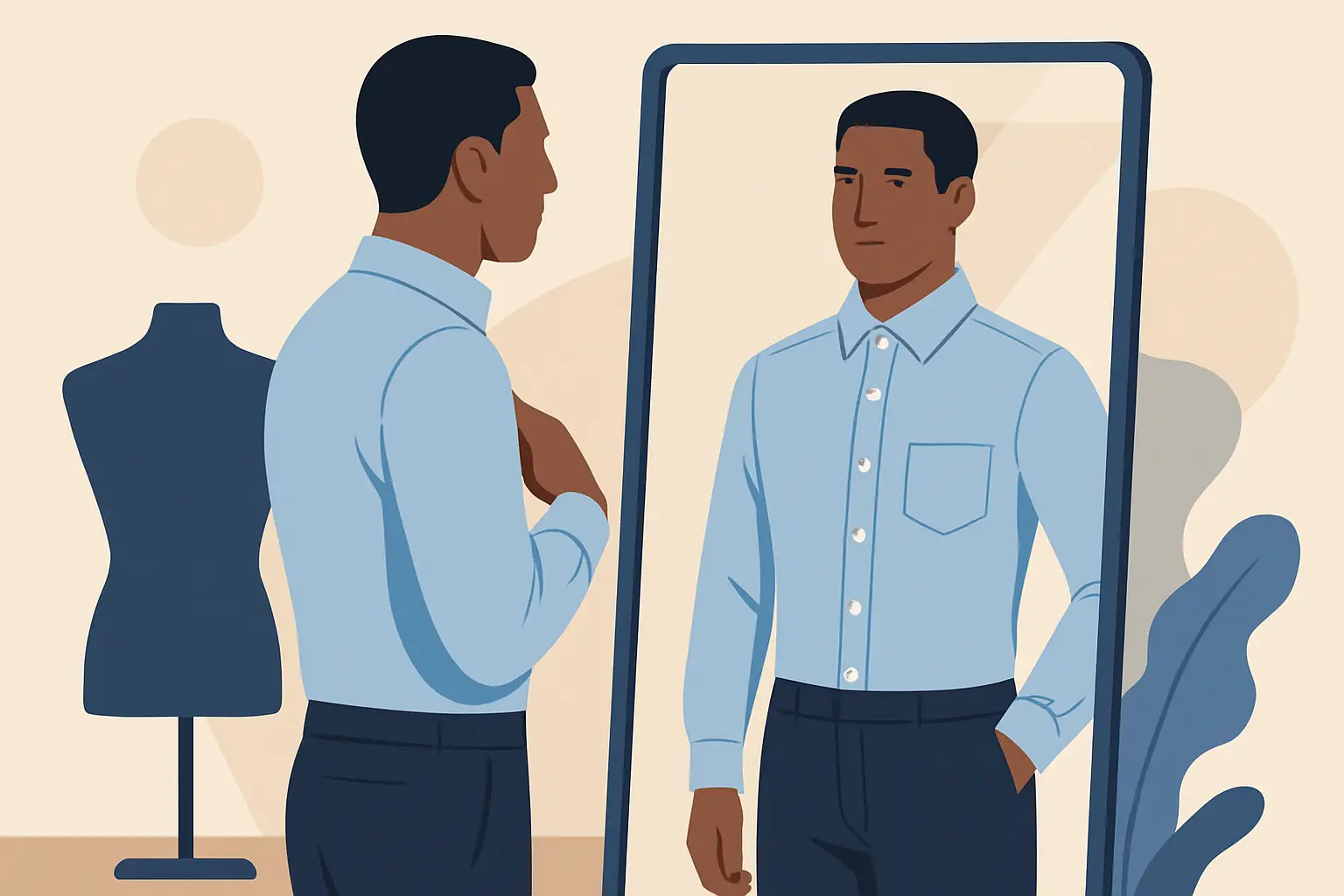

A suit can be technically correct and still feel wrong the moment you walk into the office. Usually, the issue is not the cut alone. It is the colour. Get that choice right and the whole garment works harder – it looks sharper in daylight, reads more confidently in meetings, and earns far more wear across the week.
For professional dressing, colour is never just decoration. It signals authority, discretion, approachability, and taste before a word is spoken. The best office wardrobe is built on tones that perform under scrutiny, pair effortlessly with shirts and ties, and remain elegant long after trend-led shades have dated.
The best suit colours for office wear start with restraint
Office tailoring rewards discipline. That does not mean dressing without personality, but it does mean understanding that business suiting should project control rather than novelty. The most effective colours are those with depth, versatility, and enough subtlety to support repeated wear.
For most men, the strongest foundation begins with navy, charcoal, and mid-grey. These are the shades that carry you through client meetings, presentations, formal office environments, and after-work engagements without appearing either overdone or underdressed. They are also exceptionally forgiving when tailored properly, because the eye is drawn to line, drape, and finishing rather than to an attention-seeking hue.
That is why the conversation around the best suit colours for office dressing is really a conversation about balance. You want distinction, but never at the expense of credibility.
Navy remains the modern business benchmark
If a client were building an office wardrobe from one suit alone, navy would usually be the right place to start. It is polished, intelligent, and quietly authoritative. In natural light it has richness. Under office lighting it retains depth. It also works across age groups and job functions, from finance and law to consultancy and creative leadership.
A dark navy suit is often more adaptable than black in business settings. It pairs smoothly with white, pale blue, and subtle striped shirts, and it can be styled with burgundy, navy, forest green, or silver-grey ties without strain. Brown or black shoes can both work, depending on the exact shade and level of formality.
There is, however, a difference between a refined navy and a bright blue suit that belongs more at a wedding or summer event. For office wear, look for something deeper and more composed. A cloth with a slight texture, such as a fine twill or birdseye, adds sophistication without making the suit harder to wear.
Charcoal is the quiet authority move
Charcoal has a particular strength in professional environments where seriousness matters. It is understated, elegant, and often slightly more formal than navy. For senior roles, important presentations, or offices with a conservative dress culture, charcoal sends exactly the right message.
One of its advantages is that it allows the tailoring itself to speak. Clean shoulder expression, a well-balanced lapel, and a precise trouser line become more noticeable in a charcoal suit because the colour does not compete for attention. It is a superb choice for men who want to look established and exacting.
The trade-off is that charcoal can feel stern if styled too heavily. A stark shirt-and-tie combination may make it look severe rather than sophisticated. This is where texture and tonal contrast matter. A soft white shirt, a muted tie, or even a subtle patterned cloth can bring warmth back into the look.
Mid-grey offers flexibility without looking casual
Mid-grey is often overlooked, which is a mistake. It may be the most versatile office suit colour after navy. It feels professional but not heavy, crisp but not austere. In workplaces that sit between formal and relaxed, mid-grey is often the smartest bridge.
It is also an excellent daytime colour. It responds well to British light, layers neatly with seasonal shirting, and allows more variation with accessories than darker tones. Burgundy, navy, dark green, and even certain rust tones can all sit comfortably against grey when used with restraint.
What matters is the exact grey. Too pale and the suit can feel insubstantial for serious office use. Too flat and it may lose presence. A proper mid-grey with depth, perhaps in a fine worsted or sharkskin-inspired finish, tends to deliver the best result.
What about black suits in the office?
Black is often assumed to be the most formal option, but in office tailoring it is rarely the most useful. It can look hard under artificial lighting, and it offers less dimension than navy or charcoal during the day. In many professional settings, a black suit reads more like event wear, funeral attire, or evening dress than refined business clothing.
That does not mean black is impossible. In certain industries, particularly those with a fashion-led or highly urban aesthetic, it can work. It can also suit men whose personal style is deliberately minimal and sharply edited. But for most office wardrobes, black should not be the first or even second choice.
If you do choose black, fit and fabric become even more critical. Any stiffness in the shoulder, excess cloth through the waist, or shine in the fabric will be more obvious.
Subtle patterns can elevate the right office wardrobe
Once the core colours are in place, pattern becomes the natural next step. This is where many men add interest without sacrificing formality. A faint pinstripe, a Prince of Wales check in muted tones, or a discreet herringbone can all work beautifully in an office setting.
The key is subtlety. Pattern should reveal itself at closer range, not dominate from across the room. A navy pinstripe suit, for instance, can be an excellent addition for someone in a client-facing or leadership role because it carries classic business authority. A charcoal check, if quiet enough, introduces character while remaining thoroughly professional.
This is also where bespoke guidance becomes valuable. Pattern scale, cloth weight, and jacket structure all affect how office-appropriate the final suit feels. A bold check in a soft drapey cloth may be elegant in theory but too expressive for a conservative environment.
The office matters more than trend
There is no single answer for every workplace. The best suit colours for office life in a City firm will not always be the same as those in a design studio or private consultancy. Dress codes may be unwritten, but they are usually easy to read once you know what to look for.
In formal environments, stay close to dark navy, charcoal, and restrained grey. In business-casual settings, you have more room to introduce lighter greys, softer blues, and textured cloths. In creative sectors, olive-toned tailoring, tobacco brown, or deeper green can sometimes be worn successfully, though these remain secondary wardrobe pieces rather than daily essentials.
This is the mistake to avoid: choosing colour to stand out before building a wardrobe that can stand up. Office tailoring should earn repeat wear. If a suit only works with one shirt and one pair of shoes, it is not pulling its weight.
Fabric, season and finish change how colour behaves
Colour is not separate from cloth. The same navy can look sleek and corporate in a fine worsted, softer and more relaxed in flannel, or more directional in a high-twist fabric with a dry handle. That is why swatch books matter. You are not merely choosing a shade. You are choosing how that shade will live in motion, in light, and across the seasons.
For year-round office wear in Britain, a medium-weight worsted in navy or charcoal remains a dependable choice. It holds shape well, resists looking tired too quickly, and keeps the silhouette clean. In colder months, grey and charcoal flannels can add richness and authority. In warmer weather, lighter greys or textured navies often feel more natural than dense dark cloths.
Finish matters too. A fabric with too much sheen can cheapen even a good colour. Office suiting generally looks best with a matte or softly refined finish that lets the tailoring, rather than surface shine, create presence.
The right colour still needs the right cut
Even the best office colour cannot rescue poor fit. If the jacket collapses at the collar, if the sleeve pitch is wrong, or if the trousers break awkwardly, the eye registers imbalance before it notices sophistication. Colour works best when the cut is clean, the proportions are considered, and the garment follows the body with precision rather than strain.
This is particularly true with darker suits. Navy and charcoal are wonderfully forgiving, but only when the silhouette is purposeful. A properly cut office suit should feel composed from every angle – shoulder, chest, waist and trouser line all working together.
For men refining a professional wardrobe, this is where a tailoring house such as Manndiip can make the difference between simply owning suits and having a wardrobe that performs with consistency.
Build your office wardrobe in the right order
If you are investing carefully, start with dark navy. Add charcoal next. Then introduce mid-grey. After that, consider a subtle stripe or check, depending on how formal your office is and how often you wear tailoring through the week.
That sequence gives you range without waste. It covers interviews, presentations, daily business wear, formal meetings and smart evening obligations, all while keeping your wardrobe coherent. More expressive colours can come later, once the essentials are established.
The most effective office suit colour is the one that supports your presence rather than distracting from it. Choose shades with depth, cloth with integrity, and tailoring with intention. When those elements align, getting dressed for work stops feeling routine and starts feeling exact.