Monday morning rarely fails to expose weak tailoring. The jacket that pulls across the back when you reach for your laptop. The trouser hem that collapses over the shoe and looks tired by 10am. The shirt collar that buckles under a tie. A proper business wardrobe is not about owning more – it is about owning the right pieces, cut for your body, in cloths that perform under real working conditions.
This is a practical guide to business suit wardrobe essentials for men who want to look consistently polished, not occasionally impressive. The aim is a rotation that covers the boardroom, client lunches, presentations, travel days and after-work dinners, with enough versatility to stay elegant when the weather – and the diary – changes.
Business suit wardrobe essentials for men: the foundation
A functional wardrobe starts with two questions: how formal is your workplace, and how often do you wear a suit? If you are in finance, law, senior sales or client-facing leadership, the suit is a uniform and your essentials need more depth. If you wear tailoring two or three days a week, you can build a tighter wardrobe, but each garment must do more heavy lifting.
Either way, the foundation is not trend. It is proportion, balance and cloth selection. When fit is right, everything else becomes easier: collars sit cleanly, lapels behave, sleeves show the right sliver of cuff, and trousers fall with intention rather than guesswork.
The three suits that cover almost everything
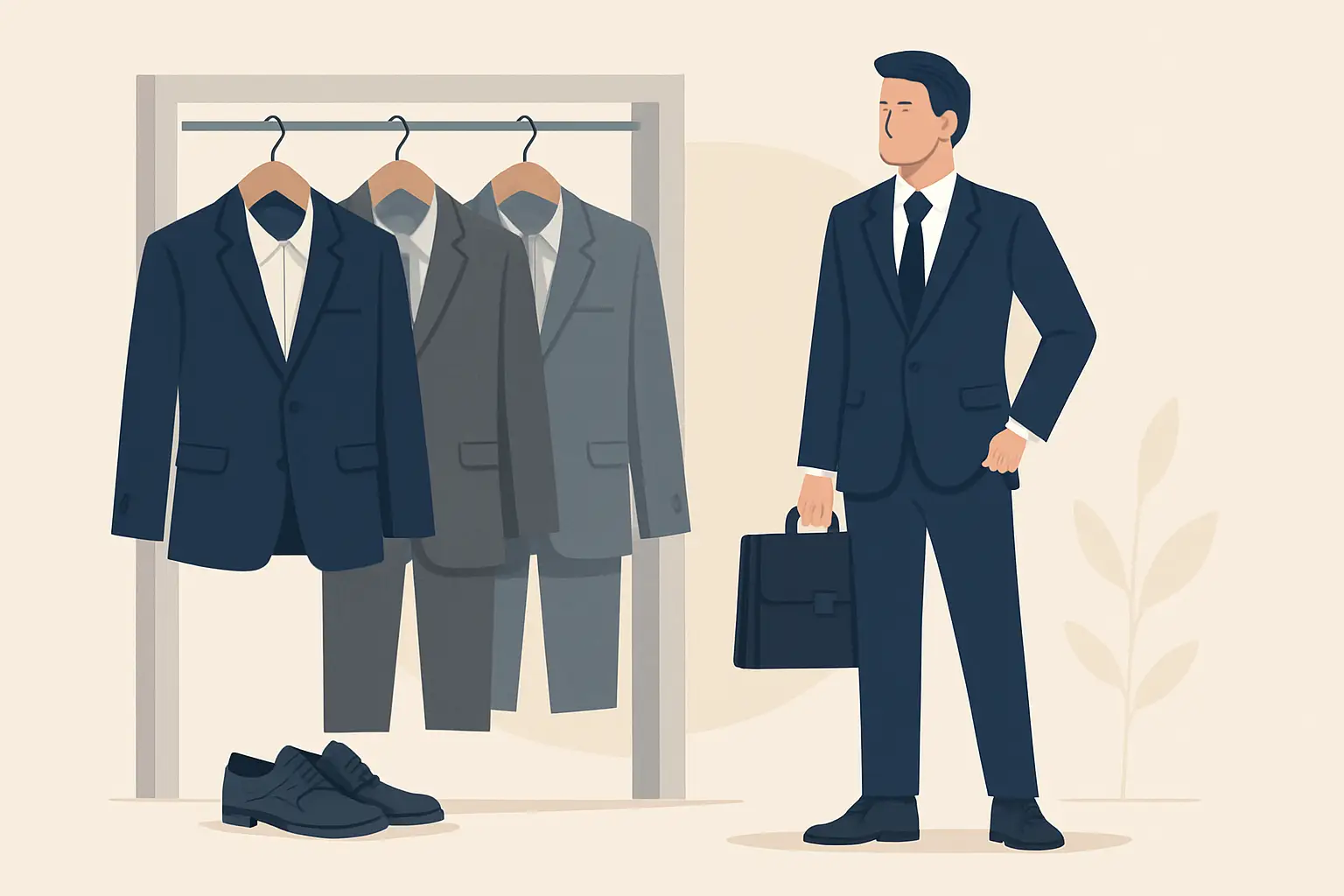
Most men who want a genuinely reliable rotation should begin with three suits, then expand. These are the combinations that cope with British seasons, varied lighting and the realities of repeat wear.
1) Navy worsted – your daily standard
A mid to deep navy in worsted wool is the modern business anchor. It reads authoritative without being severe, photographs well, and pairs with almost every shirt and tie combination. Go for a plain weave or a very subtle texture rather than anything that shouts. The sharper your office dress code, the cleaner the cloth should be.
Single-breasted, two-button is the easiest option for versatility. If you prefer a three-piece, keep the waistcoat restrained and cut close so it layers without bulk.
2) Charcoal grey – quieter, more formal, very useful
Charcoal carries a certain gravity. It is excellent for presentations, interviews, and days when you want to look decisive. It also helps when you need to rotate suits through a busy week because it does not draw attention to repeat wear.
Choose a charcoal that is clearly grey rather than nearly black. Black suits tend to look funereal in daylight and are rarely the best answer for business in the UK.
3) Mid-grey or a conservative pattern – for rotation and dimension
Your third suit should relieve the navy-and-charcoal loop. A mid-grey works in every season and lifts the wardrobe in natural light. Alternatively, a conservative pattern such as a fine nailhead, subtle birdseye, or a restrained Prince of Wales check can add depth while remaining boardroom-safe.
Pattern is a trade-off. It looks distinctive and communicates taste, but it is slightly less flexible than a plain cloth. If your calendar is heavy on formal meetings, choose mid-grey plain. If your environment is creative or your role allows more personality, a subtle check will serve you well.
Cloth choices that cope with real life
British weather and British commuting place demands on cloth. You want resilience, recovery and breathability.
For most men, 9-11oz worsted wool is the sweet spot for year-round wear. It drapes cleanly, resists creasing better than many lightweight options, and does not look flimsy. If you run warm or spend time on packed trains, a slightly more open weave can improve airflow.
Save very lightweight summer cloths for a separate suit if you need them. Ultra-light wools can crease quickly and may look tired by midday, particularly across the seat and behind the knees. On the other end, flannel is superb for autumn and winter but can feel heavy in a heated office.
Fit and cut: where “expensive” actually comes from
A business suit earns its status through how it sits on your frame. The best cloth in the world cannot compensate for a collapsing shoulder line or trousers that pull.
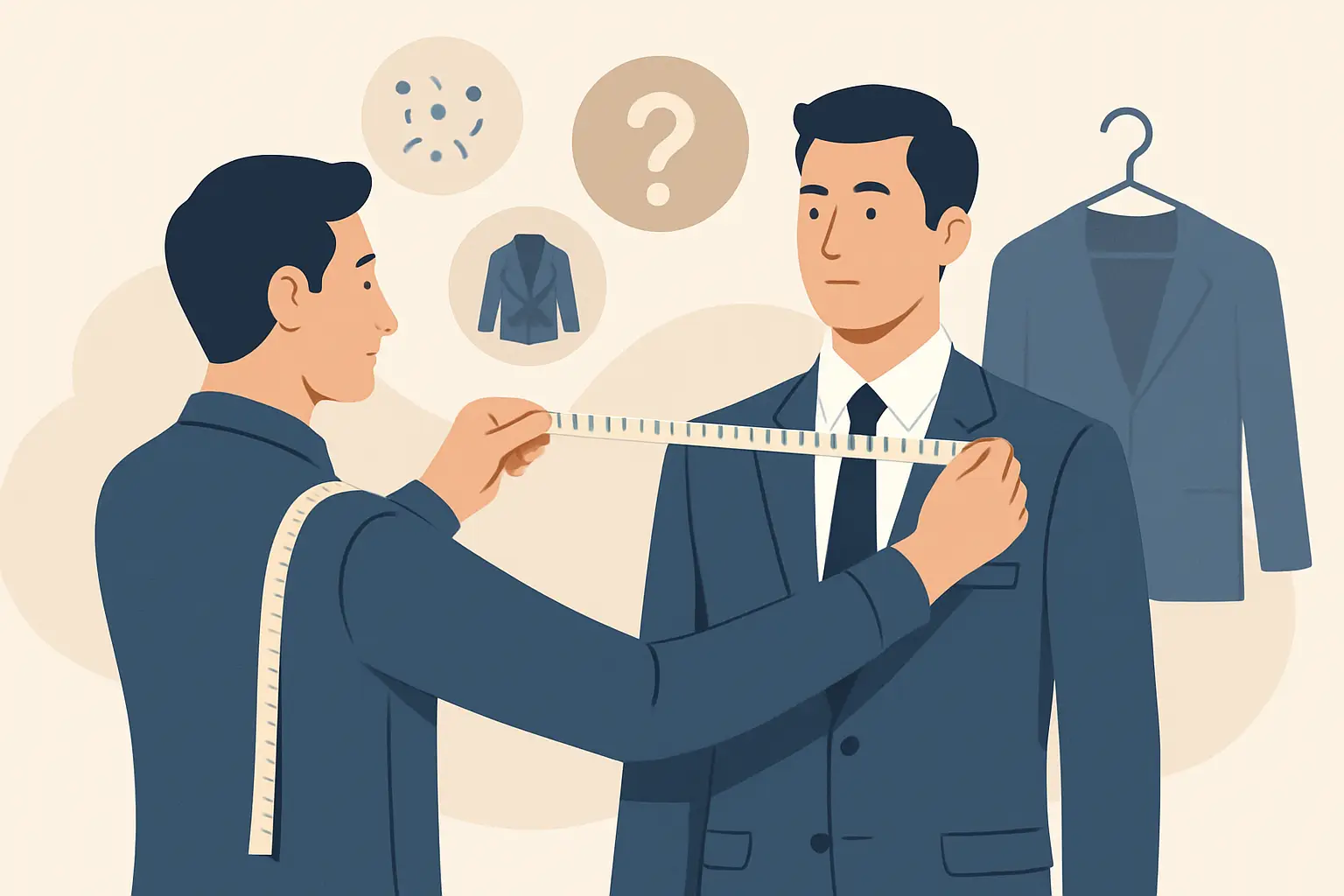
Start with the shoulder. It should lie flat, with clean contact and no divots. The chest should close without strain, and the lapel should not bow away from the body. In the back, you want a smooth line through the blade area so you can move without the jacket riding up.
Trousers are equally important. A clean seat with enough room to sit comfortably, a thigh that allows stride, and a taper that keeps the line modern without restricting movement. Hem choice depends on style and shoe shape, but the goal is always intention: either a minimal break for a crisp look, or a slightly fuller break if you favour classic proportions.
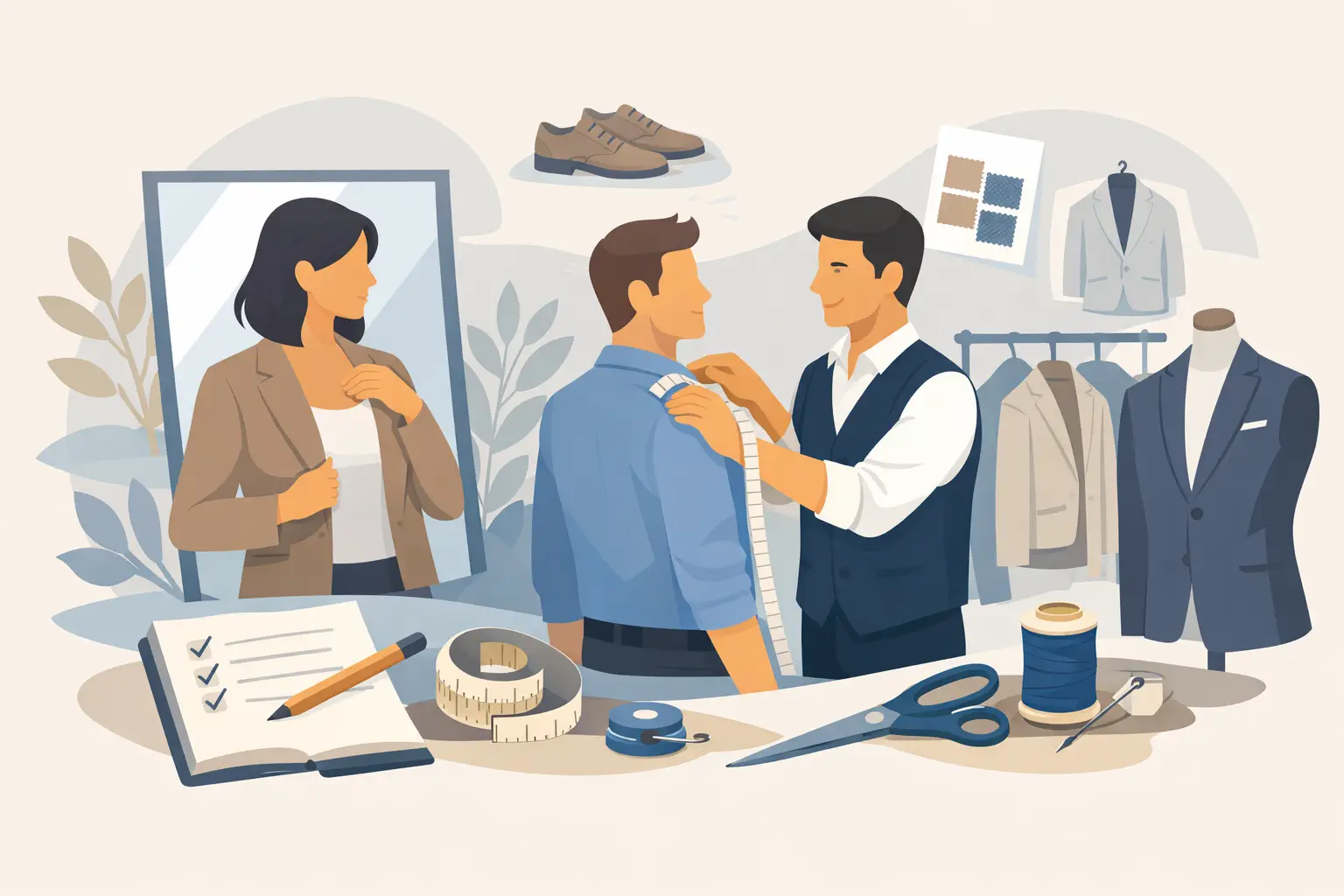
If you are building a wardrobe for genuine repeat wear, alterations are not optional. Even excellent off-the-peg suits tend to require refinement at sleeve length, trouser length and waist suppression. A made-to-measure or bespoke cut takes it further, shaping the garment to your posture and proportions rather than forcing you into a generic block.
Shirts: fewer, better, correctly specified
For business, your shirt collection should prioritise consistency. Crisp collars, stable cuffs and clean lines under a jacket.
Most men do best with a core of white and light blue in high-quality cotton. Add a blue-and-white stripe or a pale pink if your workplace allows it. The key is restraint: bold patterns fight with ties and can cheapen the overall impression.
Collar choice is strategic. If you wear a tie regularly, a semi-spread or spread collar frames the knot and holds its shape. If you are often open-collar, a collar with a touch more height and structure will sit neatly without collapsing.
Fit matters as much as in a suit. Excess fabric in the body balloons under tailoring and creates creases at the waistline. A well-cut shirt should skim the torso without pulling at the buttons.
Shoes and belts: quality you can see at ten paces
Business shoes carry the outfit. They also take the greatest wear.
Start with black Oxfords if your environment is formal. Add dark brown Oxfords or Derby shoes for versatility. Brown pairs beautifully with navy and mid-grey, and often feels less severe for day-to-day wear.
Buy the best leather you can, and protect it. Rotate pairs so they can rest, use shoe trees to maintain shape, and polish regularly. A matching belt in black and one in dark brown will cover nearly all business needs.
Ties and pocket squares: controlled personality
Ties should complement, not compete. If you are building from scratch, focus on solids, grenadines, subtle stripes and small-scale patterns in navy, burgundy and deep green. These shades bring richness without looking showy.
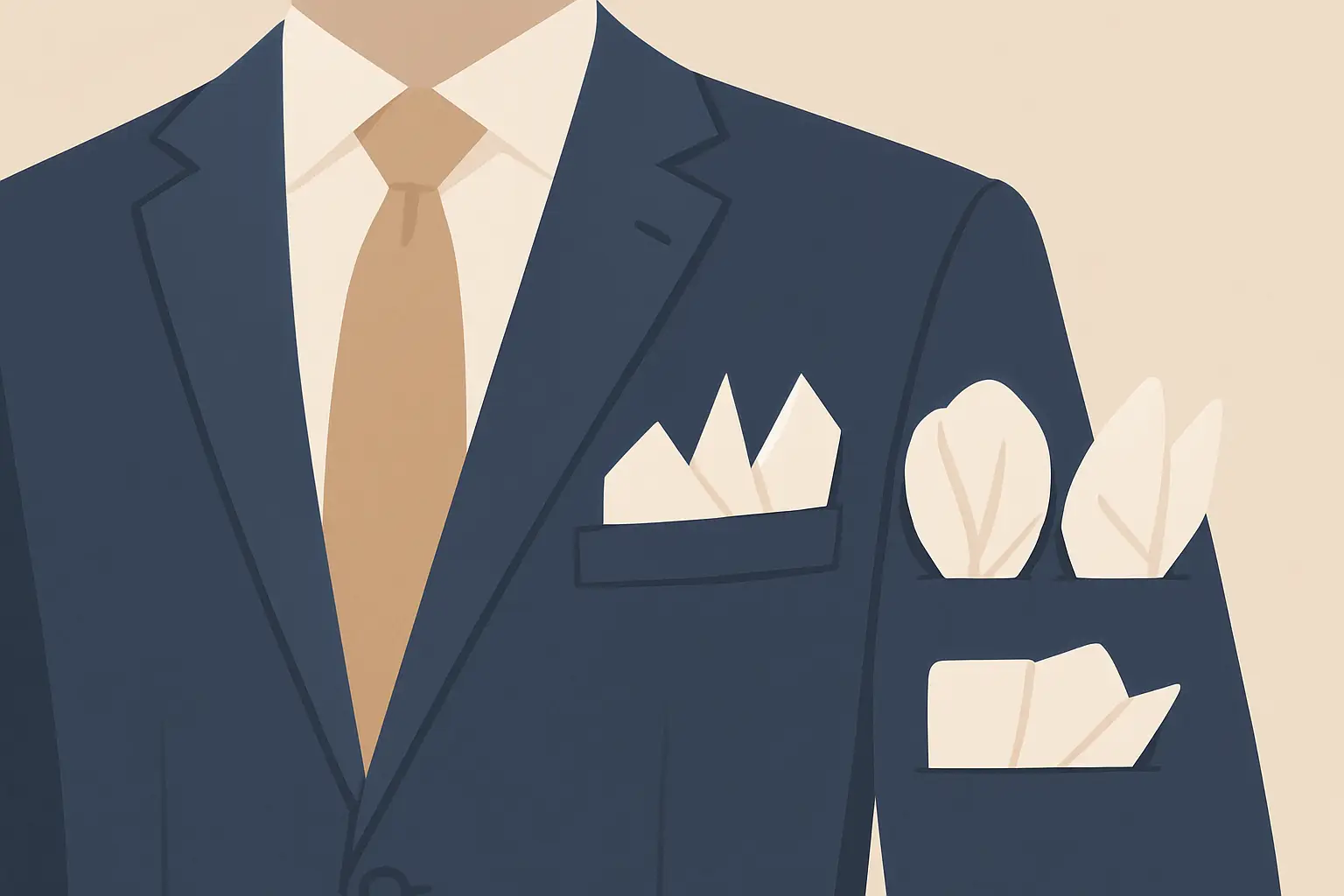
Pocket squares should read as finishing, not performance. A simple white linen square works with every suit and immediately sharpens the chest. If you enjoy pattern, keep it subtle and avoid matching the tie exactly. It looks forced.
Outerwear for British commuting
A business wardrobe fails quickly without proper outerwear. Wearing a short casual jacket over a suit compresses the shoulder and ruins the line.
A tailored overcoat in navy, charcoal or camel is the most useful piece you can add. Knee length or just above provides coverage and keeps the silhouette clean. For wet months, consider a raincoat with enough room to layer over a jacket without crushing it.
Umbrellas are underrated here. A sturdy, well-made umbrella saves your cloth and keeps you looking composed when the weather turns, which it will.
The small details that keep you looking impeccable
Once the foundation is in place, the difference between “well dressed” and “exceptional” is maintenance and finishing.
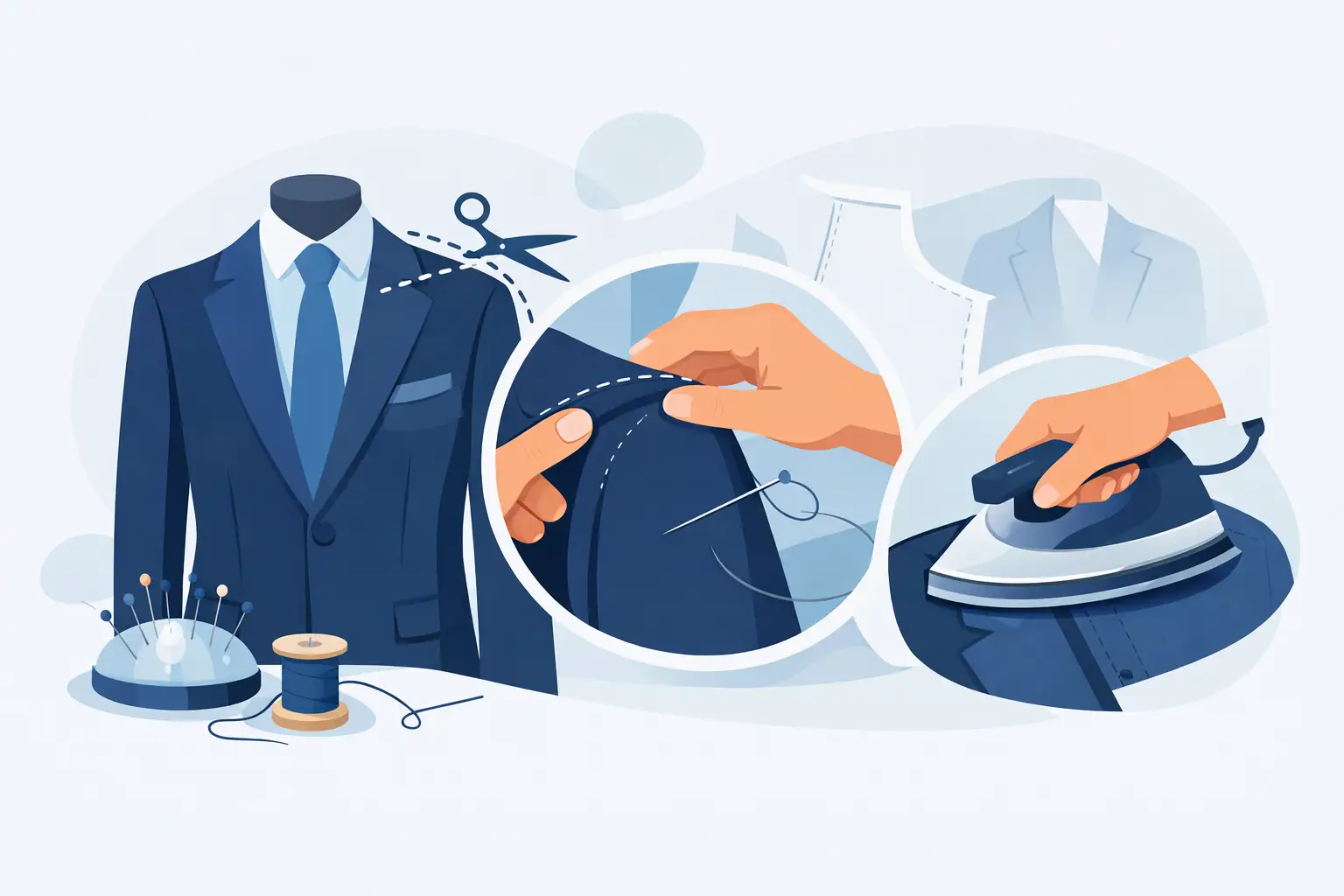
Keep your garments pressed properly and use a suit brush to lift surface dust. Steam is often safer than aggressive dry cleaning, which can strip life from wool over time. Rotate suits to let the fibres recover. Pay attention to buttons, hems and waistband integrity – small failures read as neglect.
If you wear braces, choose them as a deliberate styling decision rather than a novelty. They can improve trouser line and comfort, especially on long days, but they require trousers designed or altered for the purpose.
When to go bespoke, and when it depends
Bespoke is not only for special occasions. For many men, it is the most rational path once they know they will wear tailoring regularly.
If you struggle with fit off the peg – sloping shoulders, a pronounced posture, muscular thighs, or a significant drop between chest and waist – bespoke or made-to-measure delivers immediate improvement. It also offers control over details that matter in business: lapel width that suits your frame, a collar that hugs the neck, trouser rise that flatters your torso, and pocket placement that looks balanced.
If your body shape is fairly standard and your workwear needs are occasional, you may be better served by a strong ready-to-wear suit with expert alterations. It depends on frequency of wear, tolerance for compromise, and how much value you place on the feeling of a garment built around you.
If you want guidance on building a rotation with precision fit and meticulous finishing, Manndiip approaches business tailoring as a wardrobe project rather than a one-off purchase, ensuring each new piece earns its place.
A final thought to guide every purchase
Before you add anything to your wardrobe, imagine wearing it on a rushed Tuesday with an important meeting, unexpected rain and dinner afterwards. If it still feels like the right choice – in cloth, comfort and confidence – it is not just another suit. It is an essential.