You can spot a suit that was rushed from across the room. The collar fights the neck. The sleeves break at the wrong point. The trouser waist behaves until you sit down, then tells the truth. Bespoke exists to remove those tells – and the number of fittings is the quiet engine behind it.
So, how many fittings for bespoke suit should you expect? Most clients will have three fittings for a true, made-from-scratch garment. Some will need two. Others will benefit from four, occasionally five, particularly for a first commission or a more complex design. The right answer is never a sales pitch – it is a reflection of your body, the cloth, the cut, and the standard of finish you want to live in.
How many fittings for bespoke suit is “normal”?
For a classic two-piece bespoke suit, three fittings is the most reliable baseline. It gives enough touchpoints to sculpt the jacket cleanly through the shoulders and chest, establish the balance of the coat (how it sits front-to-back), and then refine the finer points like sleeve pitch, collar hug, and trouser line.
If you are commissioning a three-piece, adding a waistcoat often introduces another round of refinement, because the waistcoat must sit perfectly without riding up, gaping at the armholes, or competing with the jacket’s button stance. If you are going for a more structured silhouette, heavier canvas, or a pronounced roped shoulder, the suit may also ask for more checking along the way.
The best way to think about fittings is this: each fitting is not a repeat of the last. Each one has a different job, and together they build certainty.
The fitting stages and what they actually achieve
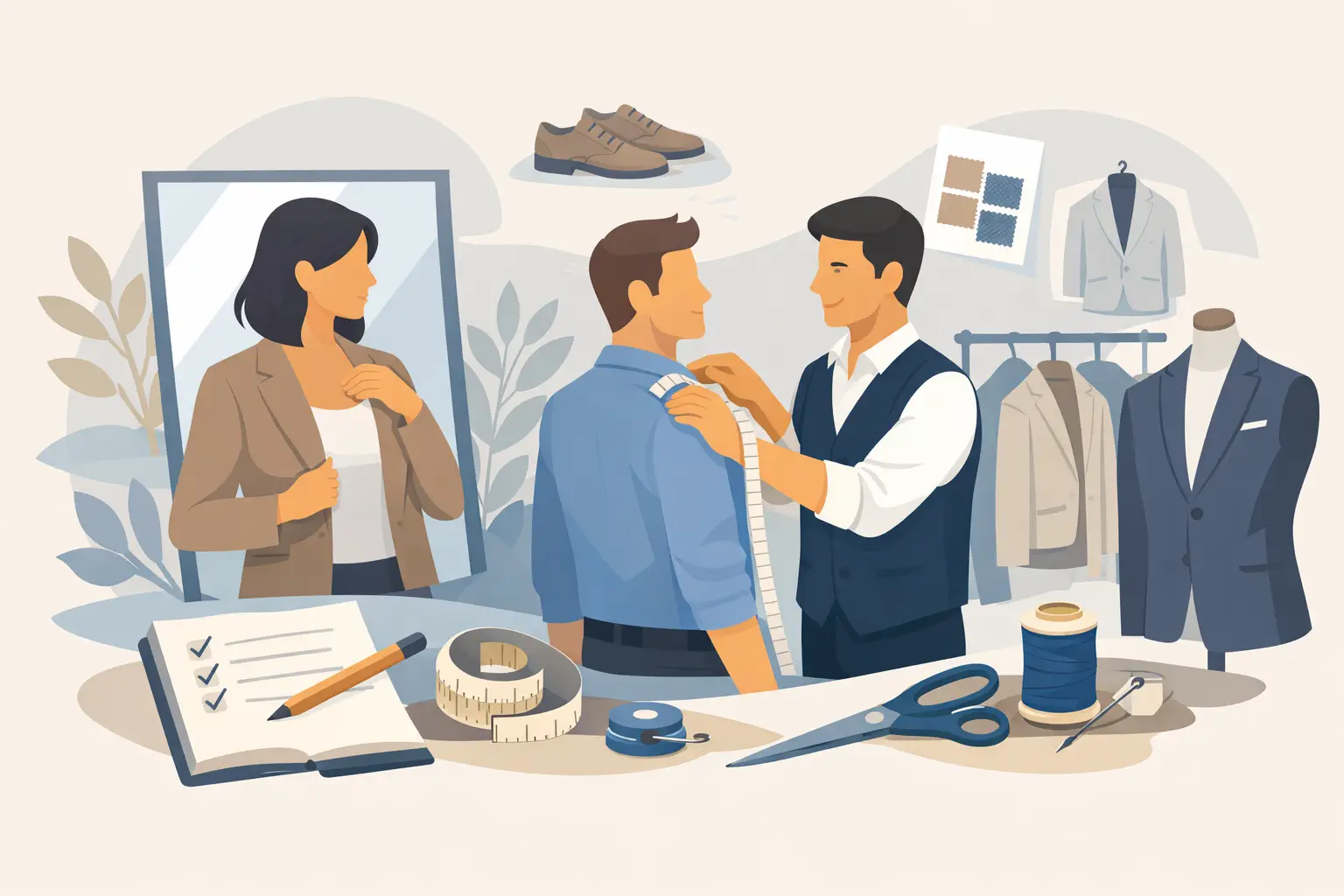
The consultation and measurements (not a fitting, but it sets everything)
Before cloth touches needle, the most important work is aligning on intent. Are you building a boardroom suit that reads authority under harsh office lighting? A wedding suit that must photograph flawlessly from every angle? A tweed suit that needs ease through the shoulder and a confident drape?
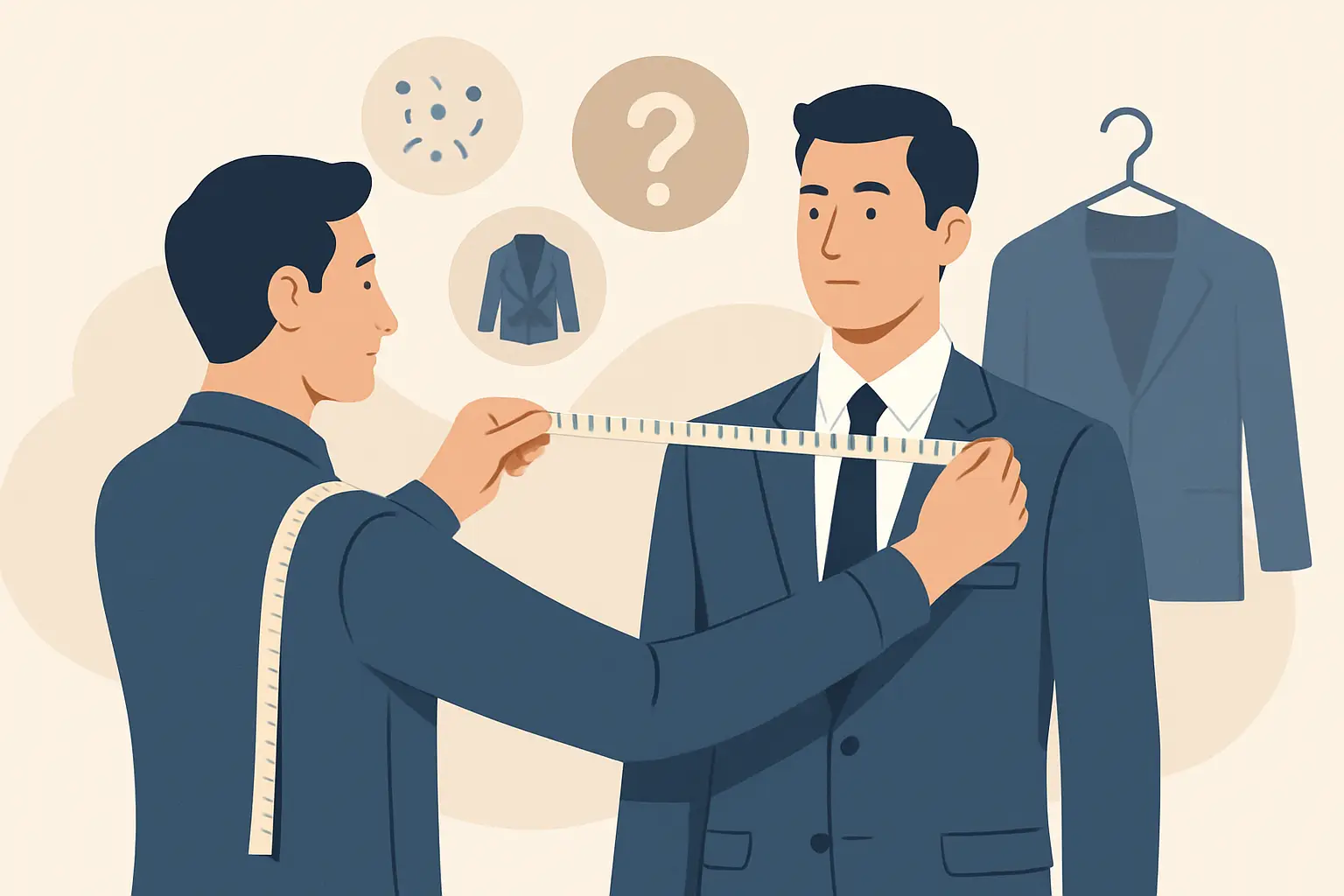
Your cutter will take comprehensive measurements, but they are only the beginning. Posture, shoulder slope, prominent blades, a hollow lower back, a fuller chest, asymmetric hips – these details decide how the pattern must be drafted. If this stage is rushed, you pay for it later in extra fittings.
First fitting: the baste fitting (the architecture check)
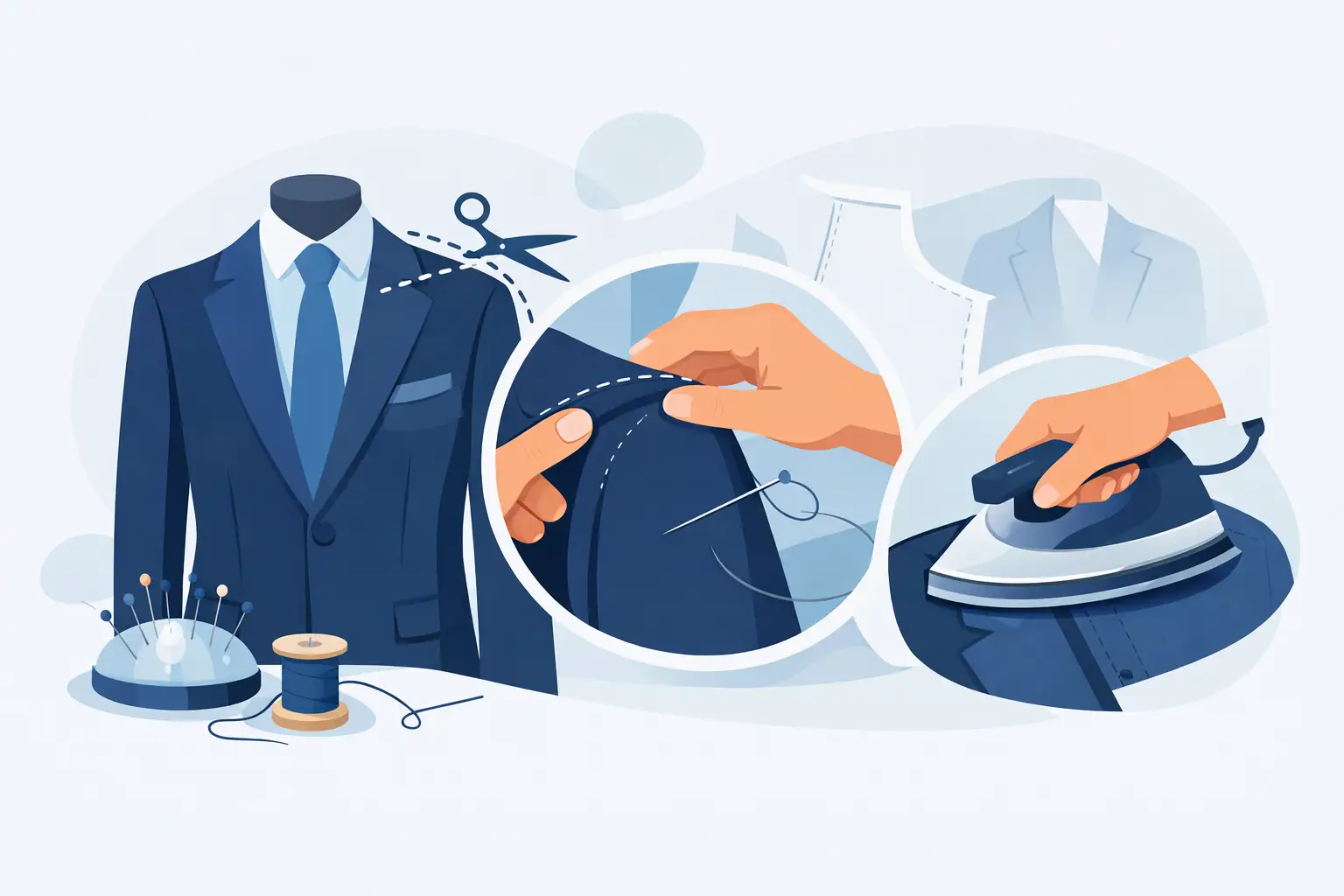
The first true fitting is usually a baste fitting. The suit is assembled loosely, often with temporary stitching, so the structure can still be moved. This is where the cutter checks the most consequential elements: overall balance, chest and waist suppression, shoulder line, armhole position, and the beginnings of your silhouette.
Expect the jacket to look unfinished, because it is. The point is not polish; it is proportion. This fitting answers questions such as: does the coat sit cleanly when you stand naturally? Is there enough room to move without losing shape? Is the lapel line sitting where it should, or is the chest asking for more or less fullness?
For trousers, this stage sets the foundation: rise, seat, thigh, and the early line of the leg. If you are particular about the trouser break (fuller, half, or minimal), this is where the conversation becomes concrete.
Second fitting: the forward fitting (the refinement and control)
By the second fitting, the suit starts behaving like itself. The canvassing and internal structure are more established, and the maker has less latitude for sweeping changes – which is exactly why the first fitting matters.
This is the stage where the suit becomes controlled. The jacket collar should begin to sit closer to the neck without that tell-tale gap. The sleeves are assessed for length and, crucially, pitch (how the sleeve hangs relative to your natural arm position). A sleeve can be the right length and still look wrong if the pitch is off.
Trouser work here is often decisive. Waist comfort, seat clean-up, and the fall of the cloth through the calf and hem are refined. If you have one leg slightly longer or a hip higher than the other – extremely common – this is where bespoke quietly solves it.
Third fitting: the final fitting (the finishing and assurance)
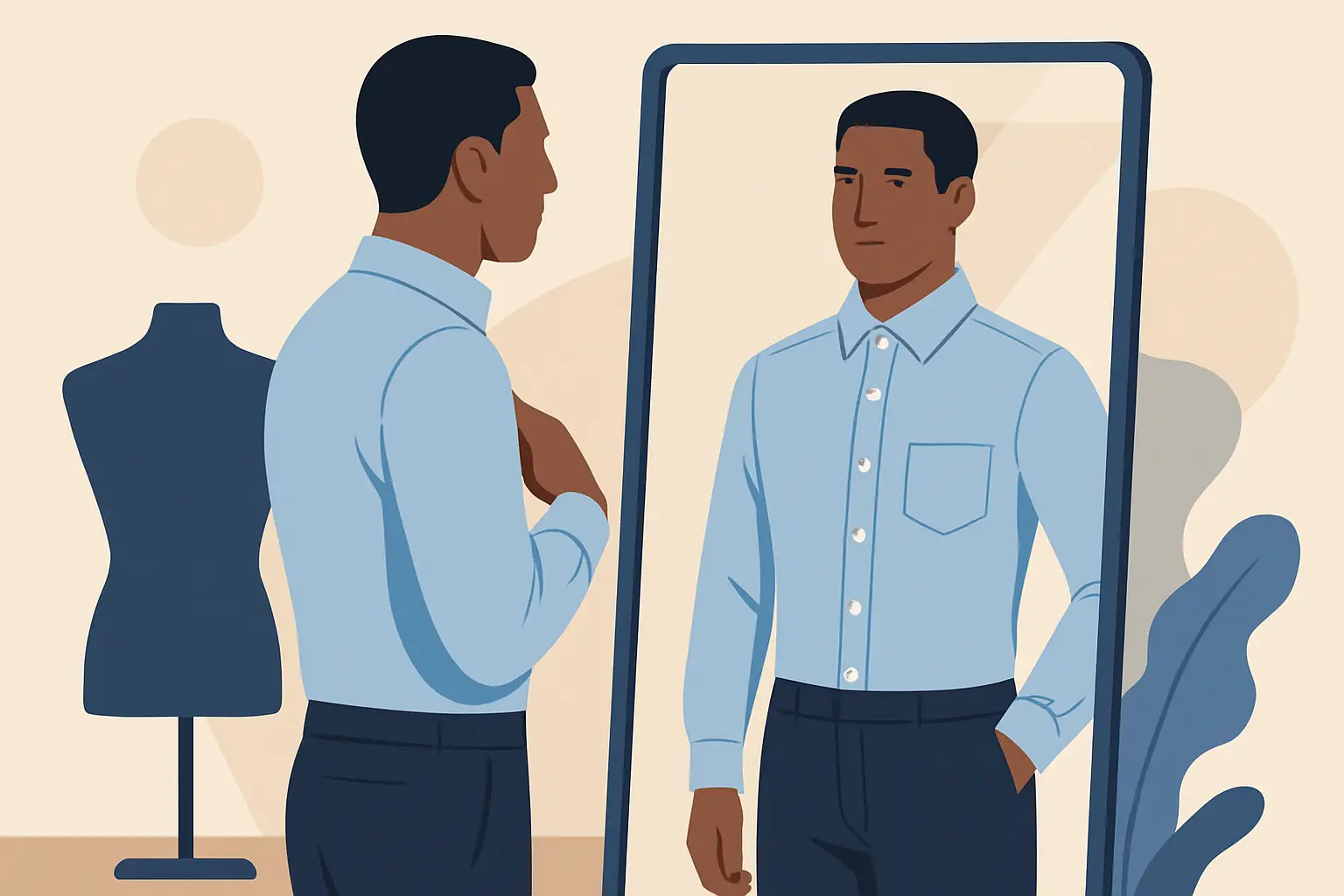
The third fitting is typically the final fitting: the garment is close to finished, with finishing details in place or ready to be confirmed. At this stage, you are checking the suit as you will actually wear it – with your chosen shirt, and ideally the shoes you will most often pair with it.
This fitting is for the details that separate “made for you” from “fits well enough”. Sleeve length is confirmed to the millimetre. Jacket length and button stance are evaluated in real context. The trouser hem is set with your normal stance and footwear. Pocket placement, lapel roll, and waistcoat length (if relevant) are verified.
If minor adjustments are needed, they are usually small and surgical. If significant issues appear at this stage, it is often a sign the process was compressed earlier – or the client’s requirements changed midstream (weight fluctuation, a different shoe, a different shirt collar style).
When you might need fewer fittings
Some clients can achieve an excellent result in two fittings, especially if they are an existing customer with a proven pattern on file. Once a house knows your posture and recurring fit preferences – how close you like the waist, how clean you want the trouser line, whether you prefer a softer shoulder – the process naturally becomes more efficient.
Two fittings can also work when the design is straightforward and the cloth is cooperative. A stable worsted suiting is typically more predictable than an open-weave linen or a lofty tweed that settles differently once it has been handled and pressed.
That said, fewer fittings should never mean fewer checks. A premium finish still demands the time to confirm balance, sleeve pitch, collar comfort, and trouser drape.
When you should expect more fittings
If this is your first bespoke suit, you may benefit from an extra fitting simply because you are learning what “your fit” feels like. Many first-time clients arrive with assumptions shaped by ready-to-wear: they are used to compromise, so they do not realise what can be improved until they see the garment on their body.
You may also need more fittings if any of the following apply:
- You have a posture-driven fit challenge such as a pronounced stoop, very square shoulders, or a strong shoulder blade.
- You want a more assertive silhouette: a sharp waist suppression, strong roping, or a very clean, close armhole.
- You are commissioning a three-piece, double-breasted jacket, or an overcoat with heavy structure.
- The cloth is characterful: textured tweeds, certain linens, and some delicate superfine wools can behave differently once pressed and worn.
More fittings are not a sign something has gone wrong. Often, they are a sign the cutter is protecting the outcome.
Timing: how to plan fittings around a wedding or key event
The most common mistake is leaving the first appointment too late. Bespoke is not just making; it is checking, adjusting, and finishing. If your suit is for a wedding, aim to begin three to four months in advance as a comfortable window, longer if you want a waistcoat, special cloth, or a busy calendar.
Try to keep your body consistent between fittings. Major changes in weight, intensive gym phases, or even a sudden increase in travelling can shift how the coat sits. If a change is likely, tell your tailor early. A good cutter can build in allowance intelligently, but only if it is planned.
Also consider the shoes. Trouser length is honest – it will reveal whether you set hems in loafers but wear the suit in more substantial oxfords. Bring the shoes you will actually wear most.
What you can do to make every fitting count
Arrive with clarity, but not rigidity. It helps to know whether you prefer a cleaner, closer silhouette or a touch more ease. It also helps to understand that comfort and sharpness trade places in small ways: a very close armhole improves elegance and mobility when done correctly, but it also demands precision. A more relaxed coat can feel effortless, but it will not give the same sculpted line.
Wear the right underpinnings. A thick casual shirt at one fitting and a fine dress shirt at the next can change how the jacket collar and chest feel. Consistency makes feedback more accurate.
Speak up about sensations, not just visuals. If the collar feels tight when you move your arms forward, say so. If the trouser waistband is comfortable standing but digs in when sitting, that is valuable information. Bespoke is engineered for real life, not mannequins.
The real question: how many fittings does your standard require?
The best bespoke experiences do not chase the smallest number of appointments. They chase certainty. Every fitting is an opportunity to refine how the garment supports your presence – how it frames the neck, cleans the shoulder line, sharpens the waist, and lets the trouser fall without distortion.
At Manndiip (https://www.manndiip.co.uk), the approach is craftsmanship-led and detail-obsessed, because that is what it takes to produce a suit that reads effortless while being quietly technical underneath.
The closing thought to carry with you is simple: a bespoke suit is not measured once and hoped for. It is shaped, checked, and perfected until it matches you – not just your dimensions, but your stance, your movement, and the standard you want to be recognised for.