You can usually tell, within ten seconds, whether a suit has been bought off the rail or built around a man. The lapel sits cleanly against the chest instead of floating. The collar stays close to the neck rather than gaping. The trouser break looks intentional, not accidental. That difference is precisely what you are paying for when you ask: how much does a bespoke suit cost UK clients, really?
A proper answer is not a single number. It is a spectrum – because “bespoke” can mean anything from a genuinely made-from-scratch garment drafted to your measurements, to a looser label used in marketing. What follows is a practical, honest guide to UK pricing, what drives it, and how to spend intelligently so your suit feels like identity, not expense.
How much does a bespoke suit cost in the UK?
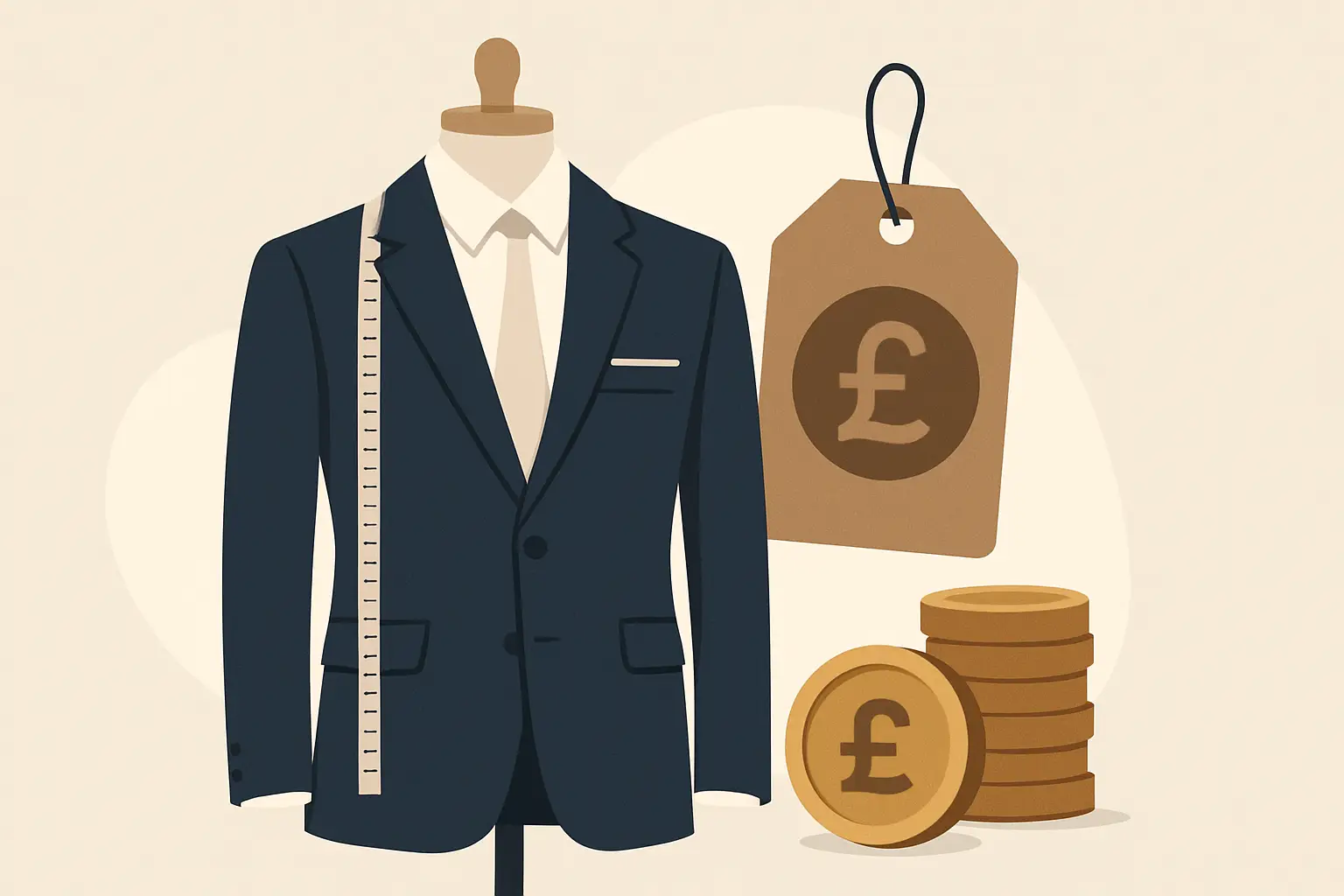
For a true bespoke suit in the UK, a realistic starting point is often in the low four figures, rising quickly with cloth, construction and finishing. In broad terms, many clients will see prices from roughly £1,500 to £5,000+ for a two-piece bespoke suit, with some houses comfortably exceeding that depending on heritage cloths, handwork levels and brand positioning.
If that range feels wide, it should. A suit is not a single product – it is a collaboration between cutter, tailor and client. The price reflects time at the cutting table, hours at the sewing bench, repeated fittings, and the calibre of the cloth.
Made-to-measure sits below bespoke, typically from around £700 to £2,000+ in the UK, depending on the maker and fabric. It can deliver an excellent result for many men, but it is built from an adjusted pattern rather than drafted from scratch. Off-the-peg, of course, can be far less – but you are paying for standardisation and speed, then trying to recover “fit” through alterations.
The biggest drivers of bespoke suit pricing
A bespoke suit is priced like a piece of craft, not like a commodity. Several factors can push a quote up or down by hundreds – sometimes thousands – without changing the basic promise of “a suit”.
Cloth: what you wear begins with what you choose
Cloth is often the most visible cost variable. Entry-level suiting wools can be handsome and durable, but as you move into finer yarns, rarer blends and more prestigious mills, prices climb.
There is also the matter of appropriateness. A mid-weight worsted in a classic navy may outlive trend-led cloths simply because it wears more often and photographs better. A wedding suit in a lighter, more lustrous cloth may be breathtaking under evening light, but less useful at 8am on a wet Tuesday. The best cloth choice is rarely the most expensive one – it is the one that suits your life.
Pattern cutting: the architecture of your silhouette
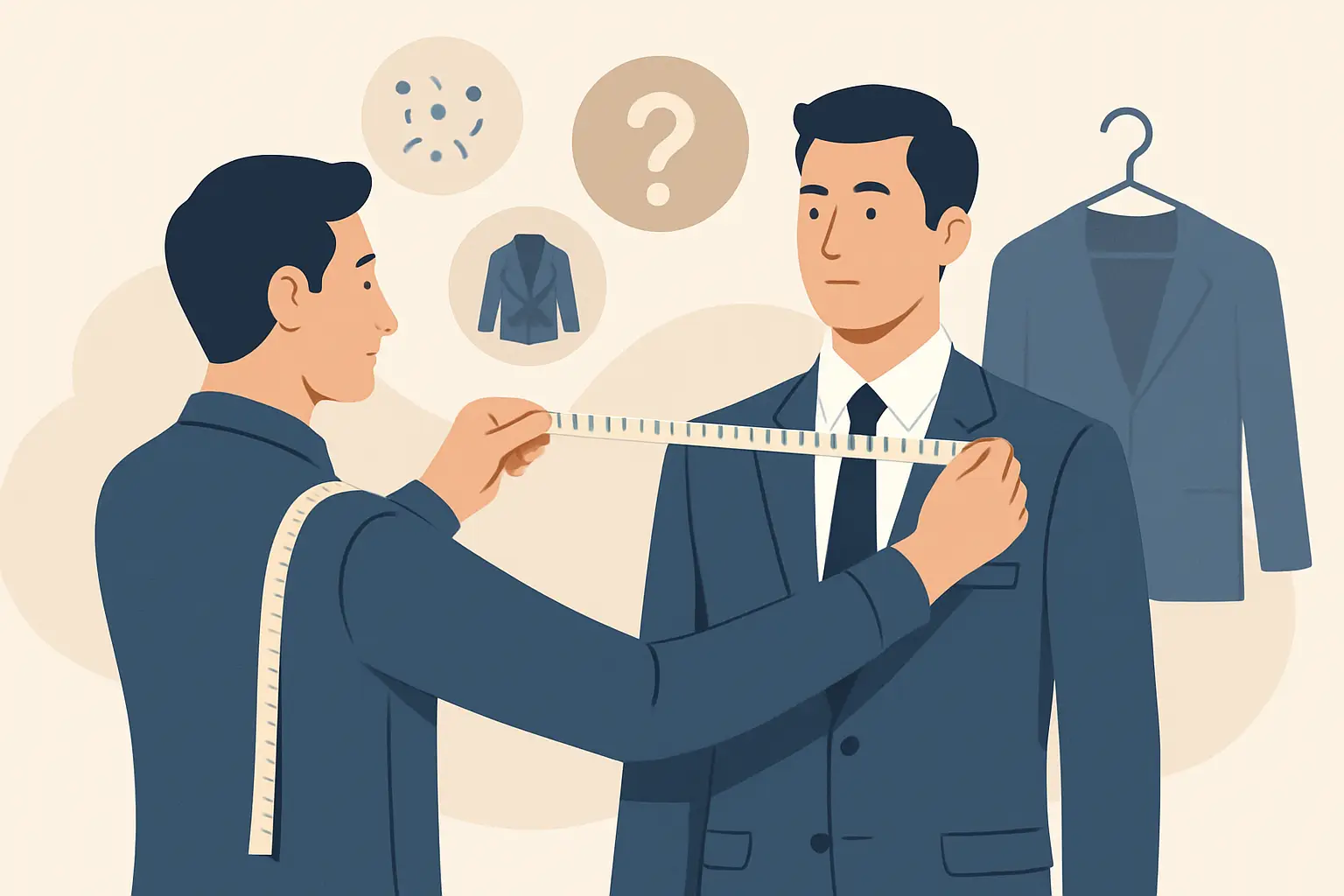
True bespoke begins with a pattern drafted to your individual body. That includes posture, shoulder slope, asymmetry, prominent seat, rounded back, athletic thigh – the real details that most men cannot articulate, yet see instantly when a garment fits.
This is also where personal style becomes physical: a slightly roped shoulder for presence, a cleaner shoulder for understatement, a stronger chest for command, or a softer line for ease. Cutting is not a measurement exercise. It is design, expressed in cloth.
Construction: what’s inside matters more than most people think
Two suits can look similar on a hanger and perform completely differently on the body. The difference is often internal.
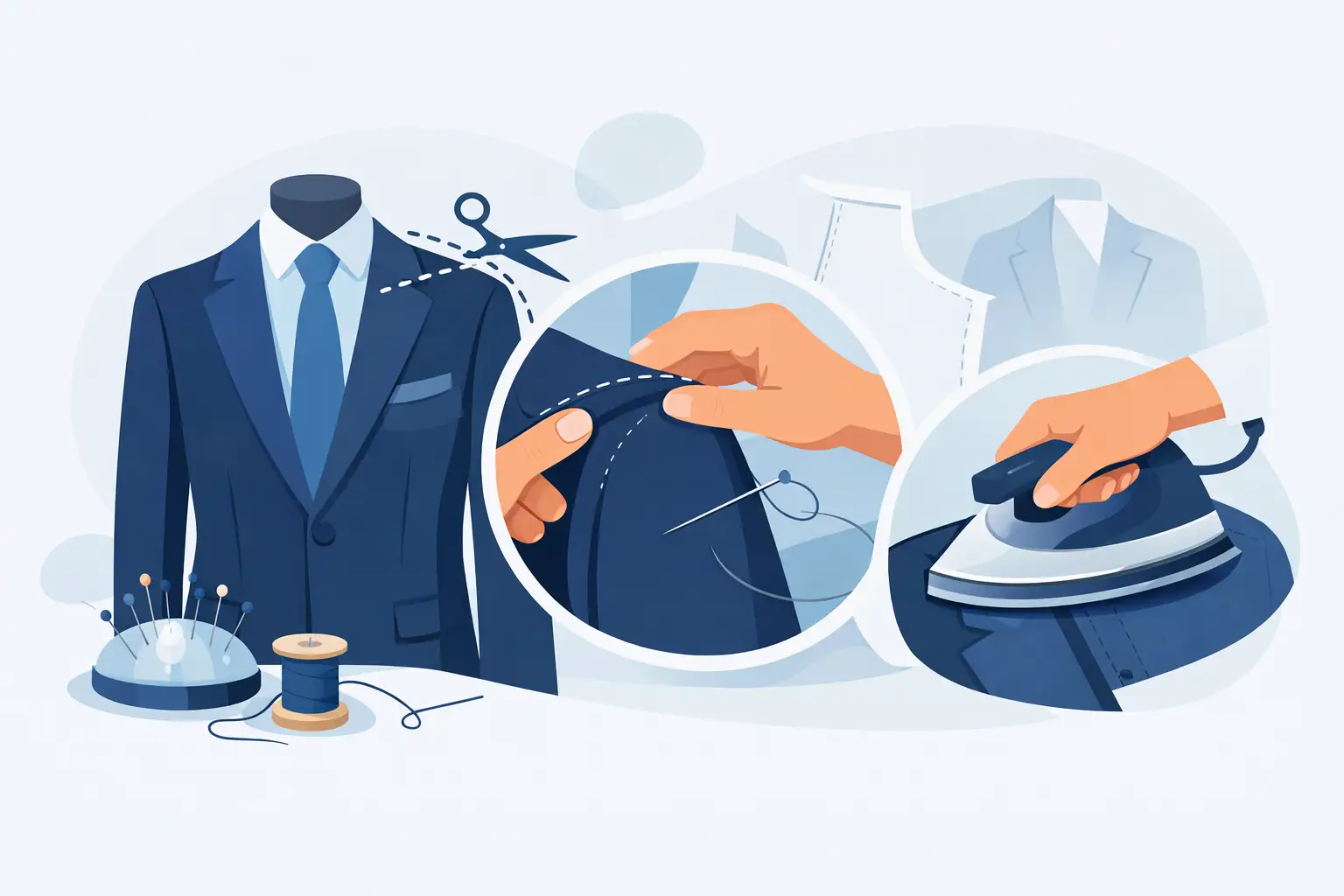
A fully canvassed jacket (where the canvas is stitched through the front, shaping to the chest over time) costs more than fused construction, and for good reason: it moves better, breathes better, and ages with dignity rather than breaking down.
Hand padding in the lapel, hand-set sleeves, careful collar work, and well-balanced linings all take time. Time is money in tailoring – but it is also comfort, drape and longevity.
Handwork and finishing: the quiet signs of quality
Hand-finished buttonholes, pick stitching, hand-attached linings, and subtle shaping are not “decorations”. They are the difference between a garment that merely fits and one that feels composed.
That said, not every client needs every flourish. If your priority is a hard-wearing business suit, you may be better served by investing in cloth and core construction, rather than paying extra for details that only the trained eye will notice.
Number of fittings: precision is iterative
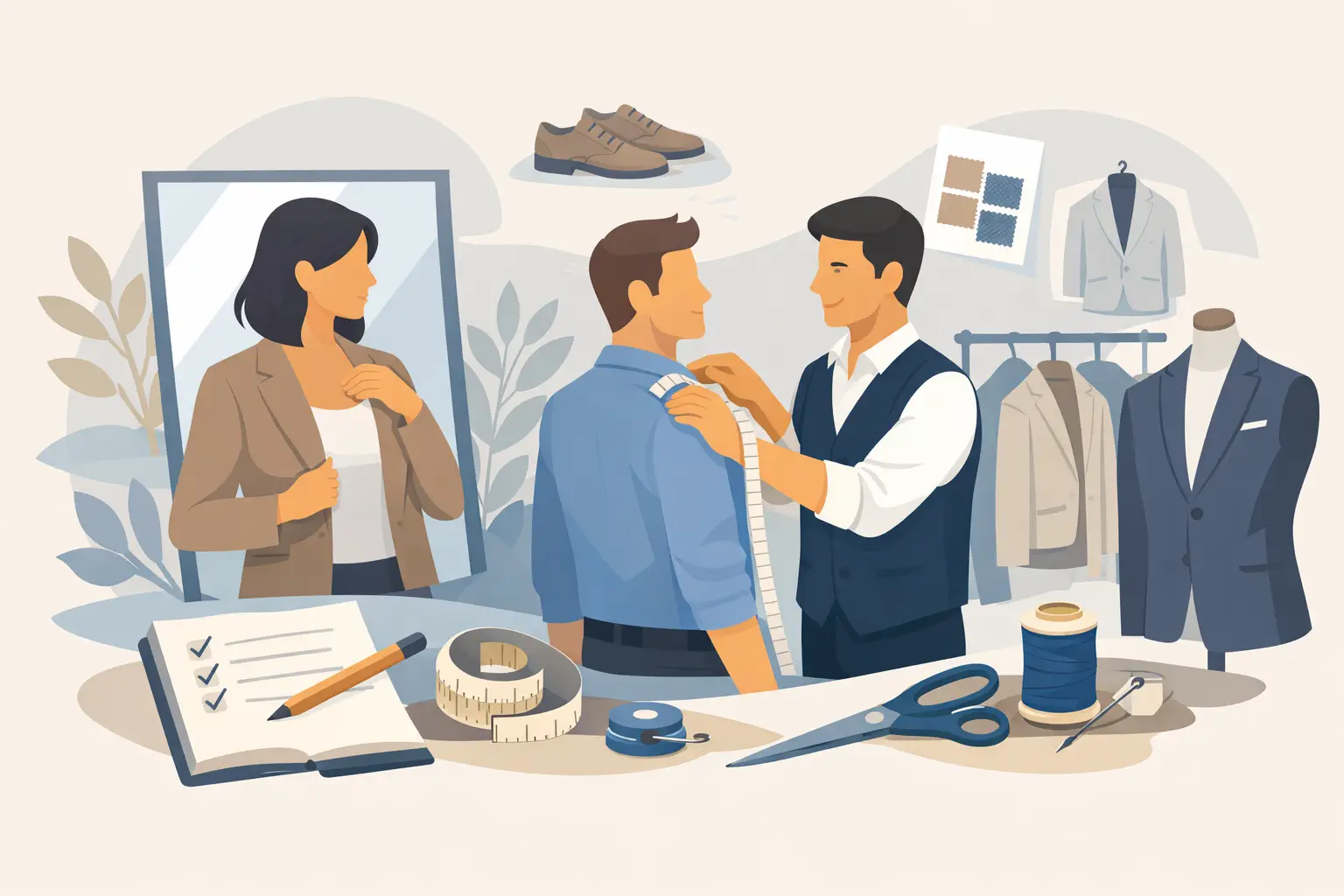
Bespoke is a process. Typically you will have multiple fittings – often a baste fitting where the suit is loosely assembled for major checks, then one or two additional fittings for refinement.
More fittings generally mean greater precision, particularly for men with challenging fit issues or very specific style requirements. They also require more hours from the workshop. If you are comparing prices, ask what the fitting process looks like, not just what the suit costs.
What you should expect at different price points
Talking about money is useful only if it maps to outcomes. Here is how pricing often translates into experience and result.
At the lower end of bespoke pricing, you can still achieve a beautifully tailored suit, particularly if you select a sensible cloth and keep the design classic. You may have fewer fabric choices, a simpler finishing specification, and a more standardised internal make – but the suit should still be cut for you, fitted on you, and refined through fittings.
In the mid range, you typically see stronger cloth libraries, more nuanced pattern work, and higher levels of canvas and hand shaping. This is where many men find the sweet spot: the suit looks exceptional to anyone who matters, and it feels unmistakably personal.
At the upper end, you are paying for the deepest handwork, rare cloths, and the time of highly sought-after cutters and coatmakers. The garment can be extraordinary – but it should also be judged against your needs. A suit you wear twelve times a year might not warrant the most labour-intensive specification. A suit you wear three times a week, however, absolutely might.
The cost question most men forget: cost per wear
A bespoke suit can feel expensive until you calculate cost per wear and cost per impression.
If you spend £2,500 on a suit you wear twice a week for two years, that is roughly 200 wears. Even allowing for occasional rest and seasonal rotation, you are looking at a far more rational figure than the headline suggests. Add the fact that a well-made suit can be maintained – pressed properly, minor repairs handled early, trousers refreshed – and you begin to see why serious professionals treat tailoring as an investment rather than an indulgence.
This is also where design discipline saves money. A classic navy or charcoal, cut with conviction but not with gimmicks, earns its keep relentlessly. A fashion-forward cloth that dates quickly does not.
Bespoke, made-to-measure, and alterations: choosing the right tool
If your body sits comfortably within standard blocks, made-to-measure can be an excellent route to a sharper wardrobe – especially if you want multiple suits for work and you value efficiency.
If you have persistent fit frustrations (collars that gape, sleeves that twist, a jacket that never settles), bespoke becomes less of a luxury and more of a solution. It is the route that allows the pattern to conform to you, rather than asking you to conform to the garment.
If you already own good suits that feel “nearly right”, intelligent alterations can be transformative. Hemming trousers, refining the waist, adjusting sleeve pitch, and cleaning up jacket suppression can often recover a neglected suit. The limitation is structural: you cannot alter a suit into a different size without compromising balance.
How to budget without compromising the result
Start with the purpose. A wedding suit wants presence, photography-friendly cloth and meticulous finishing. A business suit wants repeatability, durability and controlled elegance. Tweed and country wear want texture, drape and resilience. Your use case should decide your cloth, lining, and details – not the other way round.
Be honest about timeline. Rush work costs more, and it can also reduce your fitting options. If you want a suit for a summer wedding, begin the process early enough to enjoy the fittings rather than endure them.
Finally, prioritise fit above novelty. Peak lapels, double-breasted fronts and ticket pockets are wonderful when they are cut expertly. But the most expensive detail in the world cannot rescue a collar that does not sit properly.
A note on what “bespoke” should feel like
Beyond price, there is a human test. You should feel guided, not sold to. A proper tailor-stylist will talk to you about proportion, posture, lifestyle, and the image you want to project. They will explain why a certain shoulder line changes your presence, why a trouser rise affects comfort, and why the jacket length matters more than most men expect.
If you are looking for that kind of experience – the kind where your suit is cut with intent and finished with quiet authority – Manndiip is built around exactly that: precision fit, meticulous finishing, and a client journey that treats tailoring as personal.
A bespoke suit is not just a purchase. It is a decision to look like yourself, at your best, on purpose. When you budget for that – and choose a maker whose standards match your own – the cost stops being the headline and becomes the least interesting part of the story.