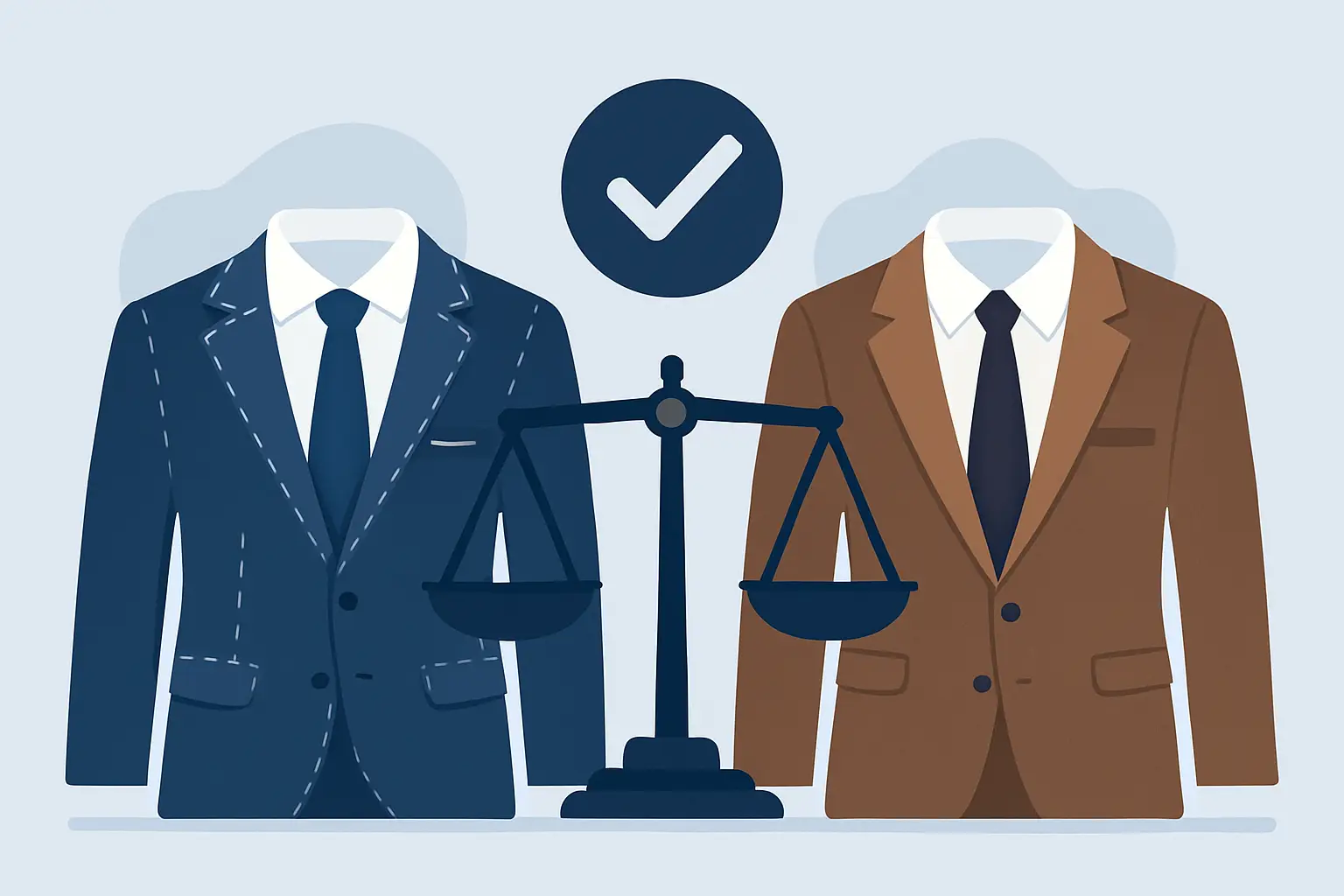
You can usually spot the man who chose well before he says a word. The jacket sits quietly on the shoulders with no tugging, the collar stays close to the neck, and the sleeve breaks cleanly at the cuff. Nothing looks “tight” or “loose” – it simply looks correct. The question is how you get there: made-to-measure or bespoke.
Most confusion comes from the fact that both options promise something the high street rarely delivers – a suit that feels personal. But the routes are different, and the trade-offs matter. If you care about presence, longevity, and a fit that respects your body shape rather than fighting it, it is worth understanding what you are actually paying for.
Made to measure vs bespoke suit: the real difference
At the simplest level, made-to-measure (MTM) begins with an existing pattern that is adjusted to your measurements. Bespoke begins with a pattern drafted specifically for you, from scratch, based on your posture, proportions, and style brief.
That sounds like a technical nuance. In practice, it affects everything you feel when you wear the garment: balance, drape, comfort, and the way the suit ages.
Made-to-measure tends to be faster and more predictable on price. It is excellent when your body shape sits within “normal” proportions and you want a sharp, upgraded fit without going to the full depth of handwork. Bespoke takes longer because it is more exacting – and because a good tailor is not merely taking measurements, but building a silhouette around you.
Fit: measurements are not the same as shape
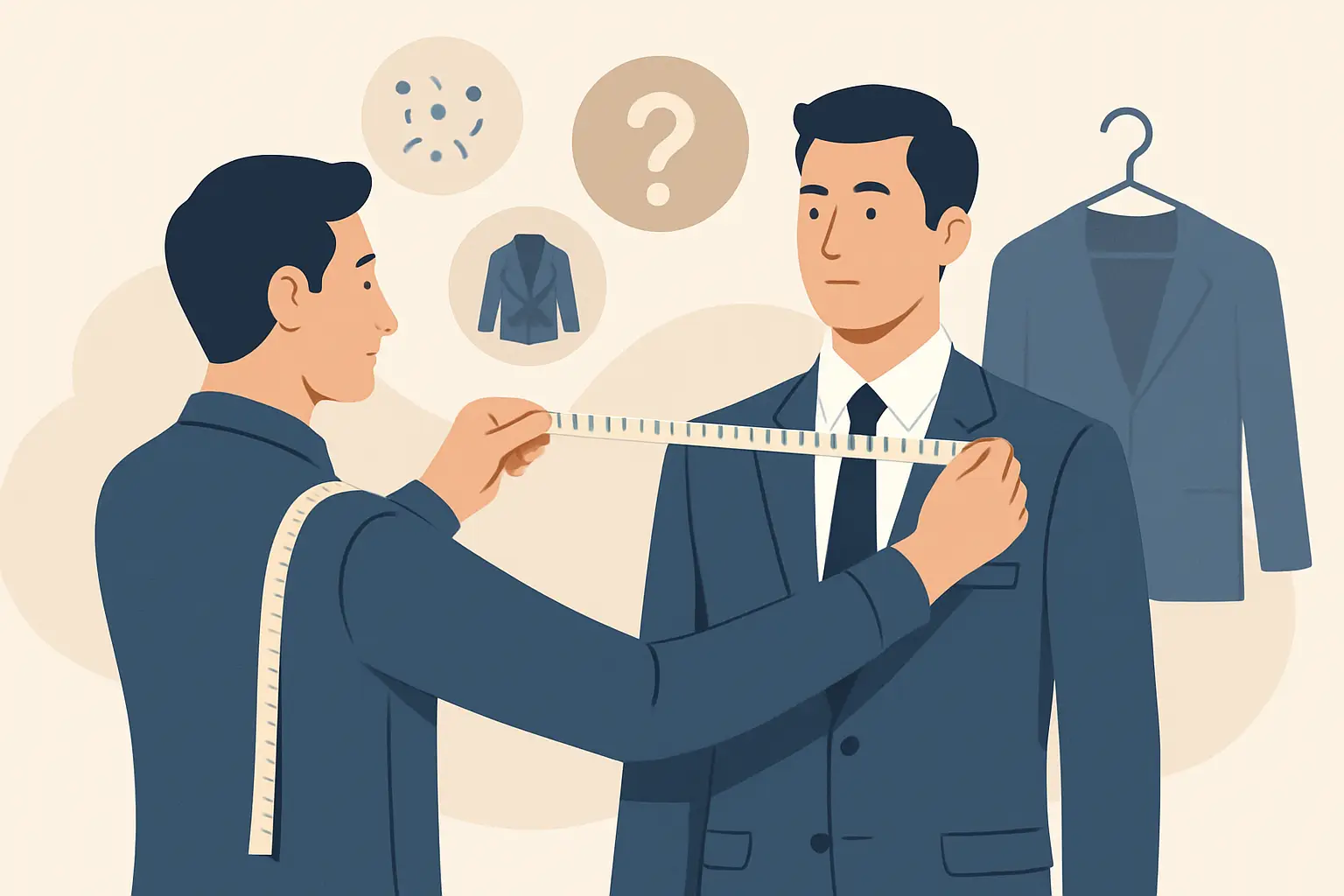
Many first-time clients assume measurements equal fit. They do not. Two men can share a chest size and jacket length and still require completely different cuts.
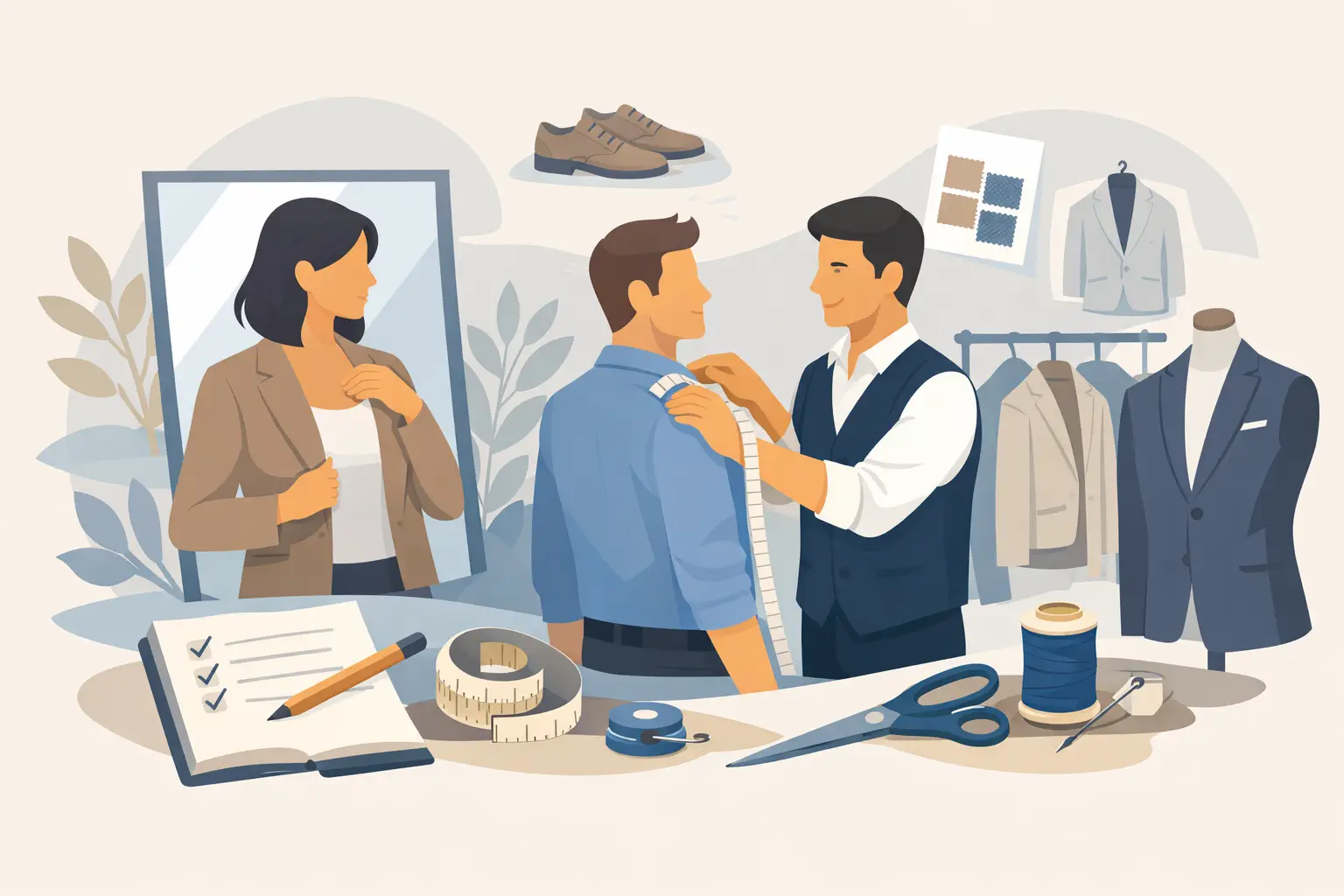
Made-to-measure captures numbers: chest, waist, seat, sleeve, trouser rise and so on. A strong MTM programme will also include some posture notes and a fit check, but it is working within the limits of the base pattern.
Bespoke captures shape. It accounts for a forward shoulder, a prominent blade, a hollow lower back, one hip higher than the other, or a chest that is muscular but narrow through the waist. It addresses how you stand and how you move. This is why bespoke can feel almost effortless when it is right – the suit is not simply the correct size, it is balanced to you.
If you have ever had a jacket that “fits” but still pulls at the front button, collapses at the neck, or twists at the sleeve, you have experienced the gap between measurement and shape.
Construction: what is happening under the cloth
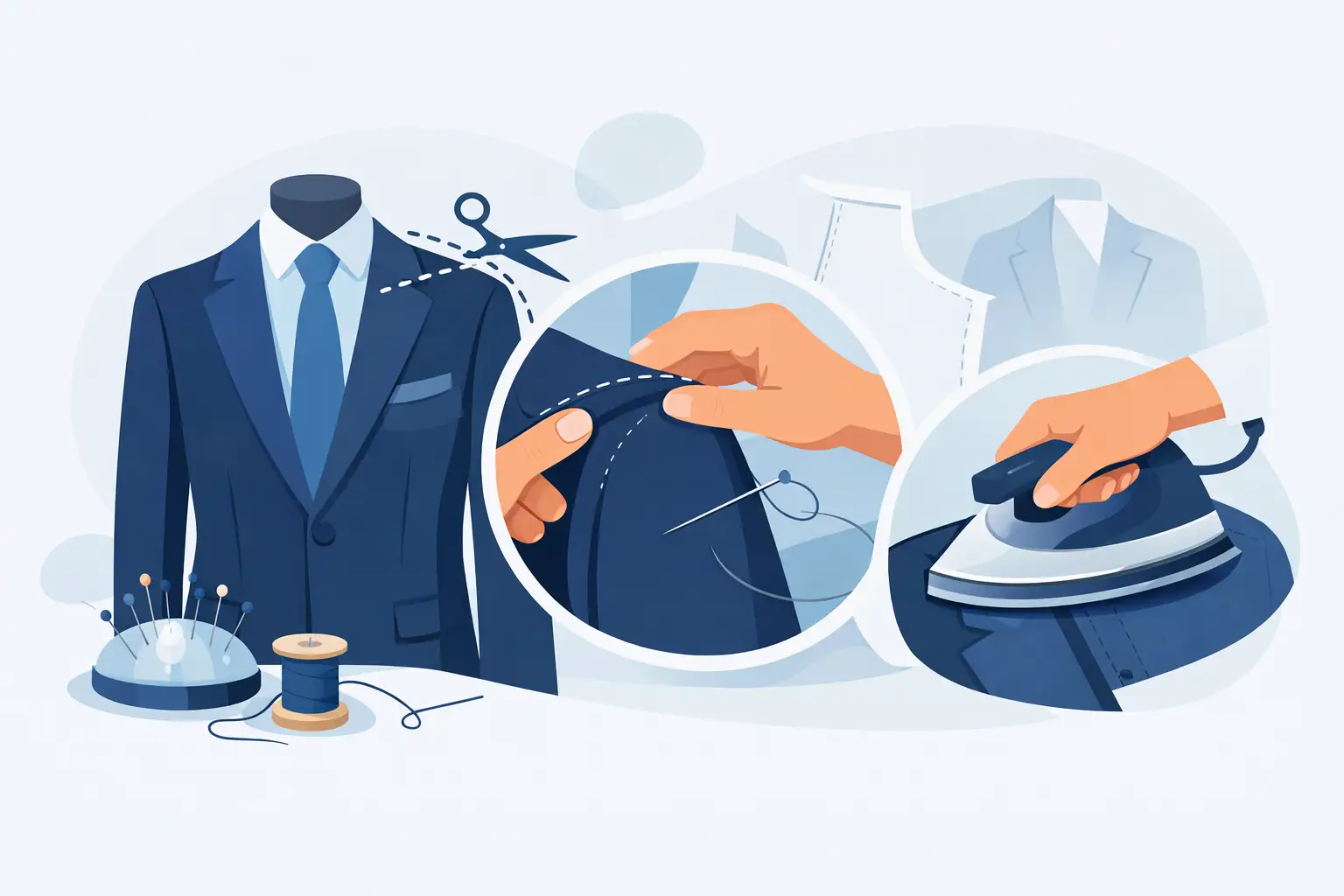
A suit’s elegance is not only the cloth you can see. It is the architecture underneath – canvassing, padding, and how the chest and lapel are formed.
In made-to-measure, construction varies widely. Some MTM garments use fused interlinings for speed and consistency; others offer half-canvas or full-canvas options. A good canvas allows the jacket front to mould to the body over time and helps the lapel roll with a natural curve rather than a flat fold.
Bespoke is typically canvas-led, and the shaping is built progressively during fittings. The tailor can manipulate the canvas, the chest piece, and the shoulder to create a clean line without stiffness. That matters if you want a jacket that looks refined from every angle, not just straight on in a fitting room mirror.
For the client, the payoff is subtle but significant: a bespoke coat tends to feel lighter for the same level of structure because the shaping is distributed intelligently, not forced.
Fittings: why more appointments can mean fewer compromises
Made-to-measure often involves one main fitting, sometimes with a second if the programme allows. Adjustments are then made by altering the garment that has been produced from the modified pattern.
Bespoke is fitting-led. You may start with a baste fitting (a partially assembled suit), then progress through one or two further fittings where the garment is refined in stages. This is where posture corrections, shoulder expression, sleeve pitch, and trouser balance are perfected.
More fittings are not a luxury for its own sake. They are the mechanism that lets the tailor solve problems before they become permanent. If your right shoulder drops, if your jacket skirts flare when you walk, or if you like a slightly cleaner waist suppression without strain, bespoke fittings give the tailor the time and access to build that in.
Design freedom: how far you can push the details
Both MTM and bespoke allow personalisation. The difference is the ceiling.
With made-to-measure, you are usually selecting from a menu: lapel style, pocket type, lining, buttons, vents, trouser pleats, waistband treatment. For many men, that is plenty – you can create a business wardrobe that feels distinctly yours without crossing into costume.
Bespoke goes further because the pattern is yours. That means you can refine lapel width to suit your chest and face shape, adjust the gorge height for a more contemporary line, shape the quarters for a longer leg effect, or build a more pronounced drape through the upper chest for comfort and presence. It also allows you to develop a consistent “house silhouette” across business suits, wedding pieces, dinner jackets, tweed, and overcoats.
If you already know what you like and you notice small differences in proportion, bespoke becomes less about novelty and more about control.
Time, cost, and value: choosing based on how you will use the suit
A suit is not expensive when it earns its keep. It is expensive when it sits unused because it never feels quite right.
Made-to-measure is often the best value when you need a sharper wardrobe quickly – a promotion, a new role, or a season of events where you want to look elevated without waiting months. It can also be a sensible route when you are refining your style: you can test a lapel shape, trouser width, or jacket length and learn what you respond to.
Bespoke tends to reward men who care about longevity and repeat wear. If you are building a rotation of business suits, or you want a wedding suit that becomes a lifelong formal option rather than a one-day purchase, bespoke makes sense because it solves comfort and proportion at the root. The suit becomes an ally rather than an item you tolerate.
There is also a practical point: if you have struggled with fit in ready-to-wear and even in alterations – prominent seat, fuller thigh, very square shoulders, a pronounced stoop – the “savings” of MTM can disappear if repeated tweaks never fully resolve the underlying balance.
Occasion matters: business, wedding, and formalwear
For business, consistency is king. You want clean lines, comfort for long days, and a silhouette that reads as authoritative without shouting. Made-to-measure can perform brilliantly here, particularly in navy and charcoal worsteds where precision looks understated. Bespoke becomes compelling when you want that same restraint with a more nuanced fit: the collar that stays put, the sleeve that never twists, the waist that shapes without pulling.
For weddings, your suit is photographed, scrutinised, and remembered. If you are the groom, you are in motion all day – standing, sitting, hugging, dancing. A bespoke suit shines when you want freedom of movement with immaculate lines, and when you want details that feel personal rather than “off the rack with extras”. Made-to-measure can still be an excellent choice, especially if you are working to a timeline or coordinating with groomsmen, but the fit must be checked carefully.
For black tie, precision becomes unforgiving. A dinner jacket has fewer distractions, so the cut does all the talking. Lapel roll, jacket length, trouser line, and shirt collar compatibility matter. If you are only wearing black tie once a year, MTM may be perfectly sensible. If you attend formal events regularly, bespoke can deliver that quiet, assured elegance that looks correct under harsh lighting and close photography.
The hidden middle ground: alterations and finishing
There is a reason the best-dressed men treat alterations as part of the purchase, not an afterthought. Sleeve length, trouser break, waist suppression, and seat shape can elevate a garment dramatically – or ruin it if handled without care.
Even in made-to-measure, expert alterations are often what turn a “good” result into a truly polished one. The finishing details – clean pressing, collar handling, pocket alignment, button stance – are where sophistication lives.
If you are deciding between MTM and bespoke, ask yourself a sharper question than “Which is better?” Ask, “Who is controlling the outcome?” The more the result depends on judgement at the cutting and fitting stage, the more you benefit from a craftsman who can interpret what he sees, not just what the tape measure says.
For clients who want that level of guidance, Manndiip approaches tailoring as a collaboration: technical precision, meticulous finishing, and styling advice that keeps the final piece purposeful for your work, wedding, or formal calendar.
How to choose with confidence
If you want a reliable rule of thumb, let your body shape and your intent decide.
If your proportions are fairly standard, you need a suit within a clear budget, and you want a refined upgrade for business or events, made-to-measure is often the smart move. You will get a personal fit, strong fabric choice, and a suit that looks decisively better than ready-to-wear.
If you are difficult to fit, you care about a distinct silhouette, you wear tailoring often, or you want a garment that becomes part of your identity rather than a purchase, bespoke is the deeper investment. It is slower, yes. But it is also the route that replaces compromise with intent.
Either way, remember the point of tailoring is not technical terminology. It is the moment you catch your reflection and recognise yourself – composed, exact, and unmistakably considered. Choose the process that gets you there, then wear it like you mean it.