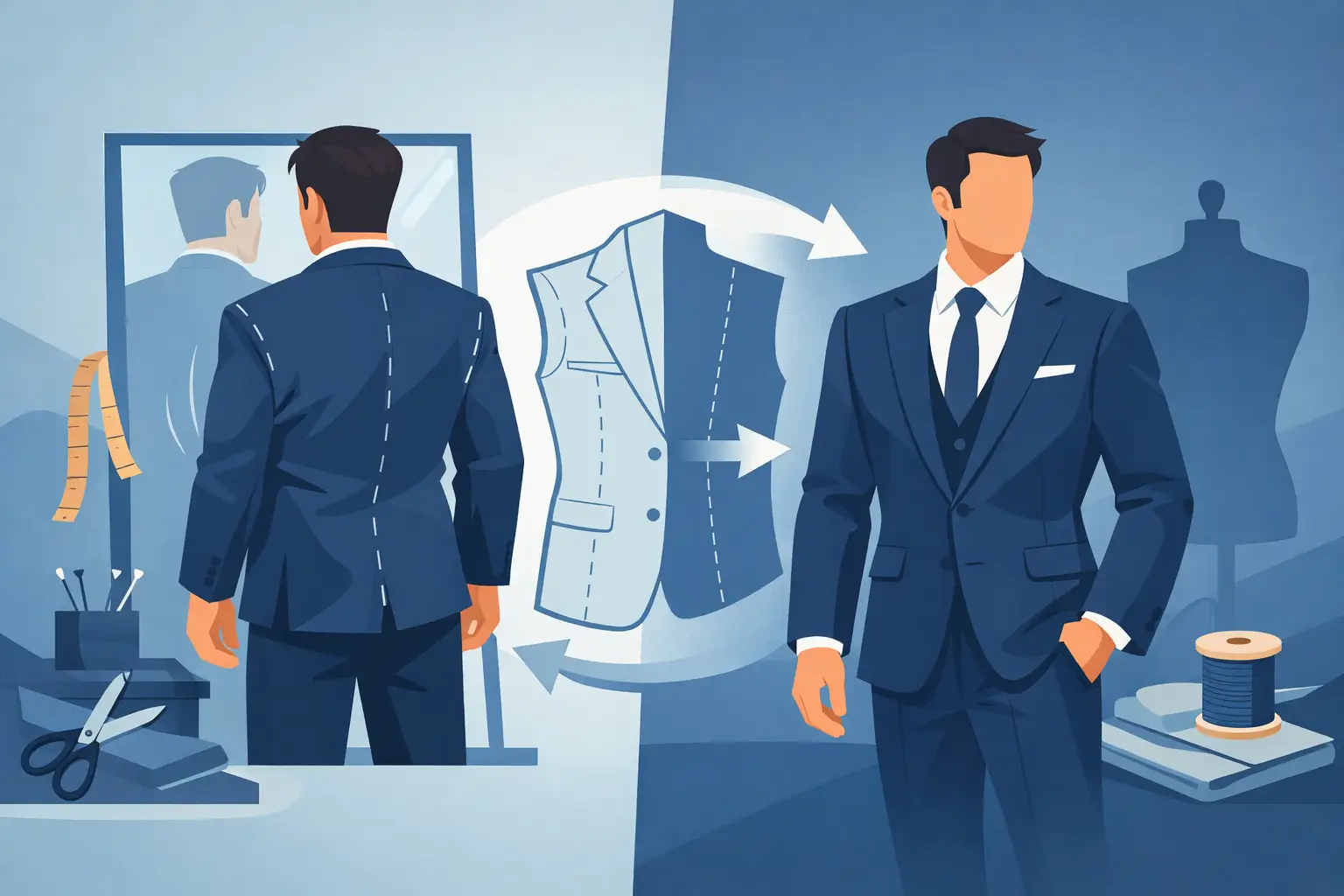
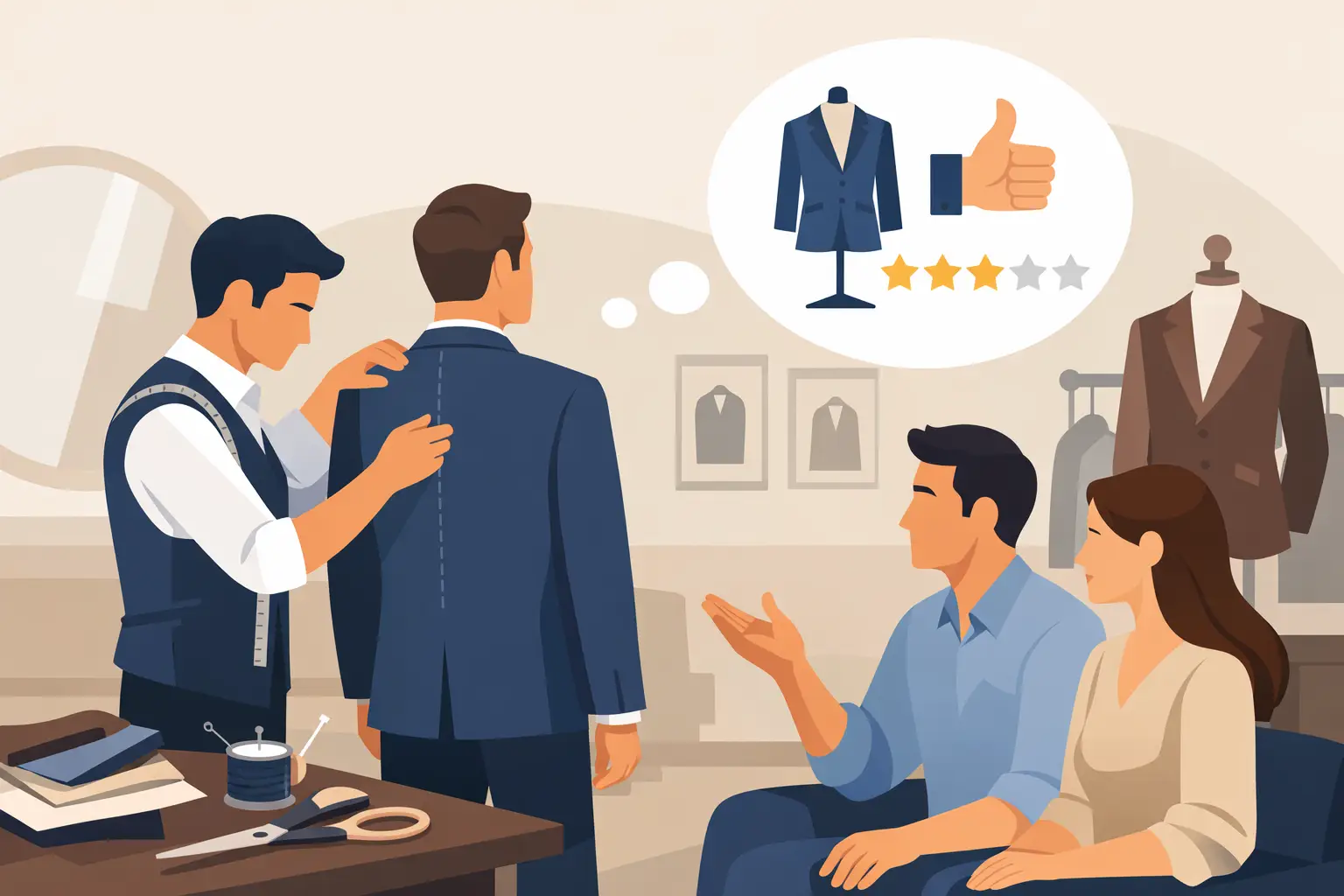
You notice the difference before you fasten the jacket. The shoulder sits cleanly, the collar stays close to the neck, and the coat follows your frame rather than fighting it. Any honest review bespoke tailoring experience should begin there – not with fabric swatches or measuring tape, but with that first moment a garment feels as though it belongs to you.
For men used to ready-to-wear, bespoke can seem mysterious, even slightly over-romanticised. The language around it often drifts into theatre. The reality is both more practical and more impressive. A true bespoke experience is not simply about ordering a suit in a finer cloth. It is about commissioning a garment built around your posture, your proportions, your movement, and the way you want to present yourself in professional, social, or ceremonial settings.
A review bespoke tailoring experience starts with fit
Most tailoring disappointments are not caused by poor taste. They are caused by compromise. Off-the-peg garments are designed to fit as many men as possible, which usually means they fit nobody particularly well. Even made-to-measure, while often a good option, begins from an existing block. Bespoke starts from the individual.
That distinction matters more than many first-time clients realise. Two men of the same chest size can carry their shape completely differently. One may have a forward shoulder, another a prominent seat, another slightly uneven balance through the hips. A well-run bespoke process accounts for these subtleties from the start. The result is not simply a trimmer silhouette. It is ease, balance, and composure.
This is why a bespoke suit can look quietly authoritative rather than obviously expensive. The garment sits correctly because it has been cut for the body inside it. When that happens, elegance stops looking forced.
What actually happens during the process
The best bespoke experiences feel personal without becoming vague. There is expertise at every stage, and a clear structure behind the warmth.
The consultation
The opening consultation is where style ambition meets technical judgement. You may arrive wanting a business suit, a wedding suit, a dinner jacket, or a country tweed coat. A skilled tailor does not simply take the request and nod. He interprets it through the lens of occasion, body shape, and longevity.
That means discussing cloth weight, drape, lapel proportion, trouser line, button stance, pocket style, and how formal or expressive the final piece should feel. For a wedding, softness and character may matter as much as precision. For business, restraint and repeat wear often take priority. For eveningwear, the line must remain sharp under artificial light and prolonged use.
A proper consultation should leave you feeling guided, not sold to. If every option is presented as equally suitable, that is not expertise. The value lies in discernment.
The measuring and pattern stage
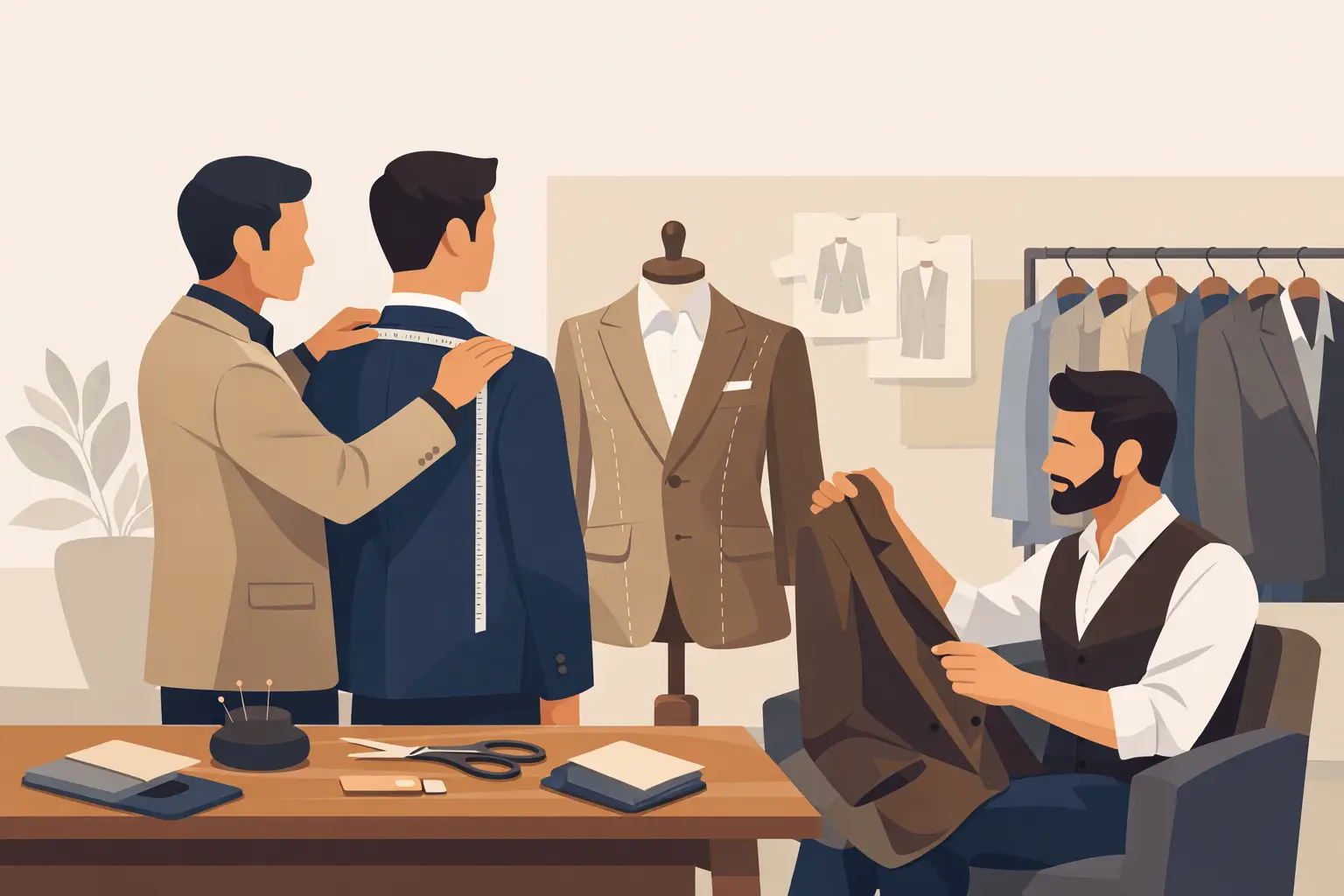
Measurements alone do not create a fine suit. Observation does. The tailor studies your stance, shoulder drop, chest balance, sleeve pitch, and the way your body settles at rest. These details are then translated into a unique pattern.
This stage rarely receives much attention in a typical review bespoke tailoring experience, yet it is where craftsmanship reveals itself. Pattern cutting is the quiet architecture of the garment. If this work is careless, no amount of hand-finishing will rescue the result.
The fittings
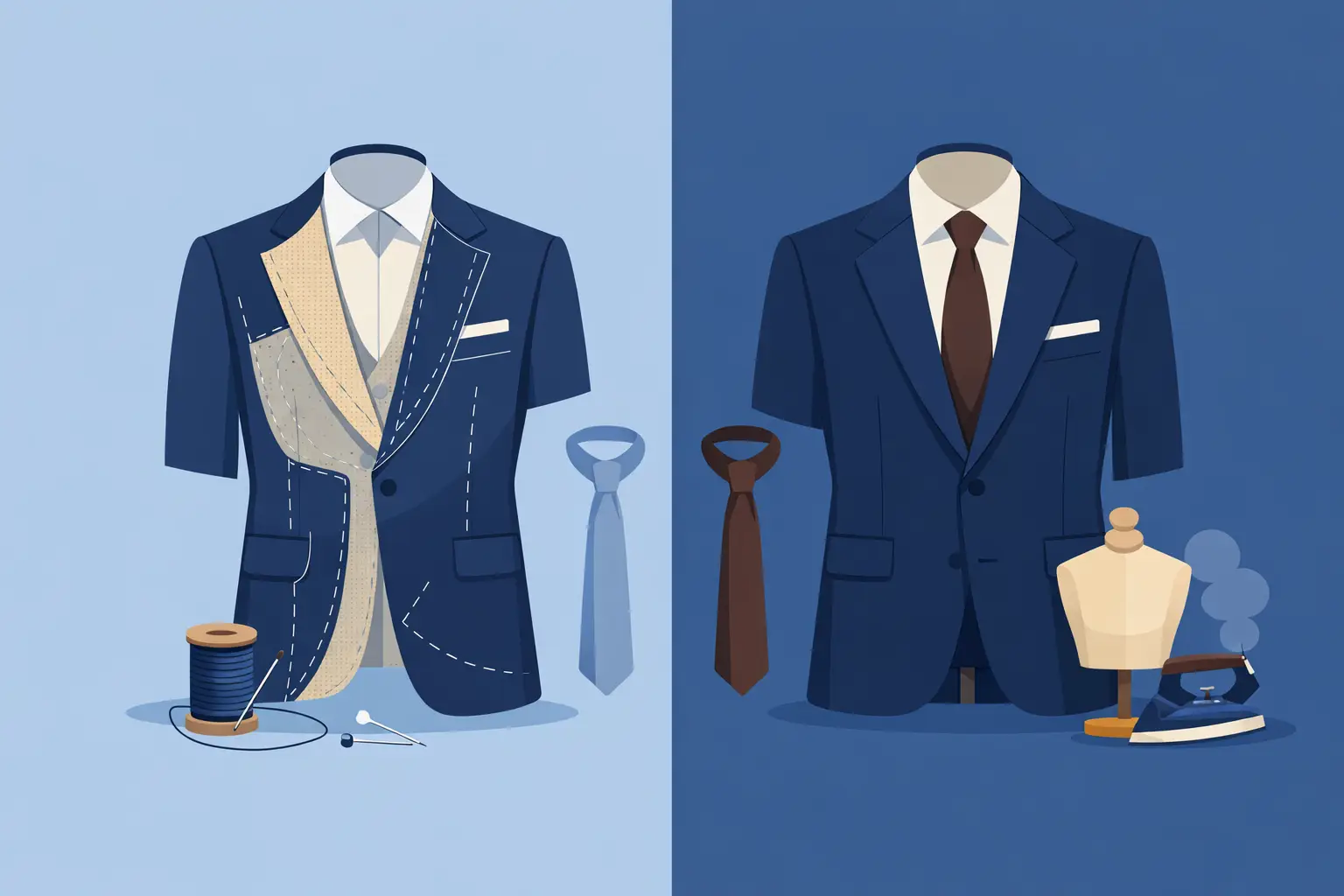
Fittings are where bespoke becomes collaborative. A baste fitting, or an early fitting stage, allows the tailor to assess balance and shape before the suit is fully finished. This is not just about taking the waist in or shortening a sleeve. It is about refining the whole line of the garment.
The best fittings are precise and calm. You should be asked how you wear a jacket, where you prefer room in the trousers, whether you favour a cleaner taper or a little more drape. That said, preference has limits. A good tailor listens carefully but will also explain when a decision may affect balance or longevity.
This is one of the trade-offs in bespoke. You gain tremendous control, but the finest result usually comes when personal taste is tempered by expert judgement.
What makes the experience feel premium rather than performative
Luxury in tailoring is easy to fake on the surface. Plush surroundings, dramatic language, and endless cloth books can create an impression. Yet the substance of the experience lies elsewhere.
It lies in consistency of communication, in whether appointments feel considered, and in whether the tailor remembers the details that matter. It lies in the confidence with which technical choices are explained. It lies in the finishing – the collar that hugs properly, the sleeve that falls cleanly, the handwork that supports rather than shouts.
A premium experience should never make the client feel rushed or dazzled into decisions. It should feel exacting. There is a difference. The strongest tailoring houses combine style direction with method. They understand that a client is not merely buying cloth and labour. He is placing trust in someone to shape how he appears at consequential moments of his life.
For that reason, the human side of the process matters enormously. First-time bespoke buyers often need reassurance. Returning clients often want refinement rather than reinvention. In both cases, the tailor’s role is part craftsman, part editor.
Where bespoke delivers the greatest value
Many men assume bespoke is mainly about weddings or black tie. Those are natural starting points, but they are not always where value compounds most.
A business suit worn regularly can justify bespoke remarkably well. Repeated wear exposes every flaw in fit and construction. A jacket that pulls across the back, trousers that collapse at the seat, or sleeves that twist become daily irritations. Bespoke reduces those frictions while sharpening the overall impression you project.
Wedding tailoring is different. Here, emotional significance joins visual impact. The garment must photograph well, move well, and feel distinctly yours. Bespoke excels when the brief is personal – unusual proportions, a specific house style, meaningful cloth choices, or a desire to stand apart without looking theatrical.
Outerwear and shirts also deserve mention. A bespoke overcoat, properly balanced over tailoring and knitwear alike, can transform a winter wardrobe. A custom shirt, when cut cleanly through collar, cuff, and body, supports the rest of the ensemble more than many men appreciate.
The honest drawbacks in any review bespoke tailoring experience
Bespoke is not the right route for every client, every budget, or every timeline. That should be said plainly.
First, it takes time. If you need a suit urgently, bespoke may not be realistic unless the house offers a very specific accelerated service. Proper cutting, fittings, and finishing cannot be reduced indefinitely without consequence.
Second, quality varies. Not every tailor using the word bespoke delivers the same level of pattern work, hand construction, or fitting expertise. Some experiences are closer to customised made-to-measure with elevated branding. Clients should ask clear questions and pay attention to how clearly the answers are given.
Third, the process rewards engagement. If you want to click a size, choose a blue cloth, and be done in five minutes, bespoke will likely feel demanding. But for the man who values polish, identity, and precision, that investment of attention is exactly the point.
How to judge whether the experience was truly worthwhile
The right question is not whether the suit felt luxurious in the studio. It is whether it earns its place in real life.
Does the jacket remain comfortable through a full day? Do the trousers hang cleanly after hours of wear? Do you stand differently in it – not because it is stiff, but because it supports your posture and presence? Do you reach for it with confidence when the occasion matters?
A successful bespoke garment should become part of your personal vocabulary. It should reflect your taste, flatter your frame, and remove the low-level distractions that poorly fitting clothes create. The compliments are welcome, of course, but they are not the true measure. The real test is how settled you feel in your own appearance.
That is where a house such as Manndiip distinguishes itself. Precision fit, meticulous finishing, and a deeply personal approach are not decorative claims. They are the foundations of a wardrobe that looks considered because it has been considered at every stage.
The best bespoke experience leaves you with more than a finished garment. It sharpens your eye. You begin to understand proportion, cloth, and structure in a more discerning way. Once that happens, you do not merely wear tailoring. You wear intention – and that tends to show long before anyone asks who made the suit.