A waistband that gapes at the back can spoil an otherwise excellent pair of jeans. The denim may fit neatly through the seat and thigh, the wash may be just right, yet the moment the waist sits away from the body, the whole line looks compromised. Knowing how to alter jeans waist professionally is less about taking in excess fabric and more about preserving balance, shape and finish so the jeans still look as though they were cut that way from the start.
For style-conscious men, and for anyone building a wardrobe around fit rather than convenience, this distinction matters. Denim is casual, but the standard should still be exacting. A clean waist alteration can sharpen the silhouette, improve comfort and make a reliable pair of jeans feel far more considered. A poor one, on the other hand, can twist the waistband, distort the back rise or leave obvious signs of reworking.
What makes a jeans waist alteration look professional
Professional waist alterations begin with restraint. The goal is not simply to make the jeans smaller. It is to reduce the waist while maintaining the original proportions through the seat, hip and top block. That is why experienced alteration specialists assess the entire upper half of the jean before they pick up a seam ripper.
Denim construction is also more demanding than many people expect. Jeans often feature heavy topstitching, flat-felled seams, belt loops, rivets and layered fabric at stress points. The waistband itself may be contoured or straight, and some styles include a rear yoke that affects how smoothly any adjustment sits across the lower back. Professional work takes those details seriously.
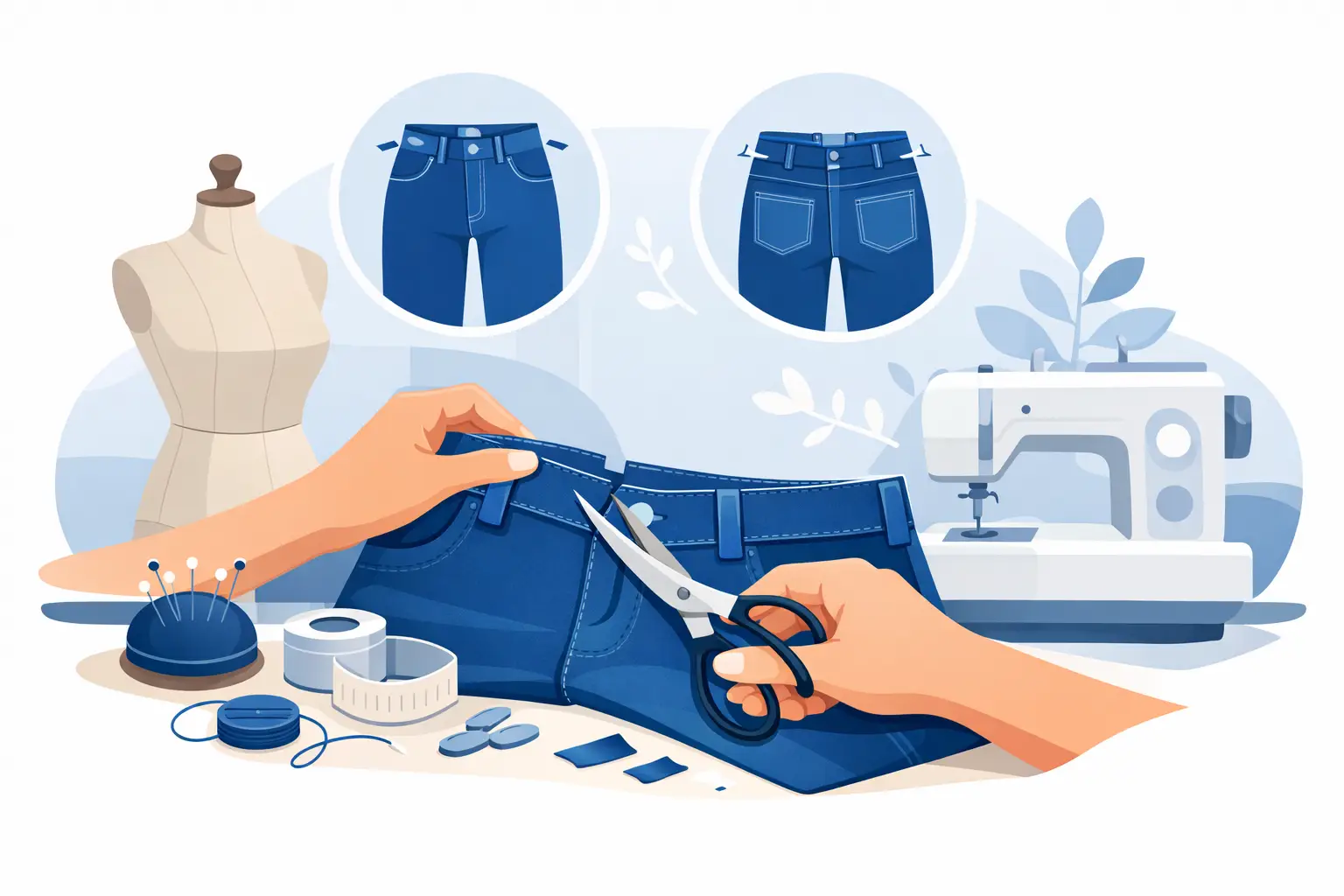
In practical terms, the cleanest result usually comes from altering at the centre back or through the back seam area, then re-shaping and reattaching the waistband with matching thread, correct stitch density and proper tension. The more closely the original finish is preserved, the more credible the result.
How to alter jeans waist professionally without spoiling the fit
The first step is measurement, but not in isolation. A tailor will pin the excess at the waistband while checking what happens below it. If the waist is reduced too aggressively without accounting for the seat, the jeans can pull uncomfortably when sitting or create drag lines beneath the waistband. If only a modest gap appears at the back, a small centre-back alteration may be enough. If the excess extends around the side seams, the approach may need to be distributed.
Once the required reduction is confirmed, the belt loop at the centre back is usually removed, followed by careful unpicking of the waistband in the relevant section. On many pairs, the alteration is then made through the centre-back seam, sometimes extending into the yoke seam depending on the cut and the amount being removed. This helps keep the adjustment visually balanced and anatomically correct.
The waistband is not simply folded and stitched smaller. It must be re-cut or re-shaped so it sits cleanly against the body without buckling. This is one of the clearest differences between a quick fix and professional workmanship. A waistband that has merely been pinched can look bulky, especially on heavier selvedge or rigid denim.
After the fit is refined, the waistband is reattached, topstitching is reinstated as closely as possible to the original, and the belt loop is replaced. On premium denim, thread colour and stitch placement are especially important because any mismatch is immediately noticeable. The aim is subtlety – not invisibility at all costs, but a finish so well judged it does not distract from the garment.
How much can the waist be taken in?
This depends on the style, the rise and how the jeans fit elsewhere. As a rule, a small to moderate reduction often works well. Once the alteration becomes too ambitious, the upper block can lose its intended shape. A pair that originally sat neatly through the hips may begin to feel strained, or the pockets may shift out of position.
If more than a few centimetres need to come out, it is worth asking a harder question: are these the right jeans to alter at all? In some cases, the better decision is to choose a pair with a more suitable cut from the outset. Good tailoring is not about forcing a garment into submission. It is about respecting its structure.
Centre back only, or a more involved alteration?
For many jeans, the centre back offers the cleanest solution because it targets the area where gaping is most visible. However, not every fit problem starts there. If the waistband is too loose all the way around, or if the side profile is affected, a more considered adjustment may be needed. That can involve balancing changes through additional seams, although with jeans this becomes increasingly complex.
The right method depends on the wash, the construction and the value of the garment. On a premium pair, it is often worth investing in the more meticulous route because the jeans are likely to remain in regular rotation for years.
Common mistakes when altering a jeans waist
The most obvious mistake is removing too much. A snug waist can feel flattering when standing in a fitting room, but denim behaves differently over a day of wear. Some fabrics relax slightly; rigid styles do not. The right fit should feel secure without biting or forcing the waistband to roll.
Another common issue is neglecting the rise. If the waistband is taken in without regard for the back rise and seat, the jeans may sit awkwardly when the wearer moves. This is where experience makes a visible difference. A professional is reading the body, the cloth and the pattern all at once.
Topstitching errors are equally telling. Jeans are not discreet dress trousers where a hidden seam can absorb minor imperfections. Contrast stitching, chain-stitch details and worn-in fading all make poor alteration work stand out. If the stitch line wobbles, the thread is wrong, or the waistband seam no longer aligns, the result can look decidedly second-best.
Then there is bulk. Denim carries weight, especially where seams intersect. Without careful trimming, grading and pressing, an altered waistband can become thick and rigid at the centre back. It may function, but it will not feel refined.
When denim is worth altering
Not every pair deserves extensive work. If the fabric has thinned dramatically, if the seat is already under strain, or if the jeans are inexpensive and poorly cut to begin with, alteration may be false economy. By contrast, well-made denim with sound cloth, a flattering leg line and quality detailing is often worth preserving.
This is especially true for men who have found a wash and silhouette that works with the rest of their wardrobe. A properly altered pair of dark indigo jeans can sit comfortably alongside unstructured jackets, knitwear and polished casual separates. In that setting, a crisp waist fit does more than improve comfort – it elevates the entire look.
For clients who value clothing as an extension of personal presentation, alteration is not simply repair. It is refinement. The same logic that applies to a suit trouser waist applies here: if the line at the waist is wrong, the garment rarely feels fully convincing.
Should you alter jeans yourself or use a specialist?
A domestic sewing machine and a little confidence may be enough for simple cotton garments, but denim is another matter. The layers are thicker, the finishing is more exposed and the margin for error is slimmer. Even when the seam itself can be sewn at home, matching the original construction is difficult without the right equipment and judgement.
A specialist brings more than technical ability. They can tell when a waistband issue is really a rise issue, when a back-yoke adjustment will sit better than a crude pinch, and when the alteration requested will compromise the jean beyond reason. That advice is part of the value.
At Manndiip, this principle sits at the heart of every alteration, whether the garment is formal tailoring or everyday denim. Precision matters because fit shapes perception. A jean that follows the body correctly looks cleaner, feels more assured and earns its place in a carefully considered wardrobe.
What to expect from a proper fitting
A proper fitting should be calm, specific and honest. You should expect the alteration specialist to look at how the jeans sit when you stand, walk and sit down. They may ask what you typically wear them with, whether you prefer a closer waist or a touch of ease, and how much the denim has already softened with wear.
That conversation matters because the best result is not a mathematical reduction. It is a tailored decision. The right waist fit for rigid raw denim may differ from the right waist fit for a washed stretch pair worn on weekends. Professional alteration respects those distinctions rather than applying a blanket formula.
A well-cut pair of jeans should feel composed, not fussy. When the waistband sits cleanly against the body, the silhouette settles, the top line sharpens and the whole garment looks more intentional. That is the real standard to aim for: not merely smaller at the waist, but properly resolved.