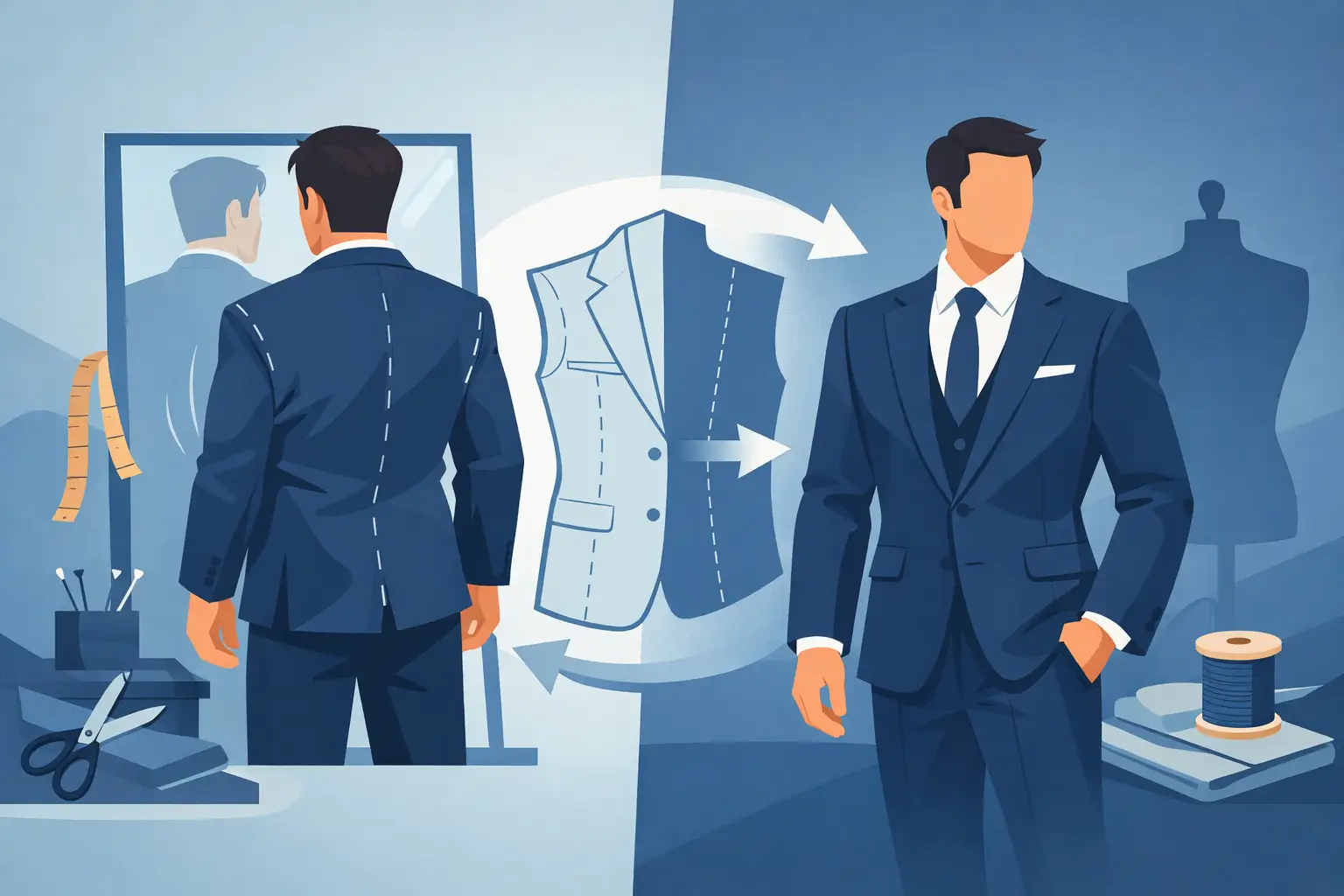
A powerful chest, developed shoulders and a disciplined waistline should make a suit look exceptional. Yet, for many athletic men, ready-to-wear tailoring creates the opposite effect: a jacket that fits the shoulders pulls across the chest, while the waist collapses into excess cloth. This case study suit alteration for athletic build shows how considered alterations can turn a promising suit into a sharper, more natural expression of the wearer.
The client required a suit for a series of high-level business engagements, where the brief was understated authority rather than conspicuous fashion. He had already found a well-made two-piece in a cloth and colour he liked. The challenge was making its proportion work with a frame shaped by regular strength training.
The brief: strength without strain
The client was broad through the upper back and chest, with a pronounced shoulder line and a notably smaller waist. His jacket size accommodated the chest when standing still, but it looked square through the middle and restricted when he reached forwards or sat down. The sleeves were also too full, while the trousers sat well at the thigh but carried excess volume below the knee.
This is a familiar issue with athletic builds. Most ready-to-wear jackets are cut to a standard chest-to-waist relationship. When a man has a more dramatic drop between those measurements, buying up in size may solve one problem while introducing several others. The garment can look borrowed rather than chosen.
The goal was not to make the suit aggressively tight. A close-fitting jacket that pulls at the button, opens at the chest or restricts the arms is not refined. The aim was clean suppression at the waist, a controlled chest, and enough ease for the client to move through a full working day with composure.
Establishing what the garment could become
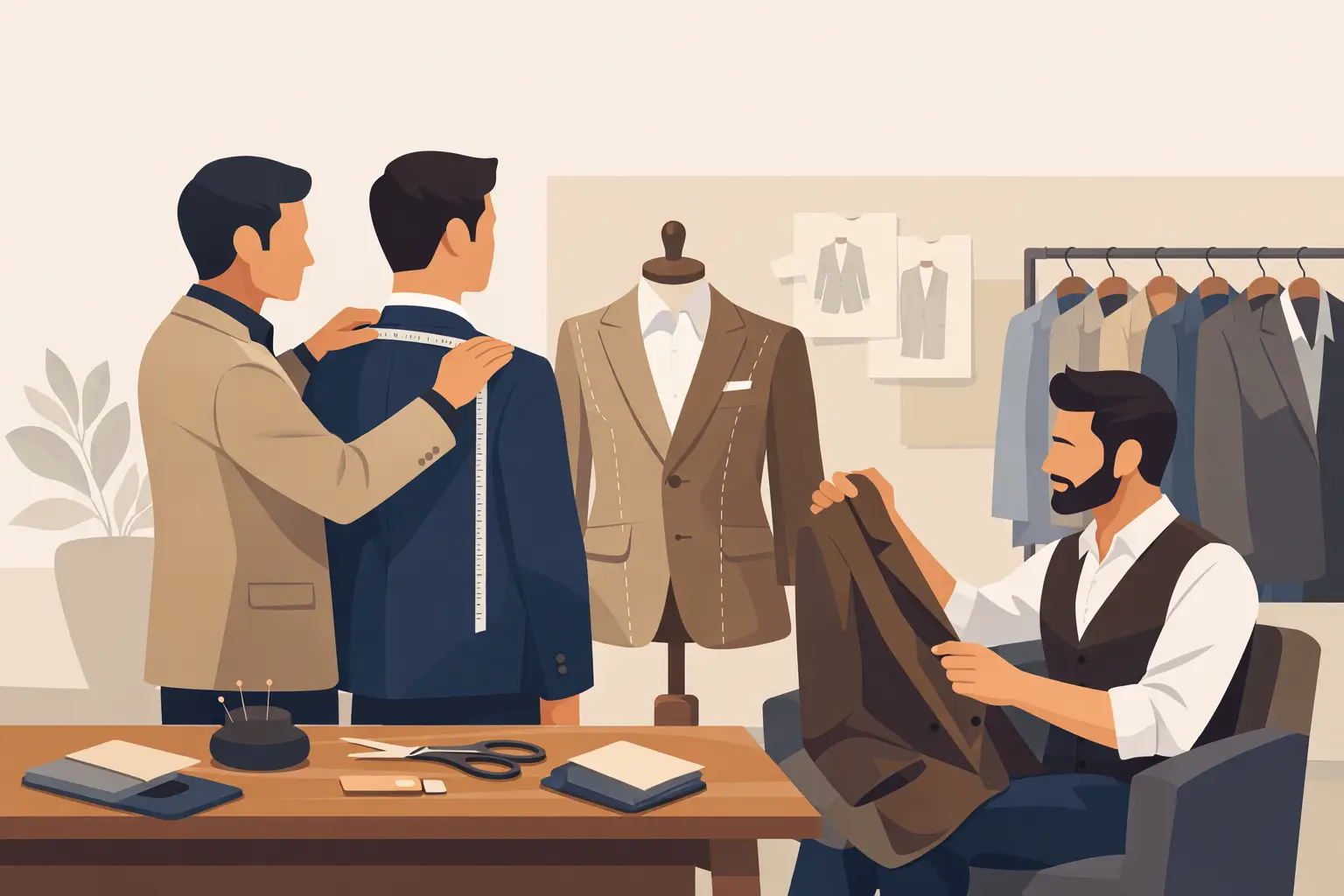
Before a needle touched the cloth, the jacket was assessed on the client rather than simply measured flat on a table. This distinction matters. A garment must be read in motion: buttoned and unbuttoned, seated and standing, with the arms relaxed and then extended.
The shoulders were the decisive factor. They sat close to the client’s natural shoulder point and the jacket collar lay cleanly against the neck. That gave the alteration real potential. Altering shoulder width or rebuilding a poorly fitting collar is possible in certain circumstances, but it is among the most complex and costly work in tailoring. If the jacket had been too narrow across the upper back, no amount of waist suppression would have produced the right result.
There was sufficient inlay – the reserve cloth inside the seams – to release a little room through the upper body. More importantly, the construction of the jacket allowed the work to be carried out without compromising its balance. A less generously made garment may offer very limited scope. This is why an honest fitting is essential: alterations can refine a good starting point, but they cannot always persuade an unsuitable jacket to behave like bespoke tailoring.
Case study suit alteration for athletic build
The first adjustment was subtle but fundamental. The side seams were released slightly through the chest and upper back, relieving the tension that appeared when the client moved his arms forwards. Rather than adding width everywhere, the release was concentrated where his physique required it. The jacket retained its close visual line while gaining practical comfort.
The waist was then shaped from the side seams and centre back. This had to be done with restraint. Too much suppression can cause the vents to kick open or the front edges to pull away from the body. The final line followed the client’s natural contours, creating a stronger V-shaped silhouette without turning the jacket into a performance garment.
Attention then moved to the sleeve. Athletic clients often find that a sleeve may feel tight at the bicep yet look too wide at the cuff. The solution is not merely to narrow the sleeve from top to bottom. Its pitch – the angle at which it is set into the armhole – must correspond with the wearer’s natural posture. Here, the sleeve was refined to remove surplus cloth through the forearm, while retaining the necessary ease through the upper arm. The result was a cleaner line when the arms rested at the side, without the drag lines that can appear during movement.
The jacket length remained unchanged. Shortening it would have made the client’s torso appear broader and risked unsettling the garment’s relationship with the trouser rise. A well-balanced jacket should frame the body, not stop abruptly above it. The existing length gave the silhouette a composed, elongated appearance once the waist had been properly shaped.
For the trousers, the work was equally measured. The seat and thigh already had enough room, which was important for comfort when sitting. The legs were tapered gradually from the knee, removing the excess that had interrupted the suit’s otherwise tailored appearance. The hem was set with a modest break, allowing the trouser to sit neatly over the shoe without bunching.
Why the smallest details changed the whole impression
At the final fitting, the difference was not simply that the suit looked smaller. It looked more deliberate. The chest sat smoothly beneath the lapels, the jacket buttoned without tension, and the waist appeared defined without being pinched. The sleeves followed the client’s arms rather than hanging around them, while the trousers gave the lower half the same precision as the jacket.
This balance is particularly valuable in professional settings. An athletic build can easily cause a suit to read as either overly tight or overly loose when its proportions are not properly managed. Neither supports the image of calm confidence that a business wardrobe should convey. Correct alteration allows physical presence to register as poise.
The client also reported a practical change: he could drive, work at a desk and move through meetings without becoming conscious of the jacket. That is the test of successful tailoring. The wearer should feel the garment’s assurance, not its restrictions.
When alterations are the right choice
An alteration is an excellent route when the cloth, shoulder fit and overall quality of a suit are right, but the garment needs to be brought closer to the body. It can be particularly effective for clients whose training has changed their proportions since purchasing a suit, or for those who find standard sizing inconsistent between brands.
There are limits, however. A jacket that is dramatically too tight across the chest, too narrow at the shoulders or too short in the body may not have enough reserve cloth or structural balance to justify extensive work. Equally, a heavily canvassed jacket, a patterned cloth, or a garment with working buttonholes may require more time and expertise. The best decision depends on the garment’s construction, not just its label or original price.
For men who repeatedly encounter the same fitting issues, bespoke or made-to-measure tailoring offers a more exact starting point. The chest, shoulder expression, armhole, waist suppression and trouser shape can be determined before the suit is cut. But expert alterations remain a valuable way to preserve a garment with potential and give it the precision its wearer deserves.
A suit should not ask an athletic man to disguise his build or tolerate compromise. With careful assessment and meticulous workmanship, it can honour the shape he has earned while presenting it with genuine sartorial sophistication.