A trouser can be cut from exceptional cloth and finished with immaculate detail, yet still feel wrong the moment you sit down. Often, the issue is not the leg shape or waist measurement. It is the rise. This guide to trouser rise styles explains the proportion that quietly determines comfort, posture and the overall authority of a tailored silhouette.
The rise is one of the first decisions worth discussing when commissioning trousers for a business suit, wedding suit or formal wardrobe. It affects where the waistband sits on your torso, how the trouser drapes through the seat and thigh, and how convincingly it works with a jacket. Get it right and the result looks composed without appearing contrived. Get it wrong and even a beautifully tailored suit can lose its balance.
What trouser rise actually means
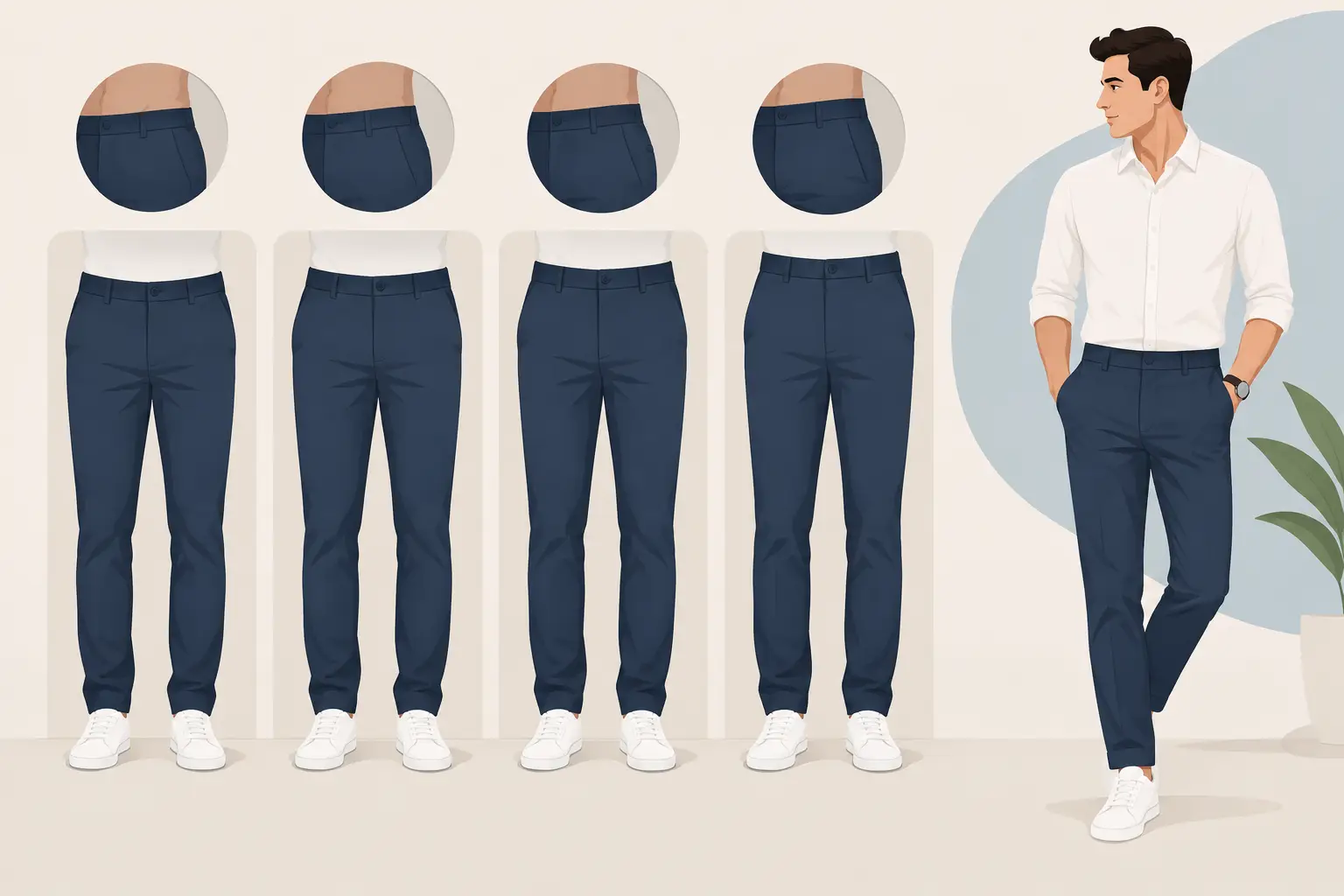
The rise is the distance from the centre of the crotch seam to the top of the waistband. In practice, it determines the height at which trousers sit on the body. The front rise shapes the visual line from waistband to crotch, while the back rise is crucial for comfort, coverage and clean movement when sitting or walking.
Rise should not be confused with waistband size. A pair of trousers can have the correct waist measurement and still be uncomfortable if the rise is too short, too long or incorrectly shaped for the wearer. Nor is it simply a matter of choosing between fashionable labels. A rise must work with your torso length, seat shape, preferred jacket length and the occasion for which the garment is being made.
In tailored clothing, this is why fitting matters. Measurements provide a starting point, but the cutter must also assess stance, pelvic tilt, body proportion and how you naturally carry yourself. The aim is not to force the body into a fashionable template. It is to create a line that appears effortless because it has been considered precisely.
Guide to trouser rise styles: low, mid and high
Low-rise trousers
Low-rise trousers sit low on the hips, well below the natural waist. They became strongly associated with casual and fashion-led menswear, particularly slim jeans and contemporary separates. On the right wearer, they can create a lean, youthful impression, especially when paired with shorter knitwear, relaxed shirts or an unstructured jacket.
Their limitations become clear in formal tailoring. A low rise shortens the visual length of the trouser front and can leave a visible gap between the trouser waistband and a buttoned jacket. It also offers less security through the seat, particularly when sitting, and may pull at the crotch if the cut is too close. For most business and ceremonial suits, it is rarely the most elegant choice.
This does not mean low rise has no place. It can suit a casual tailored trouser worn without a jacket, or a client with a notably long torso who prefers a more modern stance. The key is restraint: low should not mean restrictive, nor should it compromise the clean fall of the cloth.
Mid-rise trousers
Mid-rise trousers generally sit between the hips and the natural waist, often just below the navel. For many men, this is the most adaptable and dependable option. It gives sufficient coverage through the seat, creates a balanced break between jacket and trouser, and remains comfortable throughout a working day.
A well-cut mid rise is especially effective for business suits. It supports the clean vertical line expected of tailoring while retaining a contemporary ease. With a two-piece suit, it avoids the exaggerated formality some men associate with higher-waisted trousers, yet looks considerably more polished than a low-rise alternative.
The distinction lies in the cut, not only the position of the waistband. A mid-rise trouser with a properly shaped back rise will sit securely without pulling. Its waistband should remain stable as you move, and the front should not collapse into diagonal creases beneath the fly. This is where thoughtful construction is felt as much as seen.
High-rise trousers
High-rise trousers sit at, or close to, the natural waist. They lengthen the leg line, provide generous coverage and offer a particularly refined relationship with a tailored jacket. In classic British tailoring, a higher rise has long been valued because it allows the jacket and trousers to meet cleanly, preserving a continuous, elegant silhouette.
For weddings, formal occasions and clients drawn to timeless sartorial character, a high rise can be exceptionally flattering. It is also a strong choice for men with longer legs and a shorter torso, as it brings the body’s proportions into greater harmony. Pleats, side adjusters and braces often work particularly well with this style, lending the trousers depth and presence without unnecessary bulk.
High rise does require confidence in the fitting. If cut too high or too full, it can feel theatrical rather than elegant. If the waistband is positioned above the wearer’s true natural waist, it may become uncomfortable when seated. The finest result is one that feels natural on the body while creating a composed, elongated line.
Choosing the right rise for your proportions
There is no universally correct rise. The most suitable choice depends on your frame, your wardrobe and the image you wish to project. The useful question is not, “What is fashionable?” but, “What creates the strongest proportion on me?”
Men with a longer torso often benefit from a mid or higher rise, which visually lengthens the legs and brings the body into balance. Conversely, a shorter torso may suit a carefully judged mid rise, particularly if a very high waistband would make the upper body appear compressed. Height alone is not decisive. A tall man with a long torso can benefit from a higher rise just as much as a shorter man can.
The seat and thighs matter too. A man with a fuller seat needs adequate back-rise length and curvature. Without it, the waistband may dip at the rear and the cloth will strain across the seat. Someone with a flatter seat may need a different balance to prevent excess fabric from pooling beneath the waistband. These are technical adjustments that ready-to-wear trousers rarely address with enough precision.
Your jacket is equally relevant. A traditionally proportioned jacket, particularly one designed to cover the seat, usually pairs best with a mid or high rise. Shorter, more casual jackets can accommodate a lower rise, although the combination should still avoid exposing shirt when the jacket buttons. Good tailoring considers the suit as one composition, not two garments selected in isolation.
Rise, pleats and the character of the trouser
Trouser rise influences more than fit. It informs the garment’s entire character. A flat-front, mid-rise trouser has a clean, modern clarity that works beautifully in a sharp business suit. A higher rise with forward pleats offers more room through the thigh and produces a richer, more expressive drape, particularly in flannel, fresco, cavalry twill or heavier wedding cloths.
Pleats are not inherently formal, old-fashioned or forgiving. Their success depends on scale, placement and the way they relate to the rise. On a higher-rise trouser, they can allow the fabric to fall cleanly from the waistband rather than pulling across the upper thigh. On a low rise, deep pleats can appear misplaced because there is insufficient vertical space for them to settle elegantly.
Side adjusters and braces also deserve consideration. Both work best when trousers are held at their intended position rather than cinched tightly with a belt. Braces are particularly effective with high-rise formal trousers because they preserve the uninterrupted line of the waistband and prevent it from slipping as the day progresses. For a wedding, this can make a meaningful difference from ceremony to evening celebration.
Signs that your trouser rise is wrong
An incorrect rise announces itself through movement and creasing. If the trouser pulls tightly into the crotch when you sit, the rise may be too short. If the waistband slides down during the day, it may be sitting on the wrong part of the body or lack the necessary shaping. If excess cloth gathers beneath the seat, the back rise may be too long or too flat for your build.
Visual clues matter as well. A pronounced U-shaped sag at the front can indicate too much rise length, while sharp diagonal lines extending from the crotch towards the hips often suggest insufficient room or an incompatible balance. Do not assume that taking in the waist will solve these problems. Rise is a structural element, and alterations are limited when the original cut is fundamentally wrong.
This is one reason bespoke trousers offer such value. At Manndiip, the fitting process considers the whole silhouette: how you stand, where you prefer the waistband to sit, the line of the jacket and the way the garment must perform across a real day. Precision is not a decorative extra. It is what allows the wearer to look at ease.
Deciding during a fitting
When trying on trousers, stand naturally before looking in the mirror. Then sit, walk and raise one knee as if taking a stair. The waistband should stay in place without biting, the seat should remain covered, and the cloth should recover smoothly when you stand again. A good rise does not demand your attention after the first few minutes.
Be clear about how you will wear the garment. Trousers for a boardroom suit may call for a crisp mid rise and restrained flat front. A three-piece wedding suit may benefit from a higher rise that supports the waistcoat and keeps the shirt neatly contained. Country tailoring may invite a fuller rise and pleated front for comfort in heavier cloth and more active wear.
The most elegant trousers do not follow a formula. They establish proportion, allow movement and give the jacket the foundation it needs. Choose the rise that serves your body and your life, and the rest of the silhouette will begin to look considered almost automatically.