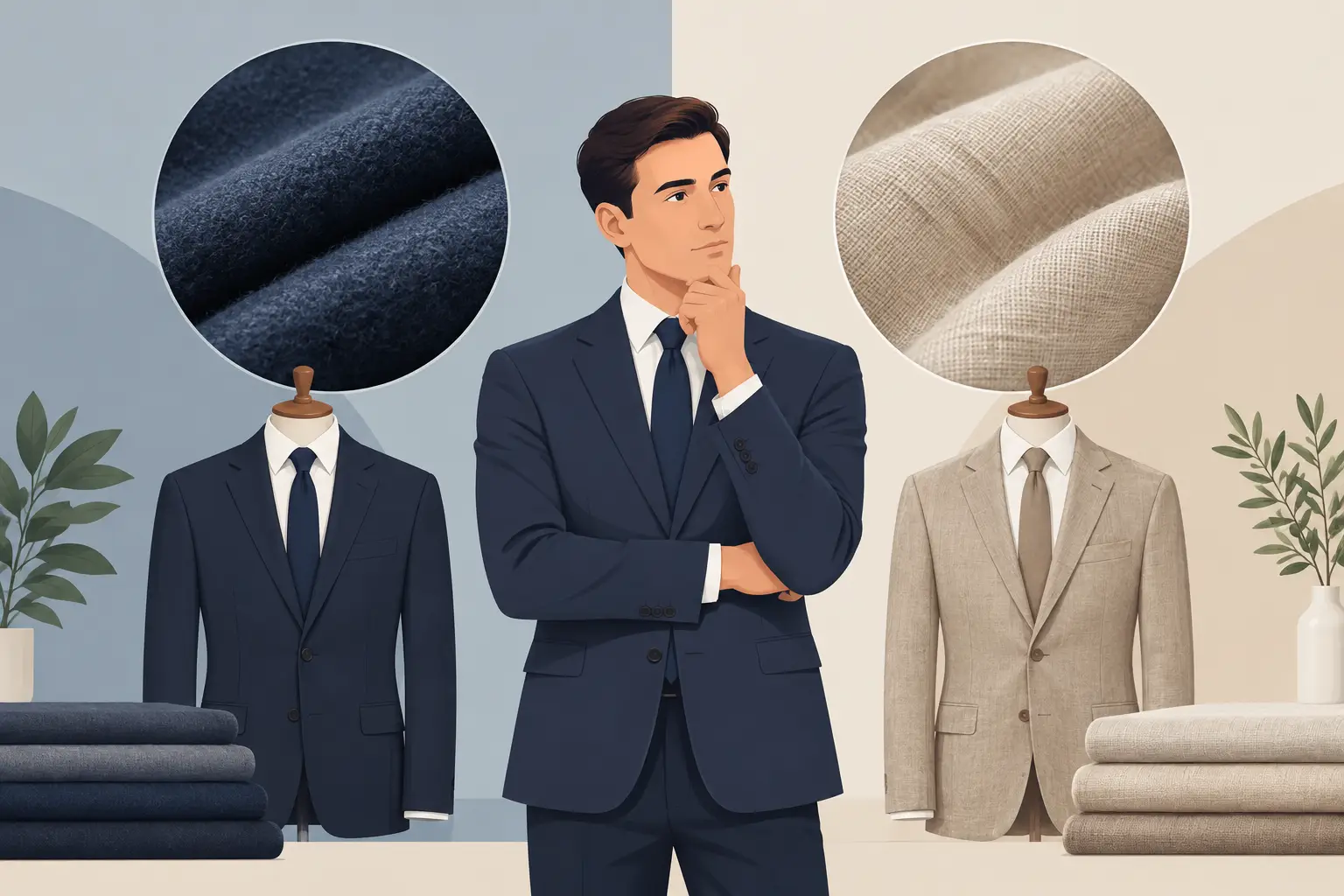
A suit cloth does more than set the temperature. It determines the line of the lapel, the way trousers fall from the hip, and whether you arrive looking composed after a long day. In the question of wool versus linen, the better choice is rarely about one fabric being superior. It is about choosing the cloth that serves your setting, style and standard of finish.
For a boardroom suit that must hold its shape from first meeting to last drink, wool is usually the natural answer. For a summer wedding, Mediterranean holiday or garden celebration where ease matters as much as polish, linen has a character no other cloth quite replicates. The distinction lies in understanding what each fabric is designed to do.
Wool versus linen for tailored suits
Wool is tailoring’s foundation for good reason. Its fibres have a natural spring, allowing the cloth to recover after movement and retain a clean, elegant silhouette. Linen is made from flax, a firmer fibre with very little elasticity. It feels crisp, dry and beautifully breathable, but it creases readily because it does not bounce back in the same way.
That is not a flaw to be designed out. A lightly rumpled linen suit can look distinguished, relaxed and entirely intentional. The key is to recognise that wool communicates refinement through structure, while linen communicates refinement through ease.
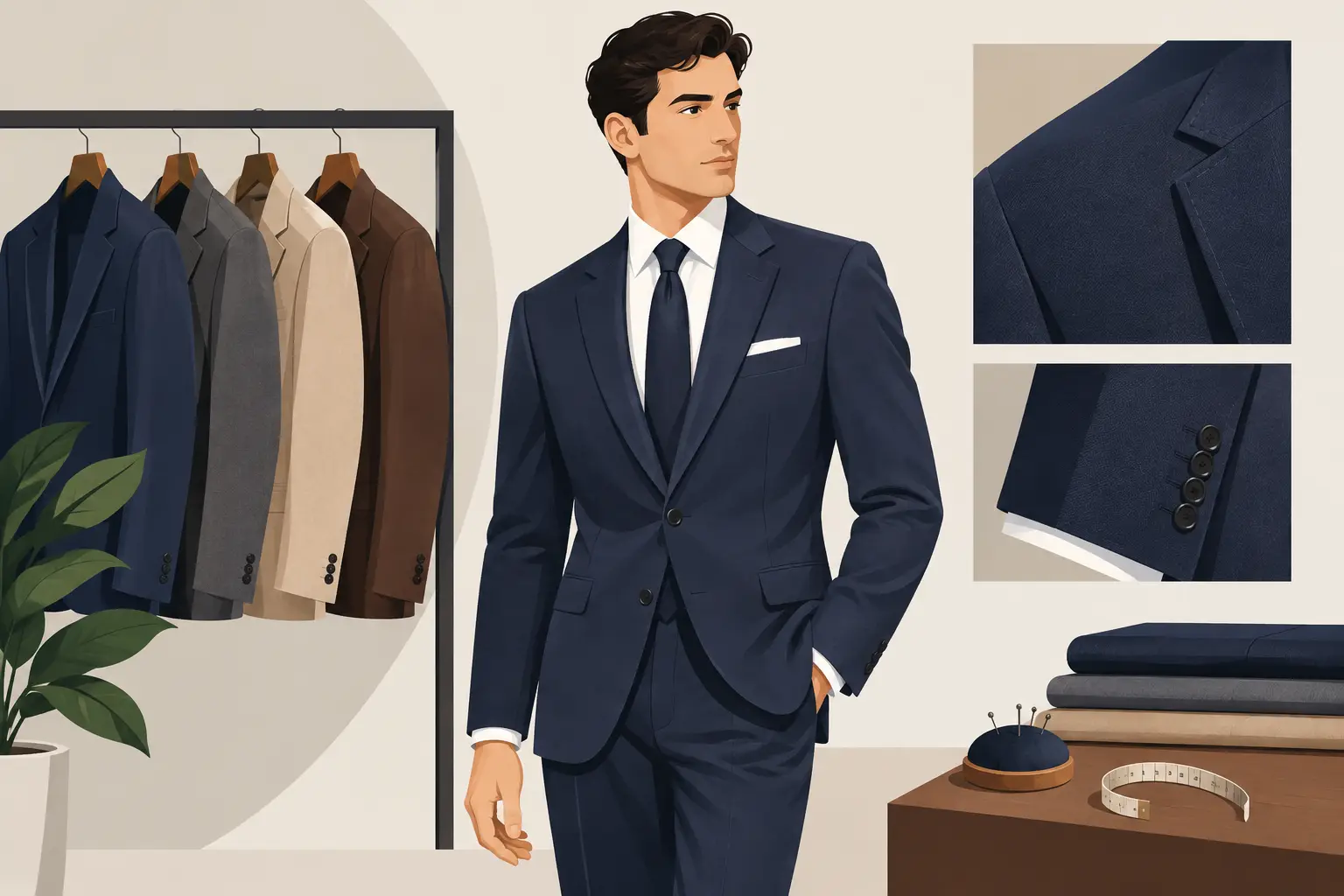
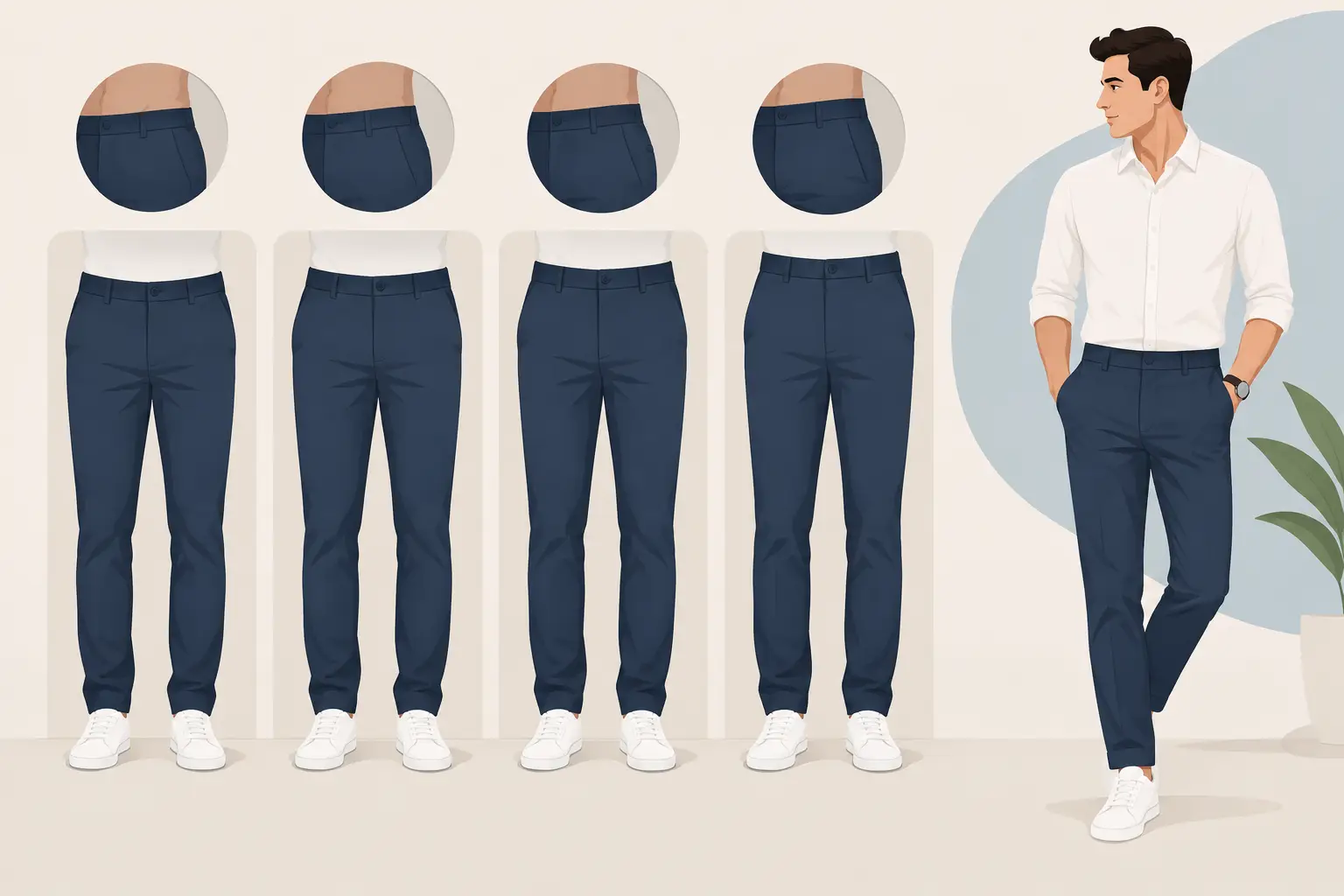
A precisely cut garment elevates both. The shoulder line, chest balance and trouser shape must work with the fabric rather than against it. A cloth with body can support a more defined construction; a lighter, more relaxed cloth benefits from a softer interpretation of the same principles.
Wool: the cloth of year-round authority
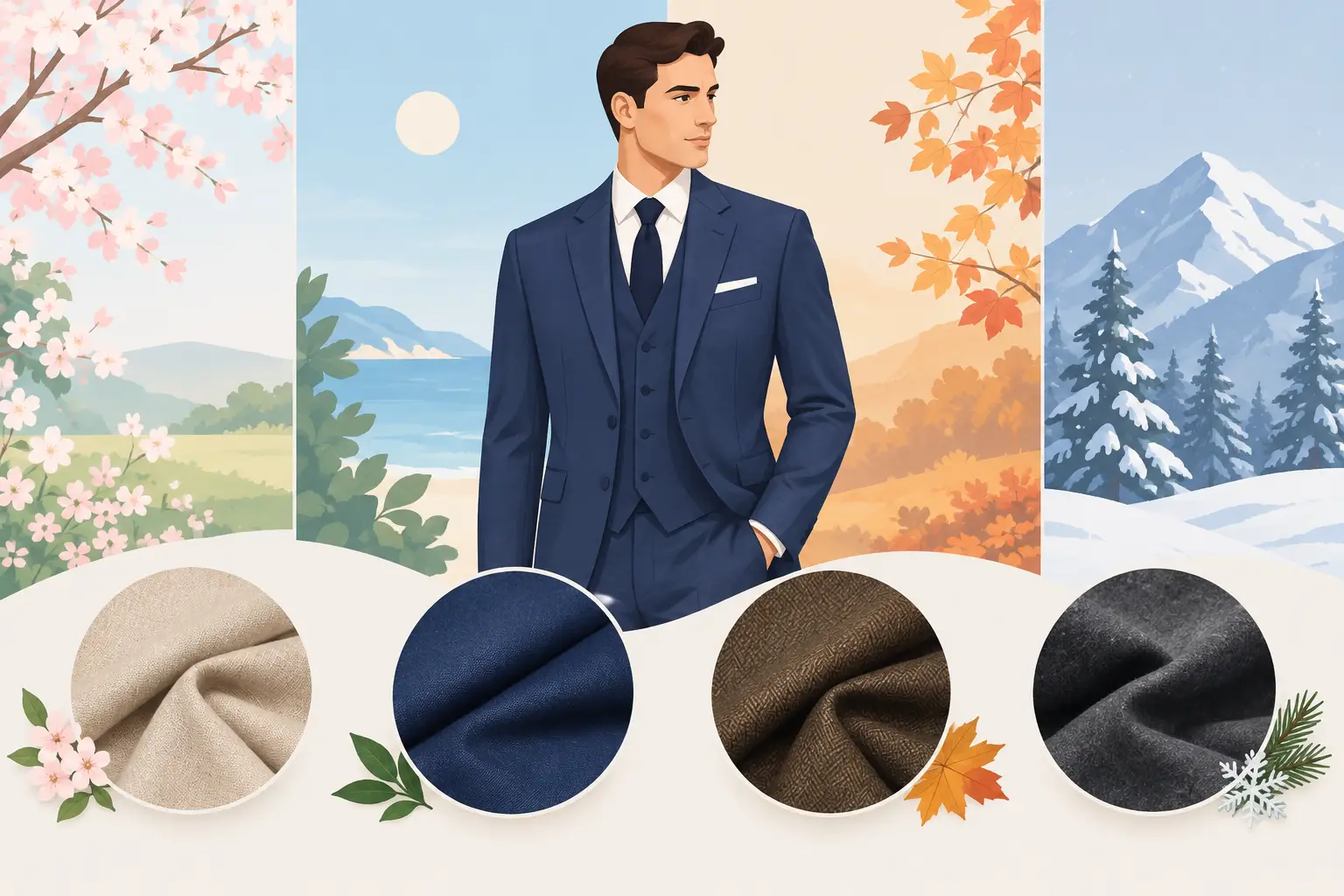
A well-chosen wool suit remains one of the most useful garments in a man’s wardrobe. It has enough resilience for regular wear, enough drape for an elegant line, and a breadth of weights and weaves that makes it suitable for almost every season.
The word wool can suggest a heavy winter cloth, but this overlooks the sophistication of high-twist and tropical wools. These lighter fabrics are woven for airflow and can be remarkably comfortable through a British summer, particularly in navy, charcoal or mid-grey. Their dry handle and crease resistance make them excellent for business travel, weddings with a formal dress code, and days that move from office to dinner.
For business tailoring, wool offers the most composed result. It responds well to careful canvassing and pressing, allowing the lapels to roll cleanly and the jacket front to sit close to the body without appearing tight. Trousers retain their crease more successfully, which matters when your suit is expected to look as considered at 6pm as it did at 8am.
Wool also gives greater scope for formality. A fine worsted cloth in a deep navy or charcoal reads as assured and professional. Flannel adds softness and depth for autumn and winter. A textured wool, tweed or hopsack introduces personality while retaining the discipline of tailored clothing. One fibre can support an entire wardrobe because its finish changes so dramatically with the weave.
Its trade-off is warmth. A heavier wool cloth, especially one with substantial lining or a close-fitting jacket, can feel too insulating in high heat. The solution is not automatically linen. It may be a lighter wool in an open weave, a half-lined jacket, or a garment with reduced internal structure.
Linen: effortless elegance with visible character
Linen excels when the weather, venue and mood call for lightness. It absorbs moisture, dries quickly and allows air to move freely, making it one of the most comfortable fibres in genuine heat. Its surface has a subtle texture that catches the light beautifully, lending pale colours such as stone, tobacco, sky blue and soft olive a depth that smooth cloths cannot always achieve.
A linen suit is particularly compelling for a destination wedding, summer party, country-house event or warm-weather reception. Worn with an open-necked bespoke shirt, it offers a level of sartorial sophistication that feels relaxed rather than overly formal. With a silk tie and polished loafers, it can still carry a ceremony with distinction.
Creasing is the decisive consideration. Linen will crease at the elbows, behind the knees and across the lap after sitting. Trying to maintain a perfectly pressed appearance is likely to cause frustration. Instead, choose linen when a little lived-in texture enhances the occasion. The best linen tailoring looks crisp when first worn, then settles into an individual, effortless character as the day unfolds.
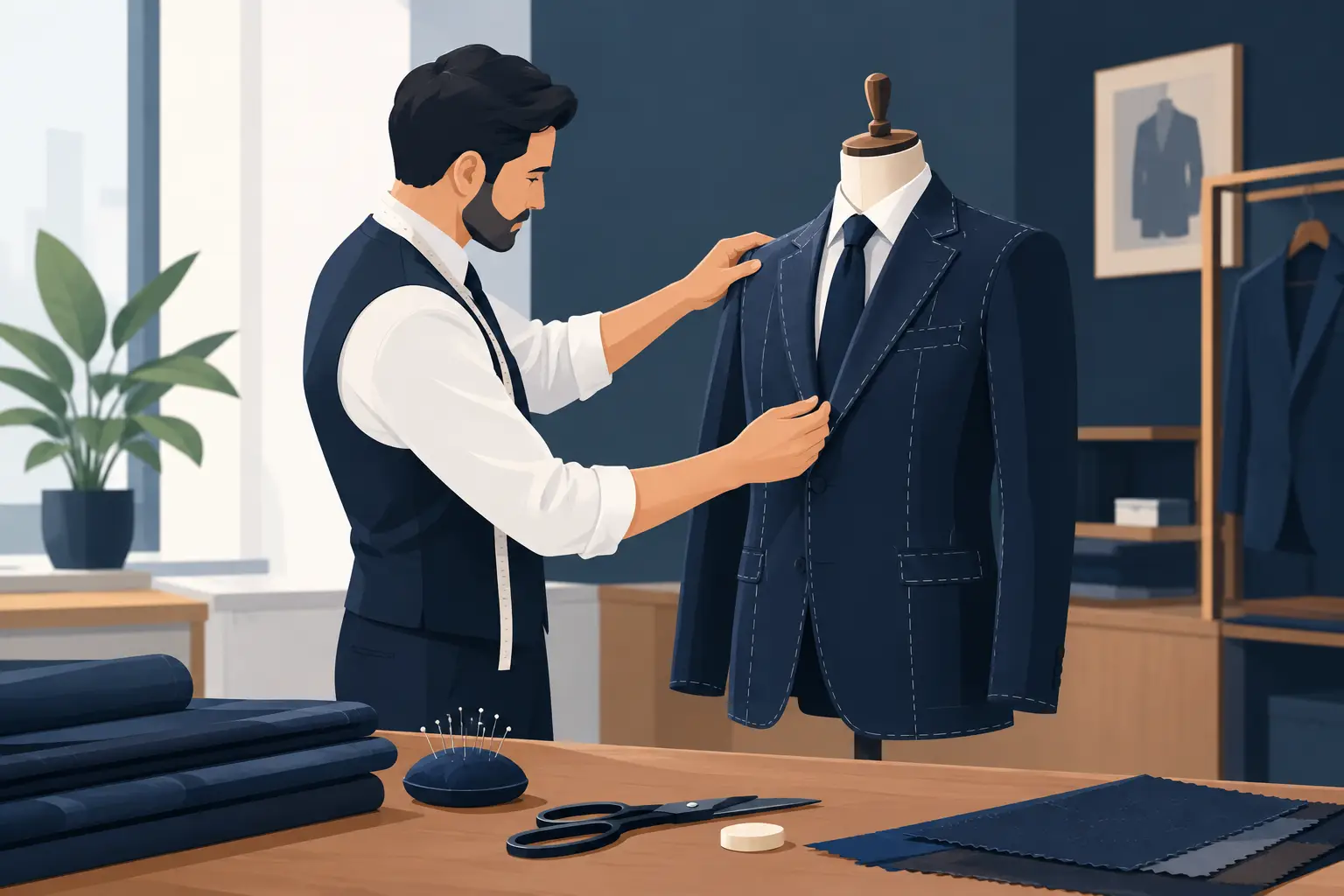
Cloth weight matters here too. Very lightweight linen can appear transparent or collapse too easily if it is poorly constructed. A quality linen with enough substance will drape more handsomely and wear with greater confidence. At Manndiip, the cut would be considered alongside the cloth, ensuring the garment retains a flattering shape while respecting linen’s naturally relaxed nature.
Drape, creases and construction
Drape is where the difference becomes most visible. Wool tends to fall in smooth, fluid lines. It has enough weight and flexibility to follow the body, which helps create a flattering chest and a trouser leg that hangs cleanly. This makes it especially forgiving for clients who want a sharply defined silhouette without stiffness.
Linen has a crisper, more matte appearance. It does not cling, which can be welcome in warm weather, yet its firmer nature means poor fit is quickly exposed. A linen jacket that is too tight across the back or too short through the body will look strained once it begins to crease. Precise measurements and thoughtful ease are not luxuries in this cloth; they are essential.
Construction should be lighter for linen. A softly shaped shoulder, reduced lining and a less padded chest create a jacket that moves naturally and keeps the wearer cooler. Wool can accommodate this treatment too, but it also performs beautifully with a more structured shoulder and fuller canvas, particularly for business and formalwear.
Choosing by occasion, not just season
If you are commissioning one suit to cover professional life, weddings, dinners and travel, choose wool. A medium-weight navy or charcoal wool suit is the most versatile investment because it reads appropriately in nearly every formal setting and can be styled differently through shirts, ties and pocket squares.
If you already own that foundation, linen is an intelligent second or third suit. It expands the wardrobe rather than duplicating it. A stone or tobacco linen suit brings a different mood to summer events, while a deep navy linen can be a refined alternative for less formal evening occasions.
For a British wedding, consider the full picture before deciding. A July ceremony may still involve a cool church, a breezy reception and a late evening outdoors. Lightweight wool offers a safer all-day option when the dress code is formal. Linen is exceptional for a relaxed celebration, particularly where the couple have embraced a lighter palette and the venue supports it.
A wool-linen blend offers a worthwhile middle ground. It often retains more crease recovery than pure linen while preserving a textured, breathable finish. It is not a replacement for either pure fibre, but it can be an excellent choice for a client who loves linen’s visual character and wants a little more day-long composure.
Care that protects the tailoring
Both fabrics benefit from rest between wears. Hang the jacket on a broad, shaped hanger and allow moisture to escape before placing it back in the wardrobe. Brush wool lightly to remove surface dust; avoid excessive dry cleaning, which can diminish the cloth over time.
Linen may be steamed to soften deeper creases, but some texture should remain. Pressing it into absolute flatness can remove the very quality that makes the cloth appealing. For either fabric, professional pressing and precise alterations are preferable to improvised repairs that compromise the garment’s line.
The right suit should make the decision feel obvious when you put it on. Choose wool when you want controlled drape, versatility and enduring authority. Choose linen when the occasion welcomes lightness, texture and a more relaxed expression of elegance. Then let the cut do what fabric alone cannot: make the garment unmistakably yours.