A suit can look expensive on the hanger and still fall short the moment you put it on. The shoulder sits too wide, the jacket collar lifts, the trouser break feels heavy, and what should project authority instead feels slightly borrowed. That is exactly where made to measure suits begin to justify themselves. They are not simply a luxury purchase. For many men, they are the difference between wearing a suit and being properly dressed.
Why made to measure suits feel different
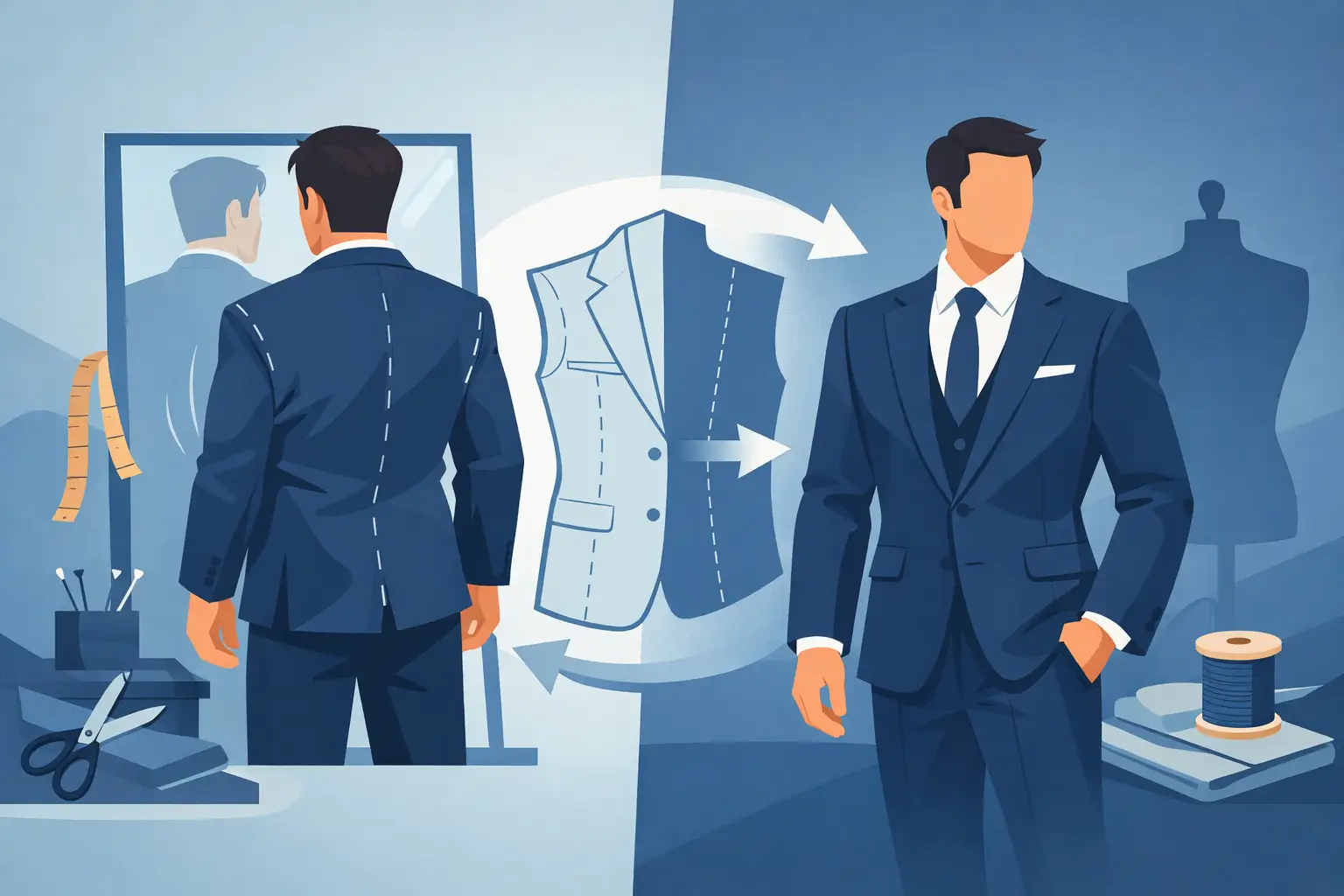
The appeal starts with proportion. Off-the-peg tailoring is built to average measurements, and very few men are truly average across chest, shoulder, waist, seat, sleeve, and posture. A made to measure garment refines an existing pattern to your body, which means the fit is guided by how you are actually built rather than how a standard size chart assumes you should be built.
That changes more than comfort. It changes line, balance, and presence. A well-cut jacket should sit cleanly through the shoulder, follow the chest without strain, and shape the waist without pulling. Trousers should complement the rise and line of the jacket rather than simply matching the cloth. When those elements are calibrated properly, the result is quieter than many expect. Not flashy. Just correct.
For a professional wardrobe, that correctness matters. In business settings, a precise fit reads as composure. For weddings and formal events, it gives polish without looking overworked. For country wear and tweed, it keeps heavier cloths elegant rather than cumbersome.
Made to measure vs bespoke
This is where the distinction deserves honesty. Made to measure and bespoke are not interchangeable, even though they are often spoken about as if they are.
Made to measure starts from a pre-existing block pattern that is adjusted to your measurements and fit requirements. Bespoke begins from scratch, with an individual paper pattern drafted for your body and posture. Bespoke typically allows for deeper architectural changes to the garment and a greater degree of handwork throughout construction.
That does not make made to measure the lesser option in every case. It depends on what you need. If you want an elegant business suit with strong personalisation, a cleaner timeline, and a better fit than ready-to-wear can usually offer, made to measure is often the right level of tailoring. If your build is particularly unusual, your preferences are highly specific, or you want the fullest expression of tailoring craft, bespoke may be the better route.
The strongest made to measure houses understand this distinction and treat the process with the seriousness it deserves. Precision in measuring, pattern adjustment, cloth selection, and finishing still determines the final result.
Where the value really lies
A common mistake is to judge made to measure solely by price. The more useful question is cost per wear, paired with the visual return you get every time you put the suit on.
A well-made suit that is worn regularly for work, important meetings, dinners, weddings, and seasonal events earns its place quickly. More importantly, it avoids the cycle of compromise familiar to many men who buy several mediocre suits trying to solve a fit problem that was never going to be solved off the peg.
The value also sits in confidence. Not theatrical confidence, but the quieter sort that comes from not thinking about your clothes once you are in them. You are not adjusting your cuffs, tugging your jacket front, or wondering whether the trousers are sitting correctly. The suit does its job, and you can focus on your own.
What to expect from the process
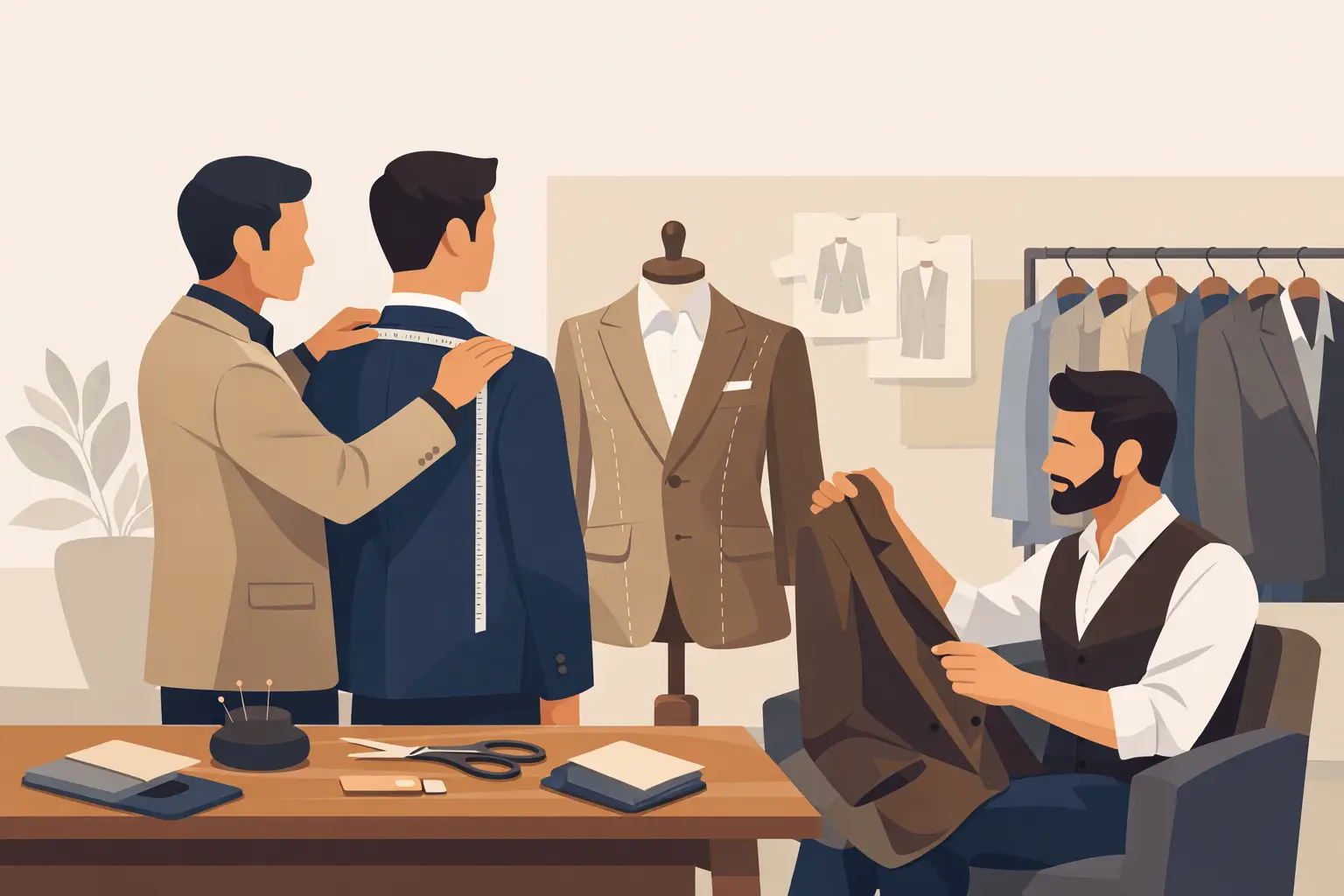
The experience should feel considered, not rushed. Your first appointment ought to cover more than chest and waist measurements. A skilled tailor will assess posture, shoulder slope, arm position, trouser line, and the way you naturally stand. Those details are not decorative. They affect how the coat hangs and how the whole silhouette settles in motion.
Cloth selection comes next, and this is where personal style meets practical judgement. A dark navy or charcoal remains a wise foundation for business. Mid-blue can feel more contemporary, especially in lighter seasonal cloths. For weddings, the right choice depends on venue, time of year, and the role you are playing. A groom may want presence, but not at the expense of longevity. A morning suit or black tie ensemble requires different considerations again.
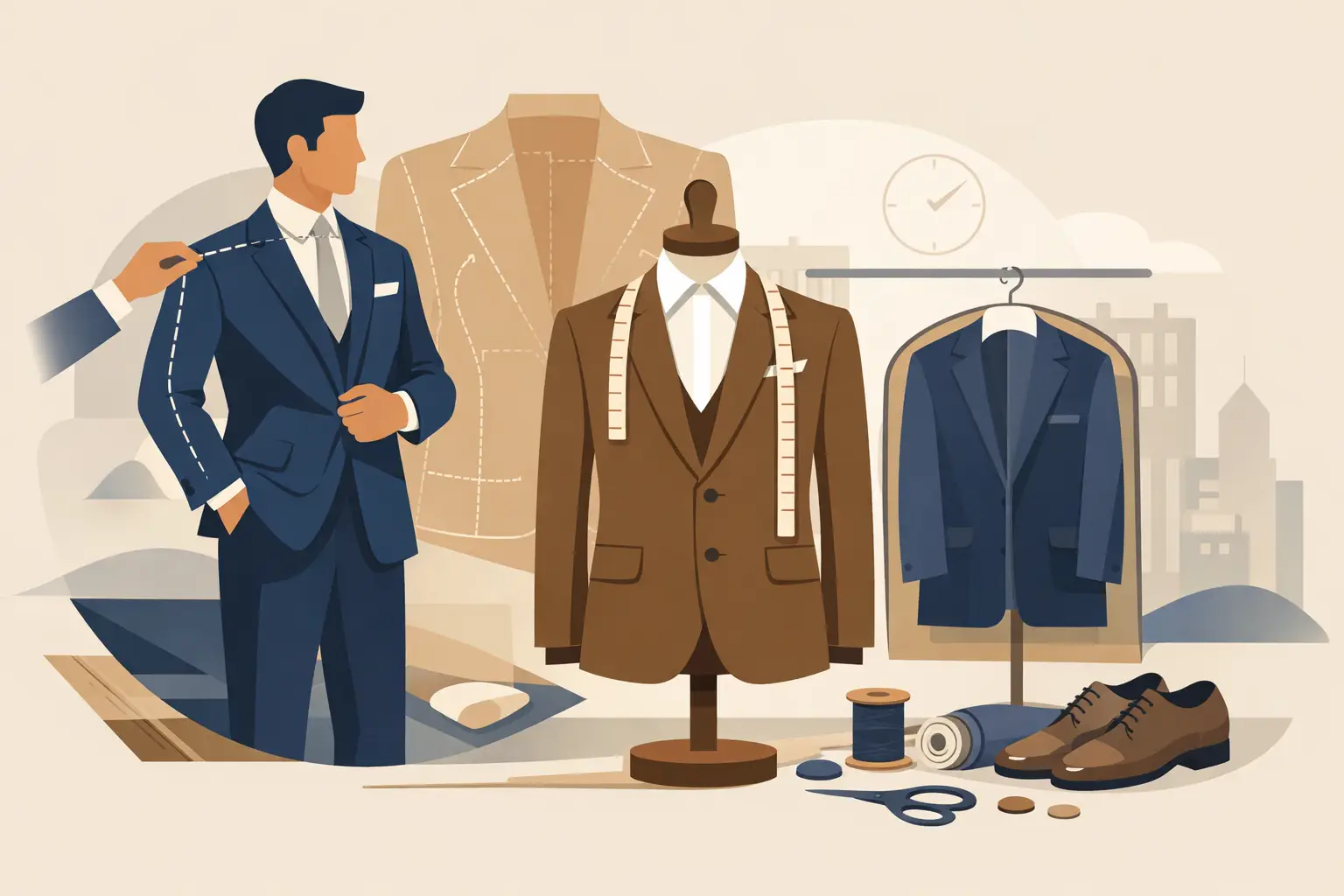
Construction details matter more than many first-time clients realise. Lapel width, button stance, jacket length, pocket style, trouser side adjusters or belt loops, pleats or flat front, half lining or full lining – each affects both look and wearability. The best guidance is never trend-led for its own sake. It should be rooted in proportion, occasion, and longevity.
At Manndiip, that balance between technical precision and personal styling is central to the experience. The goal is not simply to produce a suit that fits, but to shape one that reflects the man wearing it.
The details that separate a good suit from a forgettable one
Fit is the foundation, but finishing is what gives tailoring depth. A suit can measure correctly and still feel lifeless if the cloth, structure, and detailing are handled without care.
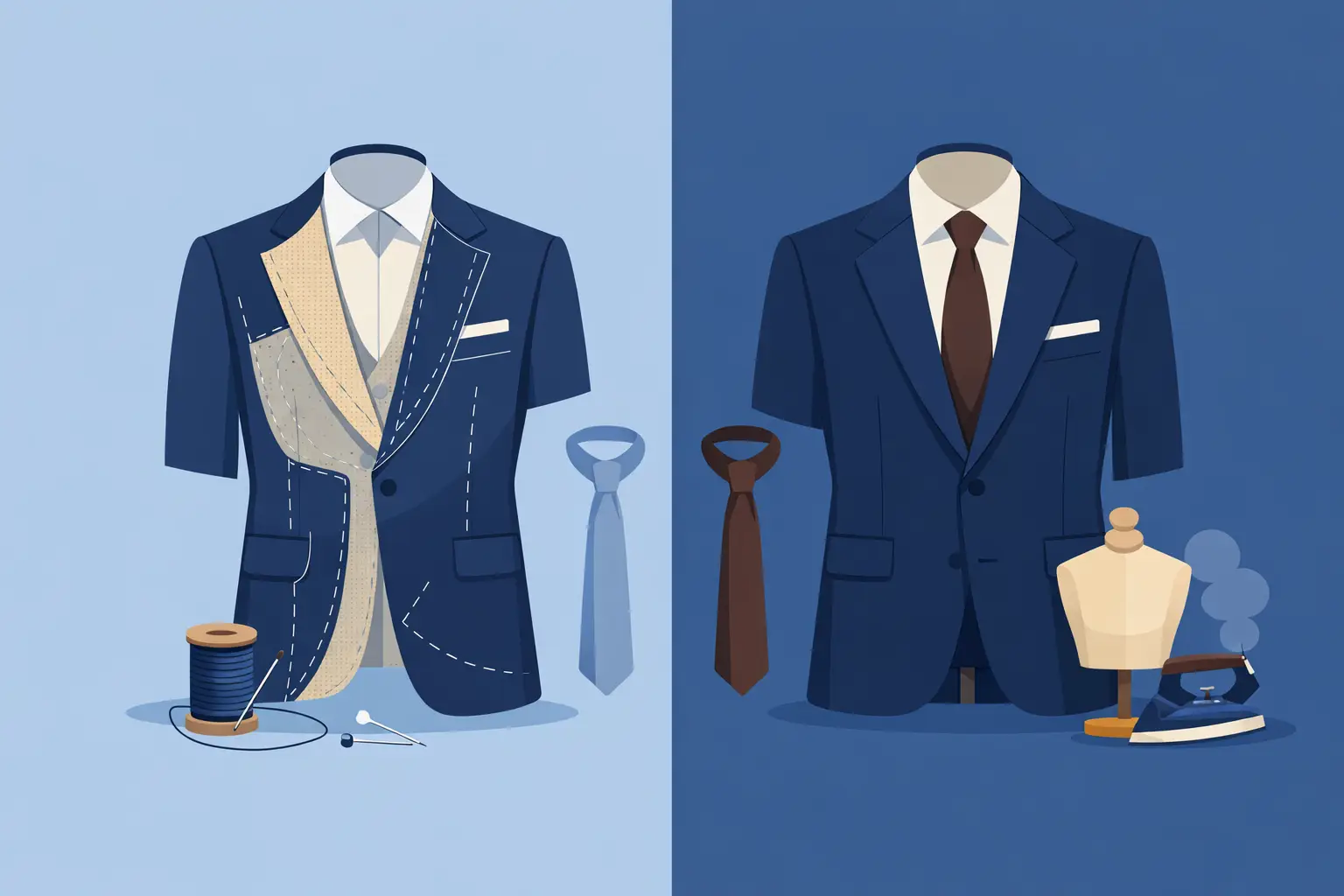
Canvas construction, for instance, influences how a jacket drapes and ages. A canvassed or partly canvassed jacket tends to move with greater fluidity than a fused equivalent and often develops more character over time. The quality of the chest piece, the setting of the collar, the clean fall of the sleeve, and the precision of the buttonholes all contribute to the final impression, even if the wearer cannot immediately name each component.
There is also the matter of restraint. True sophistication rarely comes from piling on detail. It comes from choosing the right details and allowing them to serve the overall garment. A peaked lapel on a wedding suit can be striking and elegant. The same lapel on a conservative office suit may feel too assertive, depending on your role and environment. A bold check can look excellent in tweed country tailoring, yet prove limiting for weekday business wear.
This is why expert guidance matters. Not every option that can be chosen should be chosen.
Who benefits most from made to measure suits
The obvious candidate is the man who struggles with standard sizing, but that is only part of the picture. Made to measure also suits the client who wants consistency across his wardrobe. Once a tailored block has been refined, it becomes far easier to commission additional business suits, dinner jackets, overcoats, or shirts with confidence in the fit direction.
It is equally valuable for milestone dressing. Weddings, black tie events, major presentations, and career transitions all call for clothing that carries weight. On those occasions, the difference between adequate and exceptional tailoring becomes visible very quickly.
There is, however, an it depends here. If you need a suit tomorrow, made to measure may not be the answer. Tailoring requires lead time, fittings, and thoughtful decision-making. The best result usually belongs to the client who allows enough time for the process to work properly.
How to know if it is worth it for you
Start with your habits. If you wear tailoring often, value polish, and care how clothing shapes first impressions, made to measure is rarely an indulgence. It is a practical upgrade. If you wear a suit once every few years and have a straightforward fit, the equation may be different.
Then consider your priorities. Do you want convenience above all else, or do you want a garment that reflects your build, your preferences, and the occasions that matter most to you? There is no virtue in pretending these are the same thing. Ready-to-wear wins on speed. Made to measure wins on refinement.
The strongest reason to invest is not that the suit will be unique in a loud sense. It is that it will feel uniquely right on you. That is a subtler standard, and a far more enduring one.
A well-tailored suit does not need to announce itself. It shapes your silhouette, supports your confidence, and quietly raises the level of every room you walk into. If your wardrobe is meant to say something about who you are, made to measure is where that conversation becomes precise.