A man can spend well on cloth, commission a fine jacket and choose the right shoes, only for the entire line of the outfit to falter because the trousers are sitting in the wrong place. It is a small detail with an outsized effect. So, should trousers sit on natural waist? In many cases, yes – but not as a rigid rule. The right answer depends on the cut of the trousers, the shape of the body, and the look you want to achieve.
In tailoring, the natural waist is not a vague style term. It is the narrowest part of the torso, usually sitting around or just above the navel. Traditionally, well-cut trousers were designed to sit there because that is where they hang most cleanly from the body. The waistband has a proper anchor point, the front remains neater, and the leg falls with greater elegance.
That traditional placement also creates a more balanced silhouette. When trousers sit higher, the proportion between upper and lower body becomes more harmonious. The jacket appears to start from the right point, the shirt is less likely to billow, and the overall impression is more composed. This matters especially in business tailoring, wedding suiting and formalwear, where polish is not optional.
Why should trousers sit on natural waist?
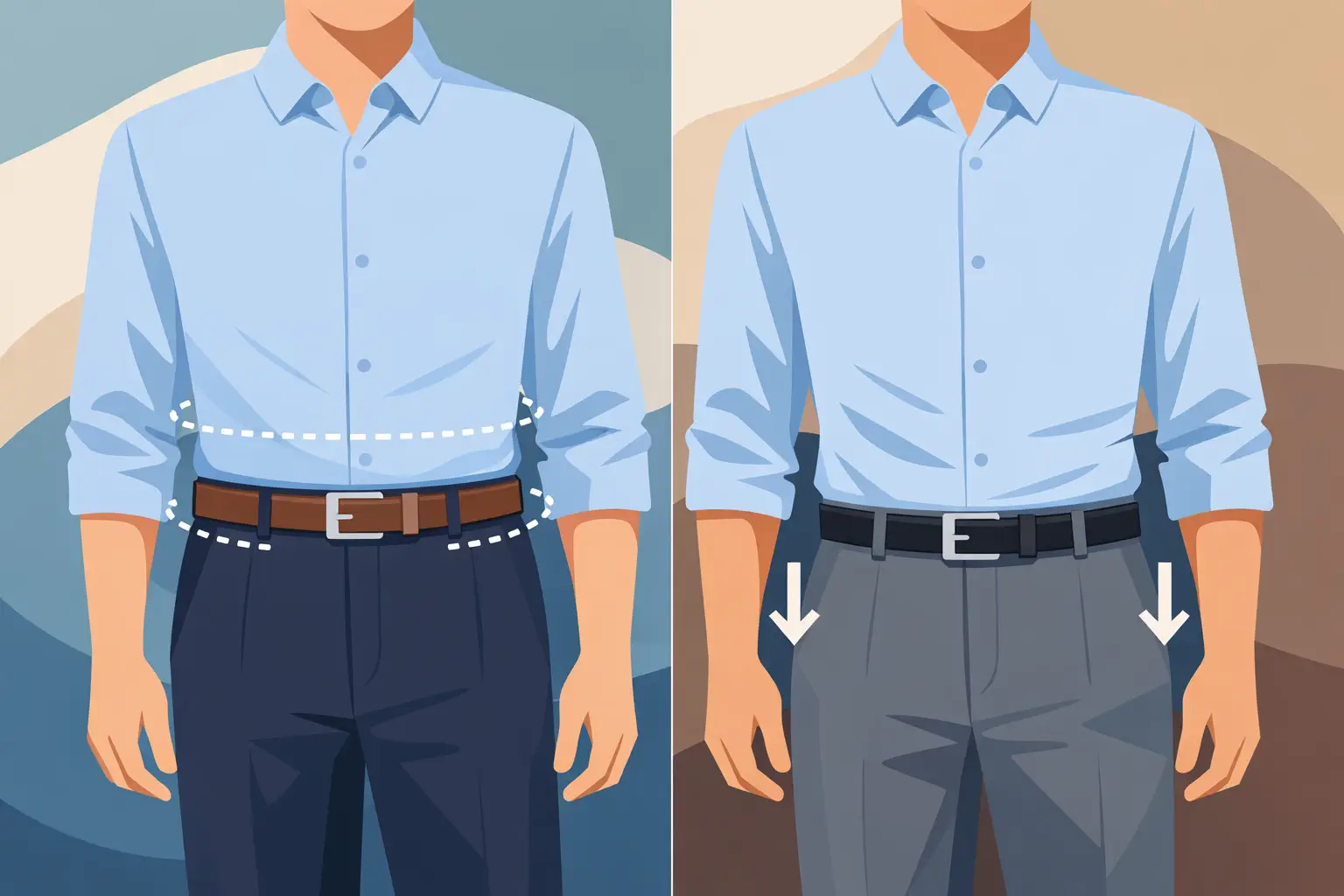
The strongest argument is structural rather than nostalgic. Trousers are easier to cut well when they sit at the natural waist, because the body gives the waistband something to rest on. Lower-rise trousers often rely on being held up by the hips alone, which can work in casualwear, but it frequently causes the waistband to shift, the seat to drag or the front to collapse.
A higher position also flatters more men than they realise. It can lengthen the leg line, clean up the waist area and reduce the visual emphasis on the stomach. Men who carry weight through the midsection often assume lower-rise trousers will be more forgiving, but the opposite is often true. If the waistband sits beneath the fullest part of the stomach, it may dig in and slide down, creating discomfort and an untidy silhouette.
There is also the question of movement. Trousers sitting at the natural waist tend to stay where they were intended, particularly when side-adjusters or braces are involved. You spend less time hitching them up and more time simply wearing them well. For a long day in the office, a wedding ceremony or an evening event, that reliability makes a real difference.
When the natural waist is the right choice
For classic suiting, it is very often the best choice. A tailored jacket is generally designed to meet well-cut trousers at a point that preserves clean proportions. If the trousers sit too low, the jacket can seem longer than intended and the legs shorter. The ensemble loses some of its authority.
This is particularly true in double-breasted suits, morning wear, black tie and pieces with a stronger drape through the leg. These garments carry a certain sartorial gravity. They look best when the trousers sit with purpose rather than hovering low on the hips.
Natural-waist trousers also suit men who want a cleaner shirt line. A higher rise keeps the shirt more secure, avoids that bunching at the front and creates a more elegant transition from waistband to chest. If you wear braces, the natural waist is almost always where the trousers should live. Braces are designed to suspend trousers from the shoulders so the cloth can fall uninterrupted.
When lower can work better
That said, insisting that every man must wear every trouser on the natural waist would be poor advice. Style is not served by dogma. Some contemporary cuts are designed with a mid-rise or lower rise in mind, especially more casual trousers, chinos and certain slimmer silhouettes.
If the trouser is cut trim through the thigh and seat, sitting exactly at the natural waist can sometimes feel too severe or look too compressed, depending on the wearer’s build. A slightly lower position may create a cleaner line without sacrificing proportion. This is often the case for younger clients who want a sharper, more modern profile rather than a traditionally full cut.
Body shape matters as well. A man with a very short torso may find that a true natural-waist rise pushes the waistband uncomfortably high in relation to the jacket buttoning point. Likewise, a very tall man may prefer a rise that acknowledges his proportions without appearing exaggerated. The best result is rarely about copying a rule from an illustration. It is about where the trousers look and feel right on your body.
Should trousers sit on natural waist for every body type?
Not for every body type, but for most men it is a better starting point than the low-rise alternatives that dominated ready-to-wear for years. The reason is simple: the natural waist is where the body is most stable. From there, a tailor can refine the rise up or down slightly to account for height, posture and personal taste.
For a man with a prominent stomach, the aim is not to force the waistband to the highest possible point. It is to place it where the trousers sit securely and the front remains smooth. Sometimes that is exactly on the natural waist. Sometimes it is fractionally lower, provided the waistband does not slip beneath the stomach and create strain.
For athletic builds, especially men with a marked drop from waist to hip and fuller thighs, a slightly higher rise often works beautifully. It allows room where needed and avoids that pinched effect across the front pockets. For slimmer frames, there is usually flexibility. The key is proportion: the rise should support the line of the jacket and length of the leg, not interrupt it.
Rise, comfort and the illusion of modernity
Many men associate lower-rise trousers with a more modern look and higher-rise trousers with something old-fashioned. In reality, what reads as dated is not the rise itself but poor execution. Trousers that sit high and are cut with elegance look assured, not antiquated. Trousers that sit low and strain at the fork or collapse at the waistband look careless, however current the intention.
Comfort is also widely misunderstood. Men often try on higher-rise trousers after years of wearing low-rise ready-to-wear and assume the new position feels unusual, therefore wrong. Usually it feels unusual because it is different, not because it is ill-fitting. Once the rise, seat and waistband are properly cut, many find higher-rise trousers more comfortable over a full day.
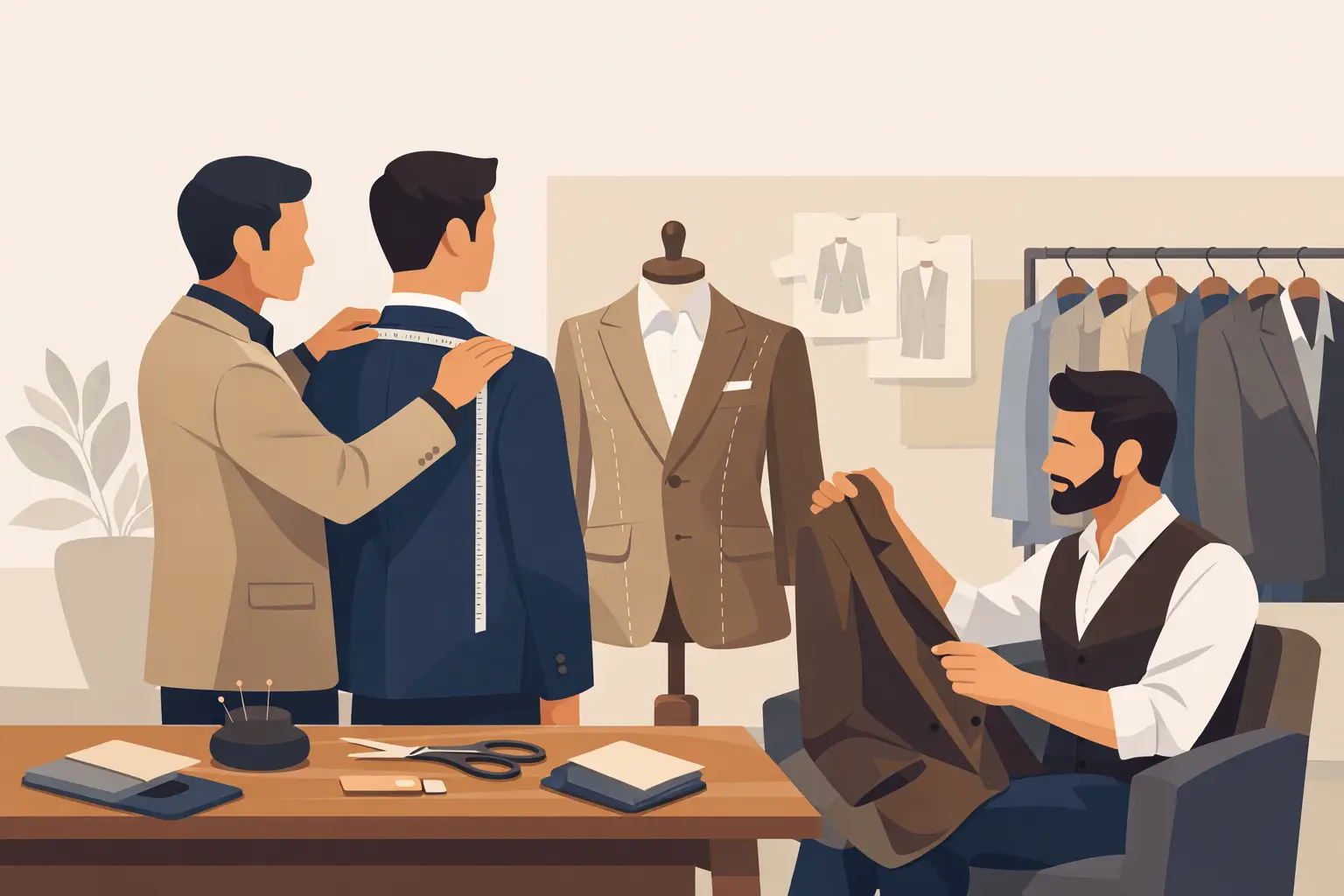
This is where bespoke and precise alteration make such a difference. Rise is not just one measurement. It affects the seat, the fork, the waistband angle and the balance of the leg. A meticulously crafted trouser does not simply sit higher or lower. It is engineered to hang properly from that chosen point.
How to tell if your trousers are sitting correctly
Look first at the line, not the number on the label. If the waistband cuts in, slips down or forces horizontal pulling across the front, the position is wrong. If the seat drags, the fork strains or the shirt keeps escaping, the rise may be working against you.
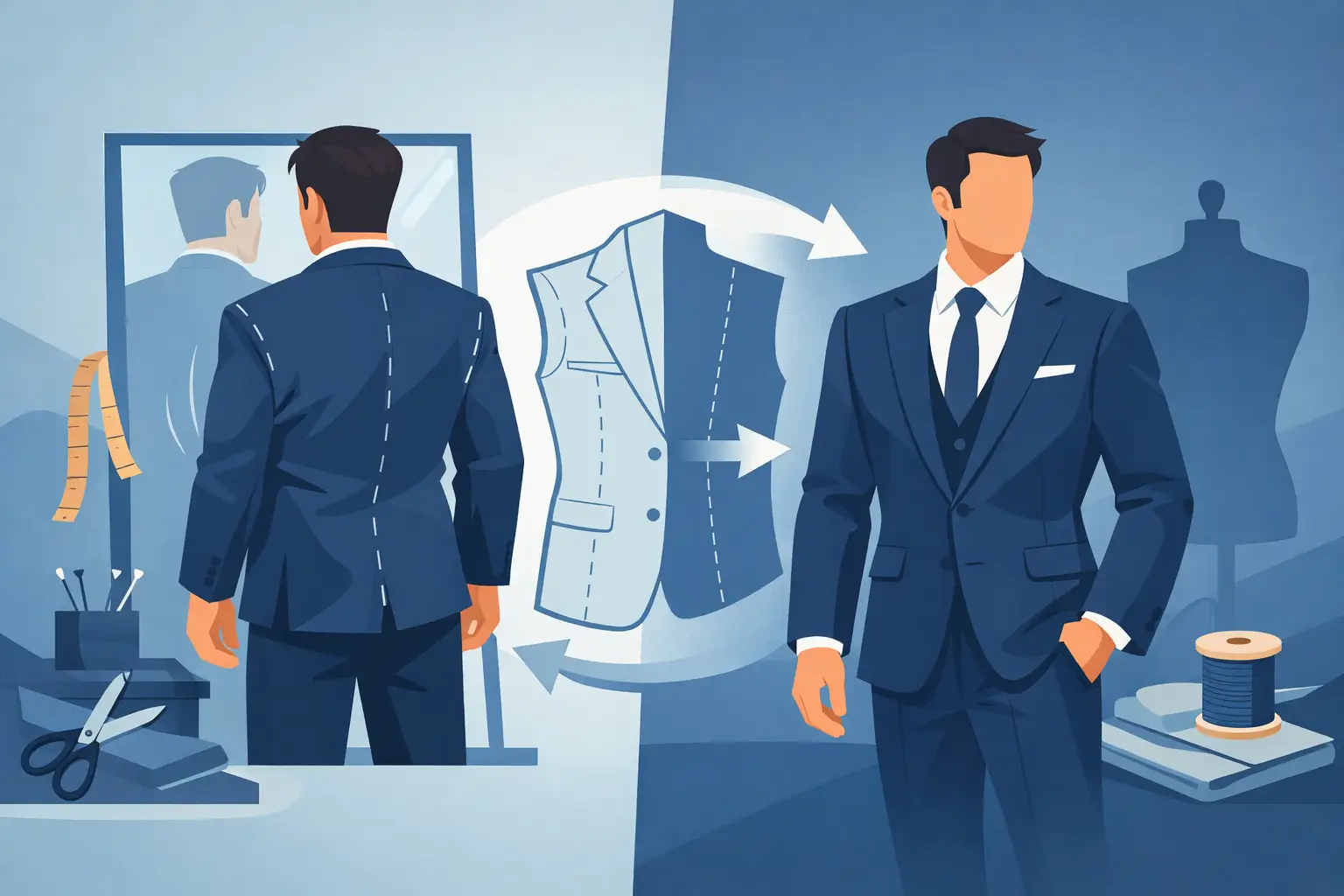
A well-positioned trouser sits calmly. The waistband feels secure without gripping harshly. The front lies cleanly, the side seam drops straight, and the leg begins from the body with continuity rather than tension. When worn with a jacket, the proportions should look intentional. The eye should register a coherent silhouette, not a jacket and trousers arguing with one another.
It helps to judge trousers in the context in which you will actually wear them. Business trousers should be assessed with a shirt and tailored jacket. Wedding trousers should be considered alongside the coat, waistcoat if applicable, and shoes. A rise that seems acceptable in isolation may reveal itself as too low once the full ensemble is in place.
The most refined wardrobes are built on these quiet decisions. Not trends, but proportion. Not assumption, but cut. If you are asking whether trousers should sit on the natural waist, you are really asking where they will make you look more composed, feel more comfortable and carry your clothes with greater authority. For many men, that answer is close to the natural waist. The exact point is where craftsmanship steps in and makes the difference felt rather than merely seen.