
The quickest way to look underprepared at work is to own plenty of clothes but no real wardrobe. A rail full of random jackets, tired shirts and mismatched trousers creates friction every morning, and it shows. If you are working out how to build a business wardrobe, the aim is not volume. It is coherence, versatility and a standard of fit that makes every piece look intentional.
A strong business wardrobe should do three things at once. It should make dressing easy, present authority without strain, and adapt to the rhythm of your week – client meetings, office days, dinners, travel and the occasional formal event. That balance is where good tailoring earns its place. When the cut is right and the cloth has purpose, even a relatively compact wardrobe can carry far more weight than a crowded one built on compromise.
Start with your working life, not a shopping list
Before you buy anything, assess the reality of your calendar. A solicitor in the City, a consultant travelling three days a week and a creative director in a smart-casual office do not need the same wardrobe, even if all three want to look polished. The most successful approach is to build around frequency. What do you wear four days out of five? What do you reach for when the stakes are high?
This is where many men go wrong. They buy for the occasional moment rather than the repeated one. A striking check suit may impress in the fitting room, but if you cannot wear it regularly, it should not be the foundation. The foundation belongs to garments with range – pieces that hold their shape, pair easily and still feel distinguished at close quarters.
How to build a business wardrobe from the suit up
For most professional men, the first pillar is the suit. Not five suits at once, and not a wardrobe stuffed with near-identical blues bought in haste. Start with two or three that cover the broadest ground.
A navy suit is usually the first and most useful. It carries authority in a boardroom, looks sharp at a dinner and can be softened with a knit or open-collar shirt when the setting allows. Choose a tone deep enough to feel refined rather than bright, and prioritise clean lines over heavy trend detail.
The second suit is often charcoal grey. It has a quieter formality than navy and tends to flatter in more serious business settings. It also broadens your weekly rotation without making the wardrobe feel repetitive. If your work is highly formal, charcoal may even rival navy for usefulness.
A third suit depends on your environment. Mid-grey works well for daytime versatility. A subtle pinstripe can add presence if your role benefits from a sharper edge. In less conservative offices, a textured suit in a muted brown, olive or soft check may give the wardrobe more character. The key is restraint. Pattern and texture should enrich the wardrobe, not dominate it.
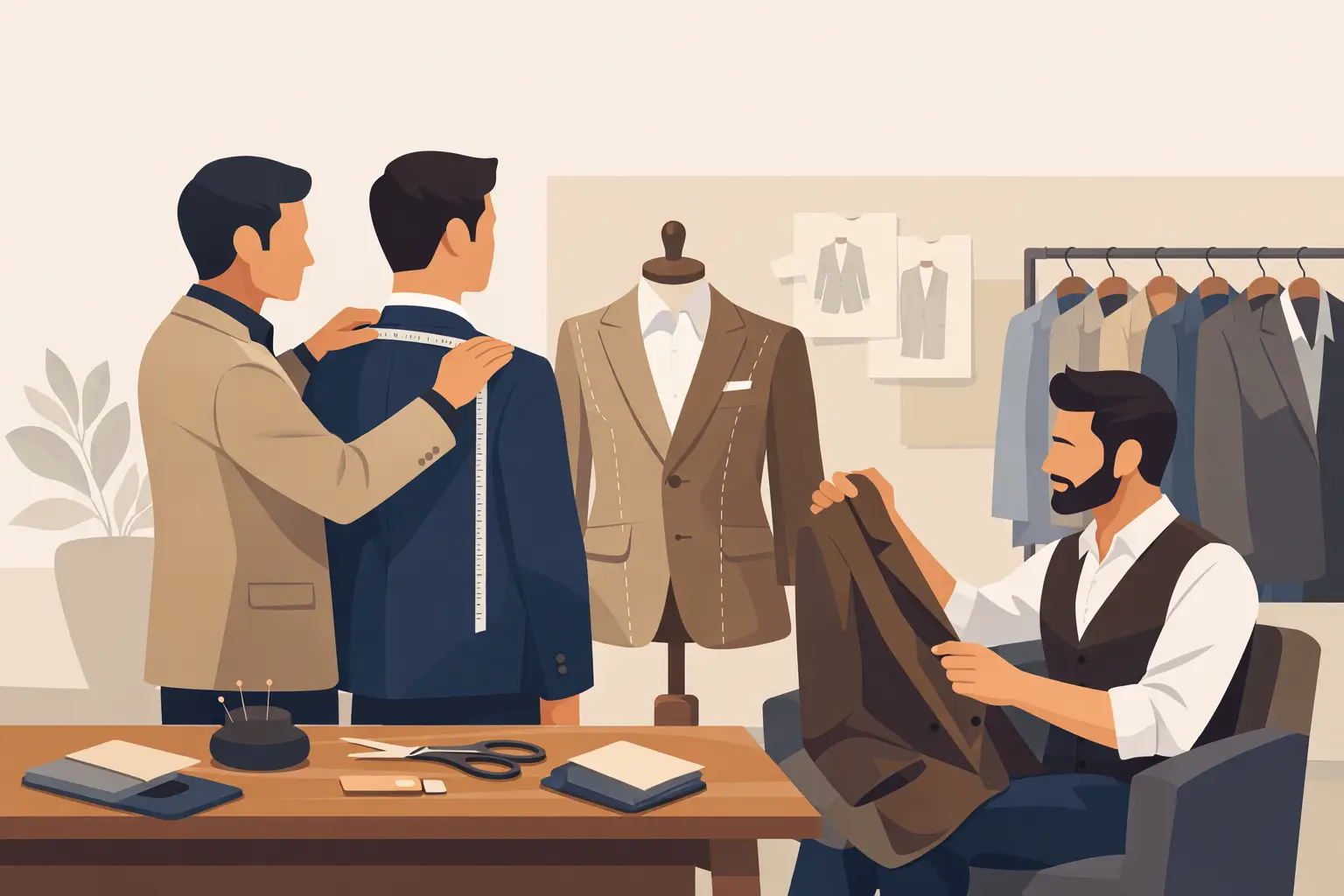
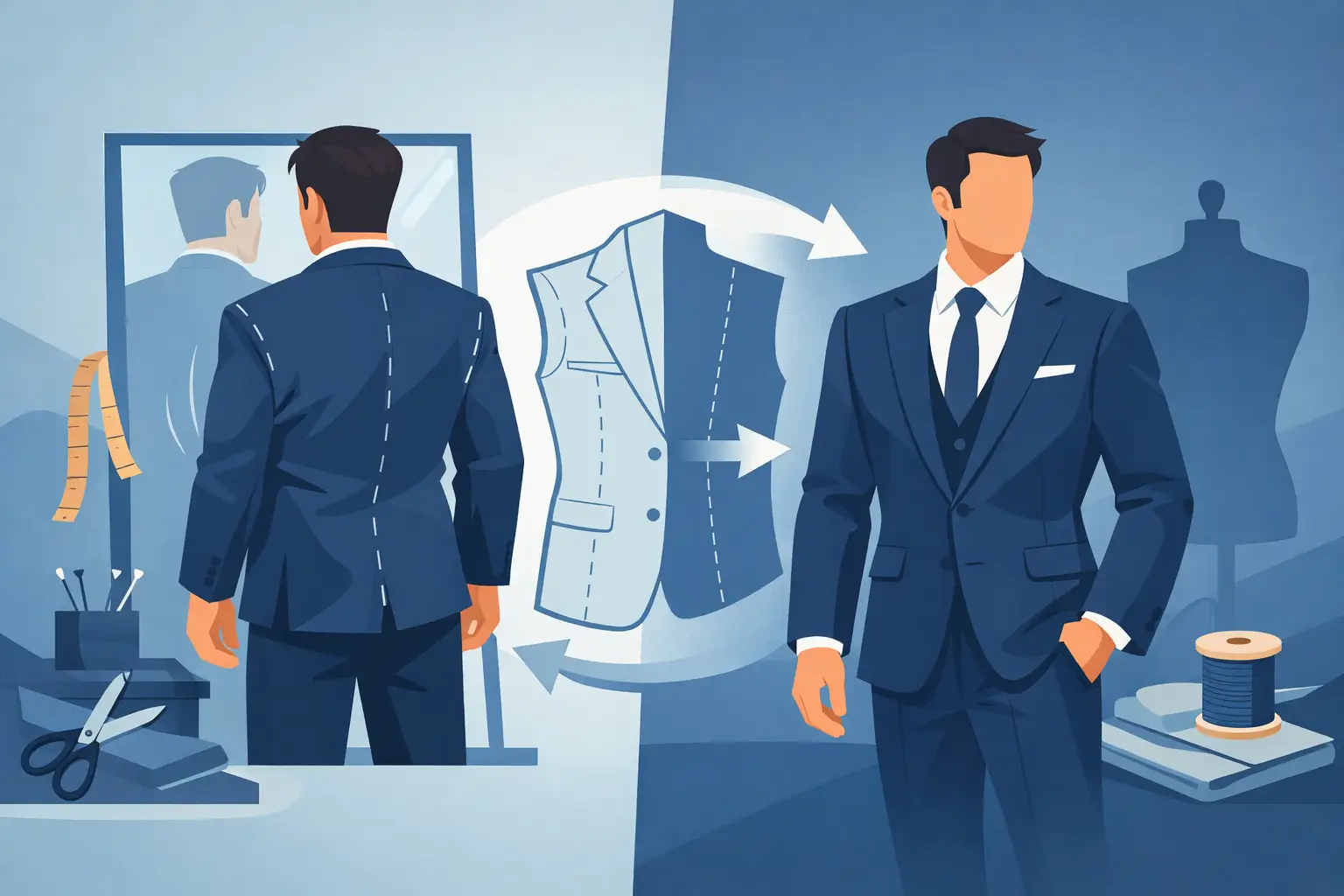
Fit matters more than any label or fabric description. A suit that pulls across the button, collapses at the collar or breaks badly at the trouser hem will always look second-rate, however expensive it was. Precision through the shoulders, chest and waist creates the clean silhouette that people read as confidence. This is why bespoke and proper alterations are not indulgences. They are the difference between wearing a suit and looking composed in one.
Separate jackets and trousers have a place
Not every professional setting requires a full suit every day. Once your core suiting is covered, a tailored blazer and two pairs of well-cut trousers make the wardrobe more agile. A navy hopsack jacket, for example, can work with grey wool trousers for business, then move easily into evening wear with darker separates.
Trousers deserve more attention than they often get. The line through the seat and thigh, the rise, and the break over the shoe all affect how finished the outfit appears. Better cloth and better cutting are obvious here. Cheap trousers tend to bag quickly and lose their edge by midday.
Shirts should support the wardrobe, not compete with it
If suits provide the structure, shirts provide the rhythm. Build with white and light blue first. They are dependable, flattering and appropriate in almost every business setting. A pale stripe can then add variation without diluting formality.
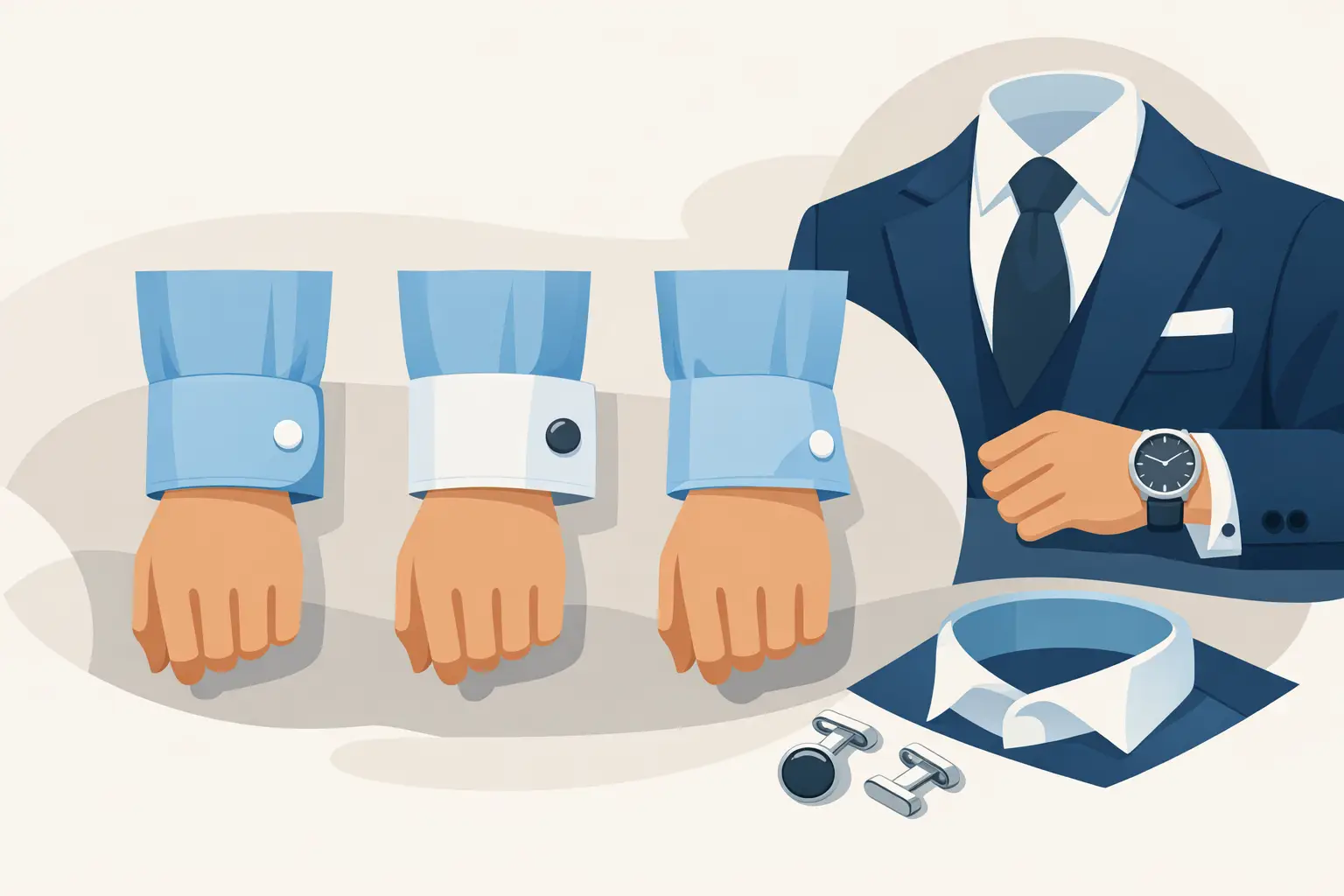
Collar shape should suit both your face and the way you wear tailoring. A well-proportioned spread collar frames a tie beautifully and sits cleanly under a jacket. A cutaway can look elegant, but if it is too aggressive for your features or office, it can feel studied. Cuffs, plackets and collar stiffness all deserve consideration, because they contribute to the visual sharpness of the finished look.
This is one of the clearest examples of why made-to-measure or bespoke shirts are worthwhile. Off-the-peg shirts often force a compromise: the neck fits but the body billows, or the chest fits but the sleeve length is wrong. A shirt should follow the body neatly, allowing movement without excess cloth. The result is cleaner under a jacket and considerably more comfortable across a long day.
Shoes and leather goods set the tone
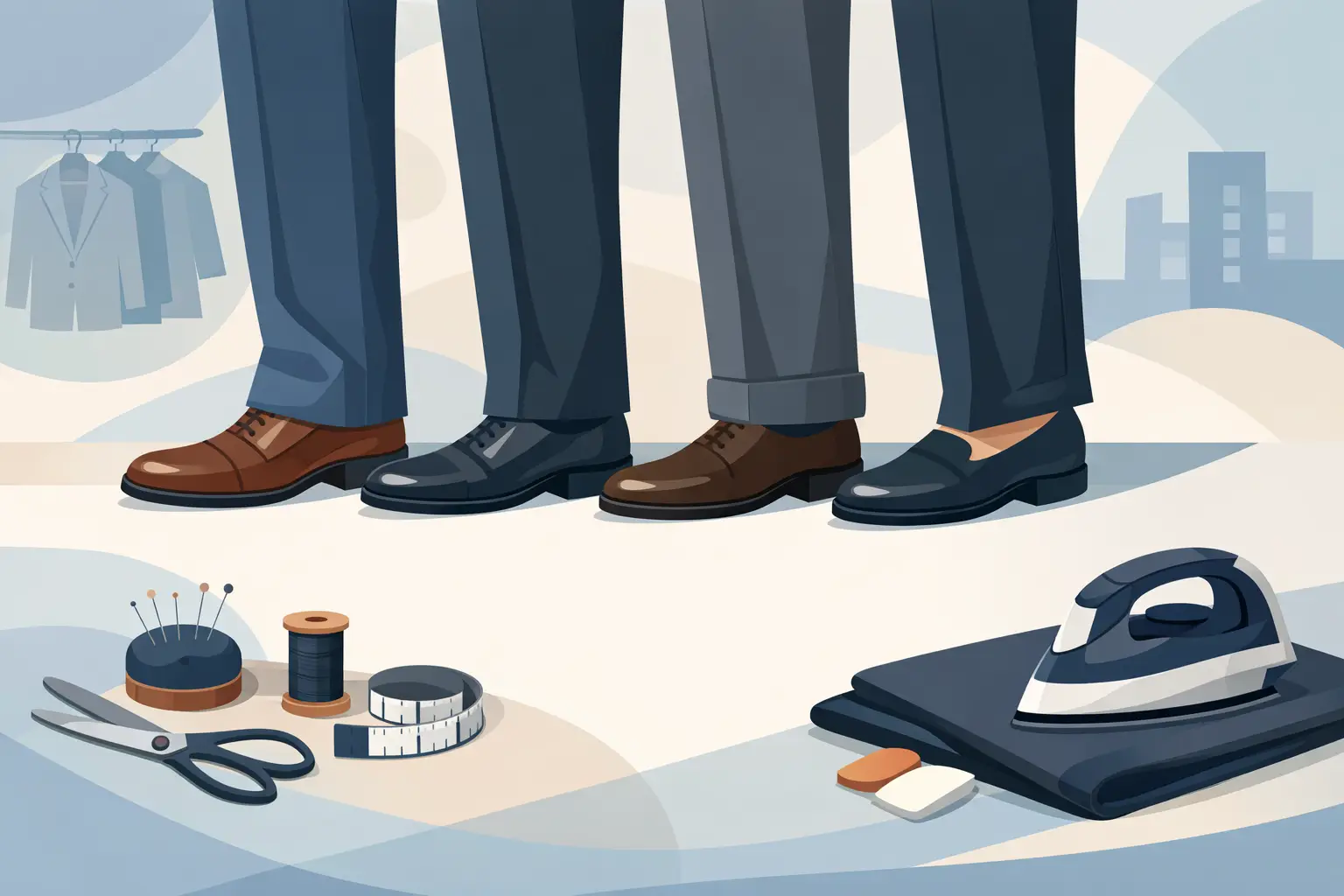
A business wardrobe loses credibility quickly if the tailoring is strong but the shoes are neglected. Begin with black Oxfords if your work is formal, then add dark brown Derbies or Oxfords for broader use. In more flexible environments, a dark brown loafer can be a useful third option, but it should not replace the formality of a closed-lace shoe when the occasion calls for it.
Leather should be cared for and consistent. A good belt, if worn, should complement the shoes in colour and finish. If you prefer braces, they can offer both practical comfort and a more refined line through the waist, particularly with tailored trousers designed for them. Small details such as this are often what separate a merely dressed man from one who appears properly considered.
Your briefcase or work bag matters too. It does not need to shout, but it should feel aligned with the rest of the wardrobe. Clean leather, disciplined shape and discreet hardware will always outlast fashion-driven alternatives.
The finishing pieces are where personality enters
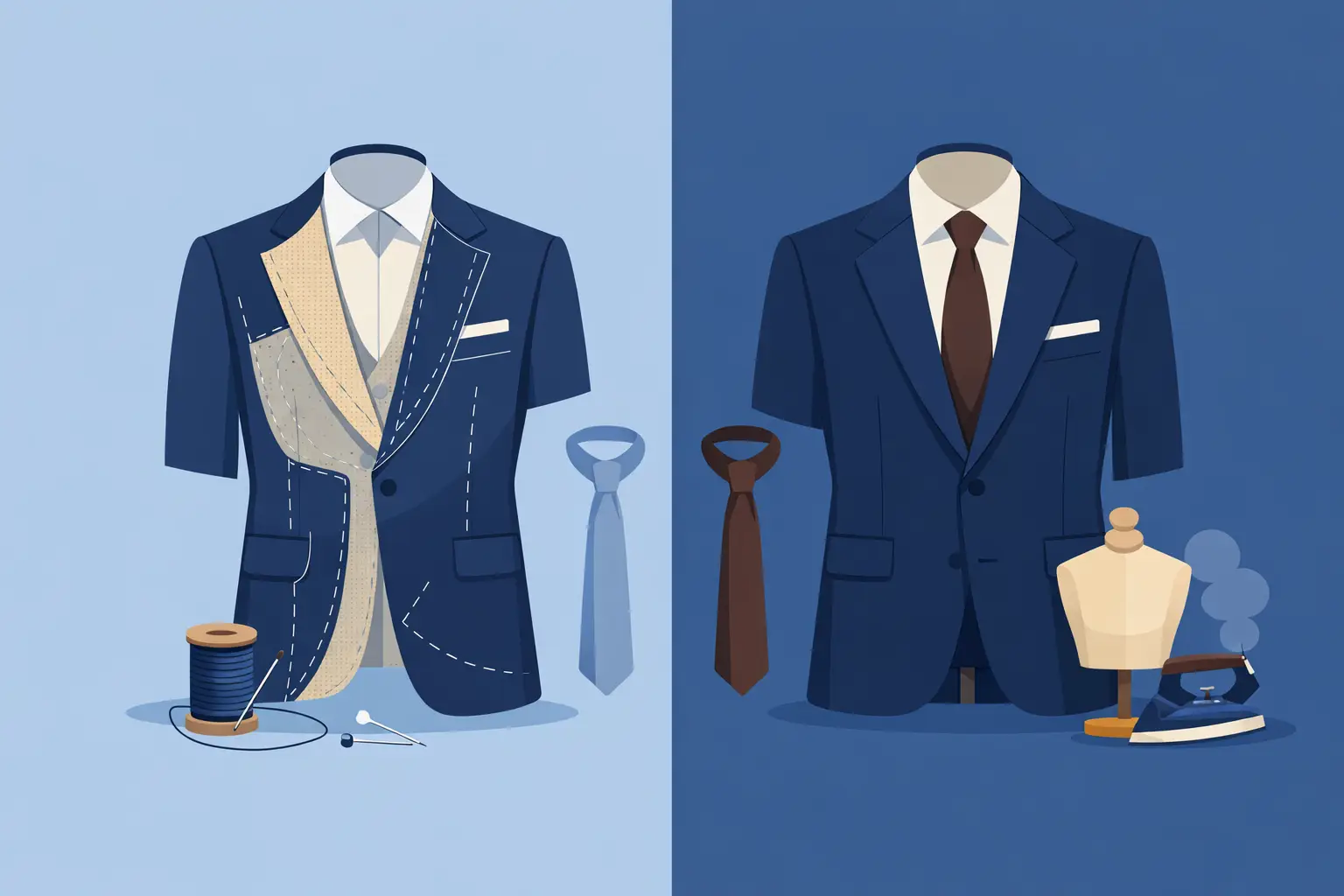
Once the essentials are in place, accessories can introduce individuality. Ties in grenadine, silk twill or subtle texture add depth without flash. Pocket squares should complement rather than match exactly. A quality overcoat, particularly in navy, charcoal or camel, extends the authority of the wardrobe beyond the office door.
This is where craftsmanship becomes especially visible. The drape of an overcoat, the hand of a tie, the structure of a pocket square – these details may seem secondary, but together they create the impression of a man who understands standards. That is not vanity. In professional life, appearance is part of communication.
How to build a business wardrobe without wasting money
Building well does not mean buying everything in one weekend. In fact, that is usually the most expensive route, because haste leads to duplication and weak decisions. A better method is phased investment.
Start with the garments that carry the most responsibility: two suits, five shirts, two pairs of shoes, and a proper coat if you need one. Then assess the gaps after a month or two of real wear. You may discover that you need another pair of grey trousers before you need a patterned tie, or that a second blue shirt is more useful than a statement blazer.
It also pays to spend more where wear is heaviest and fit is most visible. Tailoring, shirts and shoes deserve the budget. Trend-led extras do not. If a garment is likely to be worn weekly for years, quality is usually the economical choice.
There is, however, a trade-off. Not every man needs full bespoke from the start. If your proportions are straightforward, strategic alterations may be enough for some pieces while you invest more heavily in your core suits. If your build makes ready-to-wear consistently disappointing, bespoke becomes far less about luxury and far more about efficiency.
Maintenance is part of the wardrobe
A business wardrobe is not only built at the point of purchase. It is maintained through pressing, brushing, careful storage and timely alterations. Trousers may need their hems adjusted when your preferred shoe changes. Jackets may need refining as your shape shifts. Shirt collars and cuffs should be monitored before they look tired.
This is where a relationship with a tailor becomes valuable over time. A wardrobe evolves with your role, your schedule and your standards. What served you well early in your career may later need more authority, more subtlety or simply a better level of finish. At Manndiip, that ongoing refinement is often what turns a set of garments into a genuine wardrobe – one shaped around the man rather than imposed upon him.
The best business wardrobes do not announce themselves loudly. They read as assured, precise and entirely at ease. Build yours with patience, choose fit over novelty, and let each piece earn its place. When the wardrobe is right, getting dressed feels less like effort and more like alignment.