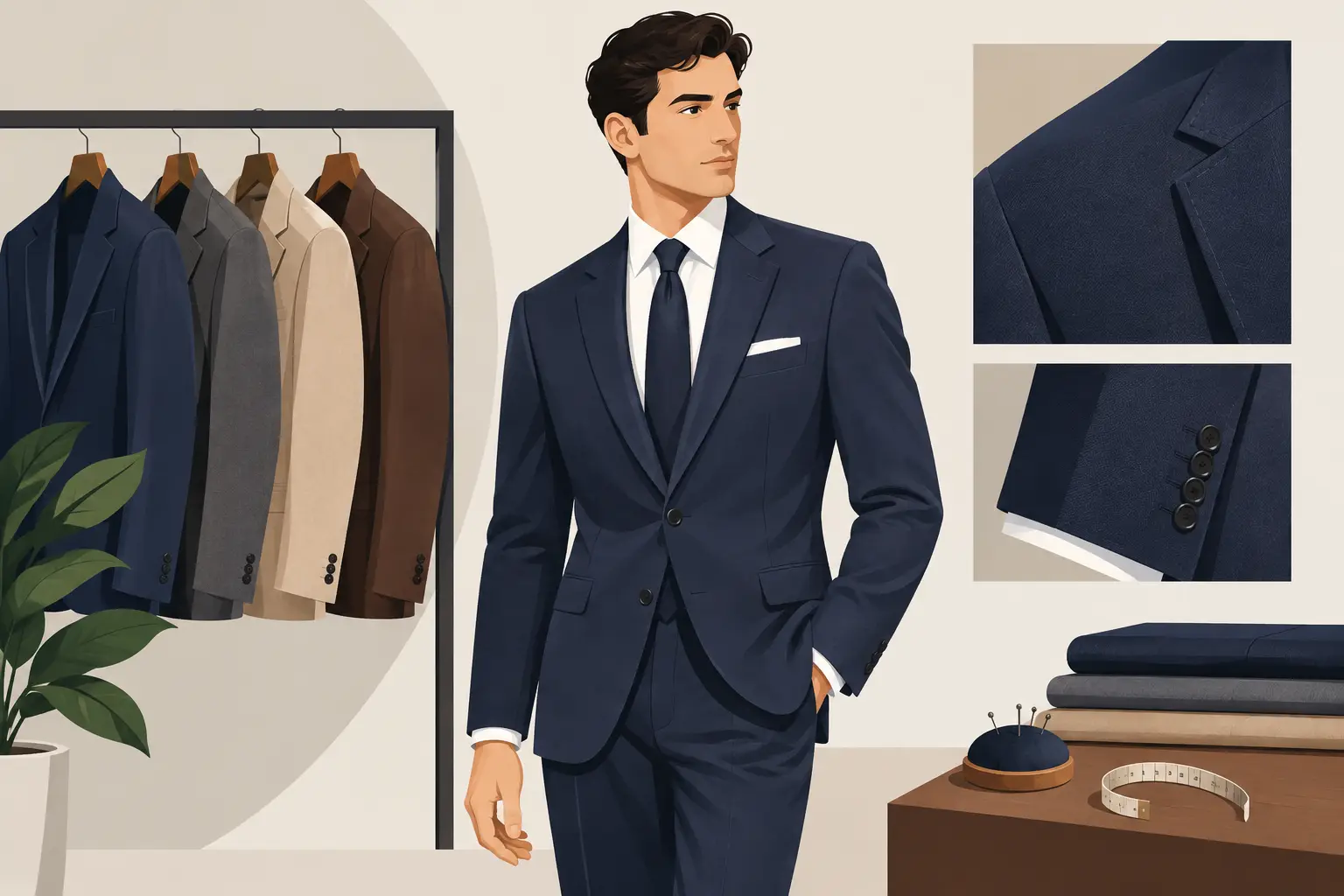
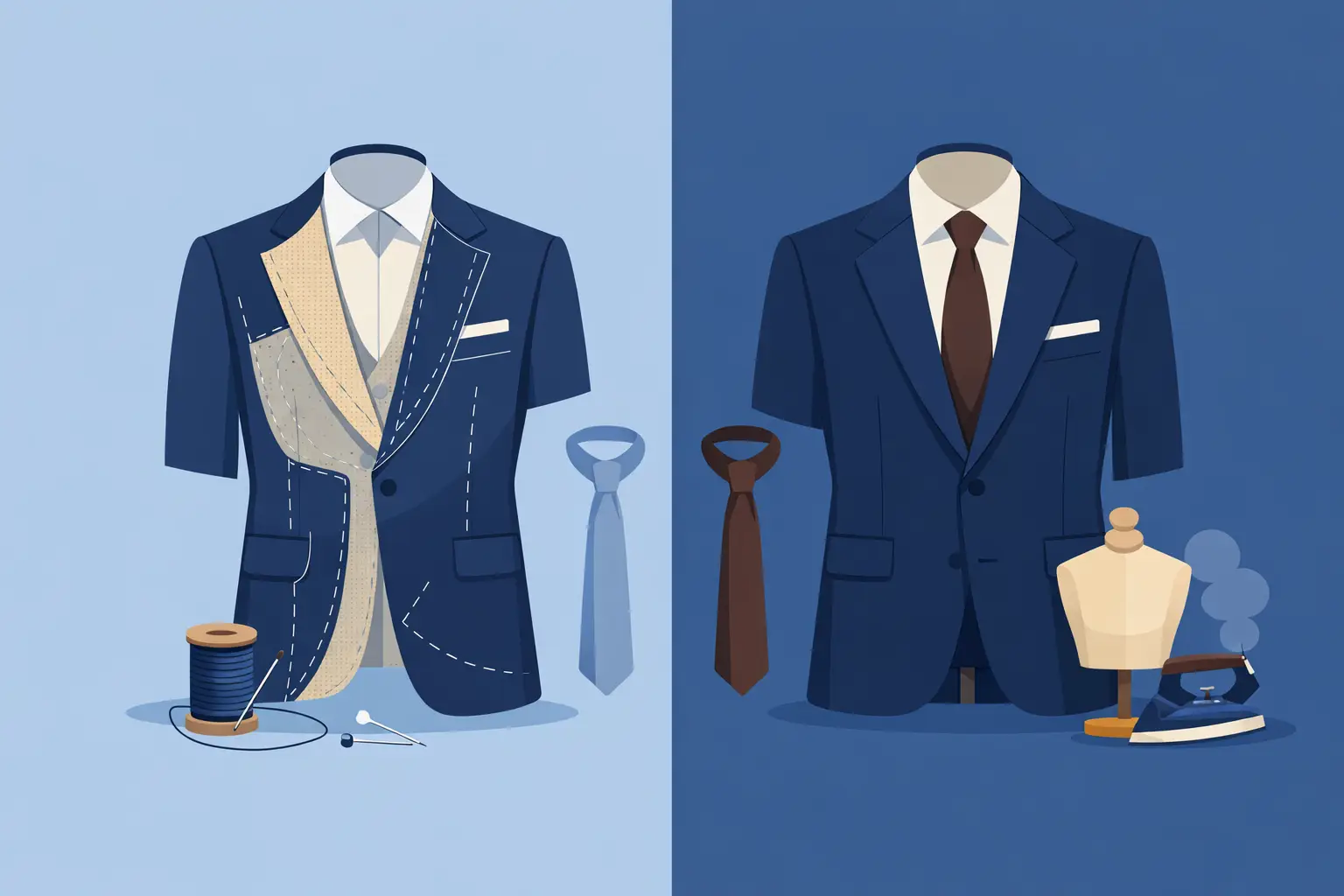
A suit can be cut from an exceptional cloth and still fall short if its internal construction is wrong for the wearer. That is why the question of half canvas vs full canvas matters well beyond tailoring terminology. It determines how a jacket sits through the chest, how it responds to movement, how it develops over time and, ultimately, whether it looks convincingly like it was made for you.
For a professional building a sharper business wardrobe, a groom choosing a suit for a long wedding day, or a man commissioning formalwear with genuine presence, canvas construction deserves the same consideration as cloth, lapel shape and fit. Neither option is automatically superior. The right choice depends on where and how the suit will be worn.
What does canvas do in a tailored jacket?
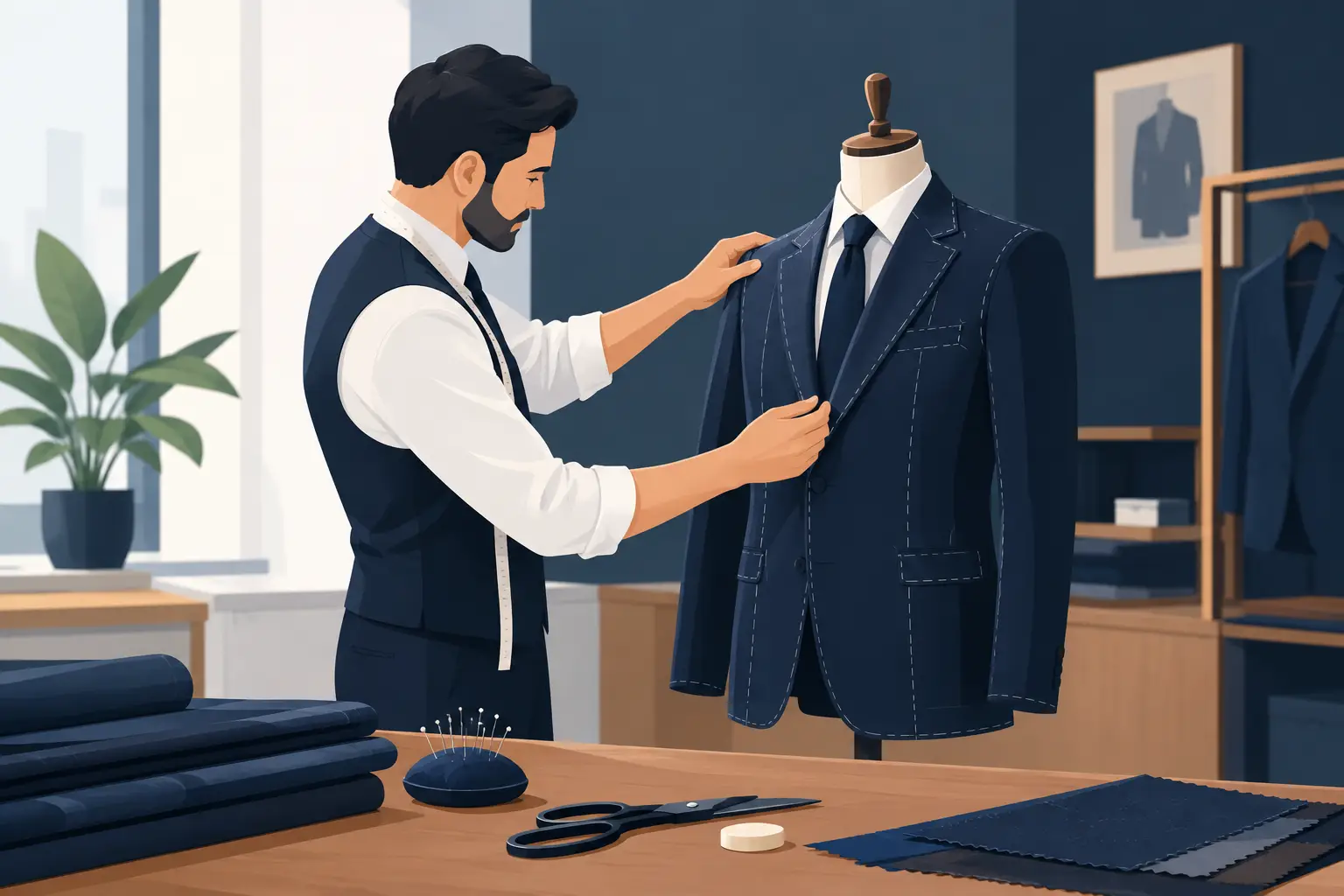
Canvas is the internal layer that sits between the outer cloth and the lining. Traditionally made from horsehair, wool and cotton blends, it gives a jacket structure without turning it into armour. A skilled tailor shapes this layer through the chest and lapel so the coat follows the body with a natural, three-dimensional line.
Unlike a fused jacket, where an adhesive is applied to bond the outer cloth to an interlining, a canvassed jacket is built to move independently of the cloth. This is what creates the subtle roll of a well-made lapel, the clean sweep across the chest and the soft recovery of the jacket after you sit, reach or travel.
Canvas also becomes more personal with wear. It gradually settles to the wearer’s posture and movement, which is one reason a properly constructed tailored jacket often looks better after several wears than it did on the day it was collected.
Half canvas vs full canvas: the construction difference
The distinction is straightforward, but its effect is meaningful.
Half-canvas construction
A half-canvassed jacket contains canvas through the chest, lapels and often down to approximately the lower pockets. Below this point, the front of the jacket is normally supported by a lighter fused interlining.
This places the most valuable structure where it matters most visually. The chest has shape, the lapels roll with greater depth and the upper body retains a refined, tailored appearance. Because the lower portion is lighter, half canvas can be an excellent option for men who want polish without the additional weight or investment of full canvas.
For many business suits, half canvas is a highly intelligent choice. It provides enough internal architecture to hold a crisp silhouette through meetings and commutes, while keeping the jacket comfortable for frequent wear. In a lightweight wool, it can feel particularly appropriate for a modern office wardrobe.
Full-canvas construction
A full-canvassed jacket extends the canvas from the shoulder through the chest and down the full length of the jacket front. The structure is stitched rather than glued, allowing the exterior cloth and internal canvas to work together while retaining their own movement.
The result is a jacket with greater depth, a more sculpted chest and an especially graceful drape through the front. The lower quarters hang cleanly rather than appearing pressed flat against the body. This is most apparent in a well-cut jacket with an open front, a pronounced lapel or a stronger chest expression.
Full canvas is often the natural choice for a wedding suit, dinner suit, overcoat or statement business suit intended to serve for years. It supports the sense of occasion without sacrificing comfort. With the right cloth and cut, it feels composed rather than stiff.
How each option looks and feels
The upper chest is where most people first notice the advantage of canvas. A half-canvassed jacket will usually offer a noticeably more natural lapel and chest than a fully fused alternative. It has enough structure to give the wearer presence, particularly when the jacket is correctly fitted across the shoulders and through the waist.
A full-canvassed jacket takes this further. Its front has more life: it moves subtly when you move, and it retains an elegant line when unbuttoned. The lapel tends to roll more organically, while the chest avoids the overly flat, manufactured appearance that can affect lower-grade constructions.
That said, more canvas is not a substitute for a good cut. A poorly fitted full-canvassed suit will never look as assured as a well-cut half-canvassed suit. Shoulder balance, sleeve pitch, chest allowance, trouser rise and the suppression at the waist must all be considered as part of one coherent garment.
Weight is another factor. Full canvas can add a little more substance, though this need not make a suit heavy. In a fine tropical wool or open-weave cloth, a full-canvassed jacket can still be remarkably breathable. In a dense flannel, tweed or heavy overcoating, however, the additional body may suit the fabric beautifully while feeling less desirable for regular summer wear.
Durability, care and long-term value
Both half canvas and full canvas offer a stronger long-term proposition than a fully fused jacket, provided the garment is made with care. Fused fronts can eventually bubble or delaminate, especially after repeated dry cleaning, heat exposure or years of heavy use. A canvassed jacket avoids this reliance on glue.
Full canvas generally has the advantage in longevity because its structure runs throughout the front of the jacket. It is designed to be maintained, pressed and worn over many seasons. This makes it especially compelling when commissioning a suit in a versatile navy, charcoal or deep brown cloth that will remain relevant for a decade.
Half canvas remains a durable and considered construction. It may be the more sensible allocation of budget when building several suits for work rather than placing all investment into one garment. Two well-chosen half-canvassed business suits, alternated properly and tailored precisely, can serve a professional wardrobe more effectively than a single suit worn without rest.
Care remains essential. Hang your jacket on a broad, shaped hanger, brush it lightly after wear and allow it to rest between outings. Dry clean only when genuinely necessary. Steam and careful pressing are usually kinder to fine cloth and help preserve the jacket’s shape.
Choosing the right construction for the occasion
A half-canvassed suit is often ideal when versatility, value and regular wear are the priorities. Consider it for office suiting, travel-friendly wool suits and lighter seasonal jackets. It offers real sartorial sophistication while remaining practical enough to become part of a weekly rotation.
A full-canvassed suit is worth considering when the garment carries greater emotional or professional significance. A groom who wants his jacket to look impeccable from ceremony to final dance, a client attending formal events, or a man investing in a signature suit will appreciate its depth and longevity. It is also particularly effective in cloths with character, such as rich wool flannel, textured hopsack, tweed and luxurious barathea.
The wearer’s build matters too. Men with a more athletic chest may enjoy the sculpted support of full canvas, while a lighter half canvas can be preferable for someone who wants the least possible bulk. A tailor can adjust the amount of padding, chest shaping and internal support to complement the individual rather than forcing the body into a standard silhouette.
Do not overlook the rest of the jacket
Canvas construction is one element of a larger standard of workmanship. Ask how the jacket is cut, whether the lapels are properly shaped, how the collar is balanced against the neck and whether the sleeves are set to follow your natural stance. A suit should look sharp while you stand still, but it should also remain comfortable while driving, greeting clients, raising a glass or sitting through dinner.
At Manndiip, the construction choice is considered alongside the client’s lifestyle, cloth selection and desired silhouette. A quietly authoritative business suit needs different decisions from a wedding suit designed to be photographed from every angle. The aim is never to prescribe the most expensive option, but to create the garment that performs with distinction for its purpose.
The better choice is the one you will wear well
If your suit needs to work hard through the week, half canvas offers a refined and practical foundation. If you are commissioning a piece with lasting ceremonial value, greater structure or a more expressive drape, full canvas rewards the investment.
The most satisfying suit is not defined by a label hidden inside the chest. It is the one that settles naturally on your frame, gives you confidence the moment it is buttoned and continues to earn its place in your wardrobe with every wear.