
The photographs will last long after the final toast, but the feeling of wearing a custom groom suit is more immediate: shoulders that sit cleanly, trousers that move with you, and a silhouette that feels considered rather than costumed. Your wedding suit should not simply meet a dress code. It should establish your presence, complement the occasion and allow you to enjoy every part of the day without adjusting, pulling or second-guessing the fit.
For many grooms, this is the first time they commission tailoring at this level. That is precisely why the process matters. A well-made suit is not selected from a rail and altered around the edges. It is designed around your proportions, your venue, the formality of the celebration and the version of yourself you want to see in the mirror.
Start With the Wedding, Not the Swatch Book
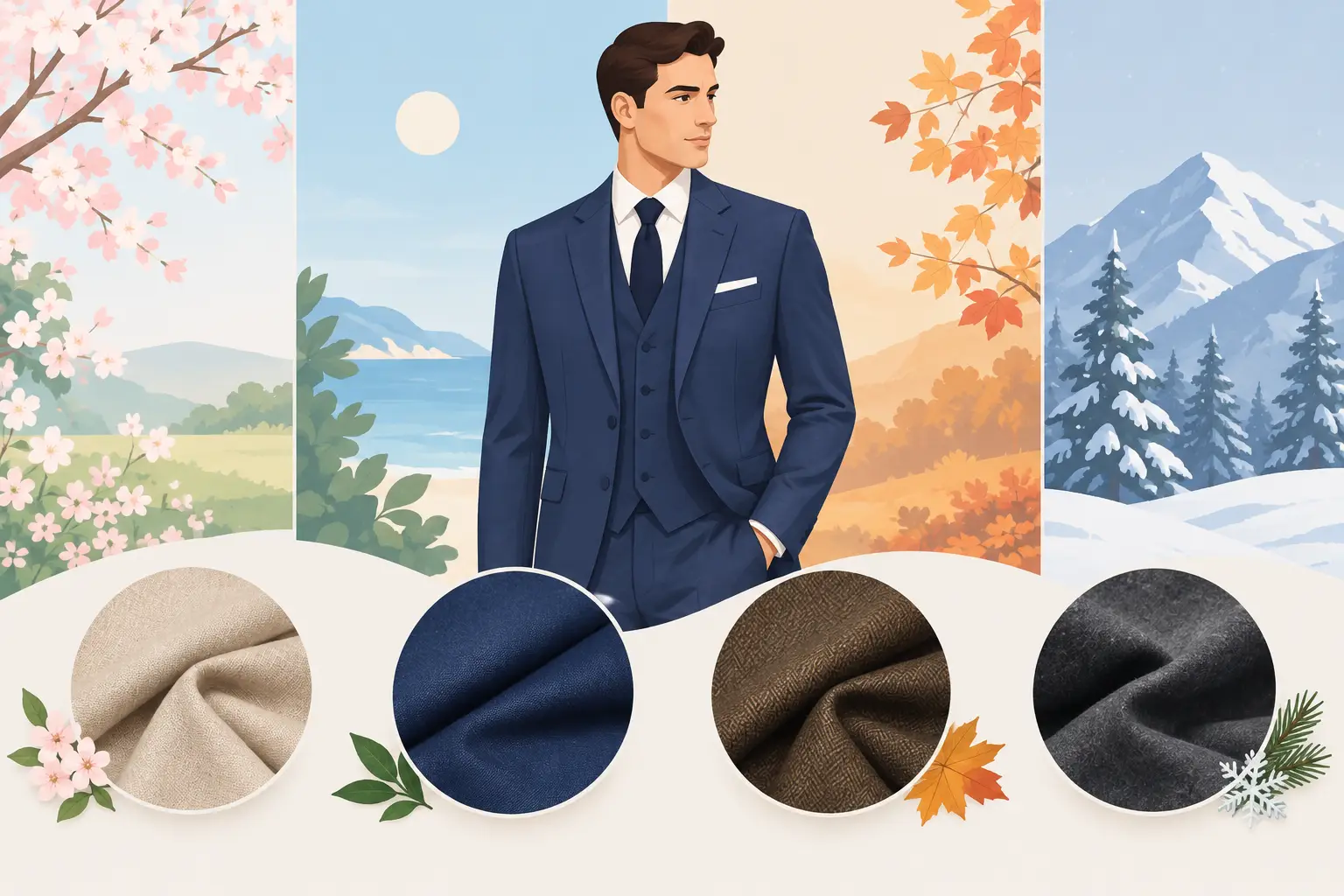
The cloth is often the first decision people expect to make. In reality, it should follow a clearer conversation about the wedding itself. A black-tie evening in a London townhouse calls for different choices from a summer ceremony in the Cotswolds, a city registry wedding or a winter celebration in a country house.
Consider the setting, season, ceremony time and how formal the wider wedding party will be. A groom in a sharp dinner suit may look perfectly placed beside candlelight and formal table settings, yet slightly disconnected at a relaxed afternoon garden reception. Equally, a lightweight linen-blend suit can feel effortless in warm weather but may not deliver the crisp, ceremonial line some grooms want for a grander setting.
Your partner’s outfit matters too, although not in the sense of matching every detail. The goal is visual harmony. The scale of lapels, richness of cloth and formality of your accessories should sit comfortably beside the bridal look and the atmosphere you are creating together.
Choosing the Right Custom Groom Suit Cut
A custom groom suit begins with proportion. Ready-to-wear sizes assume an average body shape; bespoke and made-to-measure tailoring considers where your shoulders naturally sit, the length of your torso, the position of your waist and how you stand and move. These details determine whether a jacket looks composed from every angle.
A single-breasted two-piece remains a refined choice for most weddings. It is versatile, elegant and can be worn again with different shirts, ties and trousers. A three-piece adds presence and gives the outfit a more formal, complete appearance, particularly useful if you expect to remove your jacket during the reception. The waistcoat maintains a polished line without making the look overly theatrical.
Double-breasted tailoring offers a stronger statement. Its overlapping front creates a confident, structured shape, though it works best when the jacket is cut carefully for the wearer. A poorly proportioned double-breasted jacket can feel restrictive or overly broad; a considered one can be exceptionally distinguished.
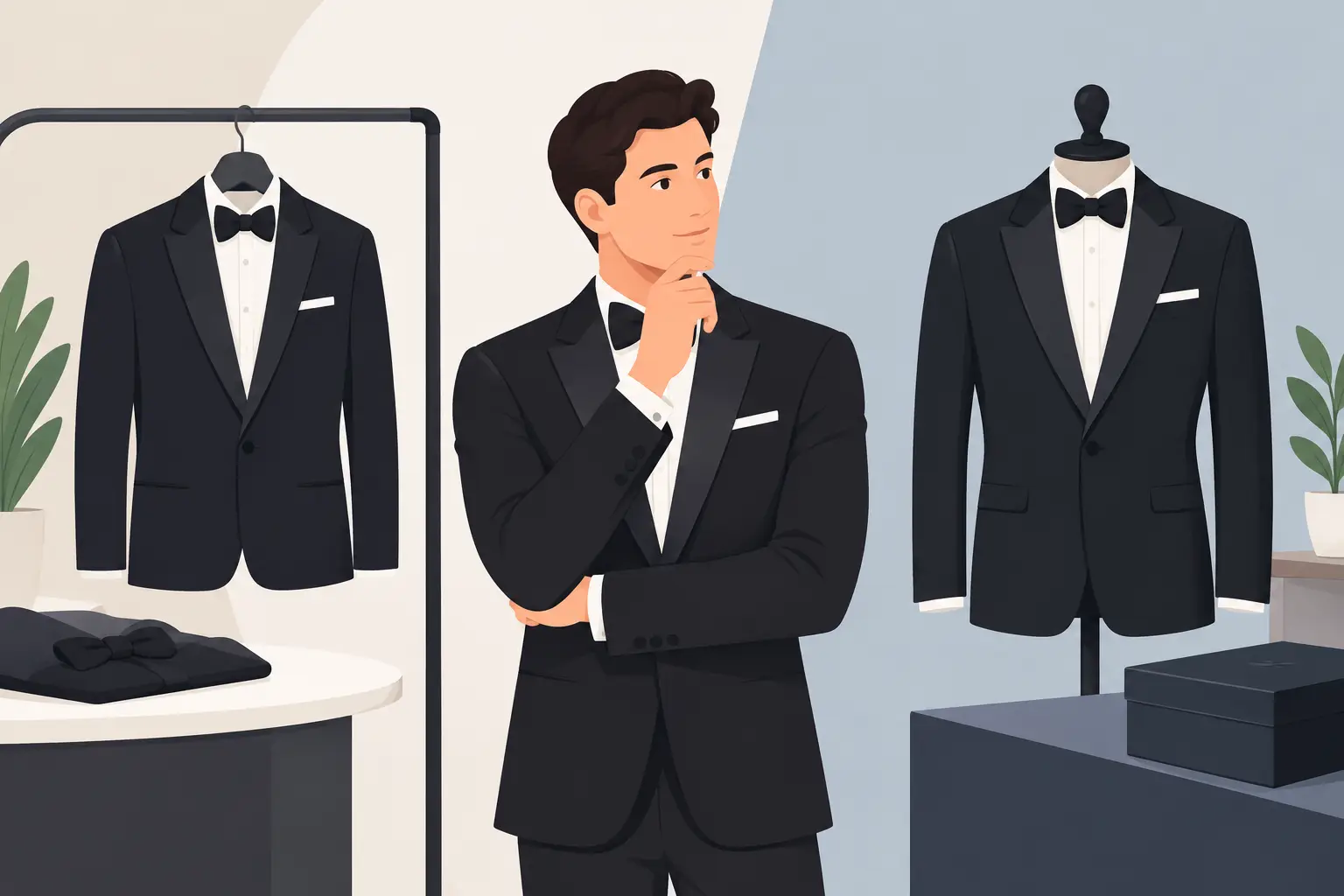
The lapel should support the character of the suit. Notch lapels are restrained and adaptable. Peak lapels bring added formality and visual authority, making them a natural option for a three-piece suit, a dinner jacket or a groom who wants a more assertive silhouette. Shawl lapels belong most naturally to black tie, where their uninterrupted curve lends the jacket its classic elegance.
Cloth Is About Performance as Well as Colour
Navy and mid-blue remain enduring wedding choices because they photograph well, flatter a wide range of complexions and retain their usefulness after the event. A deep green, rich brown or soft grey can be equally compelling when chosen with confidence and suited to the venue. Black is generally reserved for formal evening dress rather than a conventional lounge suit, where it can appear severe in daylight.
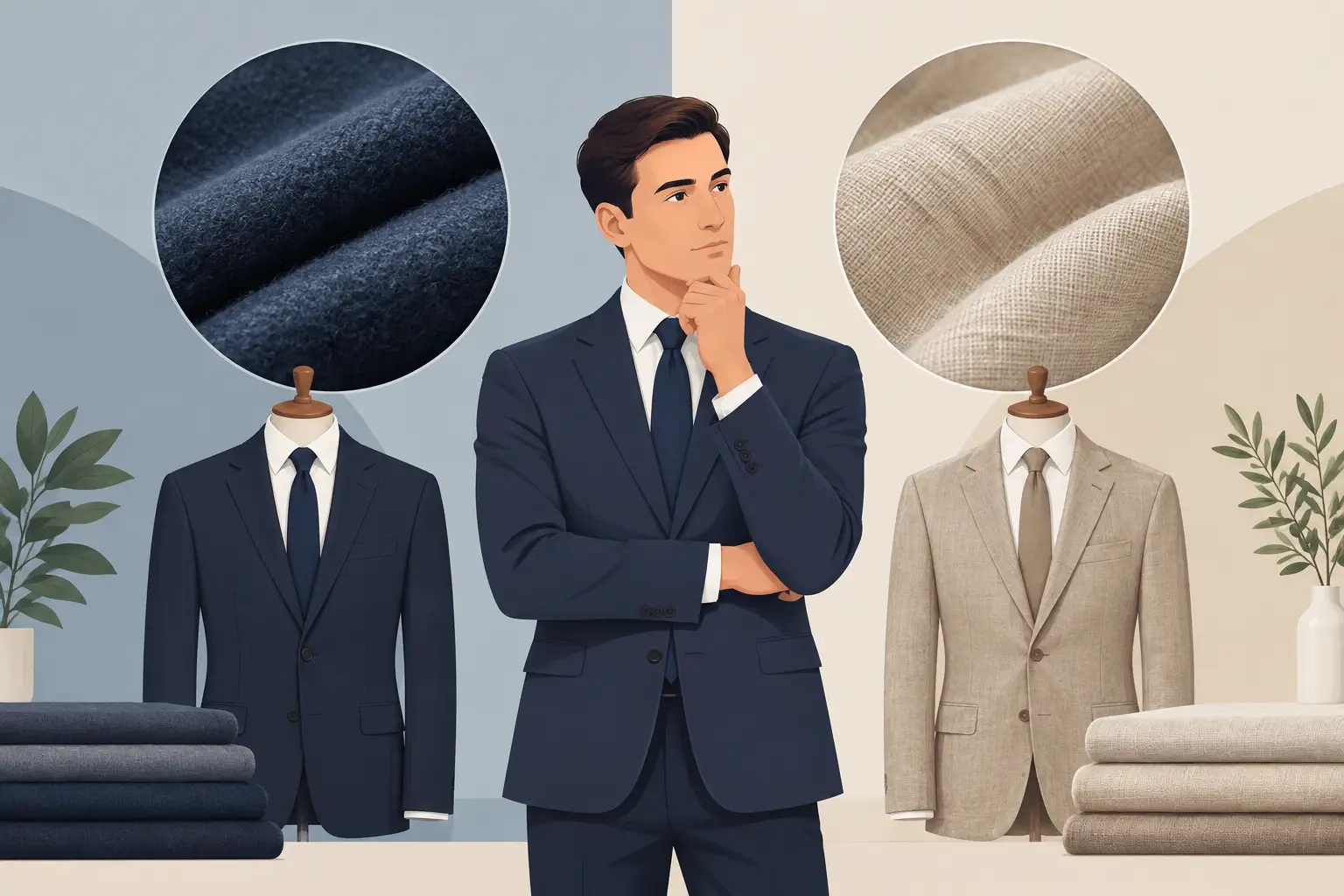
Colour is only part of the story. The handle, weight and weave of the cloth affect how the suit looks after a full day of standing, sitting, embracing guests and dancing. Fine wool provides a clean drape and dependable comfort across much of the year. For warmer months, a breathable open weave, high-twist wool or a carefully balanced wool-and-linen blend can keep the suit cool while preserving shape.
Pure linen has a relaxed charm, but it creases readily. That is not a flaw if the wedding has an informal, Mediterranean or countryside character; it is a trade-off. If you want the texture of linen with a cleaner finish in photographs, a blend often provides a more controlled result.
Texture can offer more distinction than bold colour. A subtle herringbone, birdseye or tonal check gives depth without competing with a boutonniere, patterned tie or detailed dress. The most successful cloths reveal themselves at close range rather than demanding attention from across the room.
Do Not Overlook the Lining and Construction
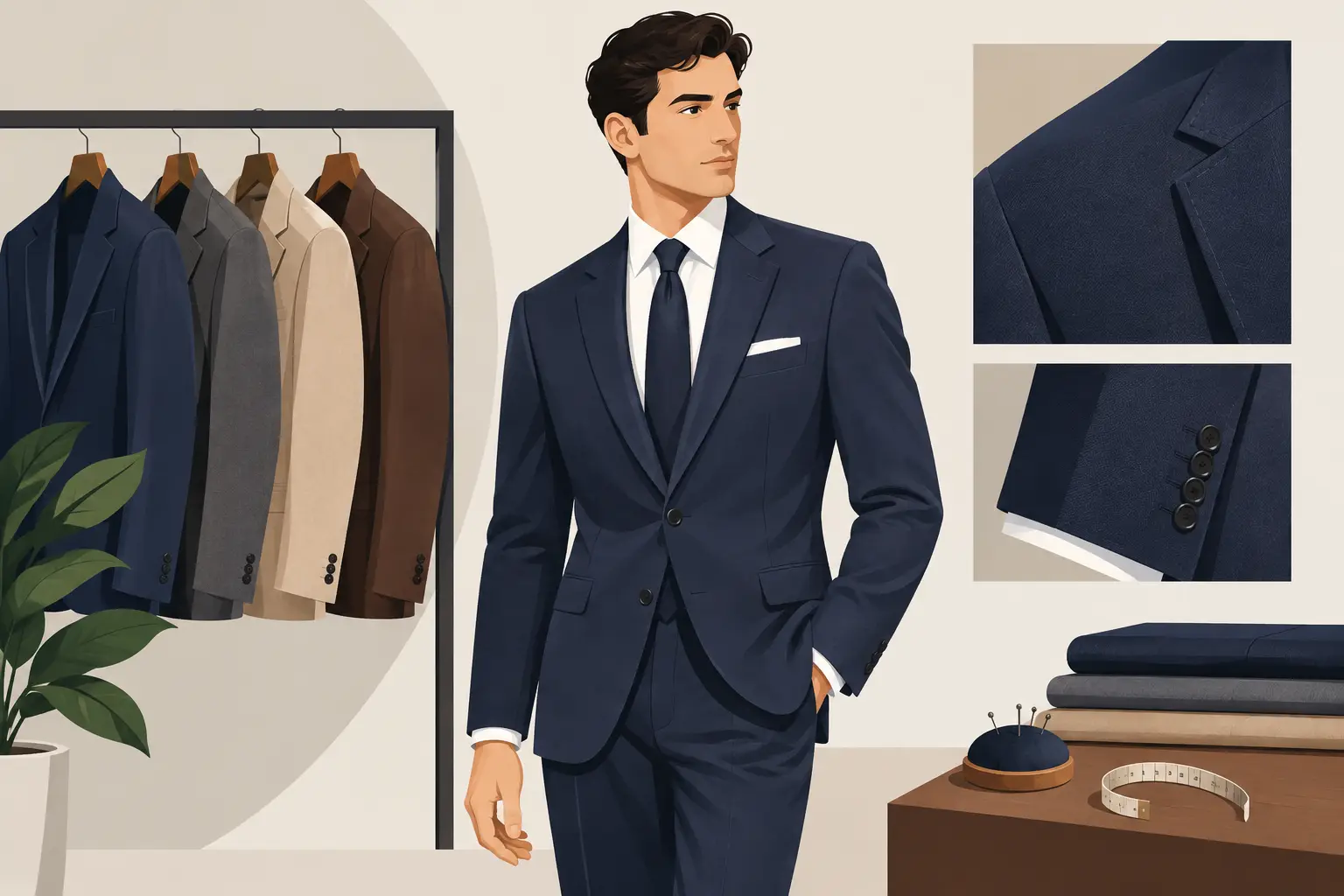
The inside of the jacket is part of the experience. A considered lining can introduce personal colour or a quieter signature, while a lighter construction can make a summer suit noticeably more comfortable. Pocket placement, button choice, working cuffs and hand-finished details all contribute to the sense that the garment has been made for one wearer, not merely customised after production.
That said, personal details should have a purpose. A wedding date stitched discreetly inside the jacket can be meaningful. Excessive contrast stitching, novelty linings or too many visual features may date quickly and distract from an otherwise timeless suit.
The Fitting Is Where Precision Becomes Visible
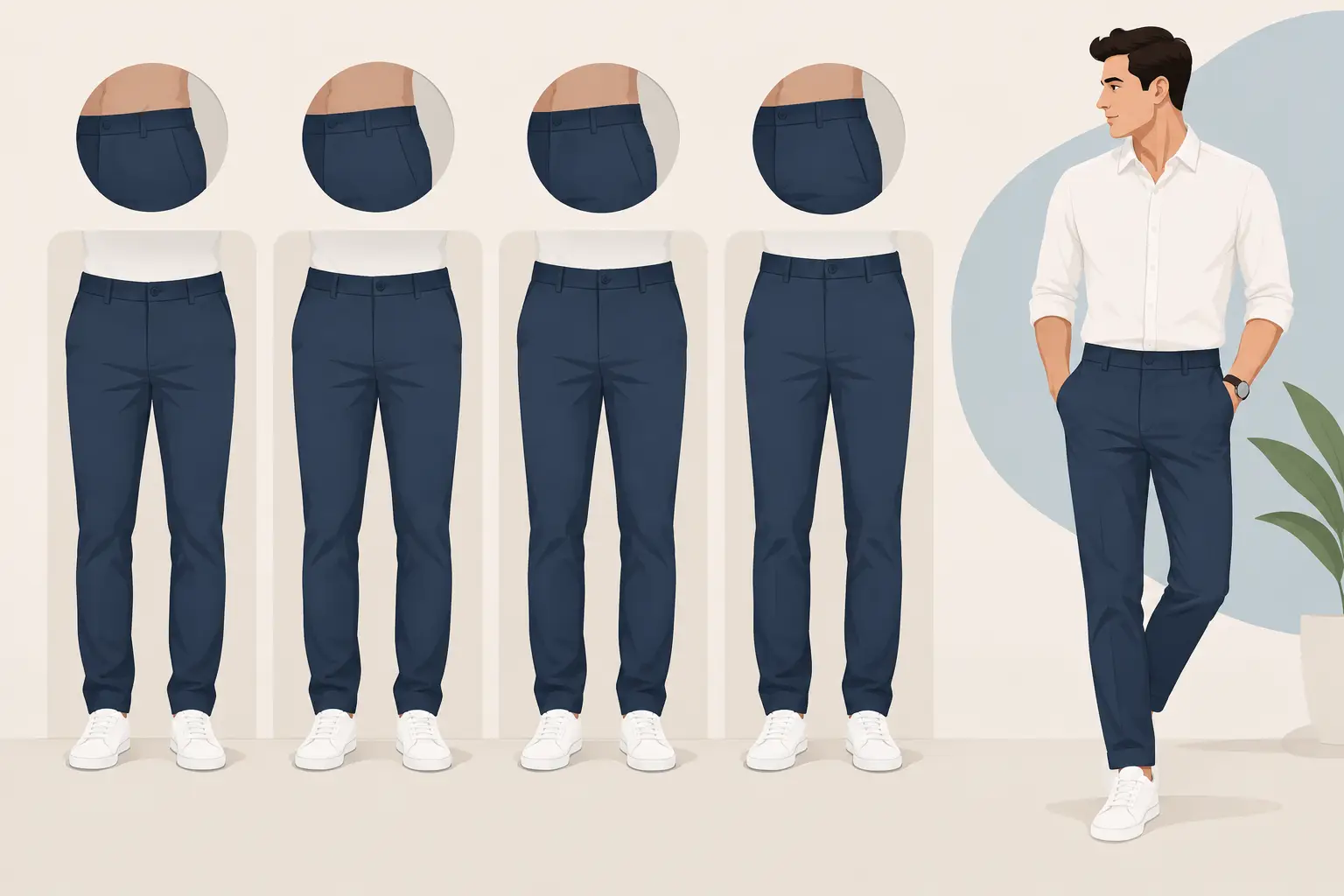
A suit can use beautiful cloth and still fail if the fit is not resolved. The collar should sit close to the neck without a gap. The shoulder line should end where your natural shoulder ends, neither collapsing inward nor extending beyond it. When buttoned, the jacket should close cleanly without pulling into an X across the chest.
Jacket length is equally influential. It should balance your frame and cover the seat appropriately, rather than following a short-lived trend towards cropped tailoring. Sleeve length should reveal a measured amount of shirt cuff, while trouser length should be chosen for your footwear and preferred break. A slight break is classic; a cleaner, shorter line can look modern when executed with care.
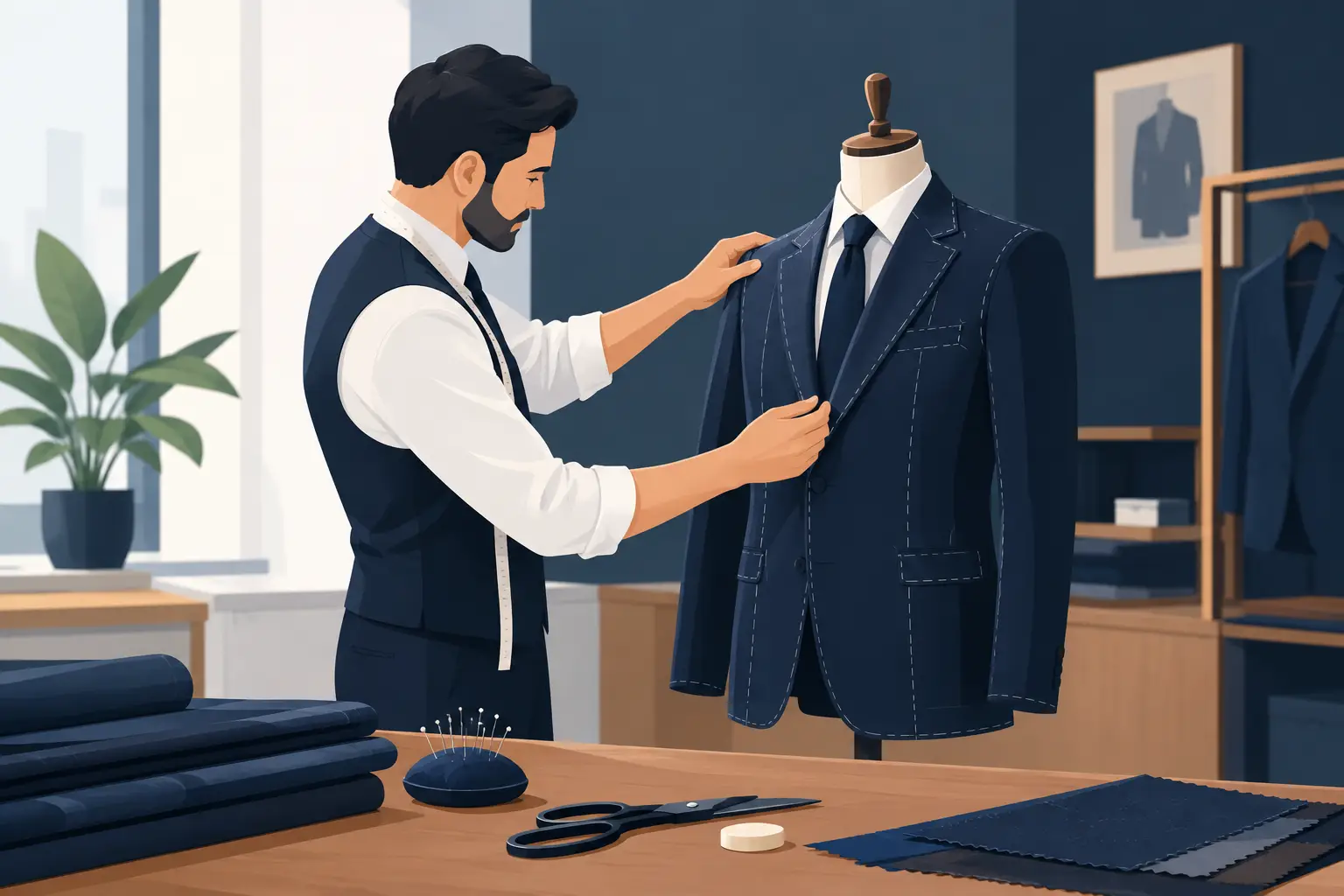
Comfort is not separate from appearance. You need to raise a glass, greet family, sit through the meal and move on the dance floor. During fittings, do not simply stand still in front of the mirror. Sit down, walk, reach forward and put your hands in your pockets. A skilled tailor will read the tension points and refine the garment without compromising its line.
At Manndiip, the fitting conversation is as much about how you want to carry yourself as it is about measurements. The aim is a suit that feels natural from the ceremony through to the last photograph, while retaining the precision expected of formal tailoring.
Finish the Look With Restraint
Accessories should sharpen the suit, not compete with it. Your shirt collar must work with the tie knot and lapel shape, while the cuff should suit the level of formality. A crisp white shirt is rarely a wrong decision, but ivory, pale blue or a subtle texture can work beautifully when the wider palette allows.
Choose footwear early rather than treating it as an afterthought. Black Oxfords are the natural partner to black tie, charcoal or formal navy. Dark brown, oxblood or polished suede may suit blue, green and brown tailoring, depending on the season and setting. The trouser hem should be fitted with the wedding shoes in mind.
A pocket square should add texture or a gentle contrast, not repeat the tie exactly. Likewise, a boutonniere is most elegant when it feels integrated into the outfit’s colour story rather than pinned on as a separate flourish. Braces can be both practical and refined beneath a waistcoat, provided they are chosen as part of the outfit from the beginning.
Give the Process Enough Time
Commissioning wedding tailoring is best begun several months before the date. This allows time for cloth selection, initial measurements, fittings and thoughtful adjustments. It also leaves breathing room if your body shape changes through training, travel or pre-wedding nerves.
A final fitting closer to the wedding is often worthwhile, particularly when the trousers, shirt and shoes are all available. Bring the accessories you intend to wear. The smallest elements can influence the overall balance, from the thickness of a watch to the height of a shoe heel.
Your wedding suit should feel like the most assured version of your everyday style, elevated for an occasion that deserves it. Choose a cloth you will be pleased to see in photographs for decades, insist on a fit that lets you move with ease, and let the detail speak quietly for itself.