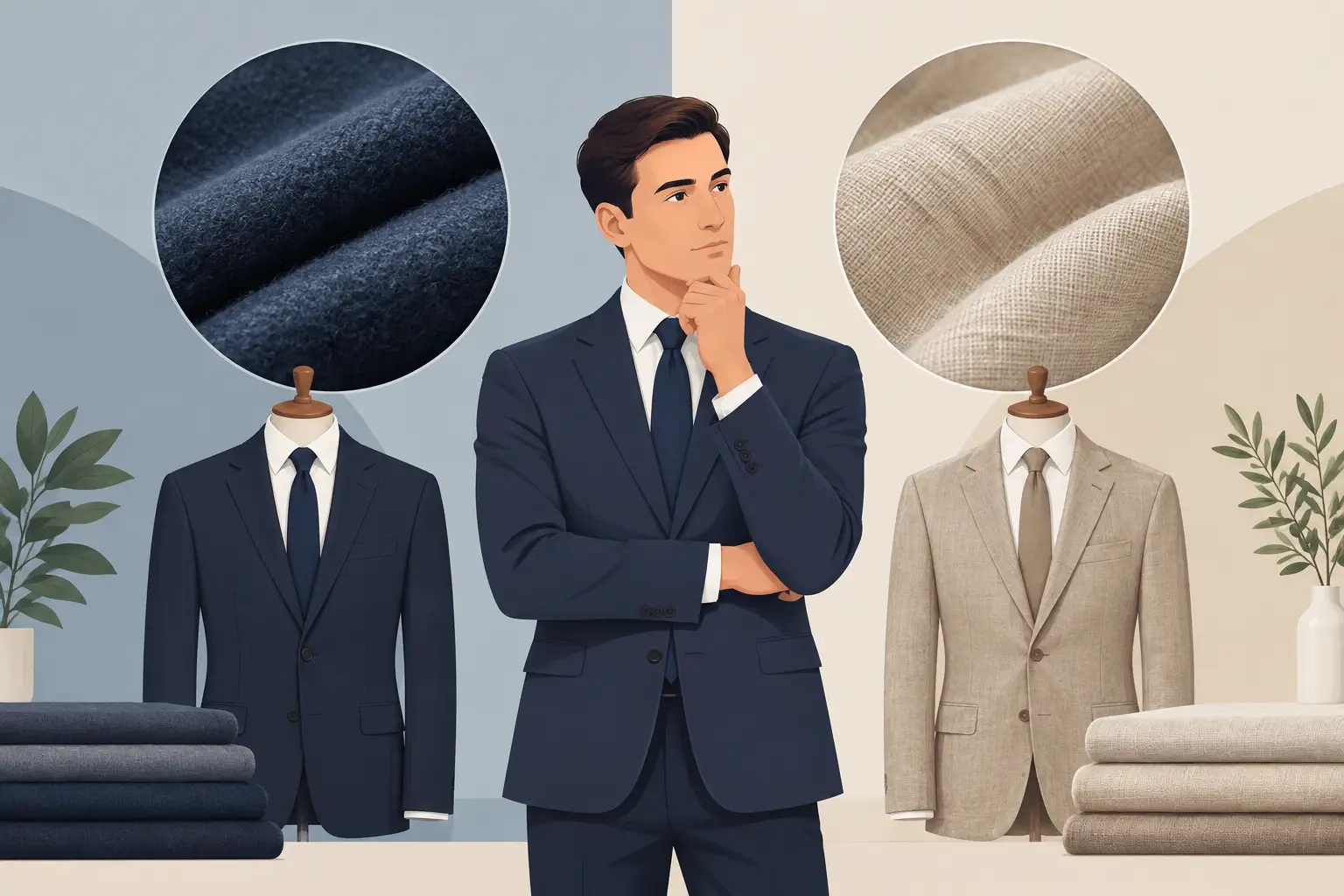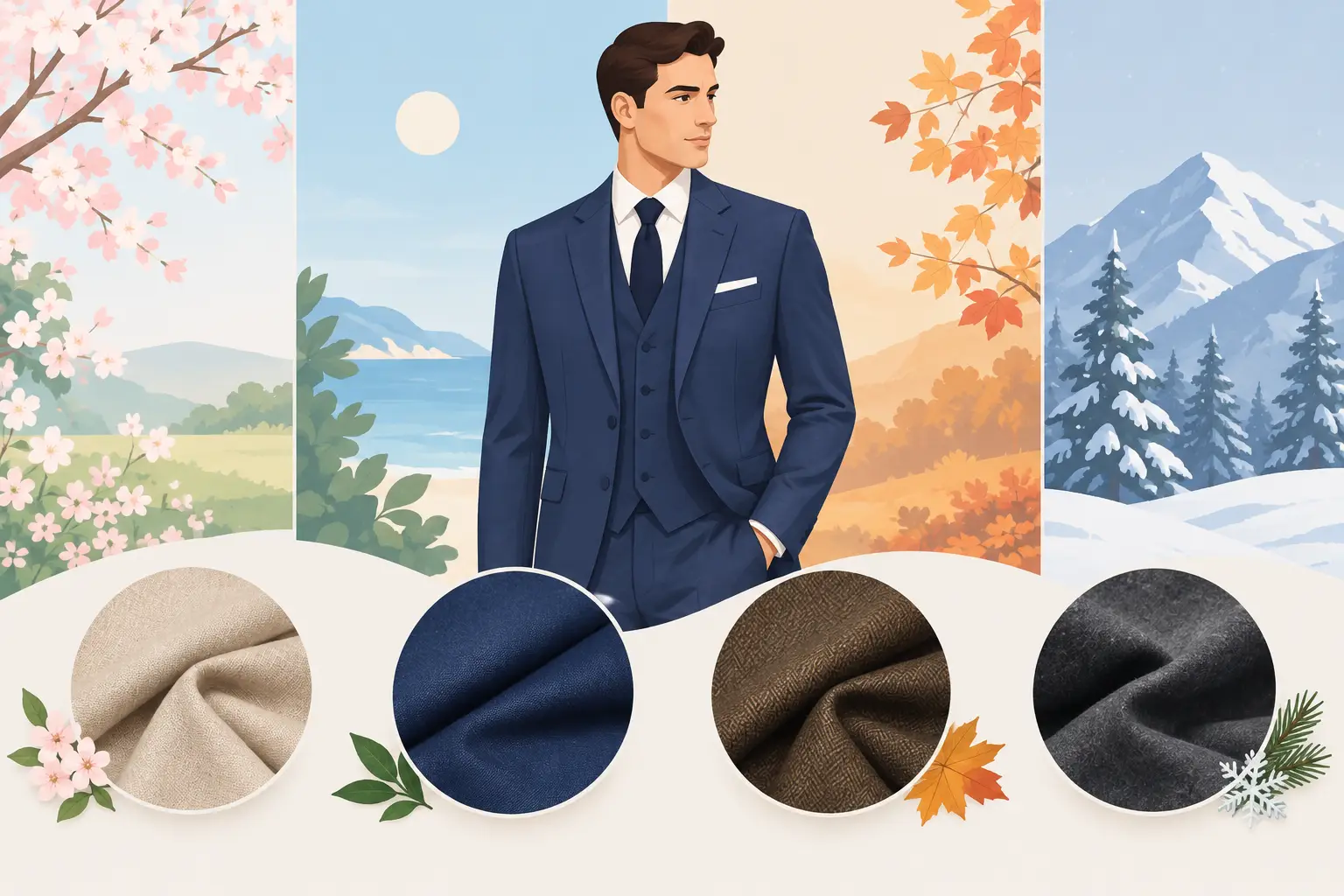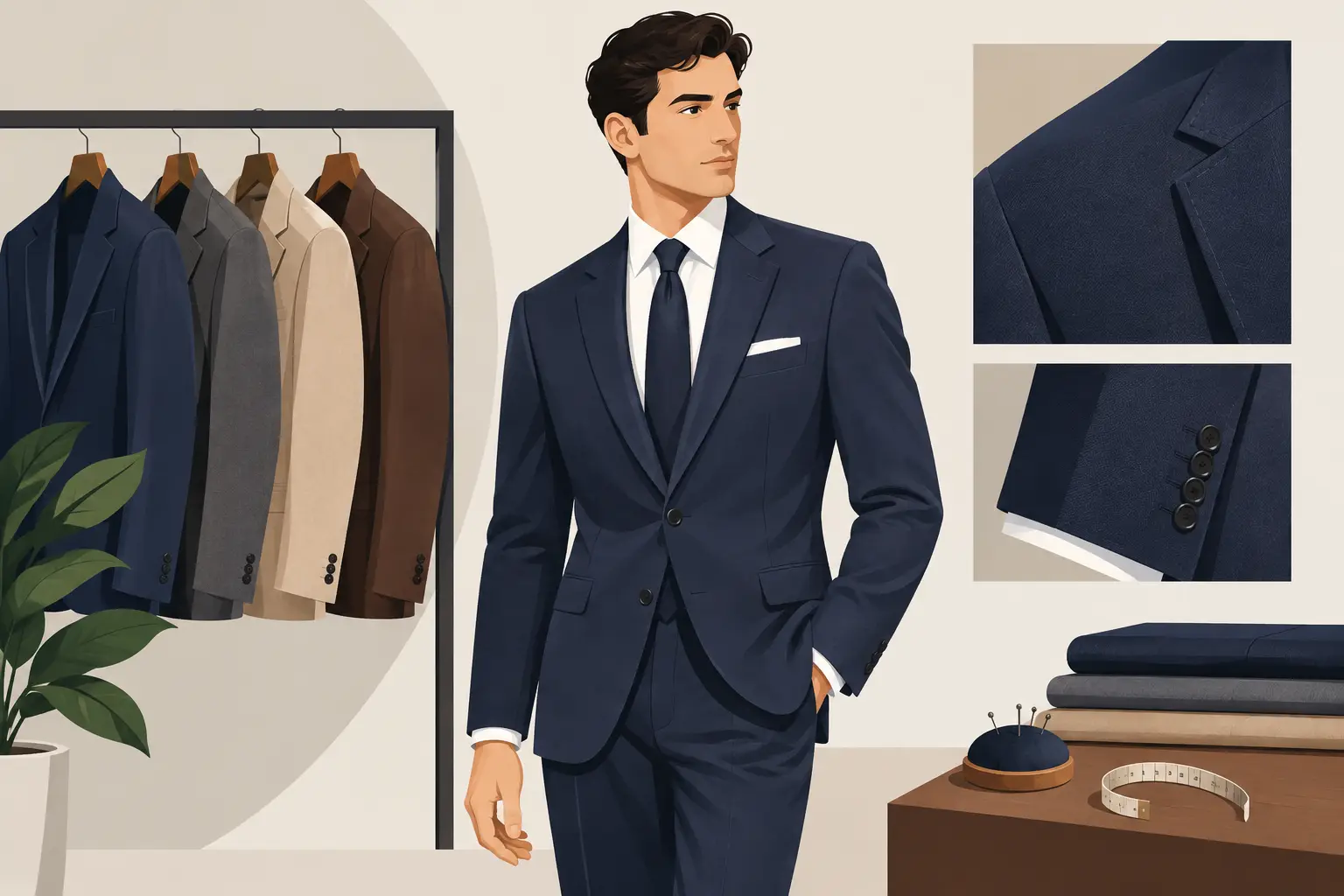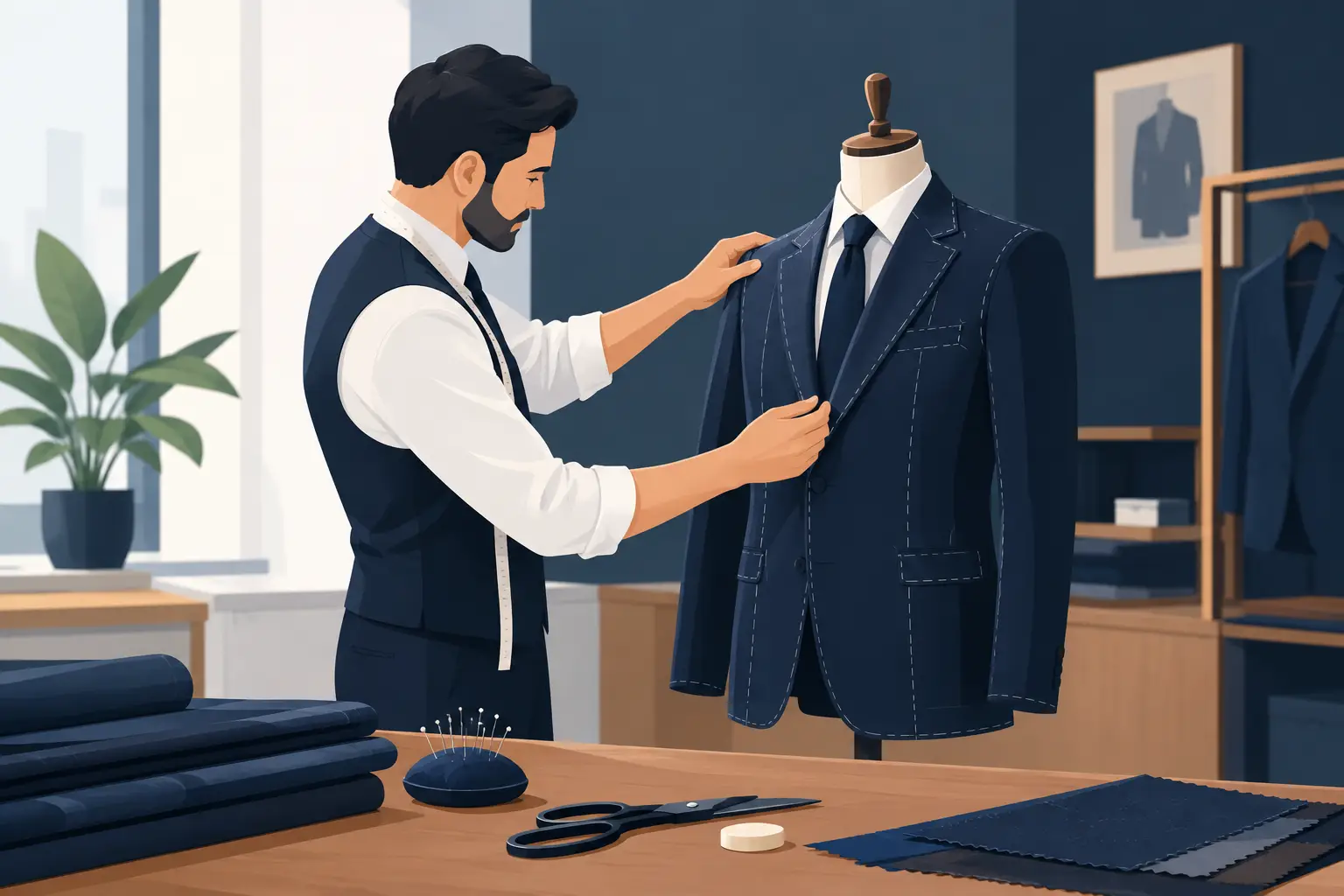

The moment a jacket opens, its lining becomes part of the impression. It frames the wearer, affects how the cloth moves across the shoulders, and offers a private detail that can be restrained, expressive or quietly luxurious. This guide to choosing lining for a suit considers more than colour alone: the right choice must suit the jacket’s purpose, its outer cloth, the season and the man wearing it.
A lining may be largely hidden, but it is never insignificant. In a bespoke or made-to-measure garment, every element should earn its place. The lining should allow the jacket to slip on with ease, support a clean silhouette and bring a considered finish to the inside of the garment. Get it right, and the suit feels as accomplished from within as it appears in the mirror.
Start with the suit’s purpose
A business suit and a wedding suit can be cut from similarly elegant wool, yet their linings may call for very different treatment. The most successful choice begins with where, when and how often the suit will be worn.
For a navy, charcoal or mid-grey business suit, a tonal lining is usually the most versatile answer. Deep blue, steel grey, burgundy or a discreet jacquard pattern introduces character without competing with the formality of the cloth. This approach is especially effective for clients building a core professional wardrobe: the jacket remains polished during meetings, while the interior still carries a personal signature.
A wedding suit allows greater freedom. A groom may choose a richly coloured lining that nods to the wedding palette, a subtle floral design, or a lining with a meaningful motif. The distinction lies in proportion. If the outer cloth is dramatic – a velvet dinner jacket, for example, or a boldly checked three-piece – a more restrained lining often creates a better balance. Conversely, a clean midnight-blue or black formal jacket can accommodate a more individual interior.
For country and tweed tailoring, consider the landscape of the cloth. Olive, tobacco, rust, forest green and wine shades sit naturally against brown, sage and earthy checks. A lining need not match a single thread in the tweed. It should instead feel connected to the garment’s overall palette, giving the jacket depth rather than making it look overly coordinated.
Guide to choosing lining for a suit: begin with fibre
The most beautiful pattern is of little value if the lining performs poorly. Fibre composition determines breathability, handle, durability and how readily the jacket slides over a shirt or knitwear.
Cupro and Bemberg: the refined all-round choice
Cupro, often sold under the Bemberg name, is a regenerated cellulose lining prized in fine tailoring. It is smooth, breathable and anti-static, with a fluid handle that complements quality wool cloth. It is particularly well suited to business, ceremonial and occasion tailoring because it feels cool against the body while allowing the jacket to move naturally.
For many clients, cupro offers the strongest balance of comfort and sophistication. It also takes colour exceptionally well, making it available in everything from classic solids to intricate jacquards. Its refinement does require sensible care, but that is a fair trade for a jacket designed to be worn and appreciated for years.
Silk: luxurious, but not always practical
Pure silk has an unmistakable lustre and a wonderfully soft touch. It can be an excellent choice for a special-occasion garment that will be worn selectively, particularly where the interior is intended to feel as luxurious as the exterior.
However, silk is less resilient than cupro and can show wear sooner at points of friction. It is not automatically the finest choice simply because it is silk. For a suit that will serve a demanding weekly rotation, a high-quality cupro lining is often the more intelligent and enduring decision.
Viscose and acetate: understand the quality level
Viscose can provide a comfortable, breathable lining at a more accessible price point. Its quality varies, so the weave, finish and construction matter. Acetate is smooth and commonly used, but tends to be less breathable and less durable than premium cupro. It may be suitable for occasional garments, but clients investing in a suit of genuine longevity should ask what sits behind the visible pattern.
Synthetic linings can be durable and inexpensive, yet they are more likely to hold heat and create static. In a carefully made suit, comfort should not be sacrificed for a flashy interior.
Match lining weight to cloth and climate
A lining changes how warm a jacket feels. This is especially relevant in Britain, where one suit may be expected to travel between a heated office, a wet platform and an evening event in the same day.
A lightweight tropical wool or open-weave summer cloth benefits from a light, breathable lining. Heavily lining such a jacket can undermine the very reason the cloth was selected. For warm-weather tailoring, a half-lined or butterfly-lined construction may be worth considering. These use lining selectively across the upper back and sleeves, retaining easy wear while reducing bulk and heat.
A substantial flannel, cavalry twill or tweed jacket can carry a fuller lining comfortably. The additional layer helps the garment glide over shirts, knitwear and waistcoats, while giving the interior a neat, finished appearance. Yet even here, full lining is not compulsory. The decision depends on the desired softness of the jacket, the wearer’s temperature preference and the intended setting.
Sleeve lining deserves particular attention. Regardless of whether a jacket is fully or partially lined through the body, smooth sleeve lining makes a considerable difference when putting it on over a long-sleeved shirt. It prevents the outer cloth from catching and helps preserve the line of the sleeve.
Choose colour with the same discipline as cloth
A lining is an opportunity for personality, not an excuse for excess. The strongest choices establish a relationship with the suit rather than merely creating contrast.
Tonal linings are timeless. Navy beneath navy, oxblood beneath charcoal, or warm bronze beneath brown creates richness without demanding attention. They are ideal for men who value distinction in the details and want a garment that remains appropriate across many years and settings.
Complementary colour can be more expressive. A dark green lining inside a navy suit, a plum lining within a grey jacket, or a petrol blue lining beneath chocolate brown can look exceptionally considered. The key is to choose a depth of colour that feels mature. Jewel tones tend to age more elegantly than bright primaries.
Patterned linings require a cooler eye. Small geometric designs, subtle paisleys and understated jacquards can add interest without overwhelming the garment. If the outer fabric already has a prominent check, herringbone or stripe, a plain lining or a quiet tonal weave generally gives a cleaner result. Two competing patterns can make even an impeccably cut jacket feel unsettled.
Personalised printed linings have their place, particularly in wedding tailoring. A discreet reference to a shared interest, a meaningful location or a family detail can make a garment genuinely personal. It is wise to consider whether the design will still feel right in photographs and when the jacket is worn years later. The most memorable details are often those that reveal themselves gradually.
Do not overlook construction details
The lining is also where thoughtful tailoring becomes visible. Cleanly finished seams, well-positioned internal pockets and a properly set centre-back pleat all influence how the jacket wears. A pleat provides a little extra movement through the shoulders and back, reducing strain when sitting, driving or reaching.
Internal pocket placement should reflect the wearer’s daily habits. A mobile phone pocket, card pocket or secure buttoned compartment can be incorporated without distorting the jacket’s shape. The aim is practical elegance, not turning a tailored jacket into luggage. Overloading internal pockets will pull at the lining and compromise the line of the coat, whatever material has been chosen.
Contrast piping around internal pockets can be a handsome finishing touch, particularly when it echoes a colour within the lining. Like a fine hand-stitched buttonhole, it should reward close inspection rather than announce itself from across the room.
Let the suit express the wearer
There is no single best lining for every suit. A conservative navy two-piece intended for client meetings calls for a different answer from a wedding three-piece, a soft-shouldered linen jacket or a heavy sporting tweed. The right lining is the one that works in service of the garment, its occasion and the individual inside it.
At Manndiip, lining is considered alongside cut, cloth and construction, not selected as an afterthought. When those decisions are made together, the result is a jacket that carries its character with confidence – composed on the outside, meticulously crafted within, and unmistakably your own.