An overcoat can make an excellent suit look considered, or interrupt its line entirely. If you are asking yourself, ‘which overcoat length suits me?’, the answer is not simply dictated by height. Your proportions, the way you dress, where you wear the coat and, crucially, how it is cut all determine whether the finished silhouette feels assured.
A well-chosen overcoat should lengthen the figure, protect the tailoring beneath it and carry the same quiet authority as a beautifully made suit. The aim is not to follow a rule blindly. It is to find the length that gives your wardrobe presence without wearing you.
Which overcoat length suits me best?
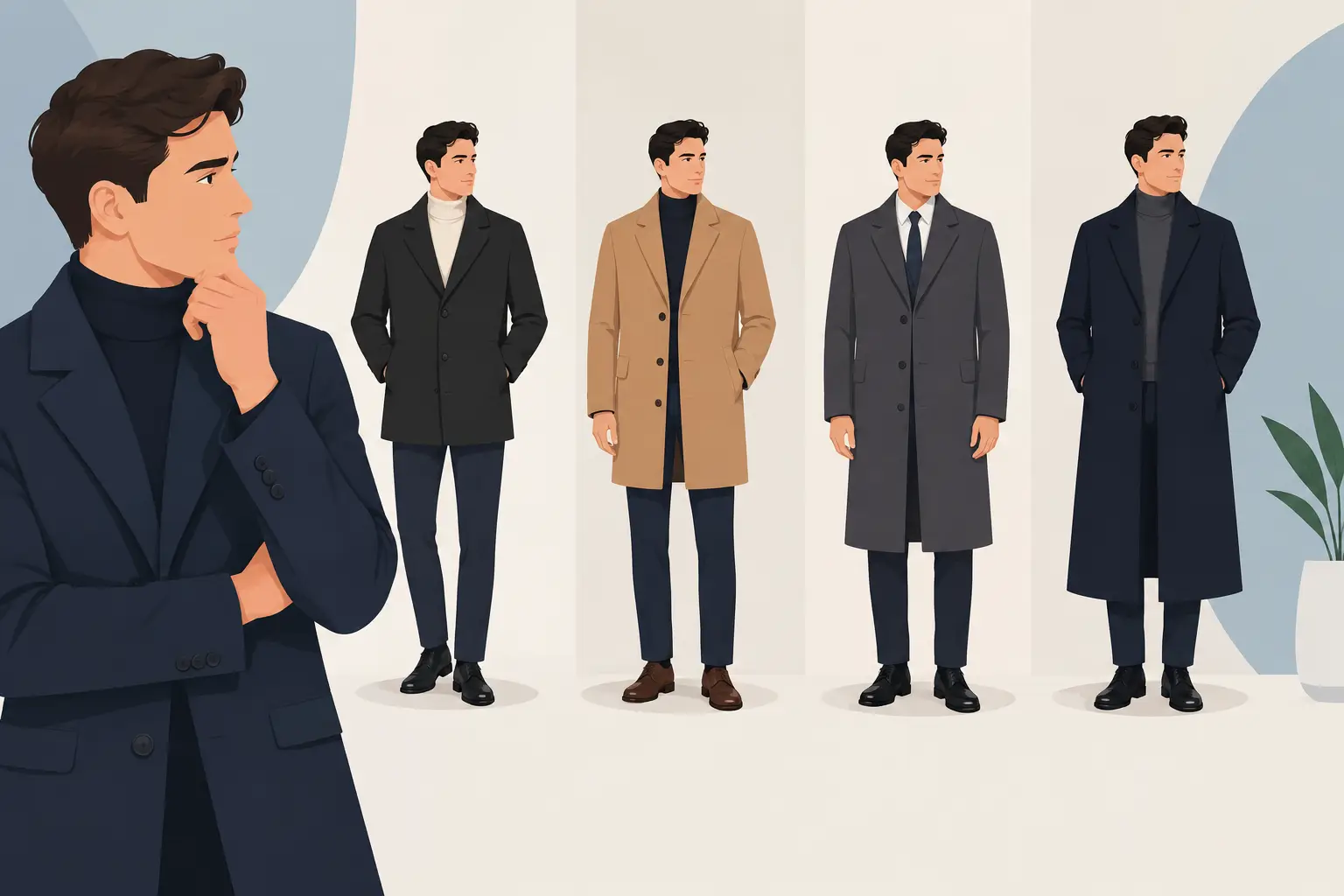
Overcoats generally fall into three useful categories: short, around mid-thigh; classic, finishing just above or around the knee; and full length, extending below the knee towards the mid-calf. Each creates a different visual effect and serves a different wardrobe.
The most versatile choice for many men is a coat that finishes at, or just above, the knee. It offers coverage over a tailored jacket, works with formal trousers and knitwear alike, and creates a clean vertical line without feeling theatrical. Yet versatility should not be confused with a universal answer. A shorter man may benefit from a slightly abbreviated version, while a tall man has the presence to carry a more generous length with ease.
The decisive detail is proportion. An overcoat should look intentional from every angle, with its hem, pockets, lapels and button stance working in harmony with your frame.
The short overcoat: practical and contemporary
A short overcoat usually ends between the upper thigh and mid-thigh. It is a strong choice for men who spend much of the day moving between the car, train and office, or who prefer a more contemporary, streamlined wardrobe. Worn over chinos, flannel trousers or a fine-gauge roll neck, it delivers polish without the formality of a longer coat.
For shorter men, this length can be particularly effective when the coat is cut close enough through the body to avoid excess fabric. A hem placed too low can divide the body visually and make the legs appear shorter. A restrained length, paired with trousers that sit cleanly at the waist, preserves a sharper proportion.
There is a trade-off. A short overcoat offers less protection from rain and cold, and it can leave the hem of a longer suit jacket exposed if not carefully designed. It is therefore less suitable as the only outer layer in a formal winter wardrobe, particularly if you regularly attend weddings, evening events or business meetings in a suit.
The knee-length overcoat: the assured all-rounder
A knee-length overcoat is the classic expression of sartorial sophistication. It has enough length to sit elegantly over a suit jacket, enough structure to frame the wearer, and enough practicality for daily city life. For the professional wardrobe, it is often the first overcoat worth commissioning.
Men of average height tend to find this proportion naturally flattering. The longer vertical line creates presence while the visible lower leg prevents the silhouette from becoming heavy. If you have a broader chest or more athletic build, a knee-length coat can also balance the upper body, especially when shaped gently at the waist rather than cut as a straight box.
Construction matters here. A higher armhole improves movement, a well-positioned waist suppresses bulk, and a vent should allow the coat to fall cleanly when walking or sitting. The coat must accommodate a jacket beneath it, but it should never look as though it has been bought several sizes too large. That distinction is where tailored outerwear earns its place.
For most formal occasions, choose a single-breasted knee-length overcoat in navy, charcoal or deep brown. A double-breasted version adds greater authority, though its stronger front can feel more formal and requires precise balance through the chest and waist.
The full-length overcoat: dramatic, elegant and exacting
A full-length overcoat usually falls below the knee, sometimes to the mid-calf. It is the most commanding option and, when cut well, one of the most elegant garments a man can own. It has a natural affinity with eveningwear, winter weddings, tailored flannel trousers and more formal business dress.
Tall men are especially well placed to wear this length, as it complements a longer frame and creates a composed, architectural outline. That said, a full-length coat is not reserved for the exceptionally tall. A shorter man can wear one successfully if the hem is controlled, the waist is clearly defined and the coat is not overloaded with large lapels, oversized pockets or too much volume through the skirt.
The risk is excess. A coat that is too long, too wide or too heavy can appear costume-like rather than distinguished. Fabric selection makes a material difference. A substantial wool or cashmere blend gives the coat enough body to hang beautifully, while an overly thick cloth may add unwanted bulk. For a longer design, clean lines and disciplined detailing are often more powerful than decoration.
Height matters, but proportions matter more
Height is a useful starting point, not the final verdict. A man with longer legs and a shorter torso may carry a longer overcoat differently from someone of the same height with the reverse proportions. Similarly, broad shoulders, a fuller chest or a more compact frame all influence where the hem should sit.
The most reliable visual test is to assess the coat with the clothing you will genuinely wear beneath it. Try it over a suit, not just a shirt. Stand naturally, walk, sit down and view the profile. The jacket should remain covered, the hem should move without catching, and the coat should retain its line rather than balloon at the back.
Pay close attention to the buttoning point. A low button stance can lengthen the lapel line and flatter a taller figure, while a slightly higher stance can bring balance to a shorter torso. The collar should sit close to the neck, and the shoulder should follow your own shoulder line precisely. If these foundations are wrong, changing the hem length alone will not solve the problem.
Match the length to your life
Your overcoat should be guided by the occasions it serves. A man who wears tailoring to the office five days a week needs dependable coverage and refinement, making a knee-length design the natural choice. Someone building a concise weekend wardrobe may prefer a shorter coat in textured wool, perhaps in a rich tobacco, olive or navy.
For black-tie events, formal weddings and winter ceremonies, a longer overcoat brings a sense of occasion that a short style cannot replicate. It protects the clean line of eveningwear and ensures the outer layer is as considered as the suit beneath it. If country wear is part of your wardrobe, a fuller length in a robust tweed or herringbone can feel entirely at home, provided the cloth and cut suit the setting.
Colour also changes how length is perceived. Dark, solid shades create an uninterrupted vertical line and make longer coats easier to wear. Checks, bold patterns and lighter colours draw more attention to the garment itself, so they benefit from a particularly disciplined cut.
Why a tailored fitting changes the answer
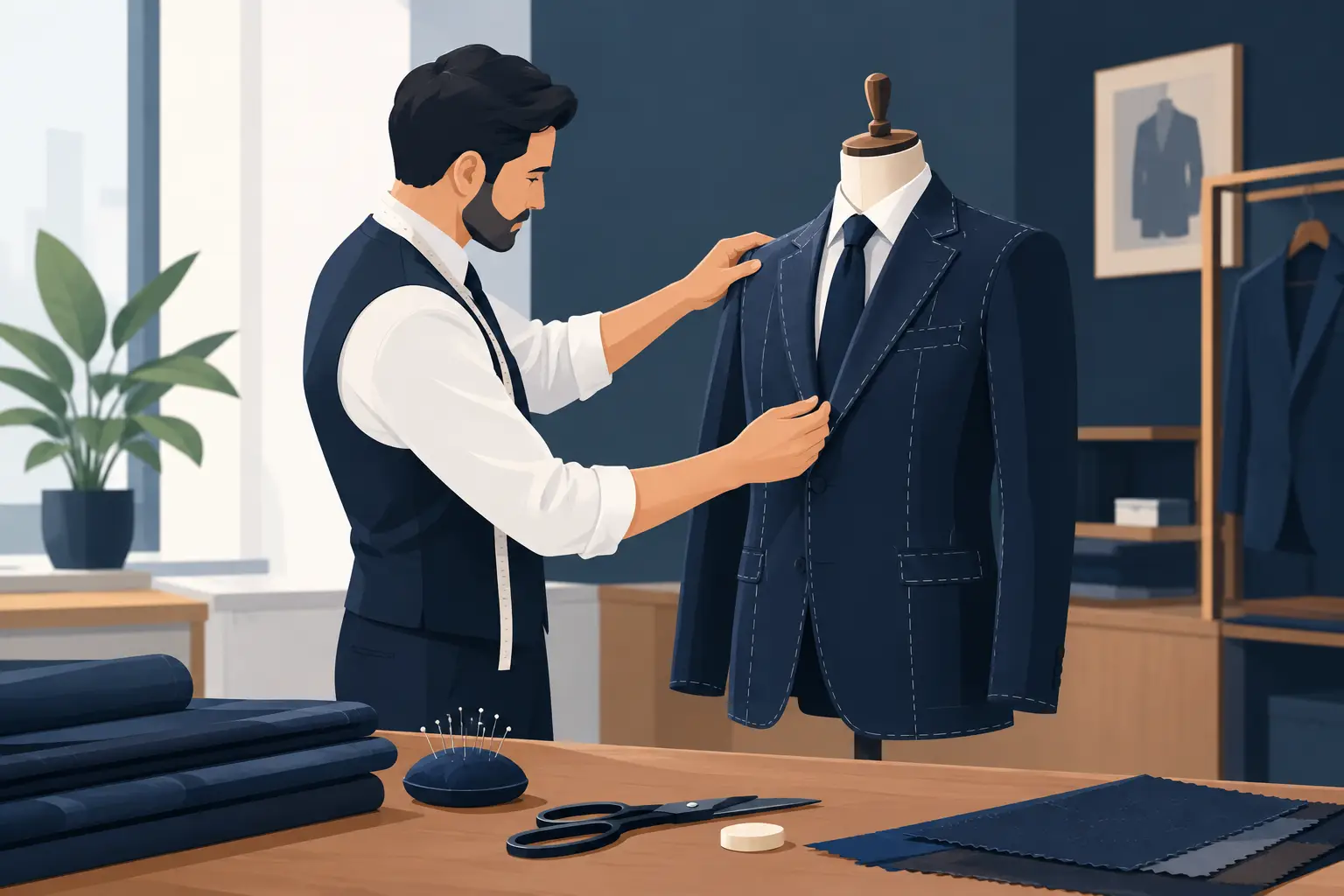
Ready-to-wear overcoats are drafted for an imagined average body, often with generous dimensions to fit as many men as possible. Bespoke and made-to-measure outerwear begins with your actual posture, shoulder slope, chest, waist, seat and preferred styling. This allows the hem to be placed where it flatters rather than where a standard size chart dictates.
At Manndiip, the conversation goes beyond measurements. It considers whether your coat will sit over a business suit, accompany wedding tailoring or become a statement piece for formal evenings. Lapel width, pocket style, vent configuration, cloth weight and the amount of waist shaping are then resolved as part of one coherent design.
The right overcoat length is the one that makes the rest of your wardrobe look more complete. When the proportion is correct, you do not merely stay warm on the way to an occasion – you arrive looking as though every detail was planned.