
A lapel is not a minor finishing detail. It frames the chest, directs the eye towards the face and establishes a suit’s attitude before a word is spoken. In the discussion of peak versus notch lapels, the right answer is rarely about a rigid rule. It is about proportion, purpose and the impression you want your tailoring to make.
A notch lapel offers quiet authority and versatility. A peak lapel brings greater presence, definition and ceremony. Both can be impeccably elegant when they are cut in harmony with the wearer, the cloth and the occasion. The difference lies in how each one communicates.
Peak versus notch: the visual difference
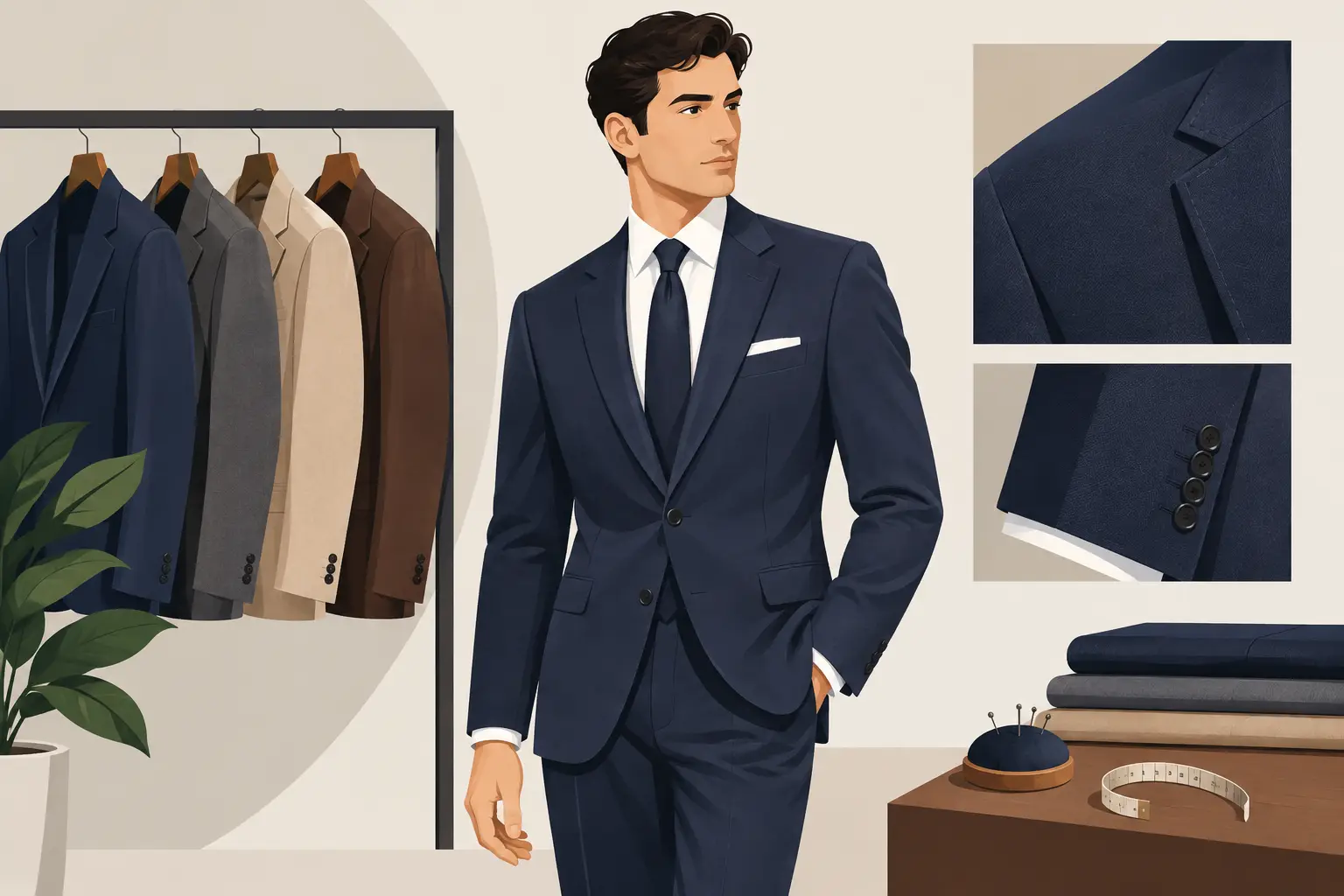
The notch lapel is defined by the small V-shaped indentation where the collar meets the lapel. It is the familiar choice on a two-piece business suit, a blazer and many contemporary wedding suits. Its lines are composed and approachable, which makes it exceptionally adaptable across a working wardrobe.
A peak lapel rises beyond the collar point, creating an upward sweep towards the shoulder. This sharper geometry broadens the visual line of the chest and gives the jacket more authority. It is traditionally associated with double-breasted suits, dinner jackets and formal tailoring, though it can look equally compelling on a finely cut single-breasted suit.
Neither style is inherently more refined. The quality lies in the cut. A poorly balanced peak can feel theatrical, while a narrow, low-set notch can leave an otherwise excellent jacket looking hesitant. The lapel must belong to the suit, not sit on it as an afterthought.
The notch lapel: effortless authority
For the man building a core professional wardrobe, a notch lapel is often the most intelligent place to begin. It has a natural ease that works across boardrooms, client lunches, formal dinners and everyday occasions where polish matters but ostentation does not.
On a navy or charcoal business suit, a notch lapel creates a clean, assured profile. It complements a crisp white or pale blue shirt, a silk tie and well-proportioned shoes without competing for attention. This restraint is precisely its strength. The suit appears considered, not overworked.
Notch lapels also offer flexibility for first-time bespoke clients. A well-cut two-button jacket with a medium-width notch lapel can be styled conservatively for work, then given more personality through cloth, shirt choice, pocket square or tie. In a textured cloth such as hopsack, fresco or subtle checks, the notch lapel allows the fabric to speak.
That said, understated should never mean generic. The height of the gorge, the width of the lapel, the roll through the chest and the position of the buttoning point all shape the final result. A bespoke jacket can retain the versatility of a notch lapel while being unmistakably yours.
When a notch lapel is the stronger choice
Choose a notch lapel when your suit needs to work hard across varied settings, especially business and smart social occasions. It is particularly effective for men who favour a refined, contemporary silhouette and want their wardrobe to remain adaptable season after season.
It is also a strong choice for a wedding suit when the celebration is elegant but relaxed. In a rich mid-blue, soft grey, deep green or warm neutral, a notch lapel can feel elevated without becoming overly ceremonial. The distinction comes through fit, cloth and finishing rather than dramatic lines alone.
The peak lapel: presence by design
A peak lapel has a more declarative character. Its rising point creates a vertical lift through the torso, drawing the eye upwards and outwards. When cut with precision, it lends stature without needing excessive padding or an aggressively shaped shoulder.
This is why peak lapels are so effective for milestone dressing. They suit wedding grooms, black-tie hosts, speakers, performers and men who want their tailoring to project confidence with clarity. A peak-lapel jacket announces intent, particularly in formal cloths such as barathea, velvet, mohair blends or finely woven worsted wool.
For eveningwear, the peak lapel is a natural companion. A black, midnight blue or deep burgundy dinner jacket with silk-faced peak lapels has lasting elegance. The sharp lapel line complements the clean formality of a bow tie and pleated or marcella-front shirt, creating a silhouette that photographs beautifully without relying on trend-led detail.
In business tailoring, a peak lapel can be equally successful, but it requires judgement. A restrained single-breasted navy suit with softly constructed shoulders and moderately sized peaks can look powerful and sophisticated. Make the peaks too wide, the gorge too high or the waist suppression too severe, however, and the effect can become louder than the setting permits.
When a peak lapel earns its place
A peak lapel is an excellent choice when the occasion calls for distinction: a wedding, formal reception, race day, gala dinner or important presentation. It is also worth considering for men with narrower shoulders or a shorter torso, as the upward line can create a stronger, more elongated impression.
The key is scale. Broad-framed men may carry a more generous peak with ease, while a slimmer frame often benefits from a cleaner, moderately scaled version. The goal is not to make the lapel noticeable in isolation. It is to make the wearer appear more composed, balanced and assured.
Fit and proportion matter more than labels
The peak versus notch decision becomes far more useful when viewed through the entire jacket. Lapel style cannot be separated from shoulder construction, chest drape, button stance, pocket treatment or trouser cut. Each element contributes to the garment’s visual balance.
A wide lapel on a close-fitting jacket may feel deliberate and elegant on one man, yet overpowering on another. A narrow notch can sharpen a lean, modern suit, but may appear slight against a broad chest. Likewise, a peak lapel needs a collar that sits cleanly against the neck. If the collar gaps or the lapel breaks awkwardly, even the finest cloth will lose its authority.
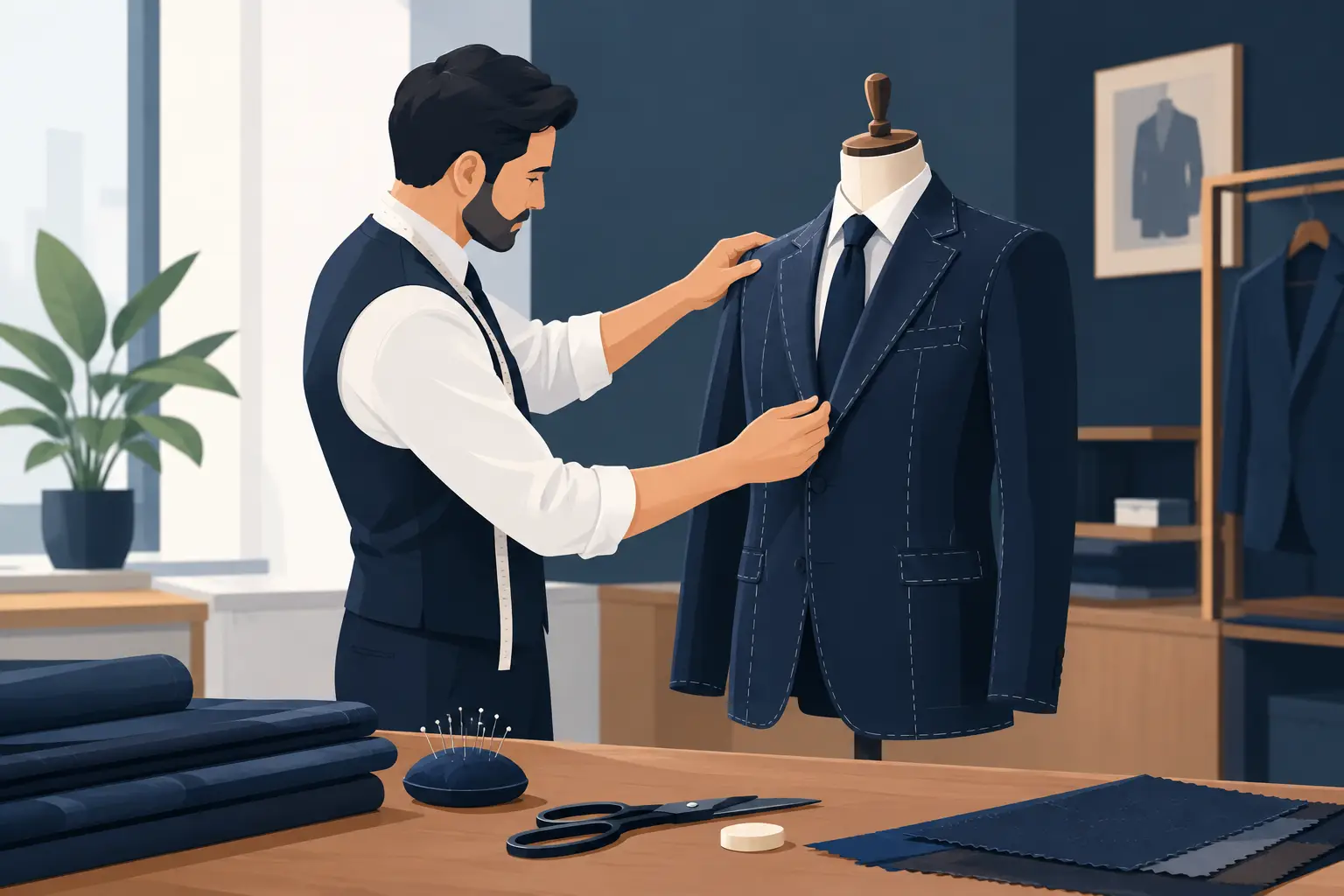
This is where personal tailoring changes the conversation. Rather than selecting a lapel from a standard menu, the cut can be developed around your shoulder line, posture, chest shape and style ambitions. The result is more than a technical improvement. It is the difference between wearing a suit and looking entirely at home in one.
Choosing for a wedding, work or formal event
For a business suit, a medium notch lapel remains the most versatile investment. It will carry you through meetings, travel and evening engagements with understated confidence. If your professional role benefits from a more commanding silhouette, a restrained peak lapel in dark navy can be an elegant alternative.
For a wedding, consider the setting and your role in the day. A groom may choose a peak lapel to distinguish his look from the wider party, especially with a three-piece suit or a double-breasted design. For guests, a notch lapel in a beautifully chosen cloth often provides the ideal balance of celebration and restraint.
For black tie, peak lapels bring a classic formality, particularly on a dinner jacket. Shawl collars have their place too, but the peak offers greater structure and a more architectural finish. Satin or grosgrain facings should be selected carefully to complement the jacket’s cloth rather than dominate it.
Let the lapel reflect the man
The best lapel is not simply the one prescribed by convention. It is the one that supports the way you want to be seen. Some men are at their best in the quiet confidence of a notch lapel, where exceptional fit and cloth do the talking. Others come alive in the definition of a peak, where the jacket carries a little more ceremony and presence.
A thoughtfully cut suit gives both options their due. Choose the line that feels natural when you stand tall, button the jacket and see not just a well-dressed man in the mirror, but a more precise expression of yourself.