A tailoring quality review should begin before a jacket is buttoned or a trouser crease is admired. Fine tailoring is felt in the way a garment settles across the shoulders, follows the body without strain and holds its authority through a full day of movement. For a business suit, wedding suit or formal ensemble, those details are not decorative extras. They determine whether you look merely well dressed or unmistakably considered.
A well-made garment should never compete with the man wearing it. It gives the chest shape, sharpens the line of the waist and allows natural movement without pulling, collapsing or looking overworked. The best result is quietly persuasive: the wearer appears composed because the cut has been resolved properly.
What a tailoring quality review should examine
Quality is often reduced to the cloth label or the number of buttons on a cuff. Both can be pleasant details, but neither tells the whole story. A meaningful assessment considers fit, internal construction, balance, finishing and how the garment performs after repeated wear.
The distinction matters because a suit can look impressive under fitting-room lights yet reveal weaknesses when you sit in a car, reach for a glass at a reception or wear it through a demanding working week. Tailoring is engineering with elegance as its visible outcome.
Fit begins at the shoulder
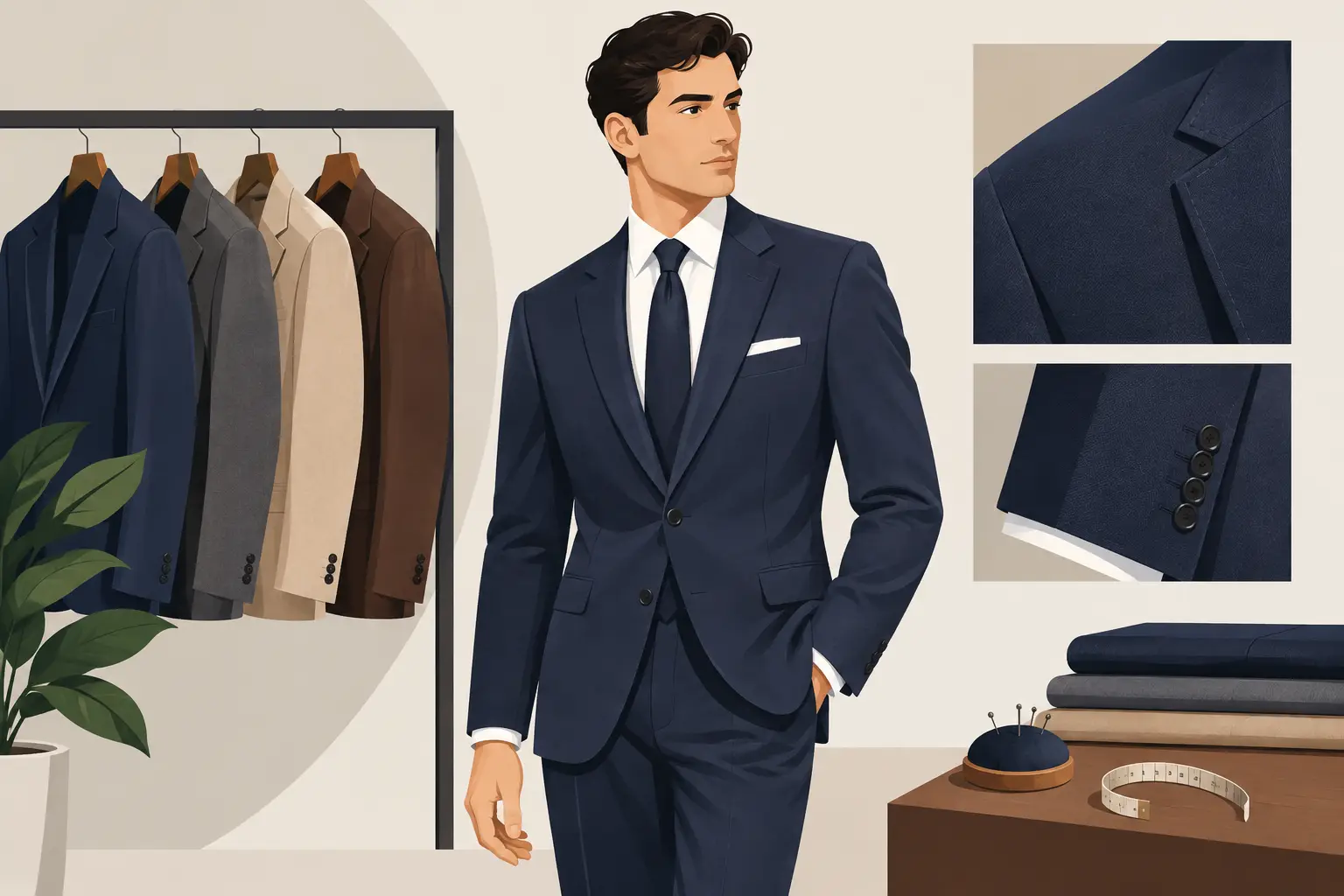
The shoulder is the foundation of a jacket. Its seam should end close to your natural shoulder point, with no divot at the sleeve head and no excess fabric standing proud beyond the arm. A clean shoulder creates a disciplined silhouette; an ill-fitting one cannot be convincingly corrected by taking in the waist or shortening the sleeve.
From there, assess the collar. It should sit close to the shirt collar without a gap at the nape, even as you move. A persistent collar roll can signal an imbalance in posture allowance, neck shape or jacket balance. It is not a small cosmetic issue, as the collar frames the entire upper body.
The chest should have enough room to permit breath and gesture, but not so much that the lapels bow away from the torso. When buttoned, a jacket may show a gentle, controlled line towards the fastening. Deep X-shaped creases, however, are a warning that it is too tight through the waist or chest. Conversely, loose folds below the lapels suggest surplus cloth or insufficient shaping.
Balance reveals genuine precision
A tailored jacket should hang level when you stand naturally. The fronts should meet cleanly, the vents should remain closed at rest, and the hem should appear even from side to side. These qualities are particularly valuable for clients with one shoulder lower than the other, a forward posture or a pronounced chest. Most bodies are asymmetrical. Quality tailoring acknowledges that fact rather than forcing the wearer into a generic block.
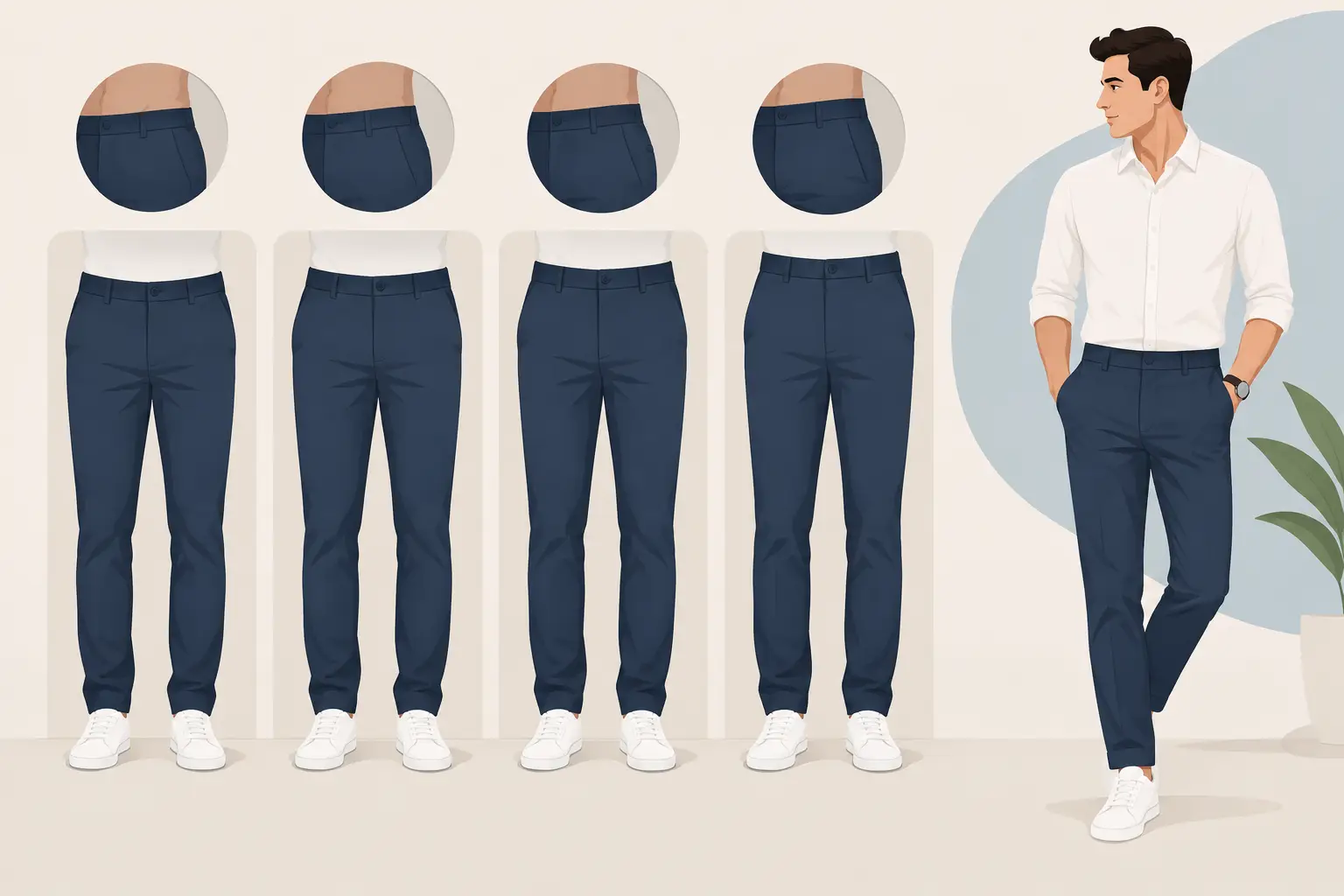
Trouser balance deserves the same scrutiny. The waistband should sit securely without needing a belt to rescue the fit. The seat must be clean but never restrictive, while the trouser leg should fall from the seat in a controlled line. A single, modest break can suit a traditional business look; a shorter break feels more contemporary and works beautifully with a slimmer silhouette. Neither is inherently superior. The right choice depends on proportion, footwear and the occasion.
Construction beneath the cloth
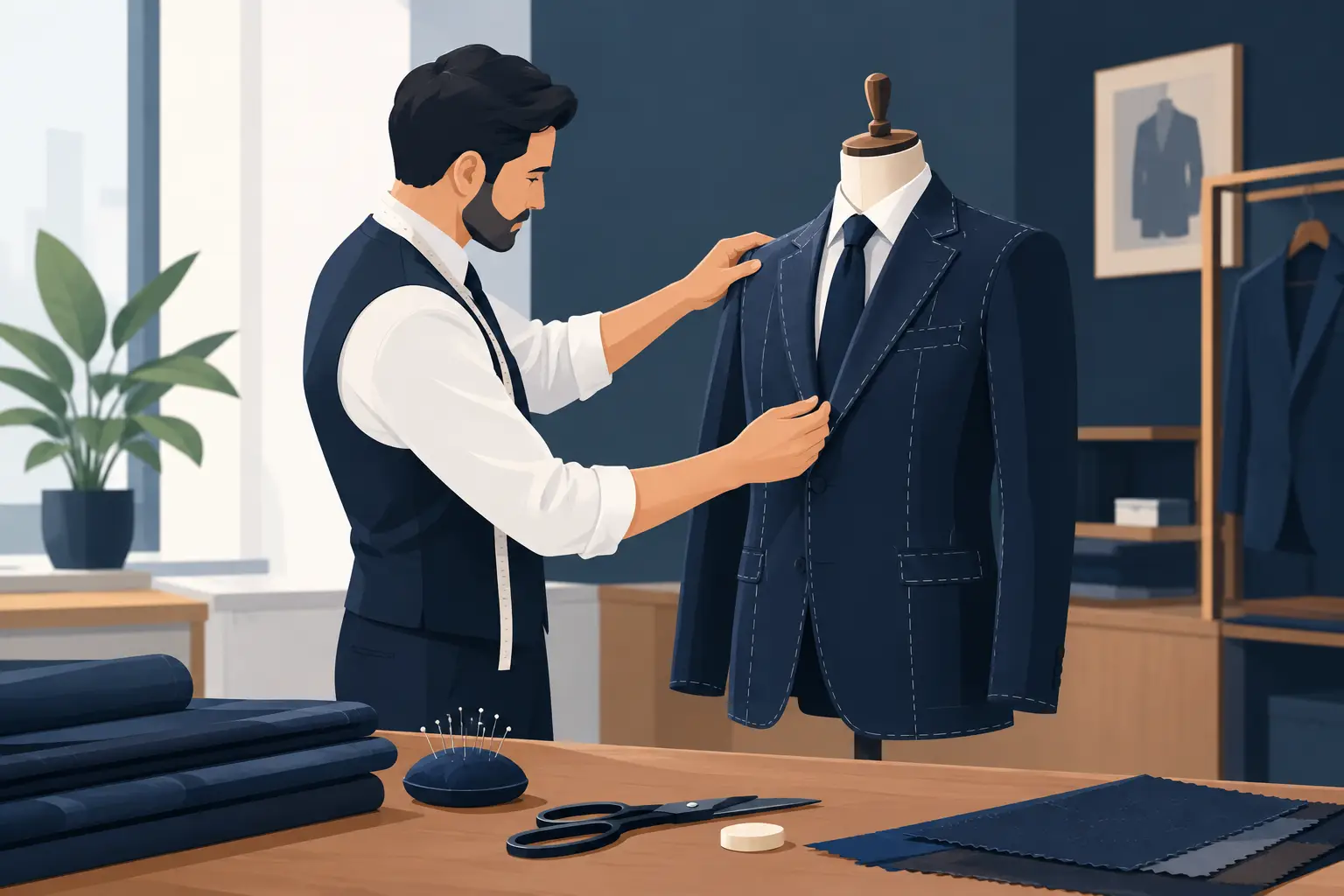
A tailoring quality review becomes more revealing when it considers what cannot immediately be seen. A jacket’s internal canvas, chest structure and shaping determine how it ages, recovers and moulds to the wearer.
A fully canvassed jacket uses a floating layer of canvas between the outer cloth and lining. It is shaped with the garment and can gradually respond to the body over time, producing a natural roll to the lapel and a more individualised drape. This is the traditional benchmark for refined bespoke tailoring, especially in suits intended for regular use or significant occasions.
Half canvas is a credible and often sensible alternative. It supports the chest and lapel, where structure matters most, while using a lighter construction through the lower body. For a warmer-weather suit or a wardrobe piece worn less frequently, it can offer excellent value and comfort.
Fused construction bonds the cloth to an interlining with adhesive. Done carefully, it can produce a clean, accessible jacket, but it is less likely to develop the same supple character as canvas. Over time, heat, moisture and wear can affect the bond. This does not make every fused garment poor, but it clarifies the trade-off: initial sharpness is not the same as enduring hand-built shape.
Lapels, pockets and buttonholes
Fine finishing is rarely loud. Look at the lapel edge. It should lie flat and roll naturally towards the buttoning point, rather than appearing pressed into a rigid line. A hand-padded lapel often has a softer, more expressive roll because the canvas has been carefully shaped with stitches rather than simply fixed in place.
Pocket placement should flatter the body and remain level. Jetted pockets on formalwear require particular accuracy, while flap pockets need crisp corners and a clean line. If the cloth ripples around a pocket opening, the garment may have been strained or poorly pressed during construction.
Functional buttonholes are a classic sign of higher-end tailoring, but they should be judged with restraint. Their value lies in neatness, density and precision, not in ostentation. The same applies to pick stitching. A subtle hand-finished detail can lend depth to a lapel or pocket edge; overly visible stitching can distract from an otherwise elegant coat.
Cloth, lining and the value of restraint
Superior cloth is selected for its purpose, not merely its name. A fine worsted wool in a moderate weight is a dependable choice for professional dressing, offering a smooth surface, resilience and year-round versatility. For a wedding, a richer texture or a cloth with a restrained lustre may be appropriate, provided it suits the setting and photographs well in natural light.
Heavier cloth often drapes beautifully and resists creasing, yet may feel too warm for frequent city wear. Lightweight cloth is comfortable in summer but demands more careful construction and can show strain more readily. The right fabric is a considered compromise between climate, use, silhouette and maintenance.
Pattern matching is another quiet marker of care. On checked or striped cloth, the pattern should align across prominent seams where practicable, particularly at the front closure and pockets. Perfect matching is not possible everywhere on a shaped garment, nor should it override correct fit, but careless disruption suggests rushed cutting.
A quality lining should sit smoothly without pulling at the armhole or hem. It needs enough ease to move with the outer cloth, especially when the wearer reaches forward. In a bespoke garment, lining can offer a discreet moment of personality, but the most sophisticated choice is one that complements the cloth rather than announcing itself before you do.
The fitting process is part of the product
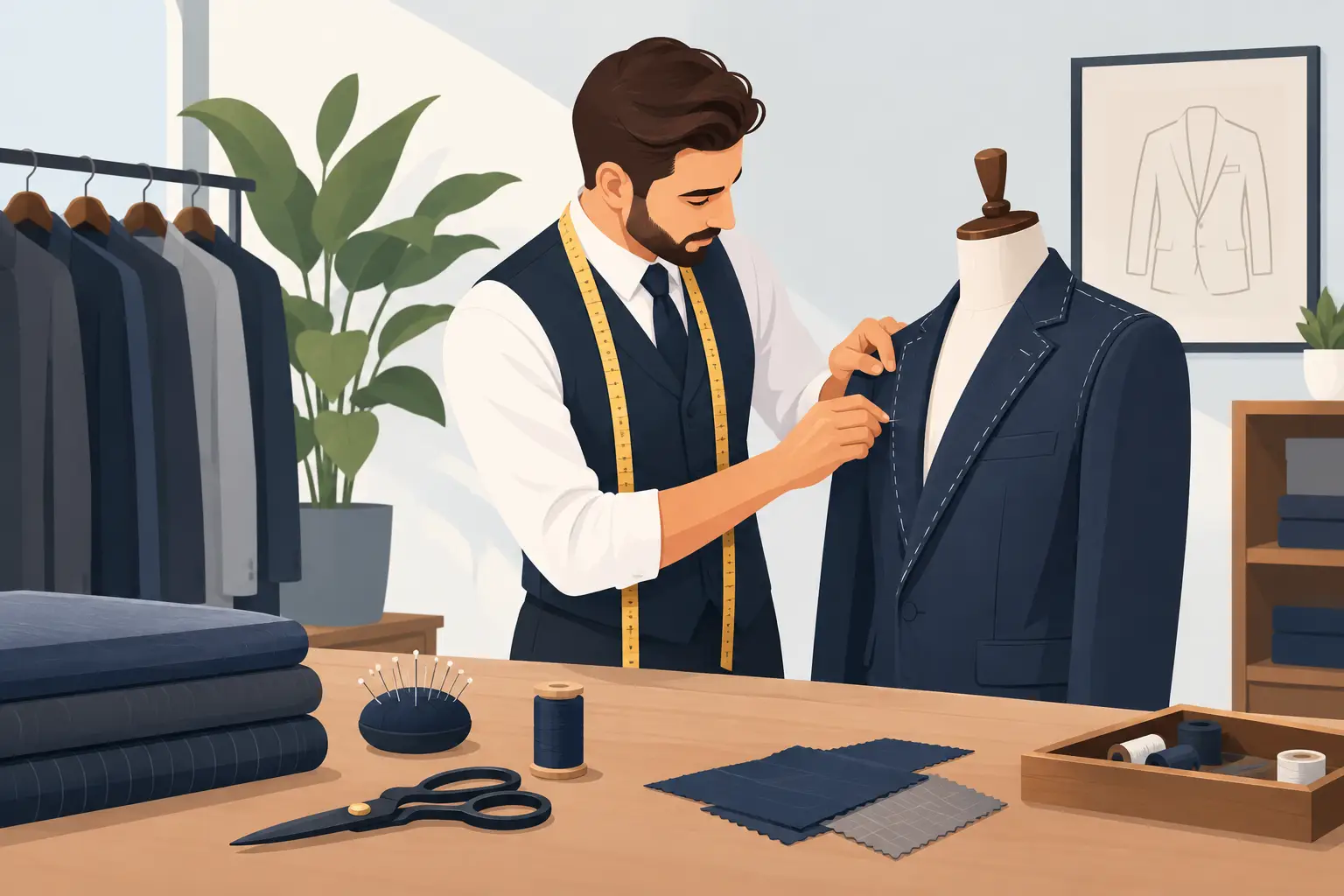
No single measurement produces a distinguished suit. A proper fitting process considers stance, shoulder slope, seat shape, arm position, preferred trouser rise and the way you expect to wear the garment. It should also consider your existing wardrobe. A navy business suit, for example, may need to work with several shirts, shoes and ties, while a wedding jacket may be cut around one defining moment.
This is where made-to-measure and bespoke differ in meaningful ways. Made-to-measure begins with an established pattern that is adapted to your measurements and style choices. It can be an excellent solution for many men, particularly where the fit requirements are straightforward. Bespoke starts with a unique pattern and offers greater control over posture, balance and proportion. For complex figures or clients who value a highly specific silhouette, that additional scope can be transformative.
Neither route should be sold as a shortcut to confidence. The deciding factor is the skill of the cutter, the integrity of the fitting and the willingness to refine. At Manndiip, that personal conversation is central: the aim is not simply to produce a suit, but to establish how you wish to be seen in it.
How quality proves itself over time
A garment earns its place in a wardrobe after the first fitting. Notice whether the sleeves retain their clean line, whether the trouser knees recover after sitting and whether the jacket still hangs well after a long day. Good tailoring should invite wear, not make you anxious about wearing it.
Care matters, too. Rest a suit between wears, use a shaped hanger and press rather than over-clean where possible. Dry cleaning has its place, but frequent cleaning can gradually diminish cloth and internal structure. Small alterations, carried out early and precisely, can also extend the life of a much-loved piece as your body or preferences change.
The real test is simple. When a suit has been cut with judgement, constructed with care and refined to your body, it stops feeling like an outfit reserved for an occasion. It becomes part of the way you carry yourself.