A fine suit should never announce itself before the man wearing it does. Yet the effect is unmistakable: the jacket sits cleanly across the shoulder, the lapel follows the chest without pulling, and the trousers fall with an easy, deliberate line. What makes a suit bespoke is not simply the ability to choose a cloth or add your initials. It is the discipline of creating a garment from the ground up for one person, one posture and one way of living.
For men investing in business tailoring, wedding attire or formalwear, the distinction matters. A bespoke suit is not a standard product adjusted to fit. It is a considered piece of sartorial engineering, shaped around the individual and refined through skilled observation.
What makes a suit bespoke?
The word bespoke comes from the idea that cloth was “spoken for” by a client. In modern tailoring, it describes a suit made to an individual pattern, rather than one adapted from an existing block. Your tailor takes a detailed set of measurements, but measurements are only the beginning.
A bespoke cutter reads the body in three dimensions. One shoulder may sit lower than the other. The back may be particularly erect or rounded. The chest, waist, seat and thighs may require balance that no off-the-peg size can provide. Equally, the client’s preferences matter: whether he wants a clean, close silhouette, more room through the trouser, a stronger shoulder or the relaxed authority of a softer construction.
Those observations become a unique paper pattern. It is drafted specifically for the client, then retained and refined over time. This is the defining principle of bespoke tailoring. The suit begins with you, not with a factory size chart.
The pattern is personal, not merely the measurements
Made-to-measure and bespoke are often used interchangeably, but they are not identical. Made-to-measure usually starts with an existing house block, which is adjusted according to measurements and chosen styling options. It can offer a significant improvement on ready-to-wear and may be an excellent choice for certain wardrobes, budgets and timelines.
Bespoke goes further. The cutter creates an individual pattern and has greater freedom to alter proportion, balance and shape at every stage. This is particularly valuable for clients whose bodies do not sit comfortably within standard proportions, but it is not reserved for unusual figures. Even a man who wears a familiar jacket size can benefit from a coat that has been balanced precisely for his stance, shoulder line and preferred silhouette.
The difference is often felt before it is seen. A well-cut bespoke jacket allows movement without looking loose. It settles naturally when you stand, sit and gesture. The collar stays close to the neck, the chest remains composed, and the waist is shaped without constriction.
Fittings turn an idea into a finished garment
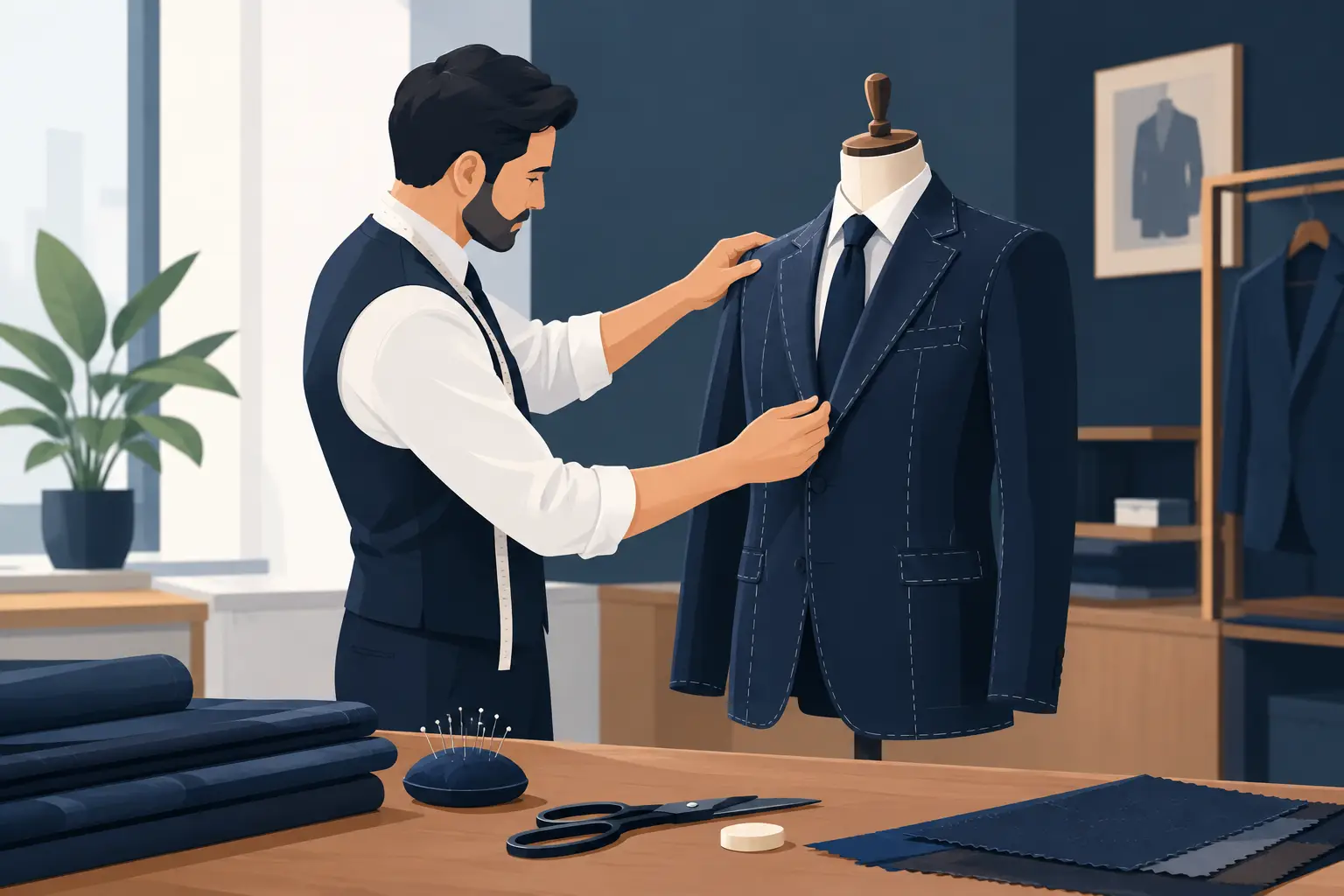
A bespoke suit is developed through fittings, not delivered as a first and final guess. The number and nature of fittings vary according to the tailor, the garment and the client’s requirements, but the purpose remains the same: to assess the suit on the body and make informed refinements.
At an early fitting, the balance of the coat can be checked. Is the jacket hanging correctly from the shoulders? Does the front edge remain level? Is the trouser break right for the chosen shoe and the wearer’s posture? These details cannot be fully resolved on a measuring tape or in a digital profile.
Later fittings bring the visual character into focus. The lapel roll, sleeve pitch, jacket length, trouser line and waist suppression are all judged in relation to the wearer. A wedding suit may call for a more expressive lapel and sharper definition. A business suit may favour quiet versatility, with enough ease to look composed through long days of meetings and travel. The process gives each decision its proper place.
This is also why bespoke takes time. A suit built around repeated assessment cannot be rushed in the same way as a garment drawn from a predetermined system. The reward is a result that looks settled, rather than simply altered.
Construction gives the suit its character
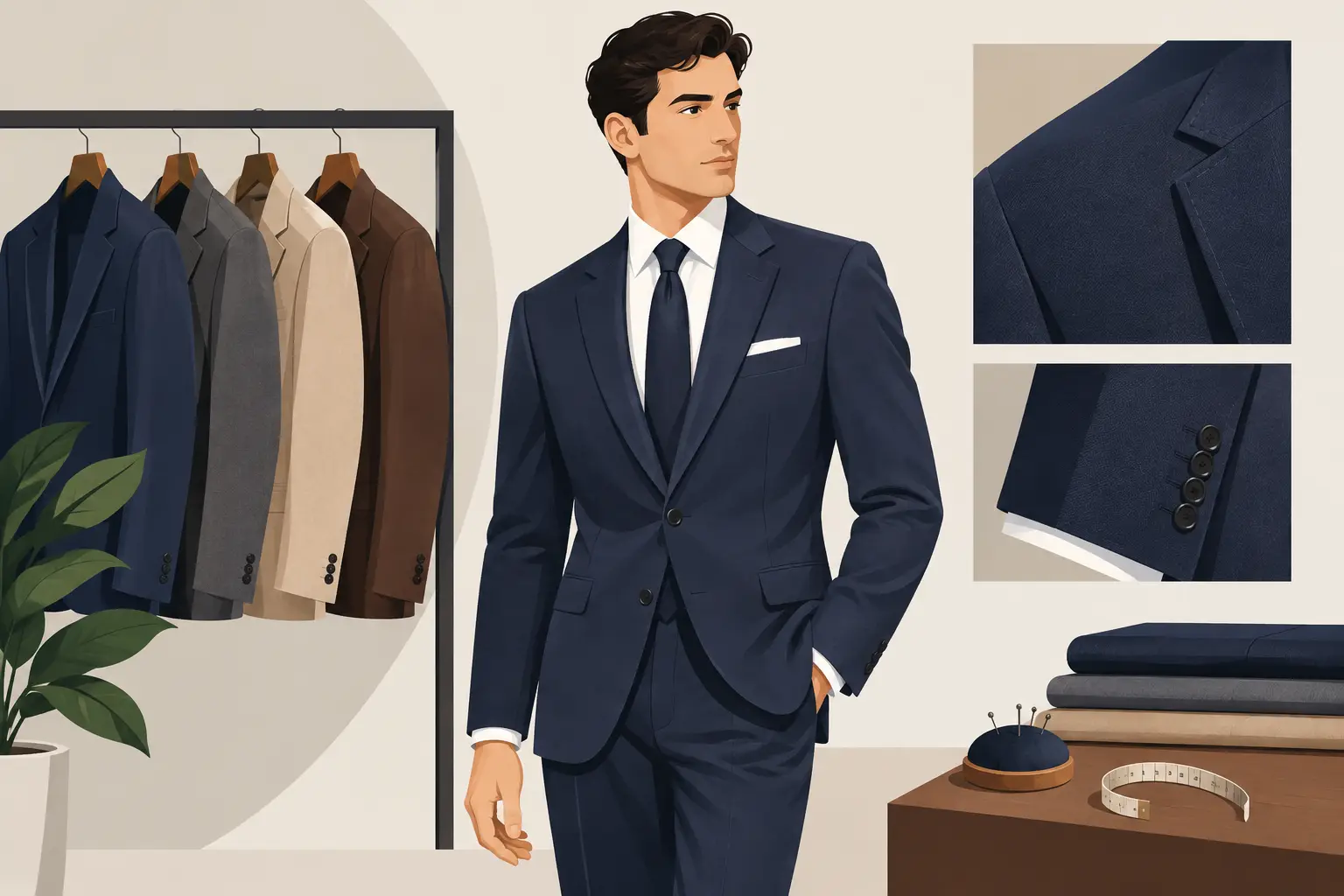
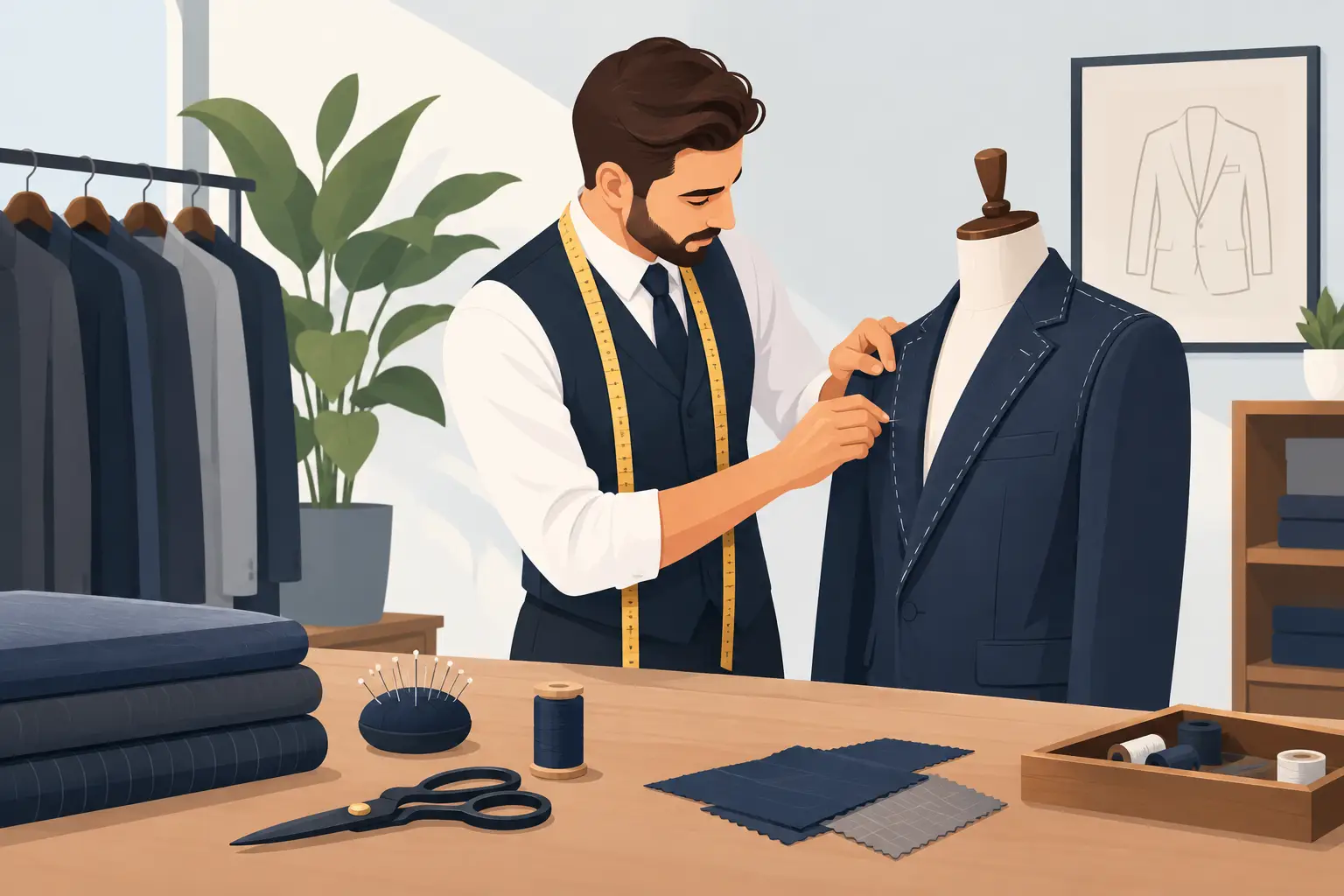
Bespoke craftsmanship is often associated with handwork, and for good reason. Hand-sewn details can allow greater control over shape, flexibility and finish. A hand-padded lapel, for example, develops a soft, expressive roll that is difficult to replicate with fused construction. Careful hand finishing at the collar, buttonholes and edges contributes to a jacket that feels considered at close range as well as impressive from across the room.
However, handwork alone does not make a suit bespoke. A beautifully hand-finished garment with an indifferent pattern will still fit indifferently. The hierarchy is clear: first comes cutting and balance; then comes construction that supports that cut; finally comes finishing that rewards attention.
Many bespoke jackets use a canvas structure between the outer cloth and lining. This internal layer helps the coat mould to the wearer over time while preserving its intended shape. The precise construction should suit the cloth, the purpose of the garment and the desired feel. A lightweight summer suit needs a different approach from a structured formal jacket or a robust tweed country suit.
There is no virtue in unnecessary heaviness. The best construction is the one that gives the garment poise, comfort and longevity for the life it is intended to lead.
Cloth and details are chosen with purpose
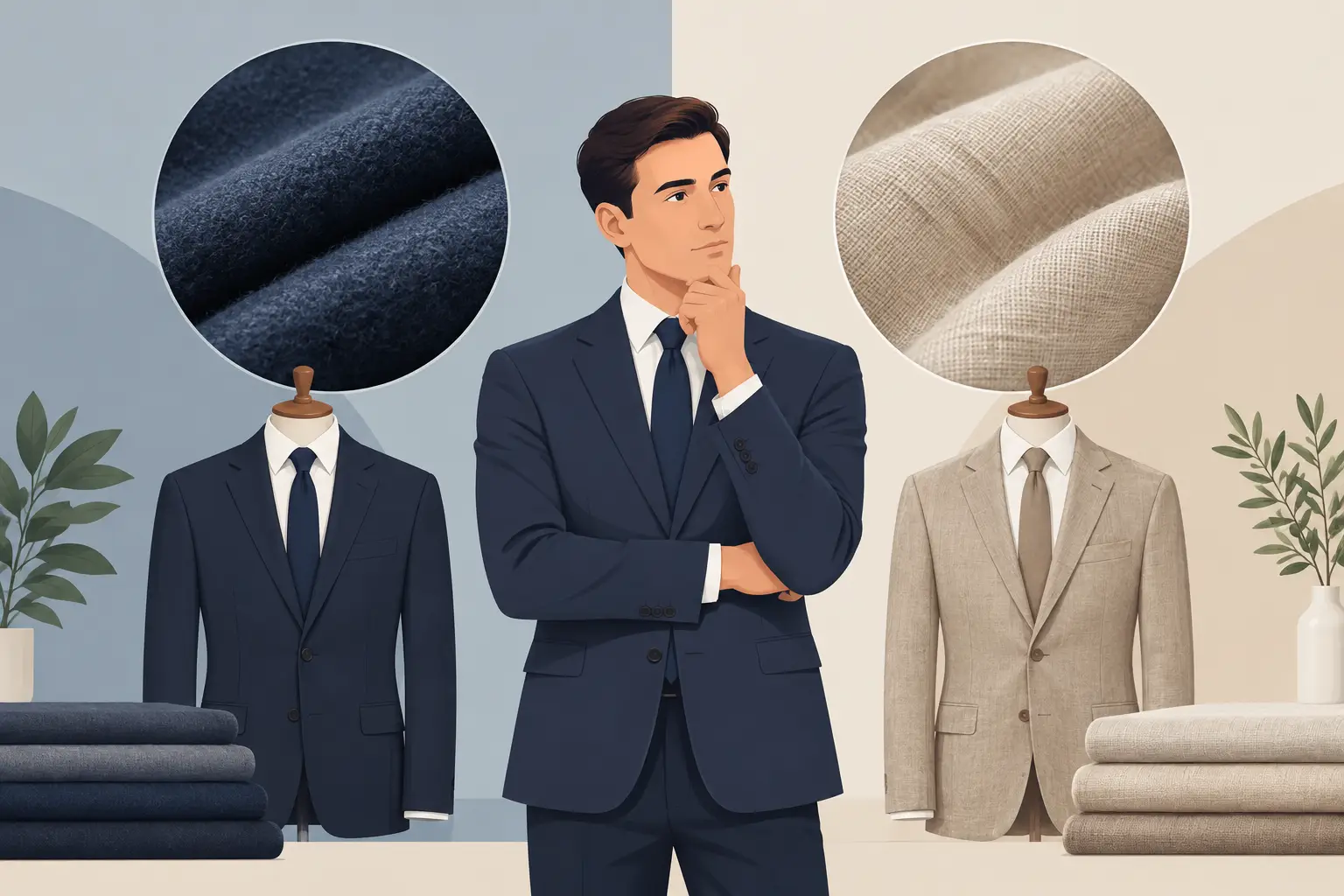
Choosing from hundreds of cloths is one of the pleasures of bespoke, but the most successful choice is never based on colour alone. Weight, weave, handle, durability and drape all affect how a suit performs.
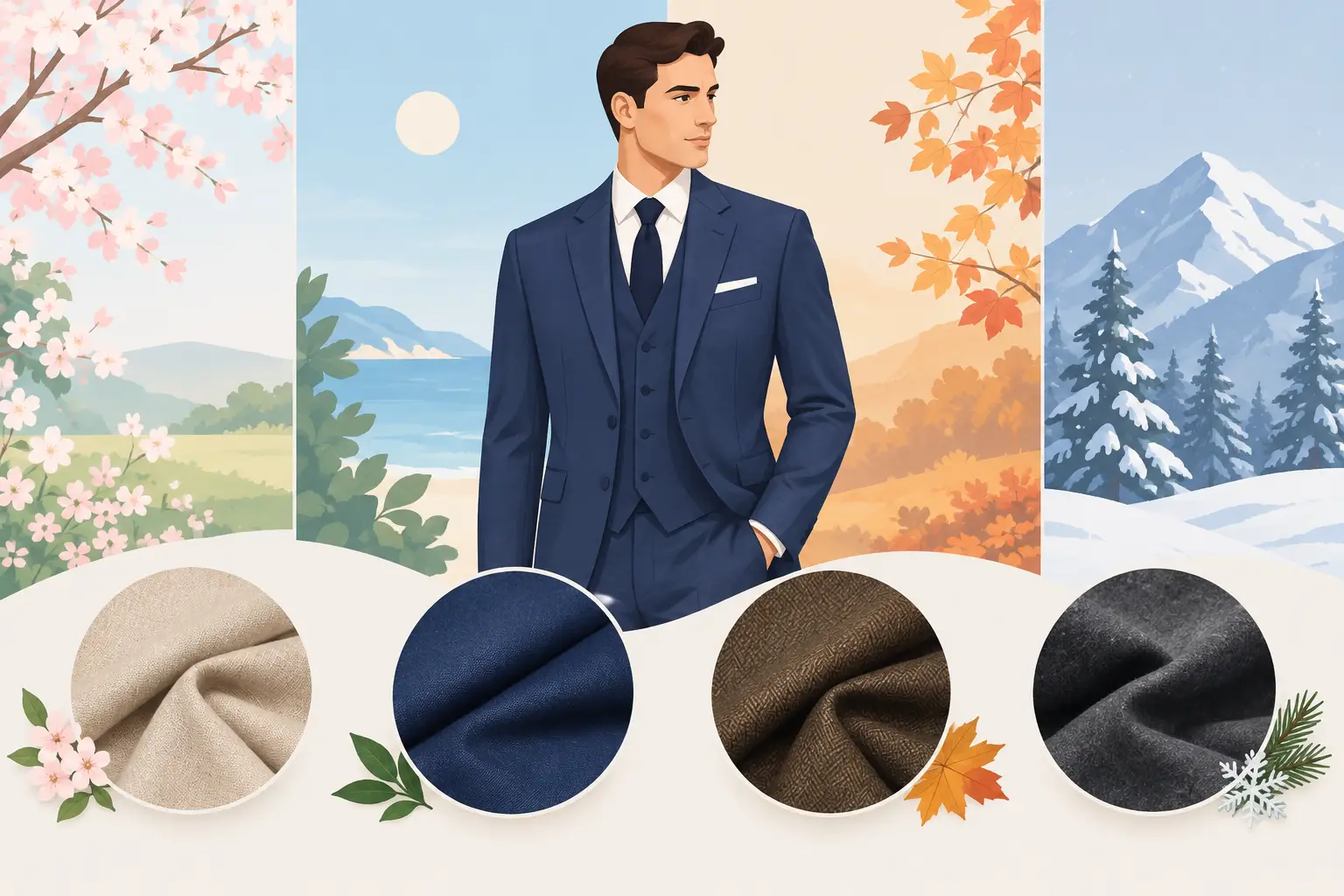
For a professional wardrobe, a mid-weight worsted wool in navy, charcoal or a restrained check offers polish and dependable wear. For a wedding, a richer texture, distinctive tonal colour or more formal cloth can establish a memorable presence without competing with the occasion. Tweed rewards a more relaxed, country-inflected cut and gains character through regular use. Linen and open-weave wools provide welcome breathability in warmer weather, although they will crease more readily. That is part of their charm, provided it is chosen knowingly.
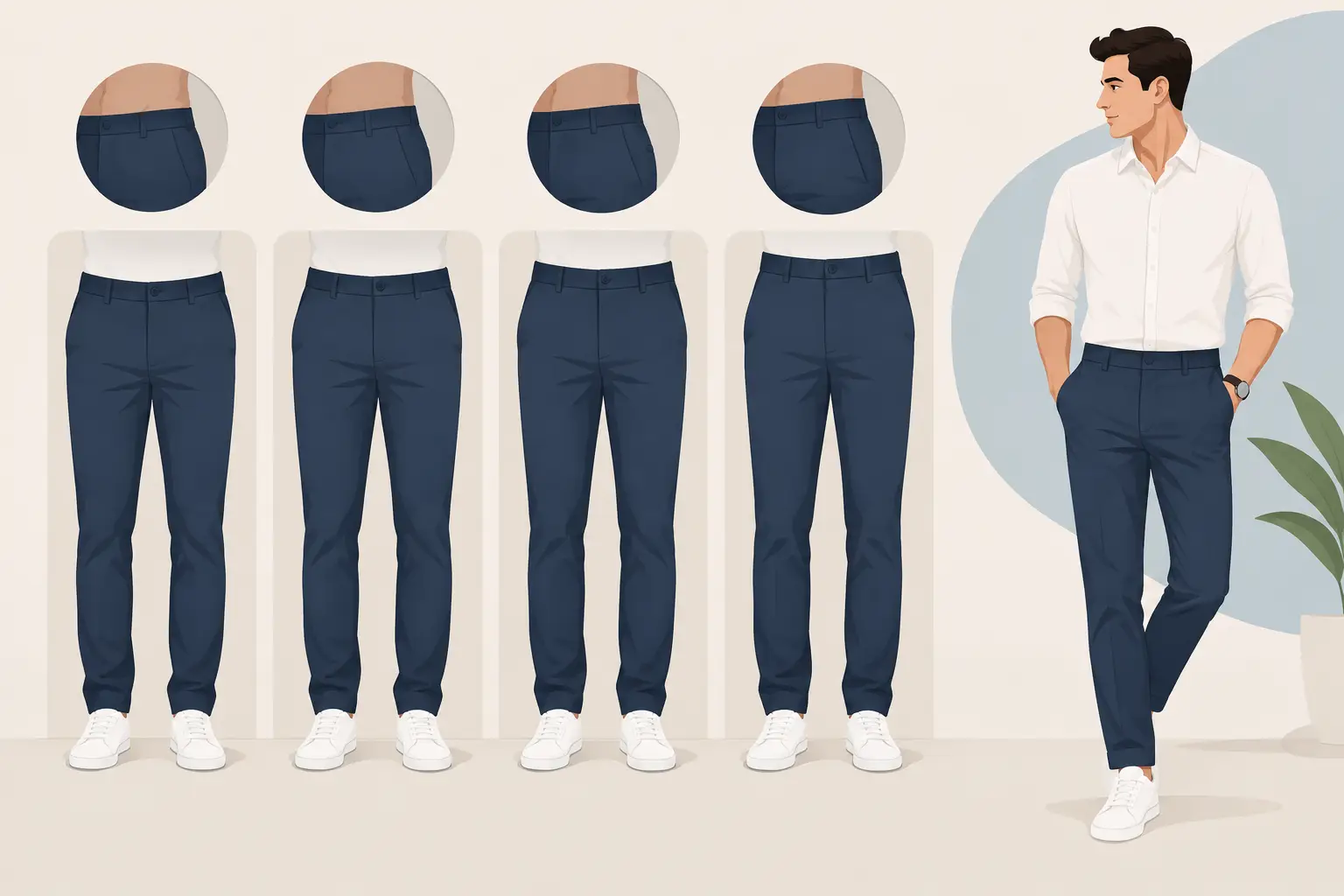
Bespoke also allows details to serve the wearer rather than a catalogue. Pocket placement can be adjusted for proportion. The rise and cut of the trousers can be designed around comfort and style. Lapel width, button stance, vents, cuff treatment and lining can all be resolved as part of one coherent design. The aim is not to add every possible flourish. It is to ensure each element belongs.
A bespoke suit improves with its owner
A true bespoke relationship does not necessarily end when the suit leaves the fitting room. Because the pattern is retained, future commissions begin with a deeper understanding of what works. A second suit may refine the shoulder, change the trouser shape or introduce a more relaxed cloth while preserving the proportions that already flatter the wearer.
Bodies and lifestyles change too. A trusted tailor can make considered alterations where the garment allows, helping a fine suit continue to serve its owner. This long-view approach is one reason bespoke offers value beyond its initial price. It is an investment in a wardrobe with continuity, not a one-off purchase made for a single photograph.
At Manndiip, this is the value of a personal tailoring experience: meticulous craft guided by a clear understanding of how a client wants to look, move and be remembered.
Is bespoke always the right choice?
Not every occasion requires bespoke. If time is short, a well-selected ready-to-wear suit with expert alterations can look excellent. Made-to-measure can also be a compelling route for clients seeking choice and improved fit within a more defined process.
Bespoke is most meaningful when fit, individuality and construction are priorities rather than afterthoughts. It is especially suited to a wedding garment, an important business wardrobe, black-tie dressing, or the client who has struggled to find a jacket that sits correctly off the peg. It also rewards the man who values quiet details: a lapel that rolls properly, trousers that hold their line, and a silhouette that feels like his own.
The right bespoke suit does not make a man look dressed up. It makes him look entirely himself, with greater clarity, confidence and ease. Start by considering where you need that assurance most – across the boardroom table, at the altar, or at the moments when first impressions deserve no compromise.