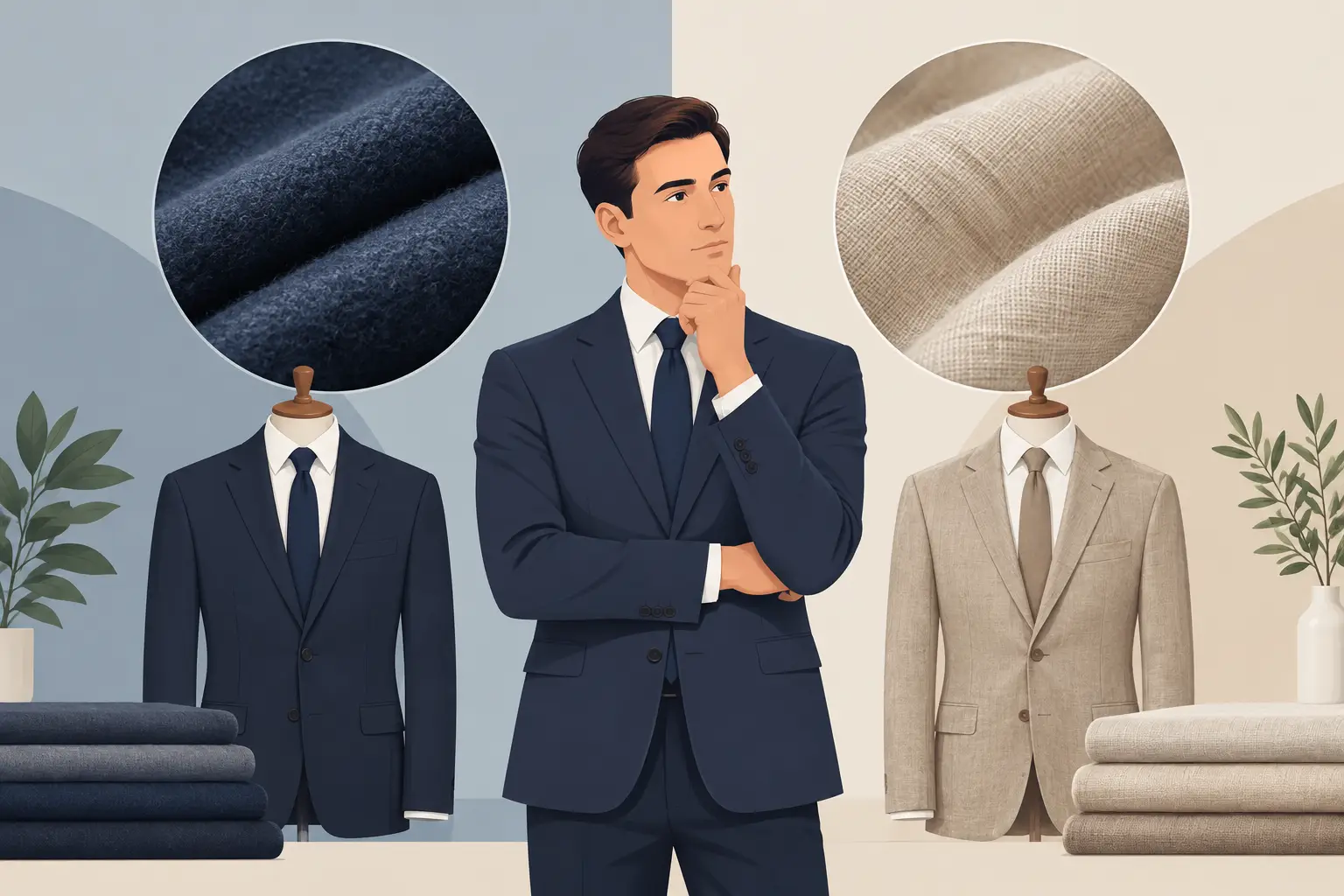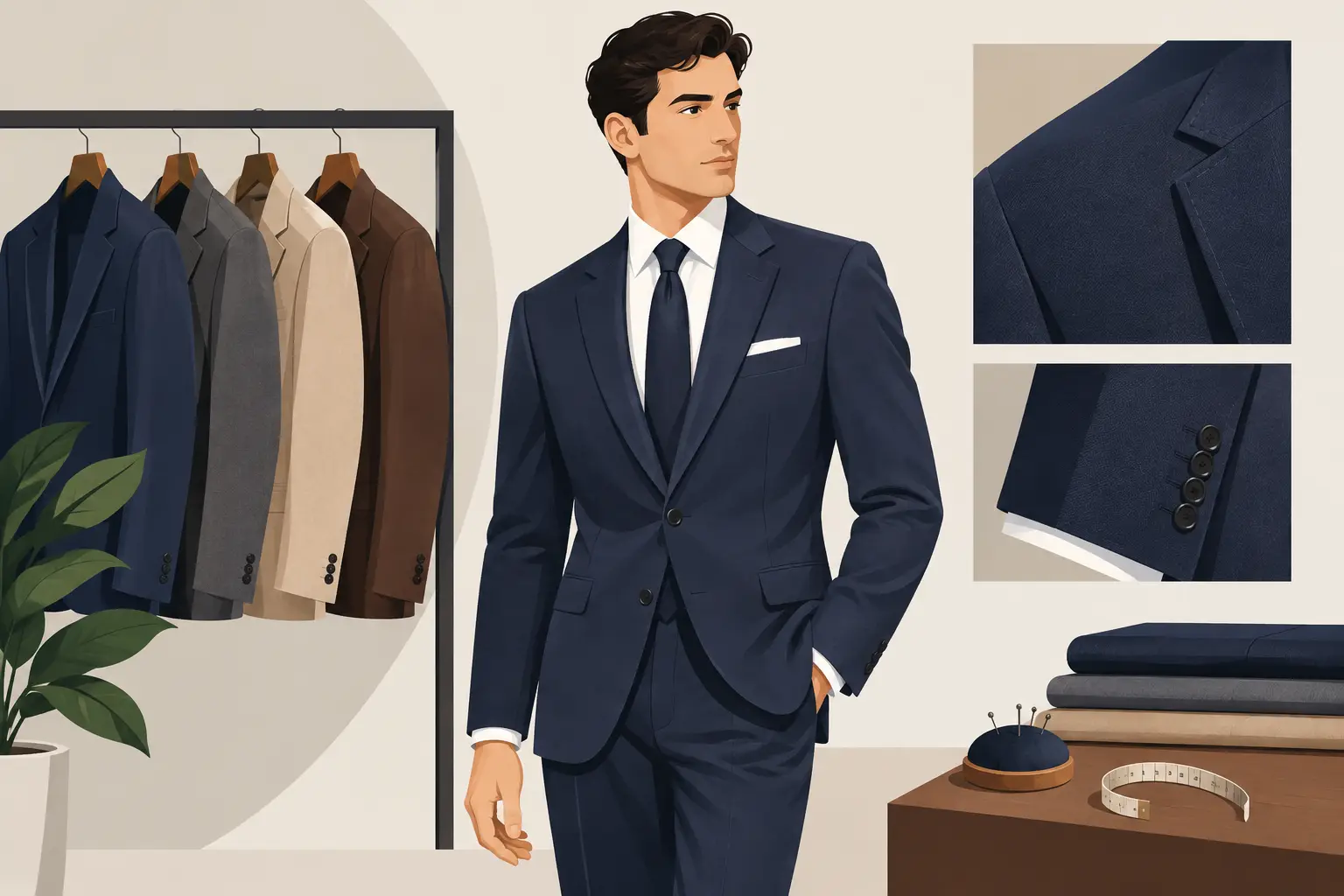
The cloth you choose will do more than determine the colour of your wedding suit. It governs how the jacket holds its line in photographs, how comfortable you feel through the ceremony and reception, and whether you still look composed after a crowded dance floor. This guide to wedding suit fabrics is designed to make that decision clearer, balancing season, setting and personal style with the standards of proper tailoring.
A wedding suit should never be chosen from a swatch alone. Fabric has movement, texture, weight and character. The same navy can appear quietly formal in a smooth worsted wool, more relaxed in a hopsack weave, or distinctly celebratory in a subtle mohair blend. The right choice is the one that supports the occasion while feeling unmistakably your own.
Guide to Wedding Suit Fabrics: Start With the Setting
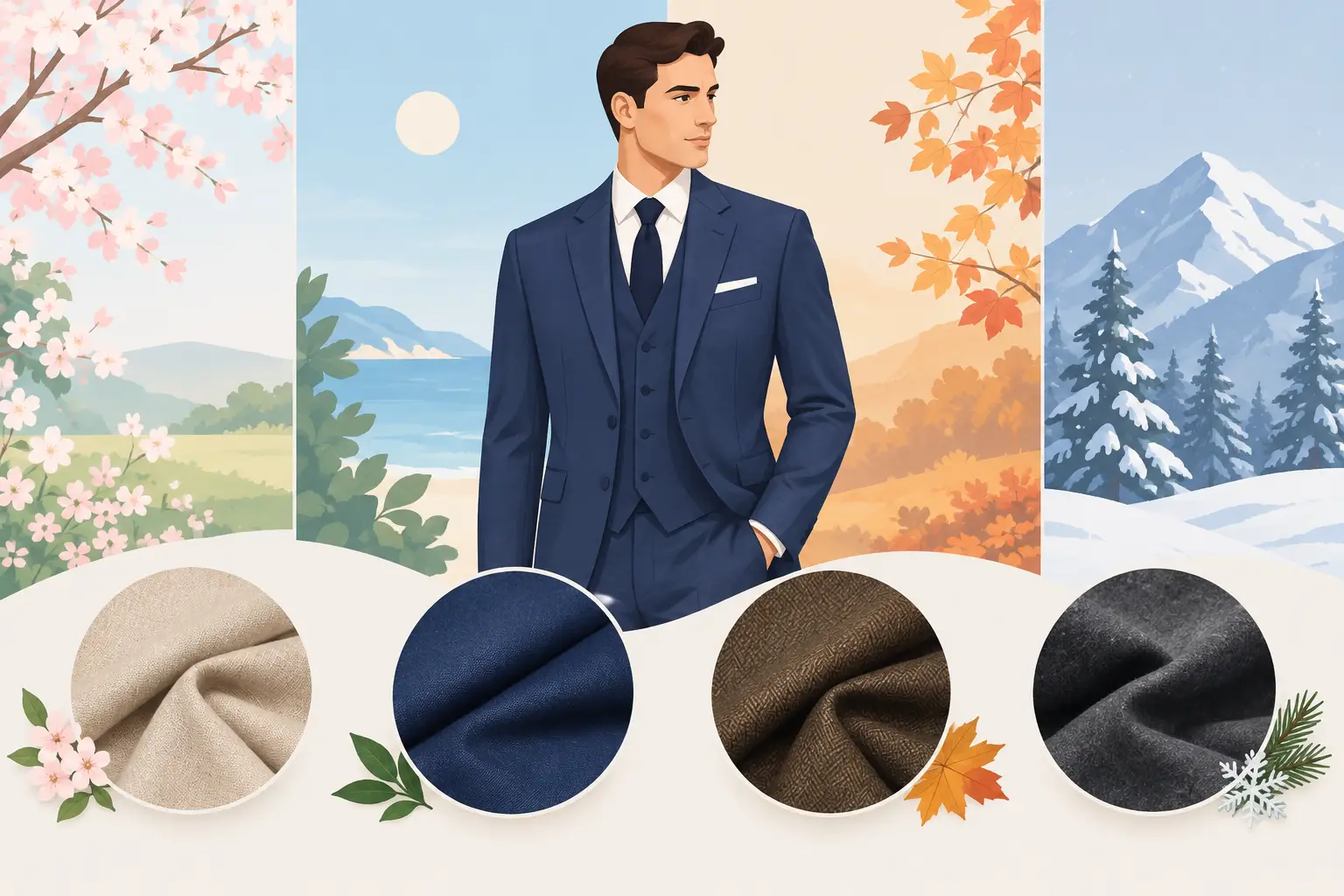
Before discussing fibre, consider the practical realities of the day. A formal winter ceremony in a city venue asks something different of a suit than a July celebration in the Cotswolds or a ceremony abroad. Temperature matters, but so do the venue’s interiors, the length of the day and how much time will be spent outside.
For a traditional church or town-house wedding, a refined wool suit in navy, charcoal, mid-grey or a rich neutral gives you presence without competing with the formality of the setting. For a country house or barn venue, cloth with visible texture – such as hopsack, fresco or a restrained tweed – can bring warmth and depth. Beach and destination weddings allow lighter fabrics, but ease should not be confused with informality. A beautifully cut linen or wool-linen suit remains elegant; a loose, shapeless one does not.
It is also worth considering the photographic backdrop. Highly textured fabrics create interest in close-up images, while clean worsted cloth tends to read sharply from a distance. Strong checks may look excellent in person yet become visually busy beside patterned bridesmaid dresses, floral installations or an elaborate venue. The fabric should frame the groom, not distract from the moment.
Wool: The Benchmark for Wedding Tailoring
Wool remains the most versatile and dependable choice for a wedding suit. It can be woven finely for a sleek, formal finish or more openly for breathability and texture. Quality wool has a natural resilience that helps it recover after sitting, travelling and embracing half the guest list. For a long wedding day, that recovery is invaluable.
Worsted wool for a polished finish
Worsted wool is spun from long, combed fibres, creating a smooth surface and crisp appearance. It is an excellent choice for formal weddings, particularly in a plain navy, charcoal, deep green or soft mid-blue. It drapes cleanly through the chest and trouser, allowing the cut of a bespoke suit to do its work.
A mid-weight worsted, often around 260 to 300 grams, is a sensible year-round option in the UK. It offers enough substance to hang elegantly without becoming oppressive in a heated reception room. Finer cloth may feel luxurious, but it is not always the most practical choice for a day involving movement, photographs and celebration. Very delicate fabrics can show abrasion and creasing more readily.
Hopsack and fresco for warmth without heaviness
Open-weave wools such as hopsack and fresco are particularly useful for spring and summer weddings. Their construction allows air to circulate, while wool’s natural performance keeps the cloth more composed than linen alone. Hopsack has a distinctive basket-like texture and a relaxed sophistication that suits garden, vineyard and destination celebrations.
Fresco has a dry handle and slightly firmer character. It is exceptionally breathable and resistant to creasing, making it a strong choice for grooms who expect a warm day or considerable travel. Its texture is less glossy than formal worsted, so it works best where the dress code is refined rather than strictly black-tie formal.
Linen and Linen Blends: Relaxed, Not Careless
Linen belongs at summer weddings for good reason. It is breathable, tactile and full of character, with a natural matte finish that feels at home in sunlit, informal settings. In stone, sand, tobacco, pale blue or soft olive, linen can look effortlessly elegant against coastal and countryside backdrops.
The trade-off is creasing. Linen does not fail when it creases – that lived-in texture is part of its appeal – but a groom should be comfortable with a less pristine appearance by the evening. If a sharply pressed silhouette matters to you, a linen blend is often the more considered route.
Wool-linen-silk blends are especially compelling. Wool adds structure and recovery, linen brings breathability and texture, while silk lends a subtle lustre. The resulting cloth can look celebratory without appearing shiny. A wool-linen blend is another practical alternative, retaining the visual lightness of linen while giving the jacket and trousers better shape throughout the day.
Choose linen carefully for the formality of the event. A softly constructed linen suit with an open-neck shirt may be ideal for a Mediterranean ceremony. For a British summer wedding with a more traditional ceremony, a tailored wool-linen blend with a silk tie and polished shoes will carry greater sartorial authority.
Mohair and Silk: Fabric With Occasion in Mind
Mohair is often misunderstood as a cold-weather fabric because of its crispness. In fact, it performs beautifully in warmer conditions when blended with wool. Its fibres lend a subtle sheen, excellent crease resistance and a distinctive, clean line. A wool-mohair suit is particularly effective for an evening wedding, a modern city celebration or a groom seeking a sharper, more formal profile.
The sheen should be discreet. Excessively glossy cloth can look synthetic under flash photography and can date quickly. Well-chosen mohair offers light-reflecting depth rather than glare, especially in dark navy, black, midnight blue or deep bottle green.
Silk, meanwhile, is best used as a supporting fibre rather than the dominant one. A small silk content can enrich colour and give a fabric a more luxurious handle. It is superb for waistcoats, dinner jackets and special-occasion cloth, though it can be less forgiving than wool in high-friction areas. The balance lies in selecting a fabric that feels special without becoming precious.
Tweed and Textured Cloth for Country Weddings
For autumn and winter country weddings, tweed offers visual richness that smooth cloth cannot replicate. Its flecks, checks and earthy tones sit naturally against stone buildings, woodland and muted seasonal palettes. Done well, it has heritage without costume.
Weight is the key consideration. Traditional heavyweight tweed can be uncomfortable indoors, particularly once the reception begins. A lighter wedding-weight tweed, often blended with wool, silk or cashmere, retains texture while improving drape and comfort. A subtle herringbone, small-scale check or muted Donegal-style fleck tends to photograph more elegantly than a large, high-contrast pattern.
A tweed suit also rewards thoughtful coordination. Keep the shirt clean and the accessories purposeful. A handmade pocket square or tie can echo a secondary colour in the cloth, but it should not turn the ensemble into a collection of competing textures.
Weight, Weave and Fit Matter as Much as Fibre
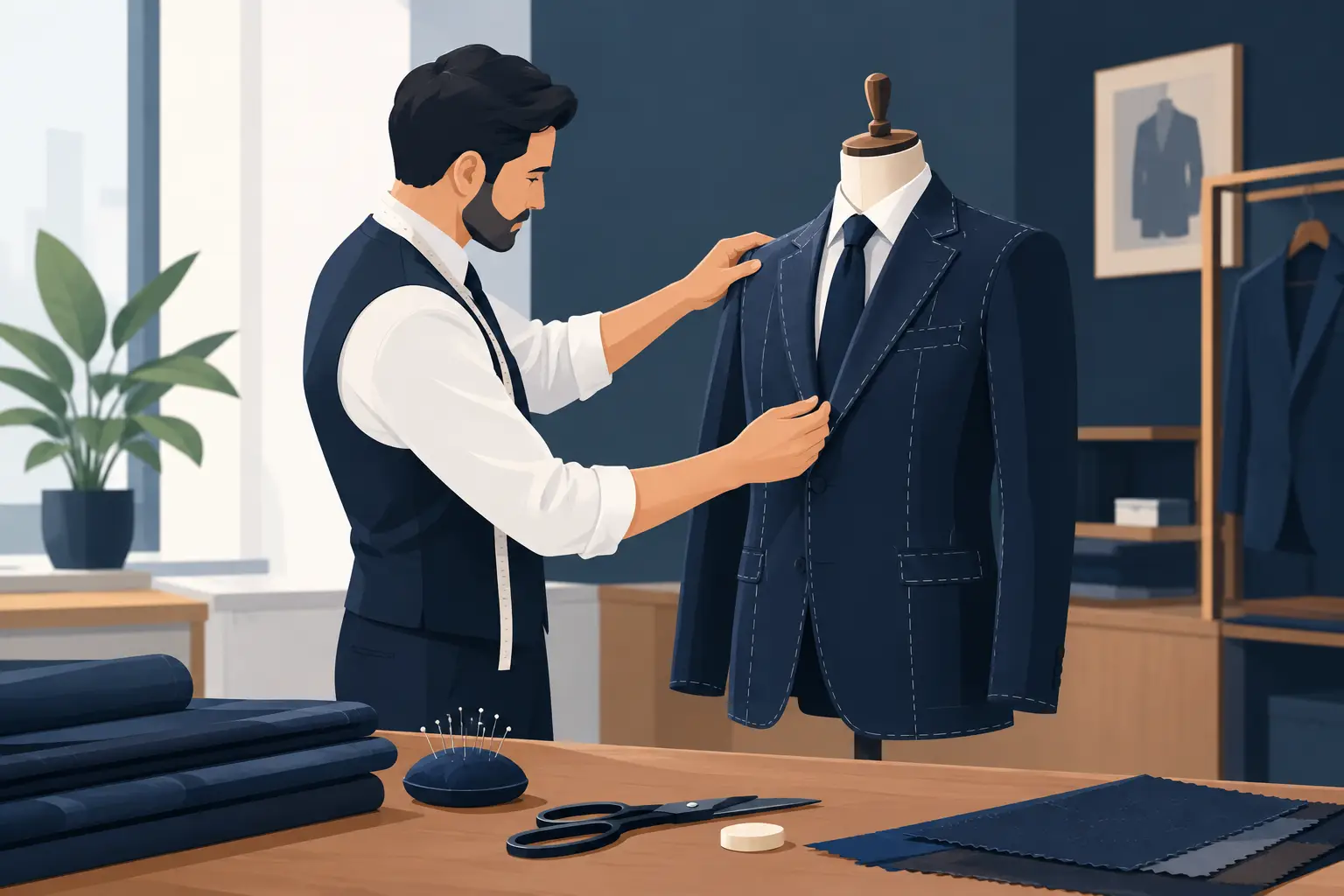
Two suits labelled ‘wool’ can perform entirely differently. Fabric weight affects warmth and drape; weave affects breathability, texture and durability. This is why a personal fitting is so valuable. The cloth needs to work with the garment’s construction and with the way you move.
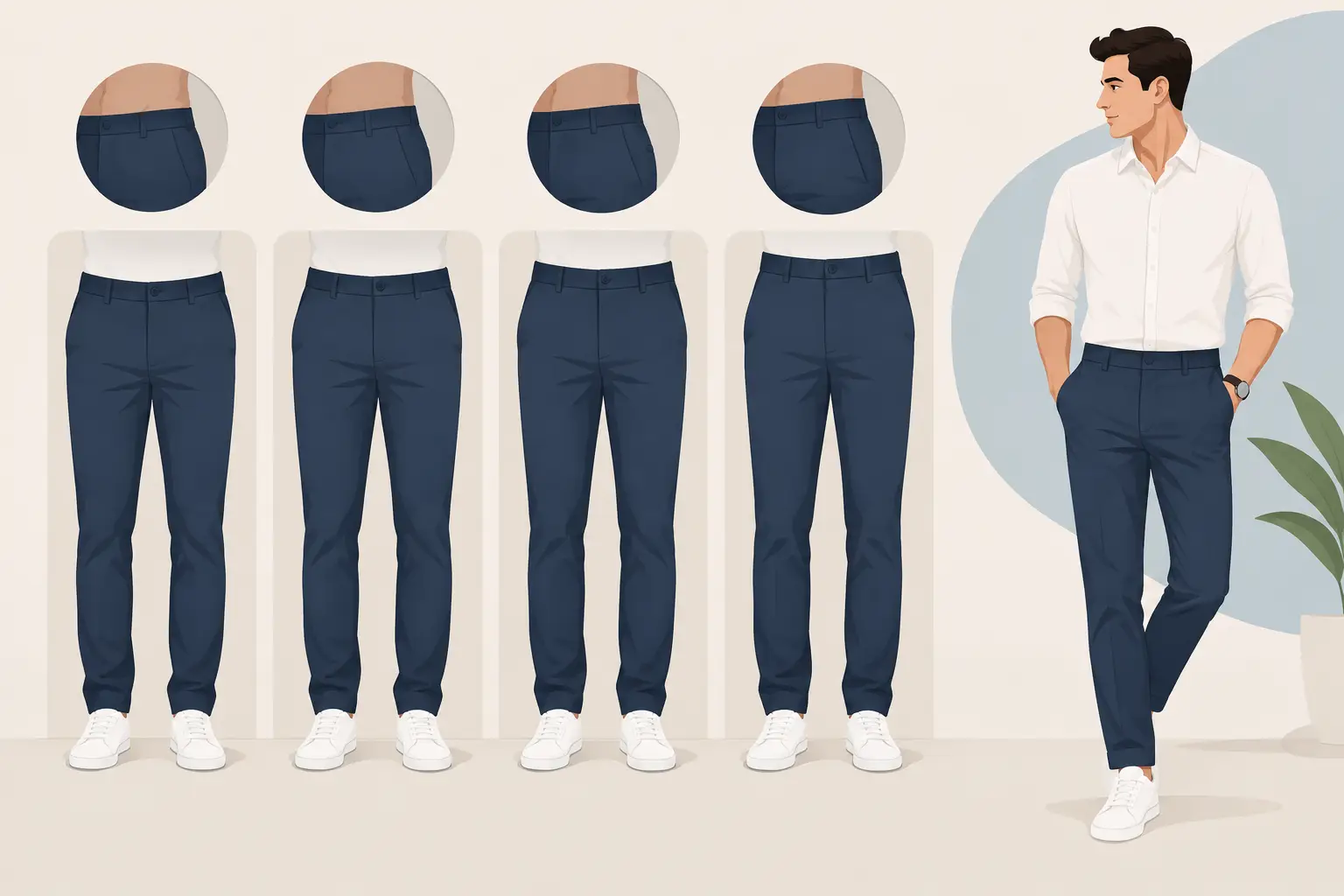
A lighter cloth can be ideal for heat, yet it may reveal every crease if the trousers are cut too close. A heavier cloth can create a commanding line, but it may feel restrictive if the wedding is in high summer. Precision in the jacket’s balance, trouser rise and room through the seat and thigh allows a suit to look refined without asking the wearer to stand still all day.
At Manndiip, fabric selection is considered alongside silhouette, venue, complexion and the details that complete the look. A groom who usually lives in dark business tailoring may want the confidence of navy, but in a more expressive weave or a softened shade. Another may suit a tobacco wool-linen blend far better than the pale grey he first imagined. The most successful wedding suit is not simply seasonal – it is personal.
When choosing your cloth, ask to handle it in natural light, bend it in your hand and consider it beside your partner’s palette. Then picture the final hours of the day, not only the first photographs. Choose a fabric that will carry you with comfort and distinction from the aisle to the last dance.