A bespoke tailoring review should never be reduced to whether a suit looks impressive in the mirror on collection day. The real test is more exacting: does the garment sit cleanly when you move, feel natural through a long working day, and express your character without appearing contrived? Exceptional tailoring earns its value through those quiet, cumulative details.
For the man investing in a business suit, wedding ensemble or formal wardrobe, bespoke is not simply a route to more choice. It is an opportunity to establish proportion, comfort and presence on your own terms. The difference lies in how the cloth is cut, shaped and refined around the individual rather than adapted from a standard template.
What a Bespoke Tailoring Review Should Assess
The word bespoke is used broadly, and not every custom garment involves the same level of individual work. Made-to-measure tailoring usually begins with an existing house pattern that is adjusted to your measurements. Bespoke tailoring starts with a pattern created for you, then developed through fittings. Both can produce handsome results, but they are distinct processes.
A considered review should therefore look beyond the number on the label or the range of fabrics presented. It should assess four connected elements: the consultation, the cut, the construction and the finishing. If one is neglected, the suit may still look respectable, but it will lack the composed ease that makes tailoring memorable.
The consultation reveals the tailor’s eye
The first appointment should feel like an intelligent conversation, not a transaction. A skilled tailor asks where and how you will wear the garment. A navy business suit required for weekly client meetings has different demands from a three-piece wedding suit intended for photographs, dancing and a full day of celebration.
Your posture, shoulder line, stance and proportions matter as much as chest and waist measurements. So do your preferences. Do you favour a stronger shoulder, a longer jacket skirt, a higher trouser rise or a more relaxed silhouette? The right advice may challenge an initial idea when it will not flatter the wearer, but it should never erase personal style.
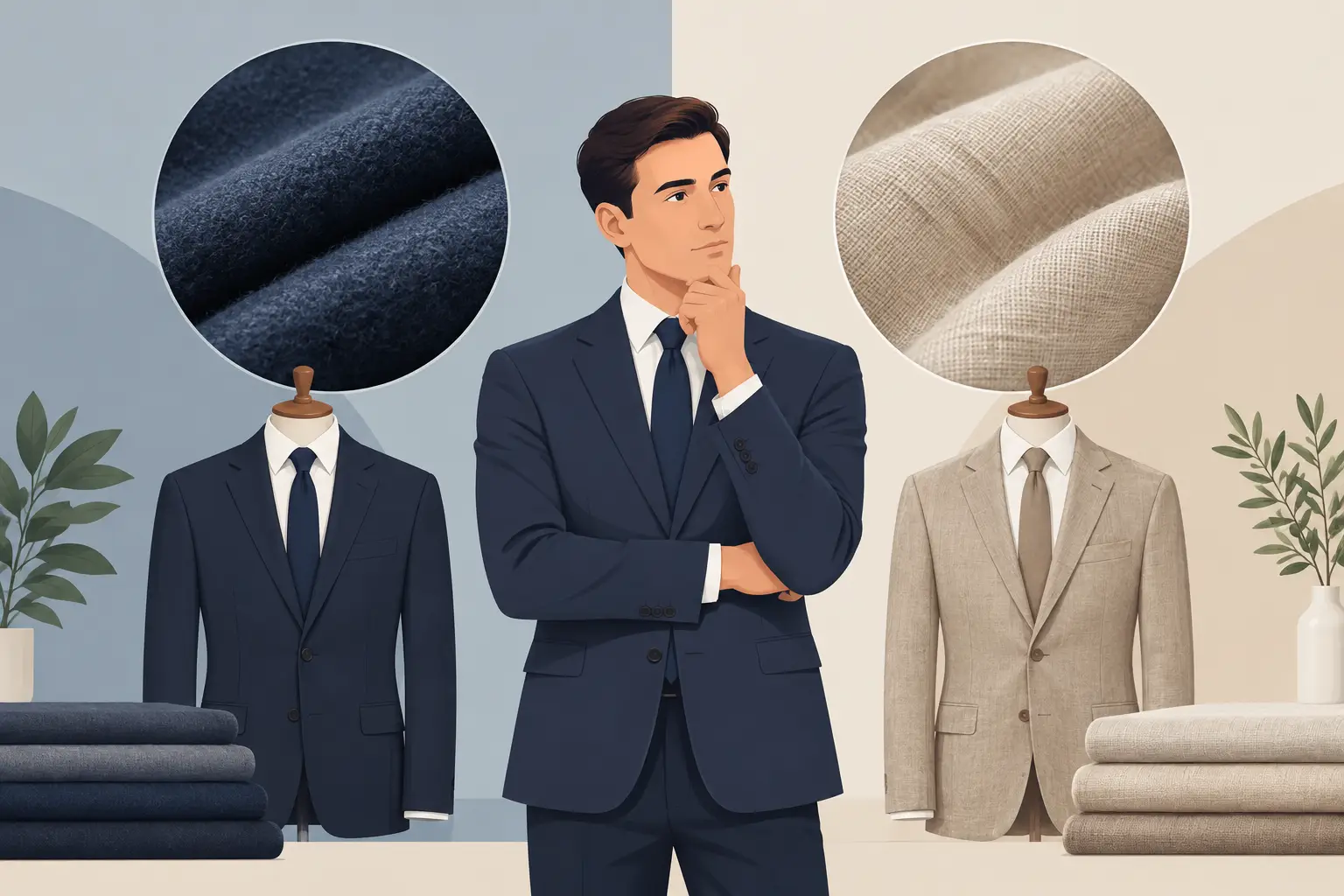
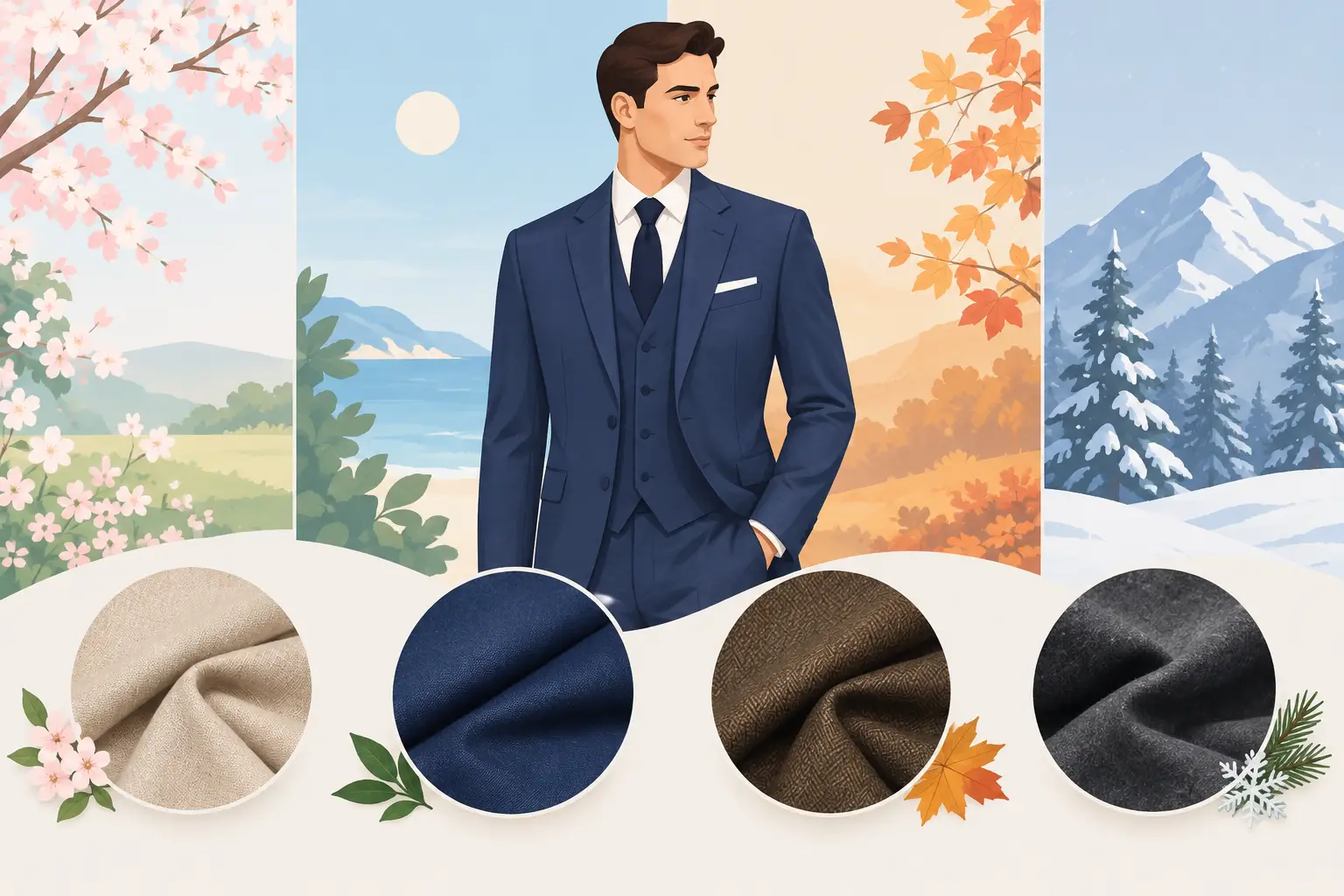
Cloth selection deserves the same care. A fine, lightweight wool can look beautifully refined, yet may not be the best choice for a suit worn hard throughout the year. A mid-weight wool offers greater resilience and shape retention. For a country wardrobe, tweed brings texture and character, though its weight and handle suit a different setting. Quality is not a single fabric grade – it is choosing the appropriate cloth for the life the garment will lead.
Fit Is More Than Measurements
A precise fit is the most persuasive argument for custom tailoring. It is also where a superficial assessment can be misleading. A jacket can appear close-fitting while pulling across the chest, collapsing beneath the collar or restricting the arms. Equally, a suit can be comfortable but look loose because the balance has not been properly resolved.
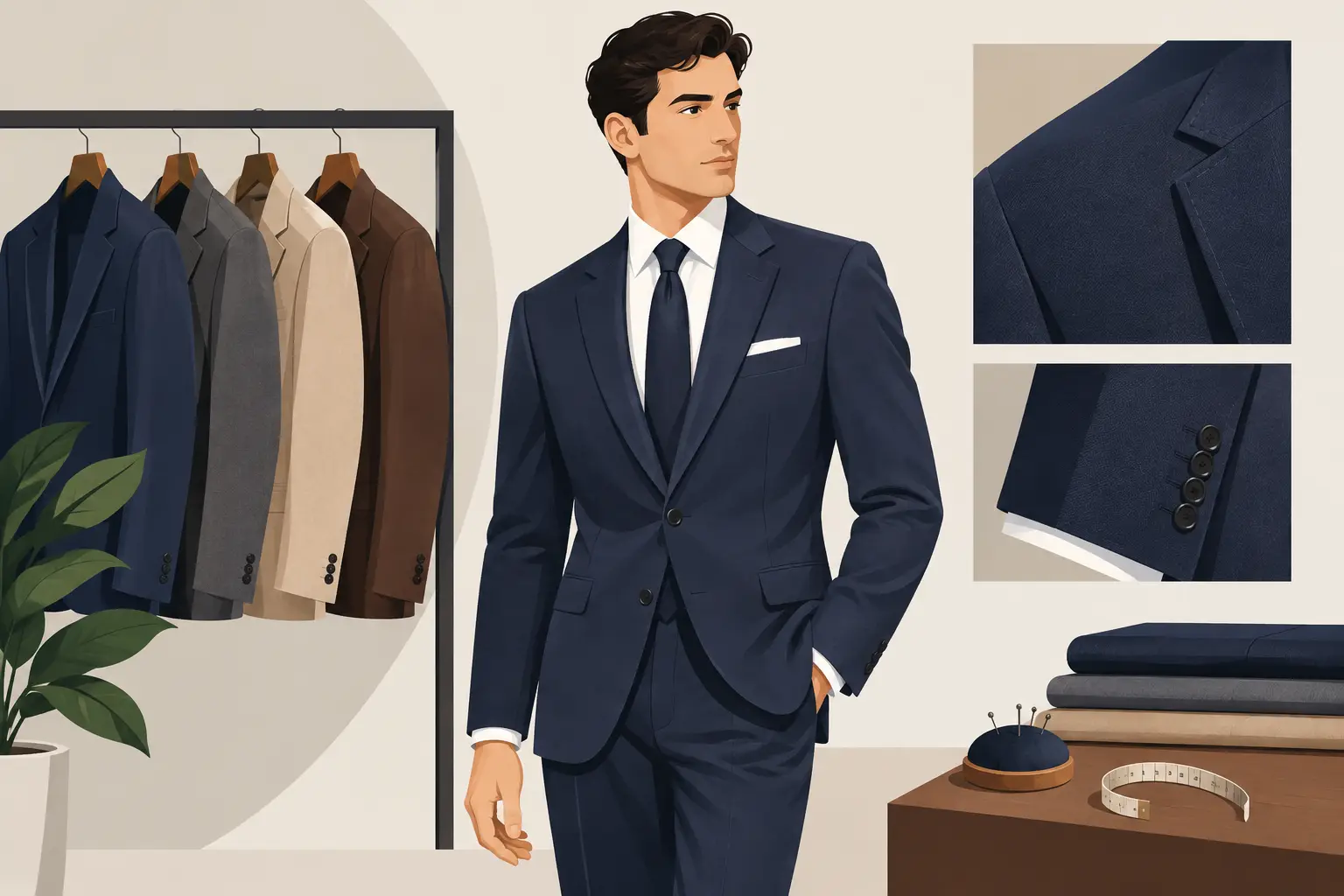
The shoulder is the foundation. It should follow the natural shoulder without extending beyond it or forming a hollow at the sleeve head. The collar should sit against the shirt collar, with no visible gap at the back of the neck. Across the chest, the lapels should lie flat and the fastening should close without strain.
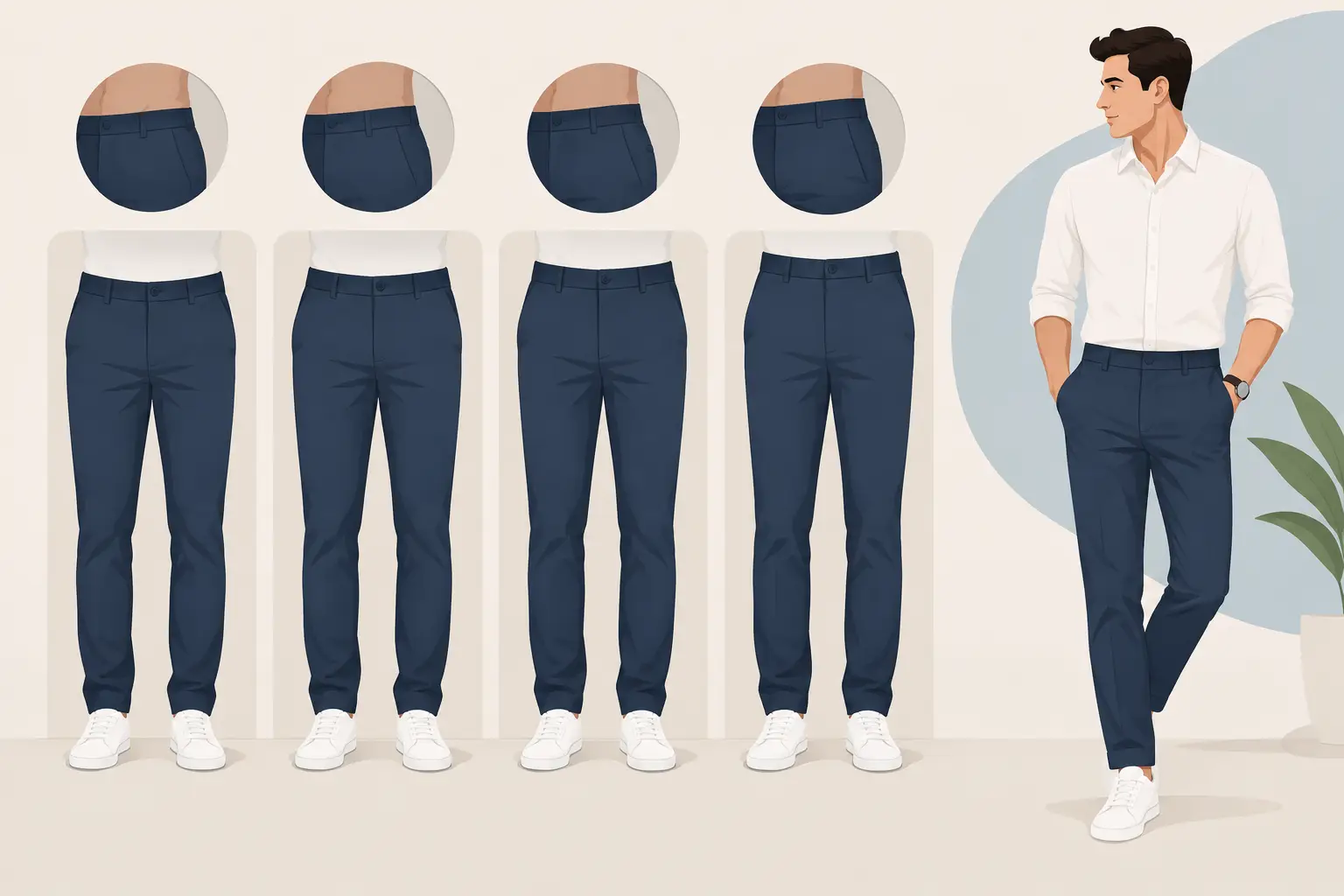
Then comes balance. A well-cut jacket falls evenly from the neck, remains composed when unbuttoned and does not swing excessively forward or back. The waist should create shape without making the wearer feel held in. Trouser fit is equally revealing: the seat needs enough allowance for movement, the rise must suit the wearer’s build, and the line through the leg should complement both the jacket and the chosen shoe.
These judgments are made while standing, sitting and walking. A suit is not a portrait. If the cloth bunches behind the knees after ten minutes at a desk, or the jacket rides up when reaching for a steering wheel, further refinement is needed.
Fittings are where precision is earned
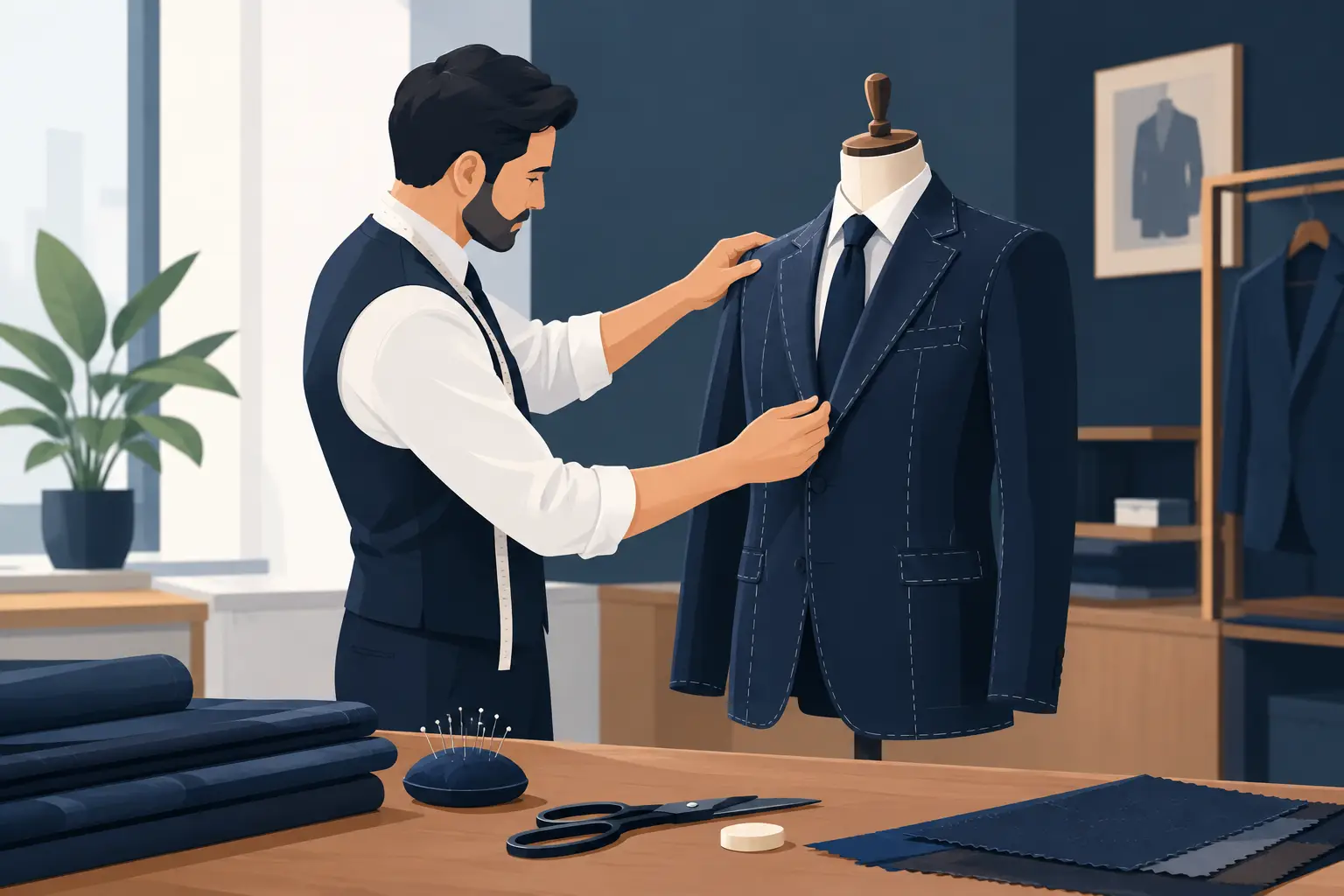
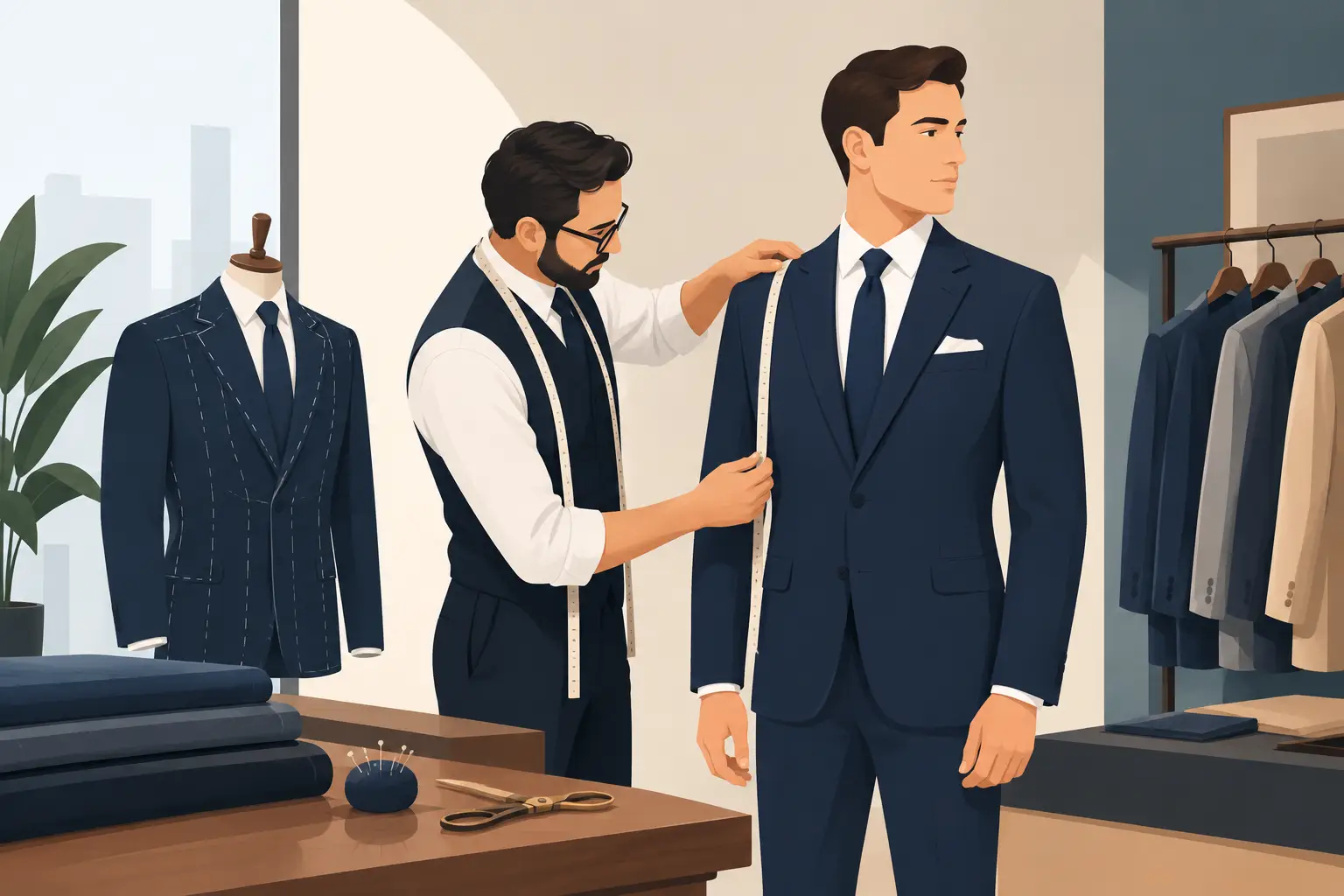
A fitting is not an inconvenience between ordering and collection. It is the stage at which good tailoring becomes personal tailoring. Markings and adjustments may address a shoulder that sits lower, a prominent blade, an uneven hip, a forward stance or the subtle asymmetries that almost every body carries.
The more complex the physique or the more exacting the desired silhouette, the more valuable this process becomes. A first-time buyer may be surprised by how much changes between an initial fitting and the finished garment. That is precisely the point. The tailor is reading how the cloth behaves on your body, not merely checking whether a tape measure was used correctly.
A thoughtful fitting also protects the wearer from fashionable excess. Very short jackets, aggressively tapered trousers and overly tight sleeves can be striking for a season, but they do not always serve a professional wardrobe or a formal occasion. The strongest garments acknowledge contemporary style while preserving proportion and longevity.
Construction Determines How a Suit Lives
The interior of a jacket is where lasting quality is often found. Canvas, lining, stitching and pressing may be less visible than lapels and buttons, yet they determine how the jacket moulds to the body and how well it recovers after wear.
A fully canvassed jacket uses a layer of canvas through the front, allowing the cloth to take on a more individual shape over time. Half canvas generally supports the chest and lapel while using a lighter construction below. A fused jacket bonds material to the outer cloth with adhesive. Fusion is not automatically poor, particularly in more accessible tailoring, but it typically cannot offer the same drape, breathability or capacity for long-term reshaping as a well-executed canvassed garment.
Construction should suit purpose. A softly constructed jacket can be ideal for travel, summer dressing or a relaxed smart-casual wardrobe. A more structured chest may better support a formal or boardroom silhouette. Neither approach is universally superior. The question is whether the construction has been chosen deliberately and executed cleanly.
Look closely at the lapel roll. A well-made lapel has life and a gentle curve rather than a flat, pressed appearance. Check that the lining lies smoothly, buttonholes are neat, and pattern matching is considered where relevant. On a striped or checked cloth, alignment across the jacket front and pockets signals patience and control.
The Details That Make It Yours
Bespoke value often appears in details that do not demand attention. The right trouser waistband can make a full day more comfortable. Side adjusters may create a cleaner line than a belt for some wearers. A curved breast pocket, a hand-finished buttonhole, a distinctive lining or a discreet monogram can add personality when used with restraint.
For wedding tailoring, these choices can be more expressive because the garment is tied to a personal occasion. For business, refinement usually comes from restraint: considered lapel width, a harmonious shirt collar, trouser break and shoes that support the overall line. The goal is not to display every available option. It is to build a coherent impression.
At Manndiip, that philosophy means treating the suit as part of a wider wardrobe rather than an isolated purchase. A custom shirt, carefully selected tie or pocket square, and an overcoat with the right proportions can extend the usefulness of a tailored commission far beyond one event.
Is Bespoke Worth the Investment?
The answer depends on what you need from your clothing. If you require a suit quickly for infrequent use and your proportions are easily accommodated by ready-to-wear, alterations to a well-chosen garment may be the sensible route. A capable alterations specialist can transform sleeve length, trouser shape and jacket waist suppression with impressive effect.
Bespoke becomes particularly compelling when fit has repeatedly been a problem, when the occasion carries significance, or when you want a reliable personal uniform. It also rewards repeat clients. Once a tailor understands your balance, preferences and wardrobe, future commissions become more efficient while remaining highly individual.
The best bespoke suit should not make you feel dressed up in someone else’s idea of luxury. It should make you stand taller, move freely and look entirely at ease. Choose a tailor who listens closely, explains the reasoning behind each decision, and gives the garment enough time to become unmistakably yours.