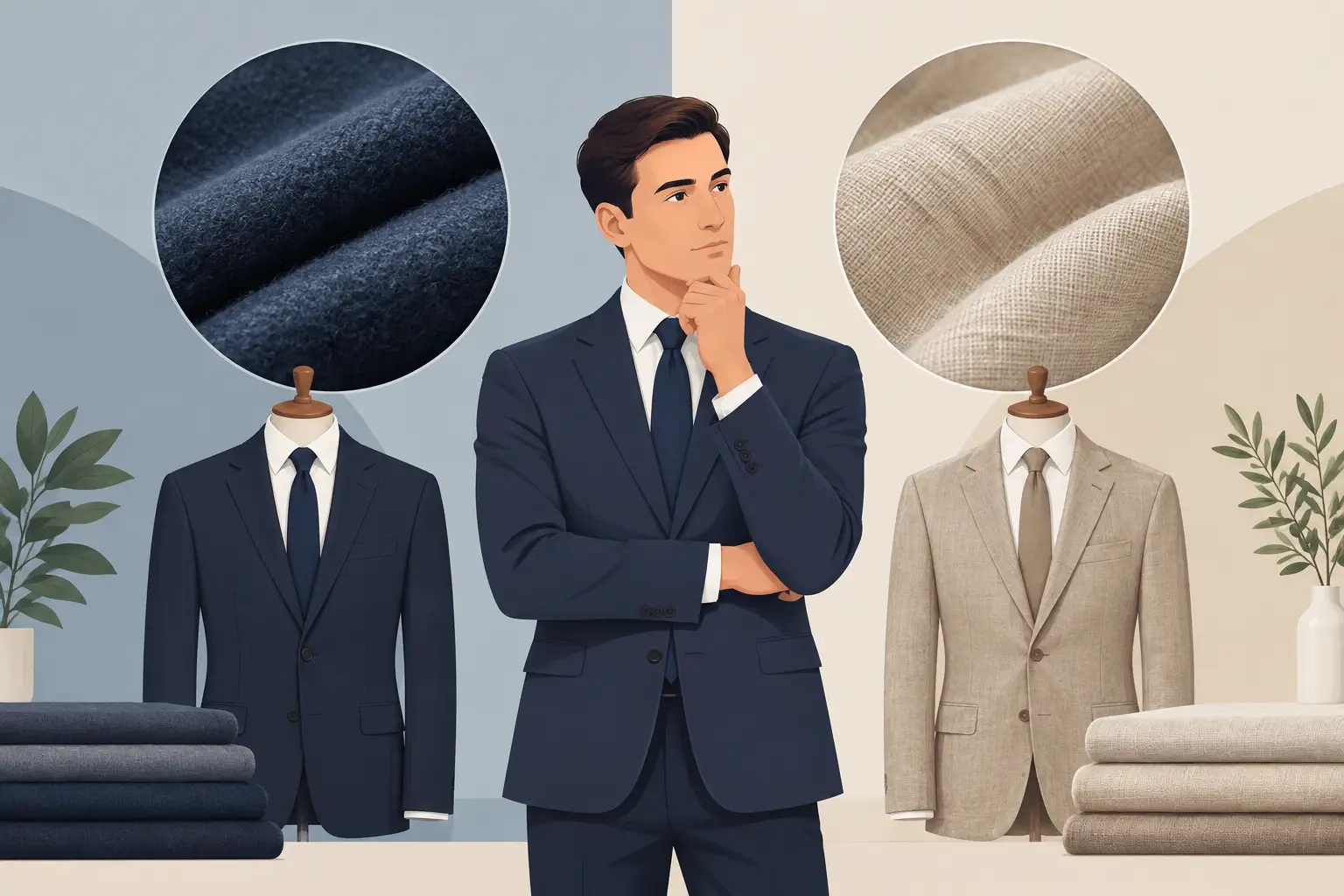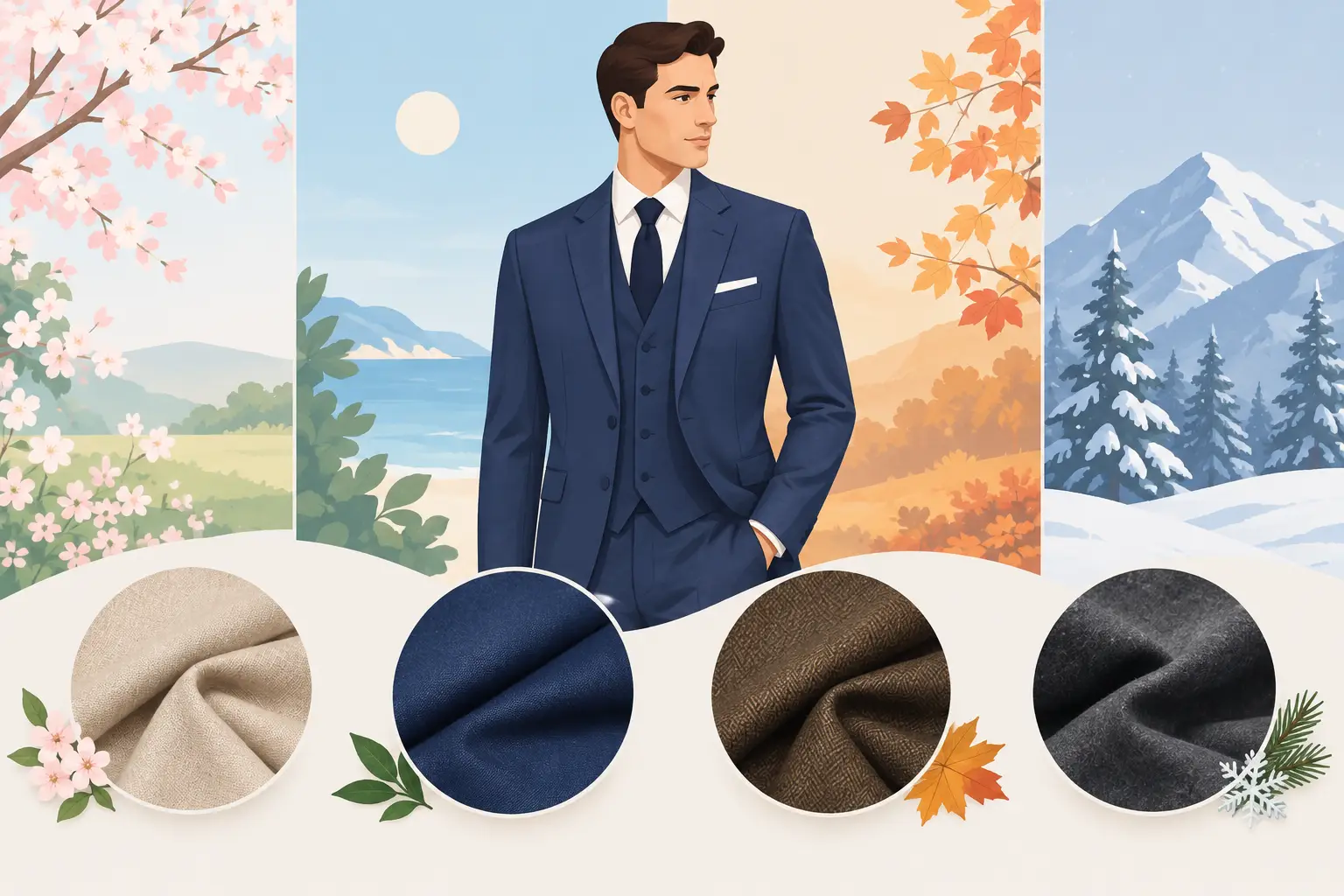

A suit can be impeccably cut in the fitting room and still disappoint at the hotel. Hours seated in a car, train or aircraft test the cloth as much as the tailoring: creasing at the lap, tension behind the knee, warmth through the chest and the way the jacket recovers once it is hung up. The best suit fabrics for travel are those that preserve a composed silhouette while allowing you to move, regulate your temperature and step into a meeting or dinner looking considered.
For the man whose diary moves between client meetings, weddings and weekends away, the answer is rarely a single “travel fabric”. It is a considered choice of fibre, weave, weight and construction, matched to the journey and destination. A refined travel suit should never look like a compromise. It should simply work harder.
What Makes a Suit Fabric Good for Travel?
Crease resistance tends to receive all the attention, but it is only one part of the equation. Natural elasticity helps cloth return to shape after sitting. Breathability prevents a long journey becoming uncomfortable, while a balanced weight gives the suit enough substance to drape cleanly and resist looking crushed.
The weave matters as much as the fibre. A tightly woven high-twist wool may perform far better in transit than a softer, finer cloth of the same weight. Likewise, the internal construction of the jacket affects how it travels. A well-made, lightly structured jacket follows the body more naturally than a rigid garment, yet still retains authority through the shoulder and chest.
Colour and pattern play a practical role too. Mid- to dark-toned navy, charcoal, olive and textured blue disguise the minor marks and soft creases that can appear during a full day in motion. A subtle twill, birdseye, nailhead or small check adds visual depth and makes the cloth more forgiving than a perfectly smooth, flat finish.
Best Suit Fabrics for Travel: The Leading Choices
High-twist wool
For most business travel, high-twist wool is the benchmark. The yarn is spun more tightly than a conventional worsted yarn, creating a dry hand, resilient surface and excellent natural recovery. It is less inclined to hold a sharp crease after a flight or rail journey, and it breathes far better than most synthetic alternatives.
A high-twist wool suit has a clean, slightly crisp appearance rather than the lustre of an ultra-fine cloth. That is precisely its advantage. It holds its line through a demanding day, works across seasons and carries the quiet authority required for the boardroom, a formal lunch or an evening reservation.
Look for a medium weight around 250 to 300 grams for the greatest versatility in the British climate and for European travel. A lighter version is excellent for warm destinations, although it may have less drape. A heavier cloth looks particularly handsome in cooler months but can feel restrictive when airports, taxis and heated meeting rooms are all part of the same day.
Wool mohair blends
A wool and mohair blend is an outstanding choice when sharpness is the priority. Mohair has a distinctive natural spring, which gives the cloth impressive crease recovery and a subtle, elegant sheen. It is especially effective in suits intended for formal business settings, destination weddings or occasions where you need to look freshly pressed after several hours of travel.
The trade-off is texture. Mohair can feel firmer and less soft than pure wool, particularly at higher proportions. For most clients, a restrained blend delivers the best balance: wool brings comfort and fluid drape, while mohair introduces resilience and a polished finish. In a precise, well-fitted cut, it creates a particularly clean trouser line.
Wool, silk and linen blends
For summer travel, few fabrics look as distinguished as a wool, silk and linen blend. Linen provides airiness and character; silk contributes a refined surface; wool improves recovery and gives the fabric enough control to be tailored with elegance. The result is lighter than a traditional business cloth yet more composed than pure linen.
This is not a fabric for someone who expects a completely crease-free arrival. Linen’s relaxed crumpling is part of its charm, and a small amount of texture should be embraced rather than fought. The blend is ideal for a summer wedding abroad, a Riviera dinner or a warm-weather client visit where a conventional dark suit would feel too severe.
Choose shades that complement the cloth’s natural texture: tobacco, stone, soft blue, sage and warm grey all travel beautifully. A half-lined or unlined jacket can improve airflow further, provided the tailoring remains carefully balanced through the chest and shoulder.
Fresco and open-weave wool
Fresco is a classic traveller’s cloth, valued for its open weave and hard-wearing character. Usually made from high-twist wool, it allows air to circulate and bounces back impressively after being worn. Its textured, matte surface is practical, sophisticated and remarkably effective at concealing the evidence of a long day.
It is particularly suited to humid cities and summer business schedules. Because Fresco has a crisp handle, it does not possess the softness of a fine flannel or luxurious cashmere blend. Yet for a suit that must perform repeatedly with minimal fuss, that firmness is an asset. It maintains a structured, confident appearance when lighter, softer fabrics might lose their discipline.
Stretch wool, used with restraint
A small amount of elastane can offer welcome ease when travelling, especially for trousers. It helps during long periods seated and can make a close, contemporary cut feel more accommodating. The key is restraint. Too much synthetic stretch can affect breathability, create an artificial sheen and cause the cloth to lose its tailored character over time.
For a man who travels frequently, a predominantly wool cloth with a modest stretch component can be a sensible wardrobe addition. It is less compelling for a wedding suit or a garment intended to become more beautiful with years of wear. Natural fibres and skilful cutting remain the foundation of true sartorial sophistication.
Fabrics That Demand More Care
Fine Super 150s and above can feel wonderfully soft, but extreme fineness is not always an advantage on the road. These cloths are often more delicate, more prone to abrasion and less resilient after prolonged sitting. They are superb for a short ceremonial appearance or a special evening, but not usually the first choice for a packed travel itinerary.
Pure linen is similarly glorious in the right setting, but it creases decisively. If you are comfortable with a relaxed, continental look, it is a pleasure to wear in heat. If you need a crisp presentation from arrival through to evening, choose a linen blend instead.
Cashmere and cashmere-rich cloths bring exceptional softness and warmth, making them attractive for winter journeys. However, they can pill, mark and lose shape more readily than resilient wool. A wool flannel with a small cashmere content is generally the more practical route for travelling in colder weather.
Match the Cloth to the Journey
A frequent business traveller benefits most from a navy or charcoal high-twist wool suit, perhaps with a subtle texture. It can be worn with a white shirt and dark tie for a formal meeting, then softened with a fine-gauge knit or open-collar shirt after hours. A second pair of trousers is a sensible consideration for anyone whose schedule involves regular travel.
For warm-weather work, Fresco or a lightweight high-twist wool offers the most reliable balance of airflow and polish. For a destination wedding, a wool, silk and linen blend brings a more expressive sense of occasion without leaving you entirely at the mercy of creases.
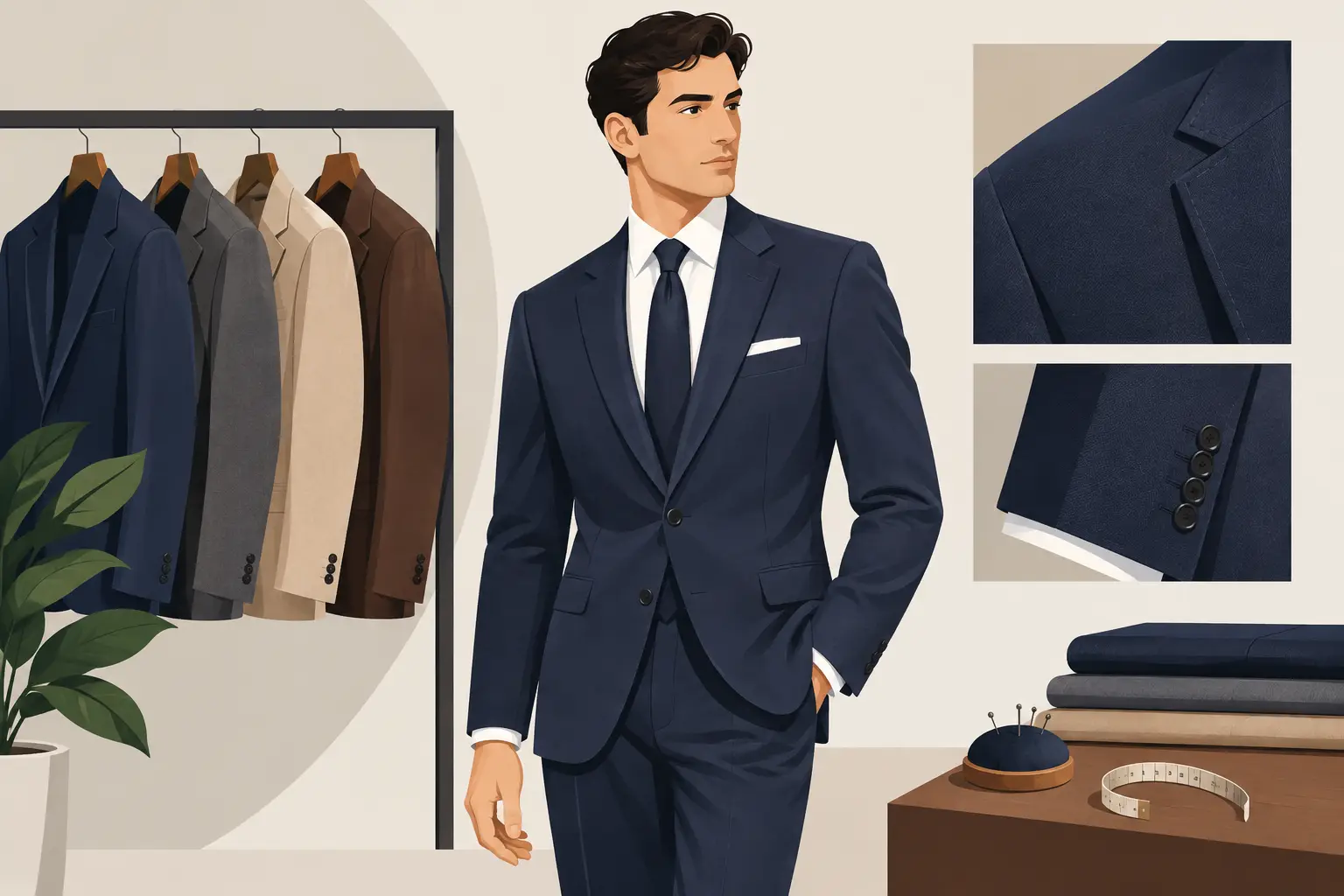
The suit’s construction should follow the same logic. A lightly canvassed jacket gives the chest shape and longevity without unnecessary bulk. Well-positioned armholes allow movement, while trousers cut with the right amount of ease will remain comfortable without appearing loose. Fabric performance is amplified by fit. Even the finest cloth cannot compensate for a jacket that pulls when seated or trousers that bind at the thigh.
Packing a Tailored Suit Properly
Never overstuff a suit into a case. Fold the jacket with the shoulders protected, place it in a garment bag where possible, and use softer items such as knitwear or shirts to prevent hard pressure points. Trousers should be folded along their natural crease, rather than compressed into a tight roll.
On arrival, hang the suit immediately. A warm shower running in the bathroom can help gentle creasing relax, though the garment should not become damp. Give it time and space before reaching for an iron. High-quality wool often recovers beautifully overnight when allowed to rest.
The most successful travel wardrobe is not built around avoiding every crease. It is built around choosing cloth that recovers gracefully, tailoring that moves with you, and a suit that still feels unmistakably your own when the journey is over.