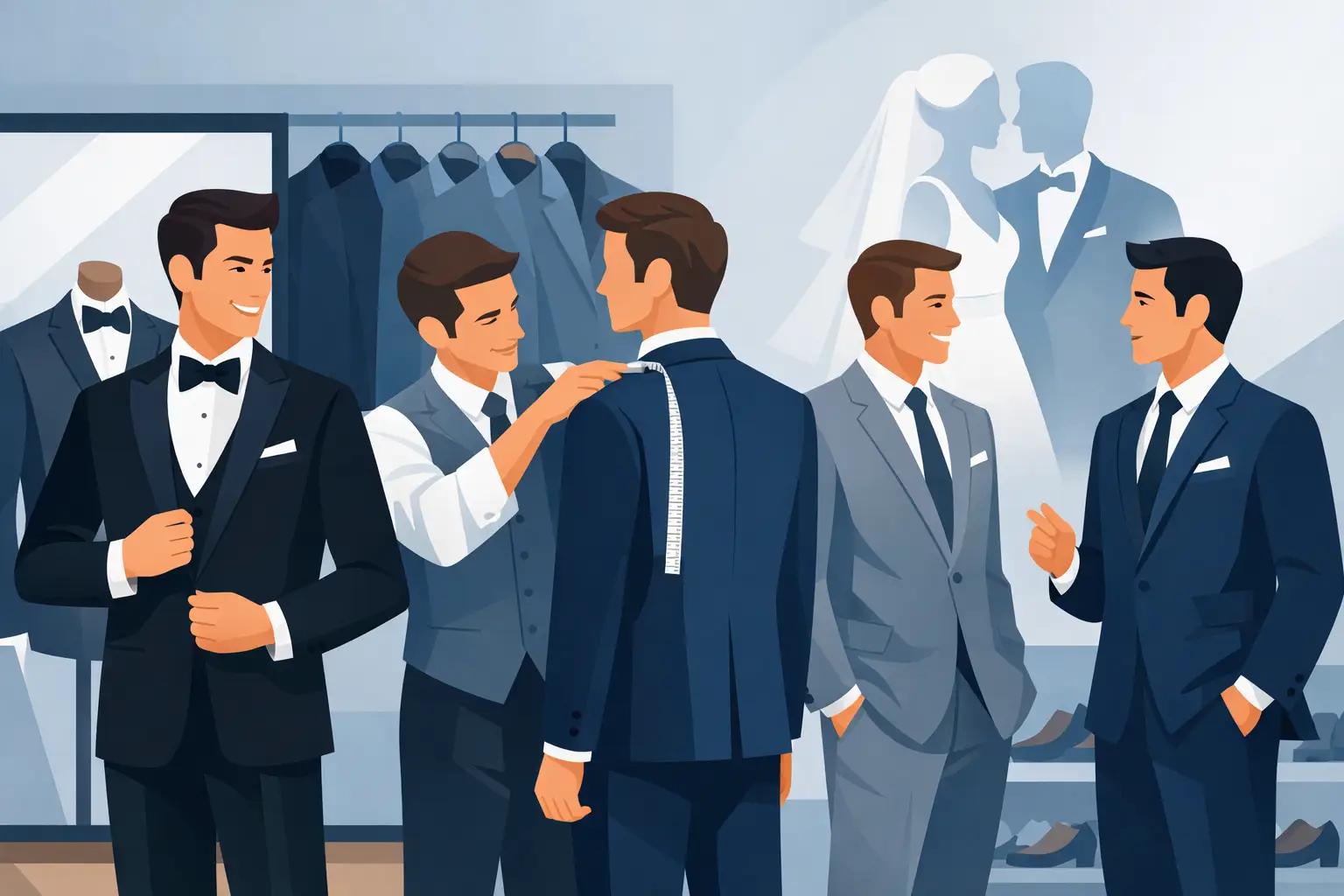
A wedding party can be impeccably styled on paper and still look uneven in photographs if the fit is off. That is why a proper groomsmen suit fitting guide matters. When jackets pull, trousers break awkwardly, or sleeve lengths vary wildly across the group, the whole line-up loses the clean, considered finish that makes formalwear feel distinguished.
The aim is not to make every man look identical. It is to create cohesion while respecting different builds, proportions and comfort levels. The strongest wedding tailoring achieves both – a unified visual standard and a fit that flatters each wearer individually.
What a groomsmen suit fitting guide should actually solve
Most fitting problems start with a false assumption that one suit shape will work for every groomsman. In reality, the same jacket can sit beautifully on one frame and look boxy or strained on another. Shoulder width, chest depth, posture, seat, thigh and leg line all affect the result.
A well-run fitting process solves three things at once. First, it keeps the group visually consistent, so the wedding party looks polished together. Second, it gives each man enough personal adjustment to look natural rather than costume-like. Third, it prevents last-minute panic, which is usually when rushed alterations lead to compromises.
For weddings, precision matters more than it does in day-to-day suiting. People will notice the line of a lapel in photographs. They will notice whether one pair of trousers puddles while another sits too short. Formalwear is unforgiving in that way, but when it is cut and adjusted correctly, the effect is effortless.
Start with the wedding standard, not just the suit
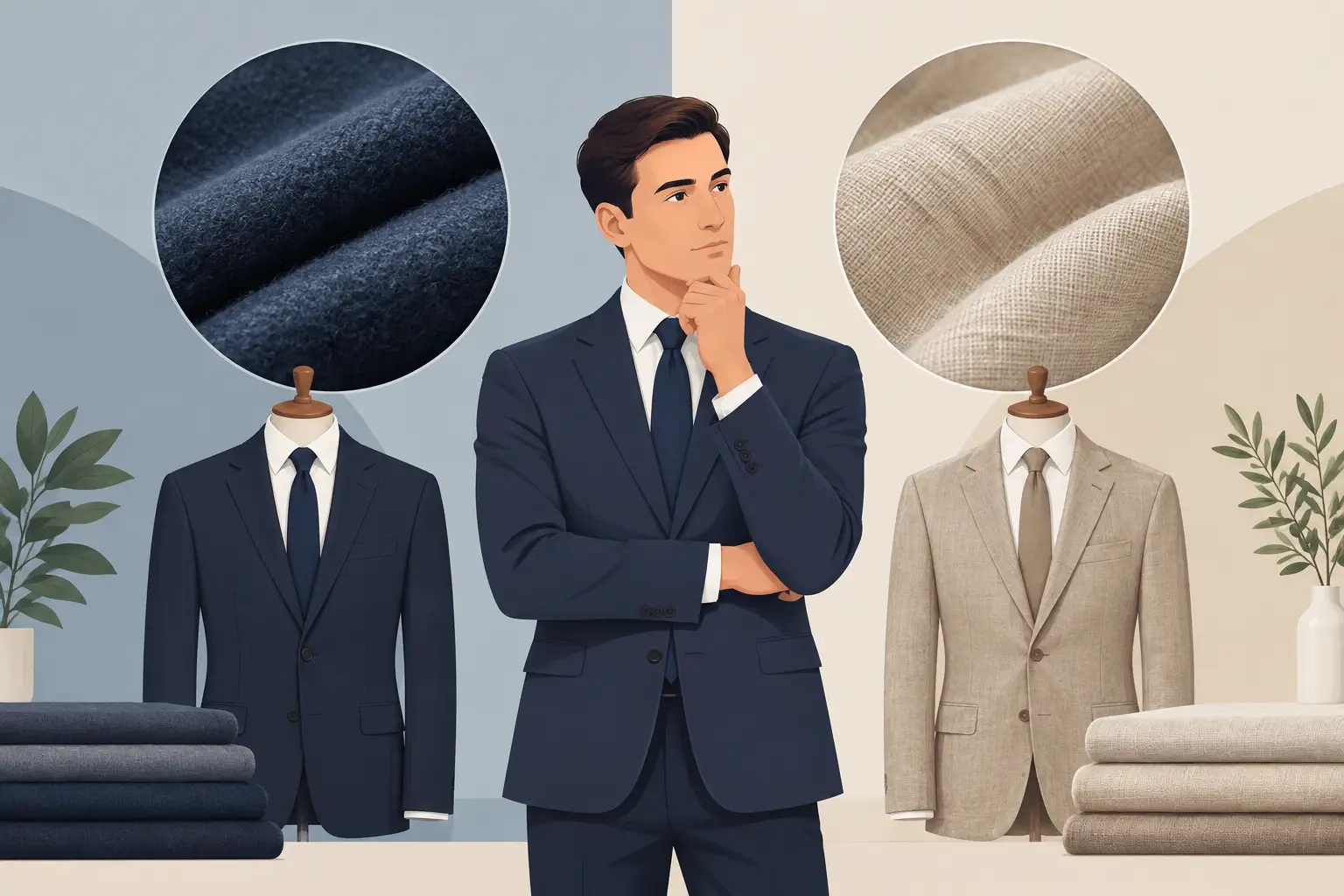
Before any measuring begins, decide what the wedding party should look like as a whole. That means settling the level of formality, cloth, colour, silhouette and finishing details. A relaxed country wedding may suit a softer shoulder and textured cloth, while a black tie-leaning evening celebration calls for sharper structure and cleaner lines.
This is where many groups lose coherence. One groomsman prefers a wider trouser, another wants a very slim cut, and someone else insists on a short cropped jacket because that is what he wears to work. Individually, those preferences may be valid. Collectively, they can fracture the visual balance.
The better approach is to set a house style for the wedding party, then allow measured refinements within it. Trousers can be tapered differently for athletic thighs. A jacket waist can be suppressed more subtly on a broader torso. Sleeve pitch can be corrected for posture. The overall identity remains consistent, but the fit becomes personal.
Fit begins at the shoulders
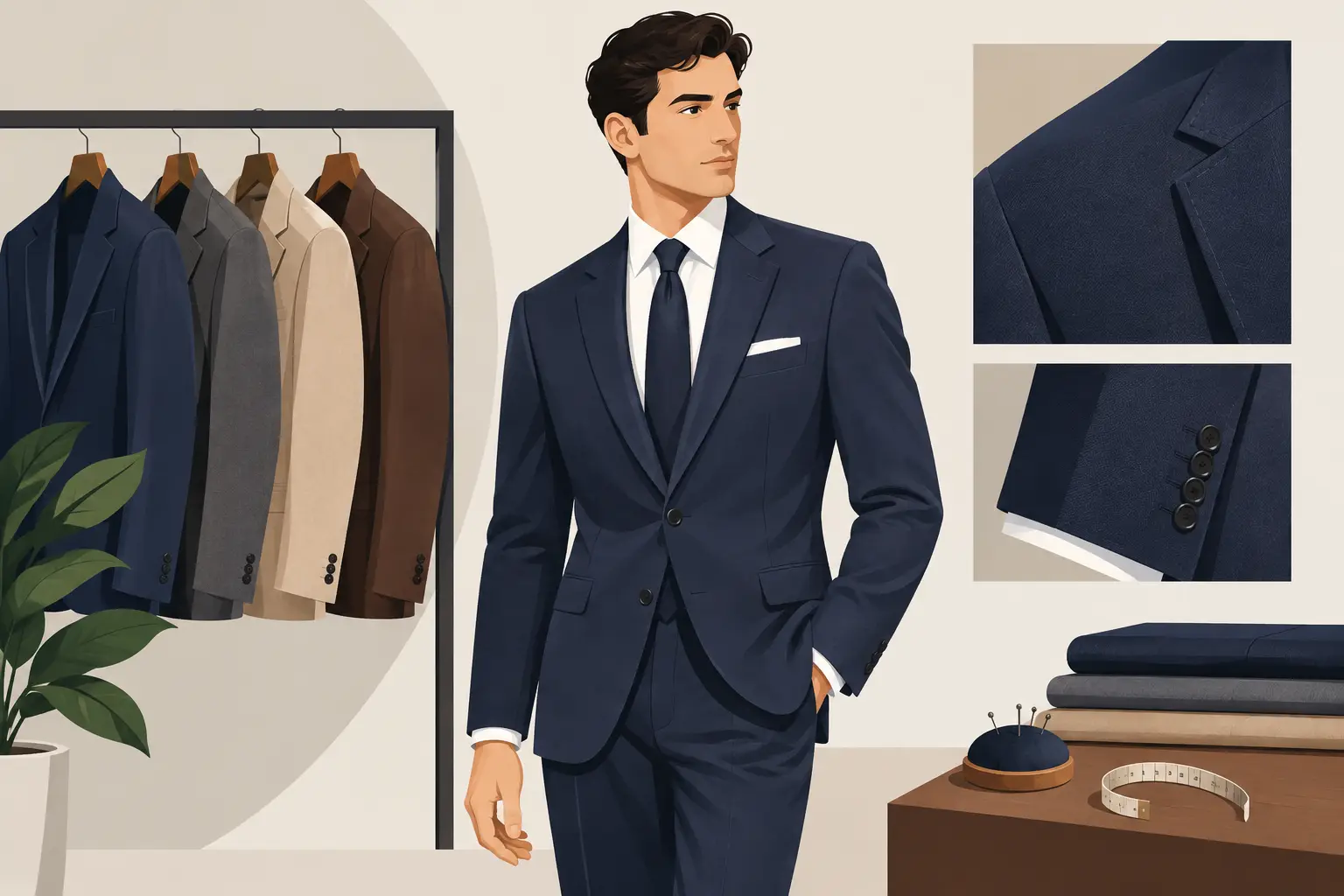
If the shoulders are wrong, very little else will save the jacket. The shoulder line should follow the wearer’s natural shoulder without collapsing, divoting or extending too far beyond the frame. An oversized shoulder makes the jacket look borrowed. One that is too narrow will pull at the upper arm and distort the chest.
This is especially important for groomsmen because group photography highlights inconsistency. If three jackets finish cleanly at the shoulder and one projects outward, the eye goes straight to the error. The shoulder should feel clean and deliberate, not padded into stiffness or cut so close that movement becomes awkward.
The chest and waist should shape, not strain
A good jacket should skim the chest and waist with enough room for natural movement. If the front quarters splay open or the button pulls into an X-shape, the coat is too tight. If the body collapses into excess cloth through the sides and back, it lacks definition.
Different body types need different handling here. A slimmer groomsman may need more shape through the waist to avoid looking swamped. A broader man may need subtle suppression rather than aggressive nipping, which can create drag lines and discomfort. The objective is composure – a jacket that looks sculpted without ever appearing forced.
Trousers are where wedding tailoring often falls apart
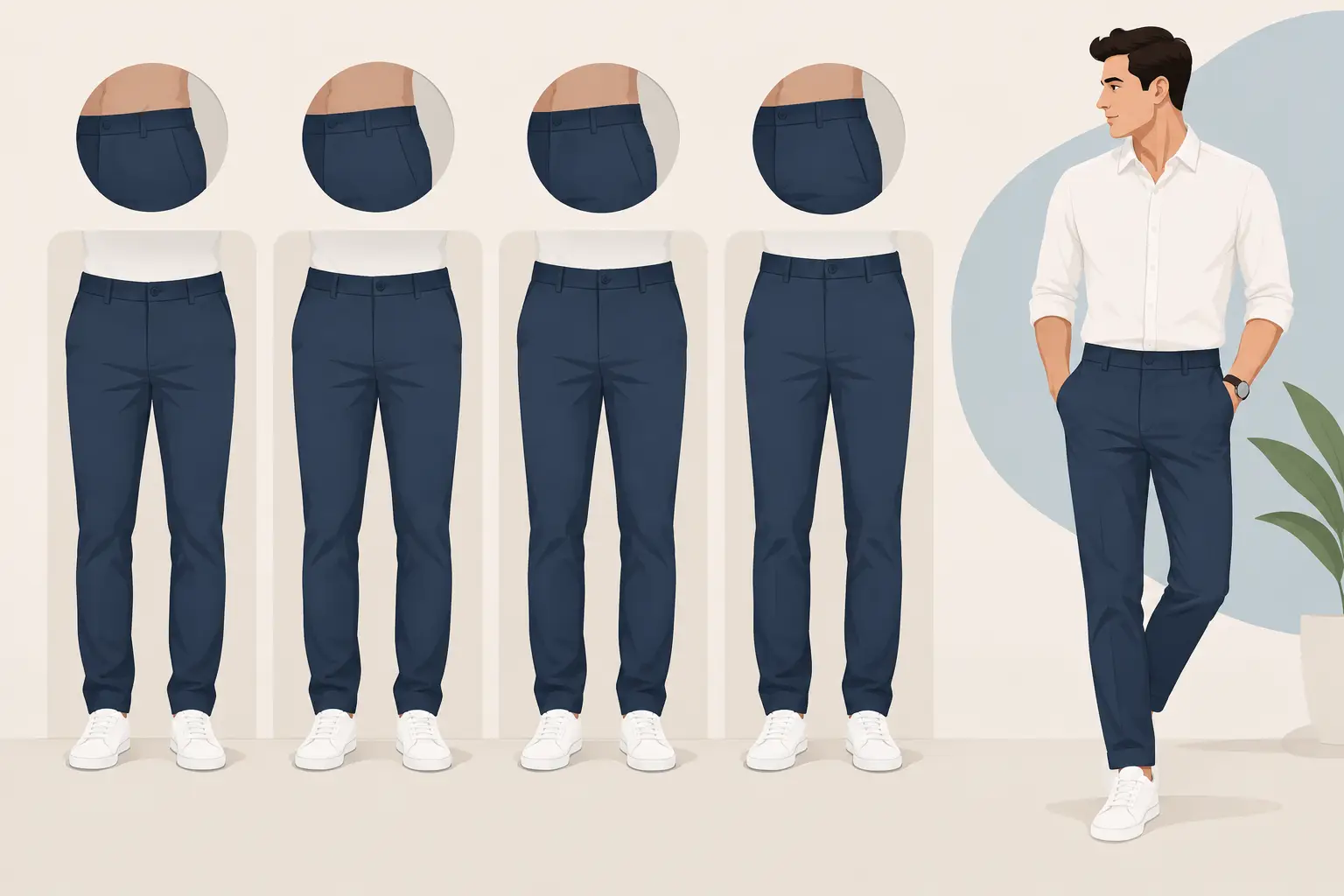
Jackets usually get the attention. Trousers usually decide whether the whole outfit feels finished. A proper groomsmen suit fitting guide has to be exact here, because trouser errors are common and very visible.
The waist should sit securely without being over-tight. If braces are being worn, the rise and drape matter even more, as the trouser must hang from the shoulder line cleanly. If belts are part of the styling, the waistband still needs to sit properly on its own rather than relying on the belt to hold everything together.
The seat should be neat, without horizontal strain or sagging excess. Through the thigh, there must be enough ease to move comfortably, sit through the ceremony and walk naturally. Trousers cut too narrowly through the thigh often twist or catch, which spoils the line immediately.
Length depends on the formality of the wedding and the chosen silhouette. A fuller trouser can carry a slightly deeper break elegantly. A slimmer cut generally benefits from a cleaner, lighter break. What matters is consistency across the party. If one trouser stacks heavily and another hovers above the shoe, the group will look mismatched no matter how good the cloth is.
Hem width changes the whole silhouette
This detail is often overlooked, yet it influences the look as much as length. A narrow hem can sharpen a modern silhouette, but on a taller or broader frame it may look pinched if taken too far. A wider hem adds balance and formality, particularly with classic shoes and more substantial tailoring.
For groomsmen, the hem should relate sensibly to shoe shape, height and overall jacket proportion. It is not about chasing trend-led extremes. Wedding photographs tend to reward balance rather than novelty.
Shirt, sleeve and collar details separate good from exceptional
Even a superb suit loses authority if the shirt fit is careless. Collar size should be close enough to sit neatly around the neck without gaping, yet never so tight that it feels restrictive. The collar must also work with the face shape, tie knot and lapel proportion.
Shirt cuffs should finish so that a measured amount shows beneath the jacket sleeve. Too much shirt cuff can look theatrical. Too little and the jacket appears overlong. Across a wedding party, sleeve balance should be checked carefully because small differences become obvious when everyone is standing side by side.
The jacket sleeve itself should follow the natural arm position. Men do not all stand the same way. Some carry a forward posture, some have one shoulder lower, some rotate their arms inward. A thoughtful fitting accounts for this. It is one of those quiet signs of tailoring expertise that clients may not always name, but they certainly notice in the result.
Timing matters as much as measurement
The best fitting guide in the world will not rescue a wedding party that starts too late. Ideally, fittings should begin well in advance, with enough time for initial measurements, a try-on, alterations and a final check. Bodies change, schedules slip and one groomsman will almost always leave things later than he should.
Rushed fittings create predictable problems. Trouser hems are guessed. Sleeve adjustments are delayed. Weight fluctuation goes unchecked until the final week. None of that supports a refined outcome.
If the party is spread across different locations, coordination becomes even more important. Measurements taken by different people using different methods can lead to inconsistent results. A single tailoring standard keeps the group aligned and reduces the risk of one suit feeling noticeably different from the rest.
Comfort is not separate from elegance
There is a persistent idea that formalwear has to feel slightly uncomfortable to look correct. It does not. In fact, discomfort usually shows. A groomsman who is constantly adjusting his collar, tugging his waistband or fighting a tight sleeve will never look composed.
True elegance comes from precision. That means enough room to raise a glass, sit through speeches, move across the dance floor and stand for photographs without the suit losing its line. The most successful wedding tailoring feels controlled, not restrictive.
This is particularly relevant for men who do not wear tailoring often. They may assume a close fit is meant to feel tight, when in reality a well-cut garment should feel supportive and balanced. That reassurance is part of the service. It helps first-time wearers carry the suit with confidence rather than self-consciousness.
Why alterations should never be treated as an afterthought
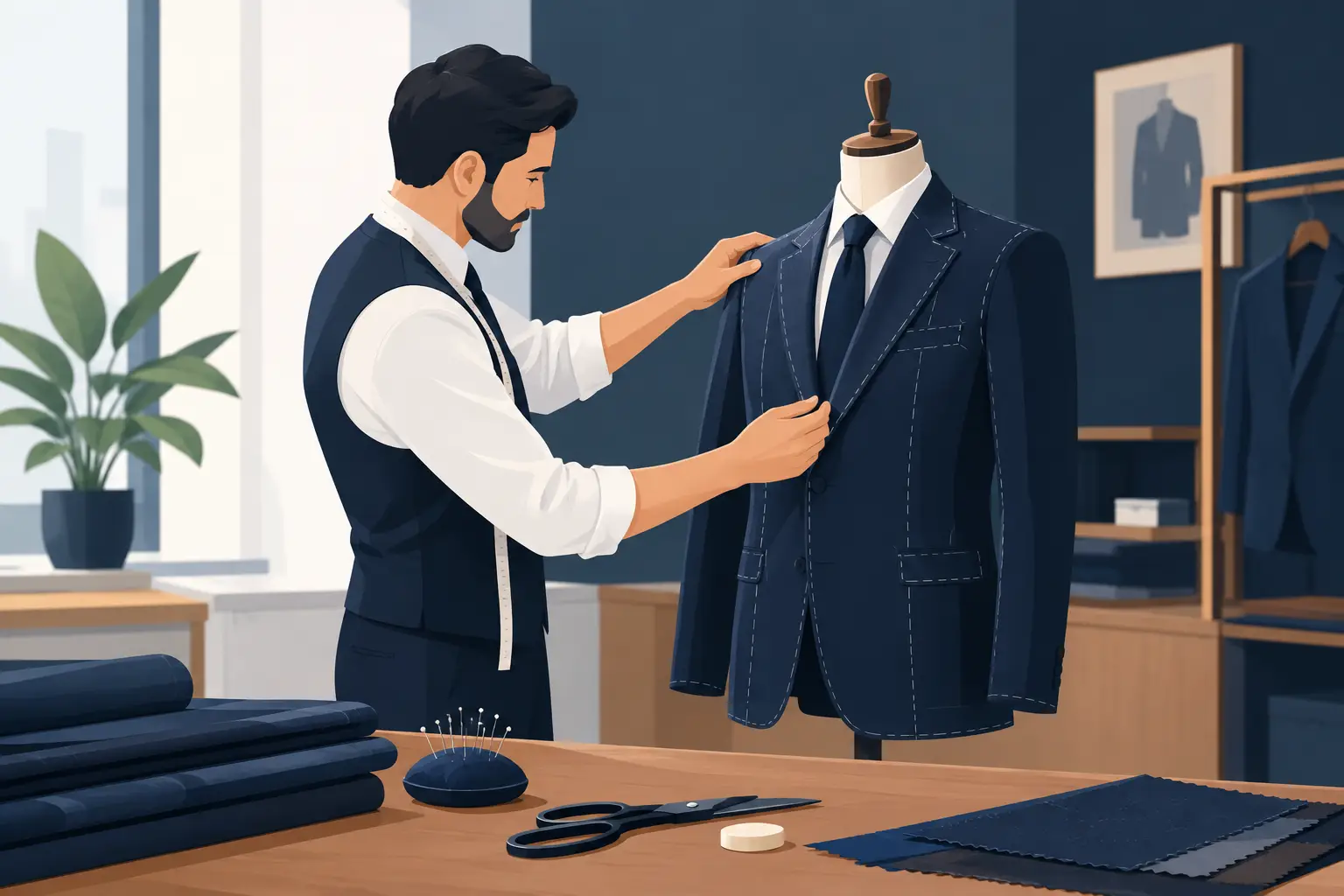
Off-the-peg garments can provide a starting point, but very few men fit a standard block cleanly enough to wear formal suiting without adjustment. Hemming alone is not a fitting strategy. Jacket waist suppression, sleeve length, trouser taper, seat refinement and balance corrections often make the difference between acceptable and exceptional.
Not every alteration is equally wise, though. Some changes are straightforward and worthwhile. Others, particularly major shoulder or chest reconstructions on a poorly chosen base garment, can become costly and still fail to deliver the right line. This is where experienced guidance matters. Precision is not just about what can be altered, but what should be.
For a wedding party, consistency in alterations is essential. If one jacket is shaped aggressively while another is left loose, the group styling loses discipline. The strongest results come from a tailoring eye that sees the party as a complete composition while still refining each individual fit.
At Manndiip, that is the difference between simply getting dressed and being meticulously turned out. When each groomsman is fitted with care, the wedding party carries the same sense of occasion as the day itself – polished, assured and unmistakably well judged.
The right fit does more than tidy a silhouette. It allows every man standing beside the groom to look like he belongs there, with confidence that reads instantly in the room and lasts in every photograph after.