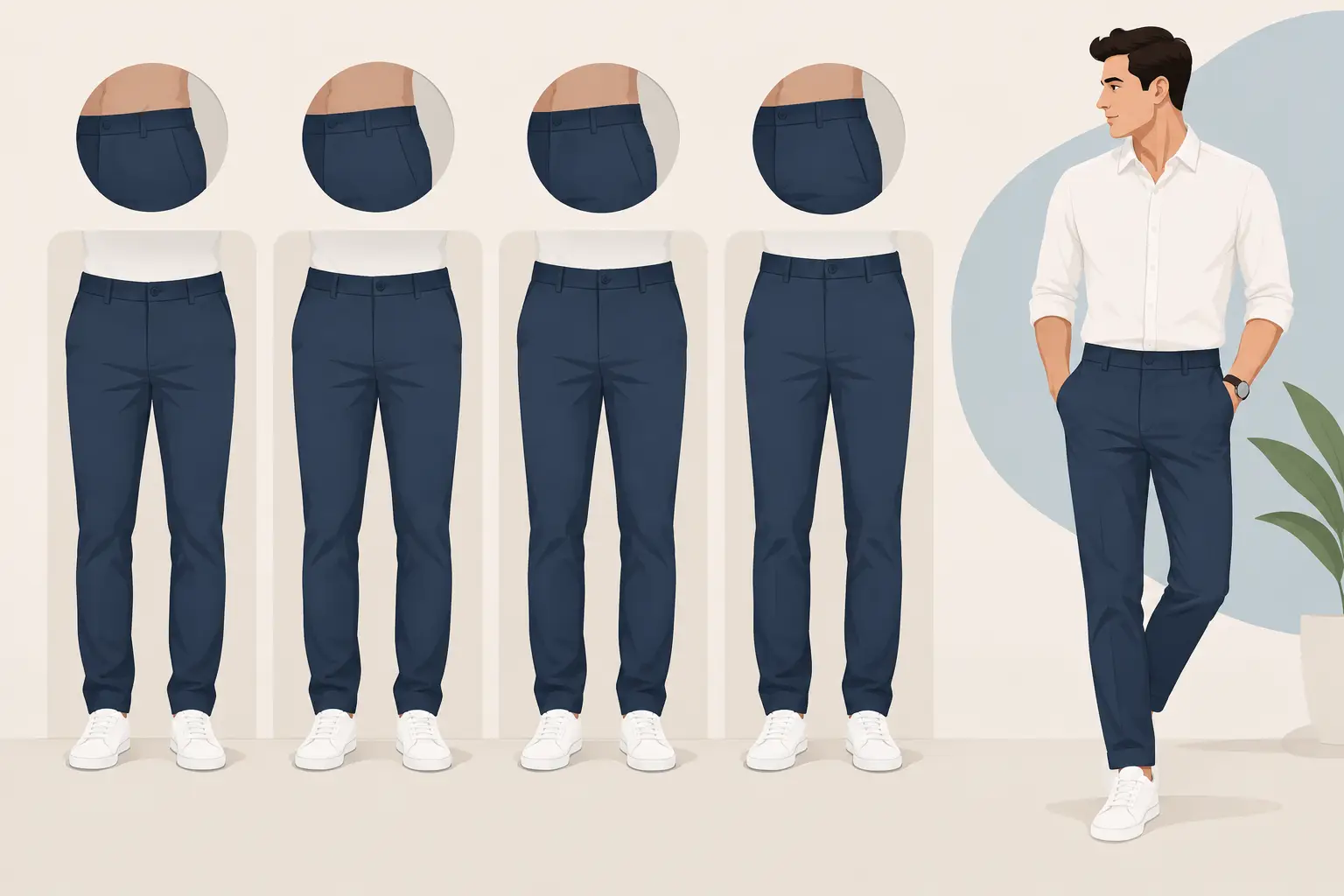
A well-cut trouser can lose its authority in the final inch. Too much cloth gathering over the shoe makes even an excellent suit appear borrowed; too little can expose the ankle when you sit. This guide to trouser hemming options explains how length, break and finishing work together to create a proportion that feels intentional, comfortable and distinctly yours.
Trouser length is not merely a practical alteration. It shapes the line from jacket to shoe, affects how a fabric moves, and signals whether a look is classically formal, contemporary or relaxed. The right decision begins with where and how the trousers will be worn.
Why the trouser hem deserves close attention
The hem is the point at which a trouser meets its footwear, so it must be considered in a complete outfit. A business suit worn with sleek Oxford shoes needs a different length from flannel trousers paired with loafers, while a wedding suit may call for a cleaner, more considered line in photographs and throughout the day.
Posture matters too. One leg may hang differently from the other, particularly where the hips, knees or calves are not perfectly symmetrical. Off-the-peg trousers are cut to a standard length and straight stance. A skilled alteration accounts for the client standing naturally, rather than forcing the garment into an idealised position that does not reflect real movement.
Fabric has a voice in the decision. Lightweight wool tends to fall cleanly and can carry a minimal break with ease. Heavier flannel, cavalry twill or tweed has more body and often benefits from a touch more length or a turn-up to balance its weight. The goal is always harmony between cloth, cut and occasion.
Guide to trouser hemming options: choosing the break
The term “break” describes the fold or crease created where the trouser meets the front of the shoe. There is no single correct break. The most flattering choice depends on the trouser’s width, the wearer’s proportions, the footwear and the intended character of the garment.
No break
A no-break trouser finishes just above the shoe, with no visible crease at the front. It creates an elongated, modern silhouette and works particularly well with slim, neatly tapered trousers, formal eveningwear and loafers. It also prevents fabric from pooling at the ankle.
This is a precise option, however. A trouser with no break should still cover the top of the shoe when standing naturally, without appearing accidentally short. It can be less forgiving when seated or walking, and taller men may find that an extremely abbreviated length makes the leg look disproportionate. For those who favour a crisp contemporary finish, a carefully judged no break can be exceptionally elegant.
Slight break
For many men, a slight break is the most versatile choice. The trouser rests softly on the shoe with one small horizontal crease, maintaining a clean line without looking cropped. It suits business tailoring, wedding suits and refined everyday separates alike.
A slight break works across a broad range of shoe styles, from Oxfords and Derbies to smart Chelsea boots. It also allows enough length for comfort when walking and sitting, making it a confident starting point for a first bespoke suit or a major alteration.
Half break
A half break creates a more pronounced fold at the front, while the back hem sits closer to the top of the shoe heel. It is a traditional, practical choice for straight-cut or slightly fuller trousers. The additional length gives the fabric a more generous drape and can balance a stronger build or larger shoe.
The trade-off is that excess width in the trouser leg can quickly turn a controlled break into untidy bunching. The hem and taper must be assessed together. A fuller trouser can look assured and luxurious, but only when its proportions are deliberately managed.
Full break
A full break leaves enough length for the trouser to form several folds above the shoe. It is generally best reserved for a deliberately relaxed aesthetic, certain wider-legged styles or traditional countrywear. On a sharp business or formal suit, it can make the lower half look heavy and conceal the clean architecture of the cut.
For most tailored wardrobes, full break is approached with restraint. It may be appropriate, but it should look like a styling decision, not an alteration left unfinished.
Straight hems or turn-ups?
Once length has been selected, the finish of the hem sets the tone. A plain, straight hem is the cleanest and most formal option. It is the natural partner for dinner trousers, sleek worsted business suits and contemporary wedding tailoring. Without the visual interruption of a cuff, it helps the leg appear longer and keeps attention on the sharpness of the silhouette.
Turn-ups, also called cuffs, add weight and visual definition to the bottom of the trouser. They are especially effective on flannel, tweed, linen blends and trousers with pleats, where they bring balance to a more textured or traditionally influenced design. A turn-up also helps a trouser hang beautifully, as the added weight encourages a cleaner fall.
For most tailored trousers, a 4 cm to 5 cm turn-up is a refined proportion. Taller men and wider-legged cuts can carry a deeper cuff, while a shorter frame or narrow trouser usually benefits from restraint. Turn-ups are not typically used on formal evening trousers, where the uninterrupted line of a plain hem is more appropriate.
The construction behind a clean finish
A quality trouser hem is more than folded fabric held in place. On tailored wool trousers, a blind hem creates an almost invisible finish from the outside, preserving the cloth’s clean face. The hem allowance should be sufficient to allow a modest future adjustment where possible, particularly for trousers intended to remain in a long-term wardrobe.
Some trousers benefit from heel tape, a narrow reinforcing strip applied inside the back hem. This protects the cloth from abrasion where it brushes against shoes, extending the life of frequently worn business trousers. On denims and casual chinos, the original finish may be replicated where appropriate, but the alteration should still respect the garment’s shape and wash line.
A competent fitting also checks that the hem is level relative to the floor while allowing for the natural rise of footwear at the front and heel at the back. Measuring a trouser flat on a table cannot replace seeing it on the body with the intended shoes.
Bring the right shoes to the fitting
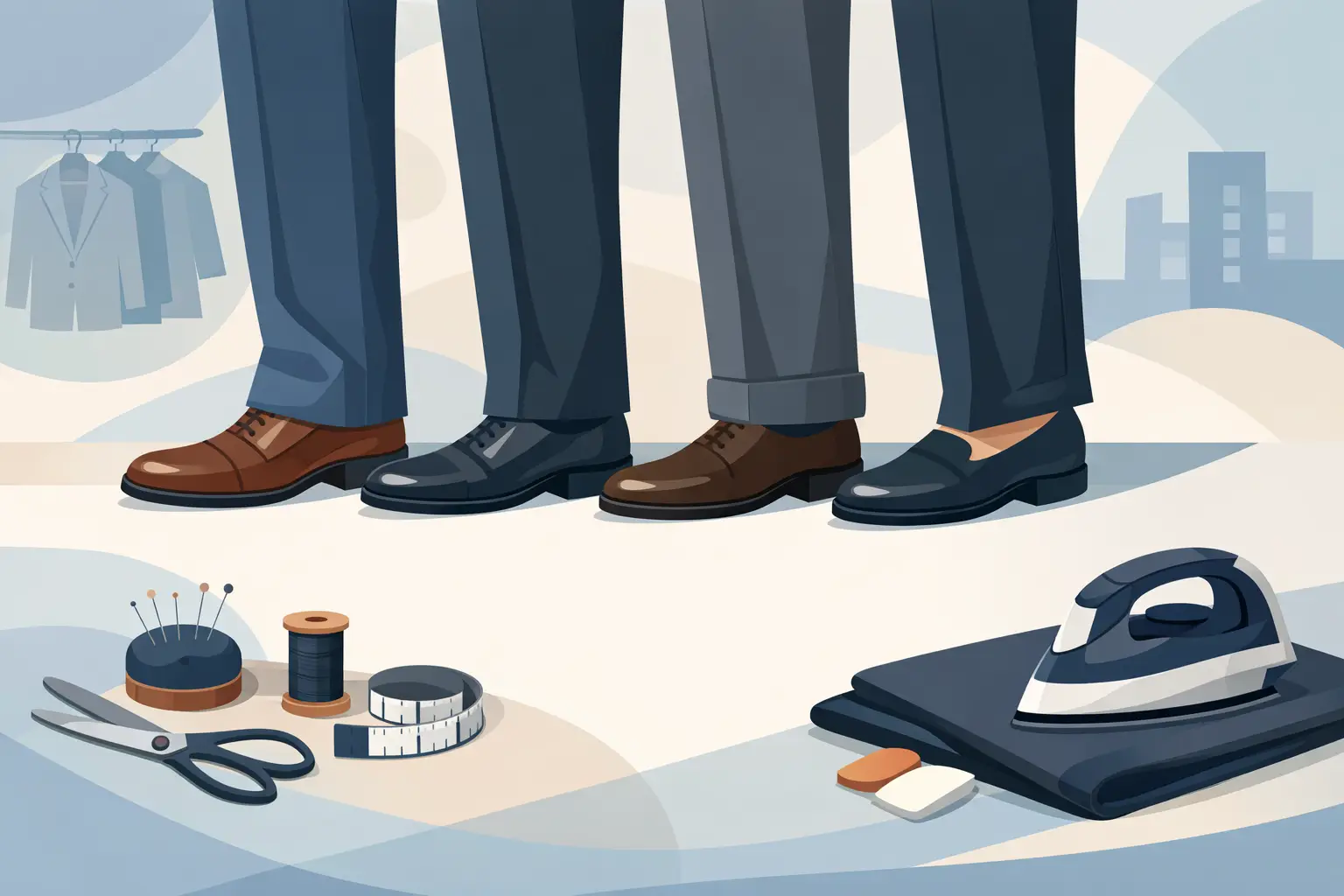
The simplest way to avoid a disappointing result is to wear, or bring, the shoes you expect to wear most often with the trousers. Shoe heel height, vamp shape and sole thickness all influence the ideal hem. A trouser marked over slim leather-soled Oxfords may sit noticeably shorter over substantial rubber-soled boots.
If one pair is intended for several shoes, choose the footwear that defines the trouser’s primary role. Business trousers should be fitted with business shoes; wedding trousers with the shoes chosen for the day. A slight break offers useful flexibility, while a no-break hem is best assigned to a more specific shoe profile.
It is also wise to stand, walk, sit and climb a step during the fitting. A hem that appears perfect while motionless can reveal too much sock once the wearer moves. The objective is not to eliminate movement entirely, but to ensure that the trouser performs with poise in real life.
When an alteration is not only about length
If a trouser pools heavily at the ankle, shortening the hem may not solve the whole problem. The leg may be too wide through the calf or hem, allowing excess fabric to collapse onto the shoe. Conversely, a narrow hem cut too short can cling awkwardly and look strained. Tapering and hemming are often related decisions, especially when refining older suits to suit a more current silhouette.
The same is true of trousers that twist or fall unevenly. This may stem from the wearer’s stance, a shifted side seam, or the way the trousers have been pressed and worn. An experienced tailor examines the entire lower leg before marking the hem, then recommends the adjustment that will create the most balanced result rather than the quickest one.
At Manndiip, trouser alterations are approached as part of the garment’s overall architecture. The aim is not simply to make trousers shorter, but to restore a deliberate line that supports the wearer’s posture, footwear and personal style.
A precise hem is a quiet detail, yet it changes the way a suit carries you. Bring the shoes, allow time for a proper fitting, and choose the finish that makes your trousers look composed from the first step to the last.