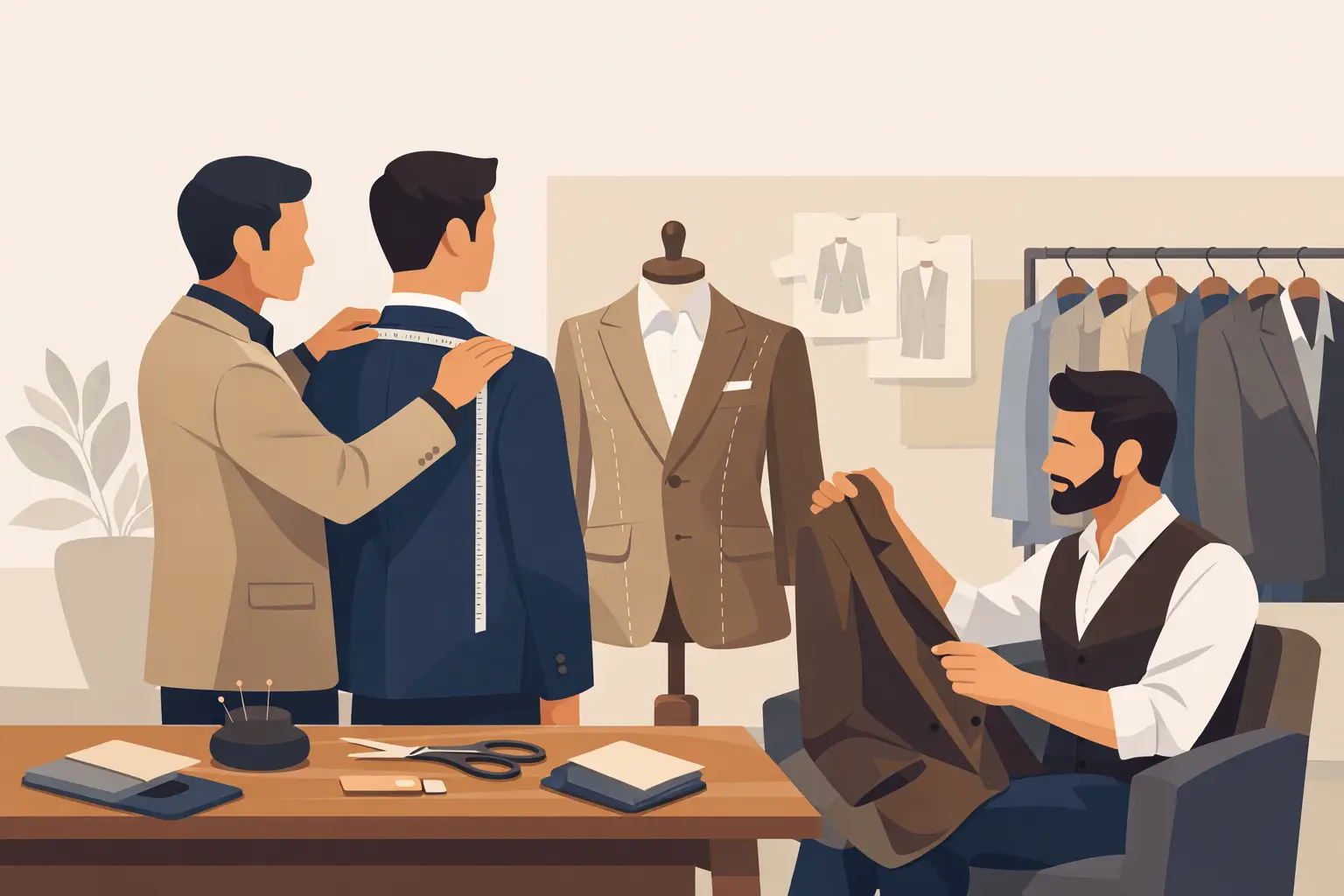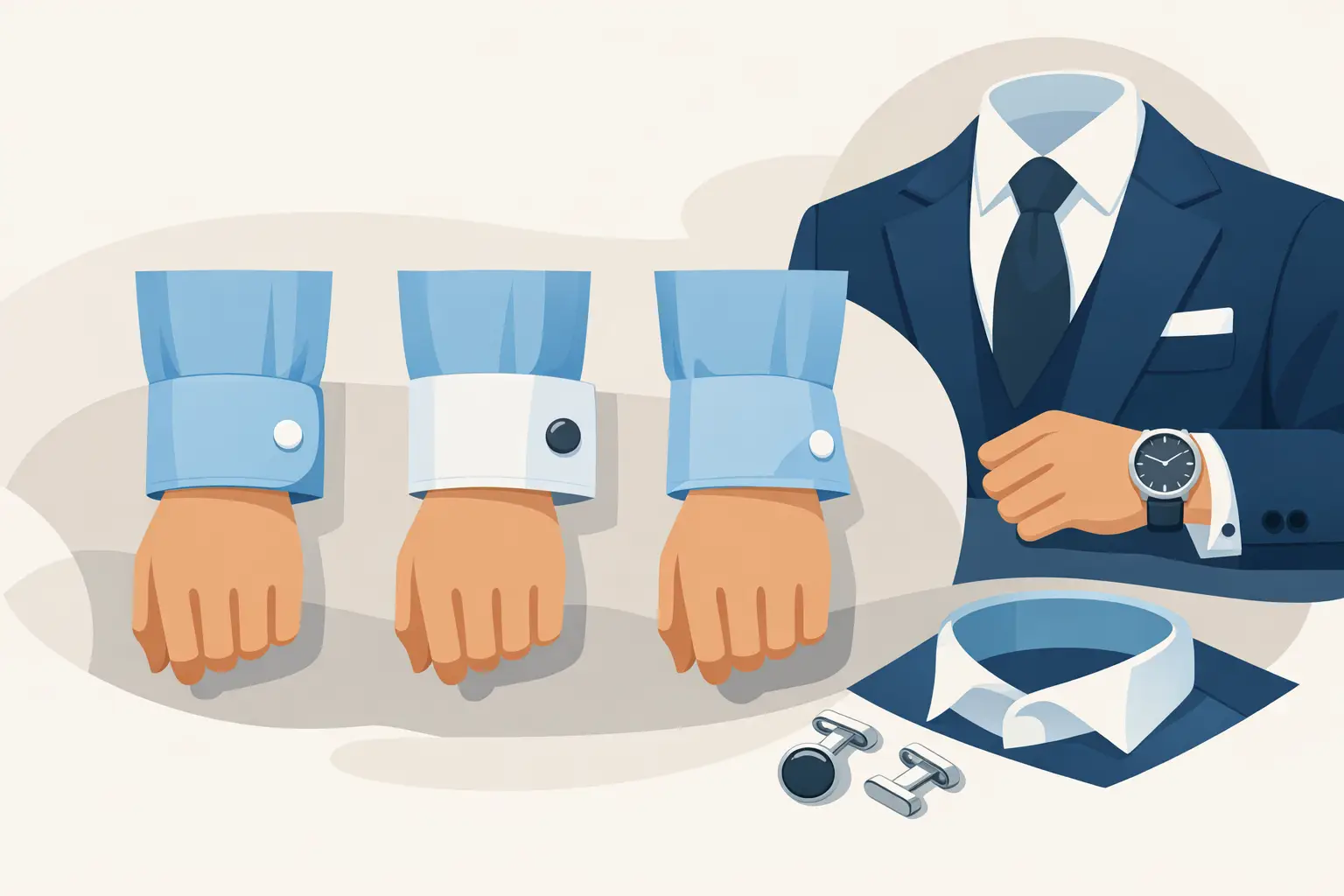

A coat can fit beautifully through the chest and shoulders yet still look borrowed if the sleeves are too long. Knowing how to shorten coat sleeves is less about removing excess length and more about preserving proportion: the cuff should finish neatly around the wrist, the lining must sit smoothly, and every detail from buttons to vents must remain in balance.
For a tailored overcoat, pea coat or formal wool coat, sleeve length is one of the first things the eye registers. It affects the line of the arm, the visibility of a jacket cuff beneath, and the overall authority of the garment. This is why a seemingly straightforward alteration deserves a considered approach.
Where coat sleeves should finish
The ideal sleeve length depends on the coat’s purpose and the garments worn beneath it. On a classic overcoat, the sleeve should generally reach the wrist bone or just beyond it, allowing the coat to cover the jacket sleeve underneath. Unlike a suit jacket, an overcoat is not usually worn to show a quarter-inch of shirt cuff.
When your arms rest naturally by your sides, the coat cuff should not sit across the knuckles or interfere with your hands. Bend your arm, hold a bag or place a hand in a pocket. If the cuff climbs far up the forearm, the sleeve may be too short. If it pools at the wrist or constantly catches on your hand, it is too long.
The right measurement is taken while wearing the layers you would normally wear with the coat. A slim wool overcoat worn over business tailoring needs assessing over a jacket. A casual field coat may be measured over knitwear. This distinction matters because extra layers alter both the sleeve’s position and how much mobility is required.
How to shorten coat sleeves: choose the right route
There are two principal ways to shorten a coat sleeve: from the cuff or from the shoulder. The correct option is determined by the construction, the amount being removed and the details that must be retained.
Shortening from the cuff
Most coat sleeves are shortened from the cuff. The tailor removes the cuff finish, opens the lining where necessary, trims the outer cloth and lining to the required length, then rebuilds the hem. On a plain sleeve with no working buttonholes, this is usually the cleanest and most proportionate solution.
It is also often the best choice where only a modest adjustment is needed. Removing one to two centimetres can transform the fit without disturbing the shoulder, sleeve head or armhole. Those areas are central to the coat’s silhouette and should be left untouched whenever possible.
The complication comes with cuff details. Coats may have decorative buttons, functional buttonholes, turn-back cuffs, tab adjusters, zips or leather trims. If the sleeve is shortened from the cuff, these details move closer to the edge. On a finely made coat, that shift can look visibly wrong even if the stitching itself is immaculate.
As a rule, the more structured or detailed the cuff, the more careful the decision needs to be. A tailor can sometimes reposition non-functioning buttons. Functional buttonholes, however, cannot simply be moved without leaving evidence of their original placement. The fabric retains needle marks, and the old holes must be dealt with expertly or incorporated into a revised design.
Shortening from the shoulder
Shortening from the shoulder is a more advanced operation. The sleeve is removed at the armhole, reduced from its top edge and reset into the coat. It is normally considered when shortening from the cuff would compromise buttonhole spacing, a cuff treatment or the visual proportions of the sleeve.
This method protects the relationship between the cuff and its buttons, but it introduces a different challenge: the sleeve head must be reset precisely. On a tailored overcoat, the sleeve head may contain wadding, canvas support and careful shaping that creates a clean roll over the shoulder. If it is reset poorly, the result can be drag lines, puckering or a hollow, collapsed shoulder.
Shoulder shortening is therefore not a casual alteration. It requires an experienced coat tailor who understands both the outer cloth and the internal structure. It also costs more, because the work involves substantially more dismantling and reconstruction.
Why coat construction changes the alteration
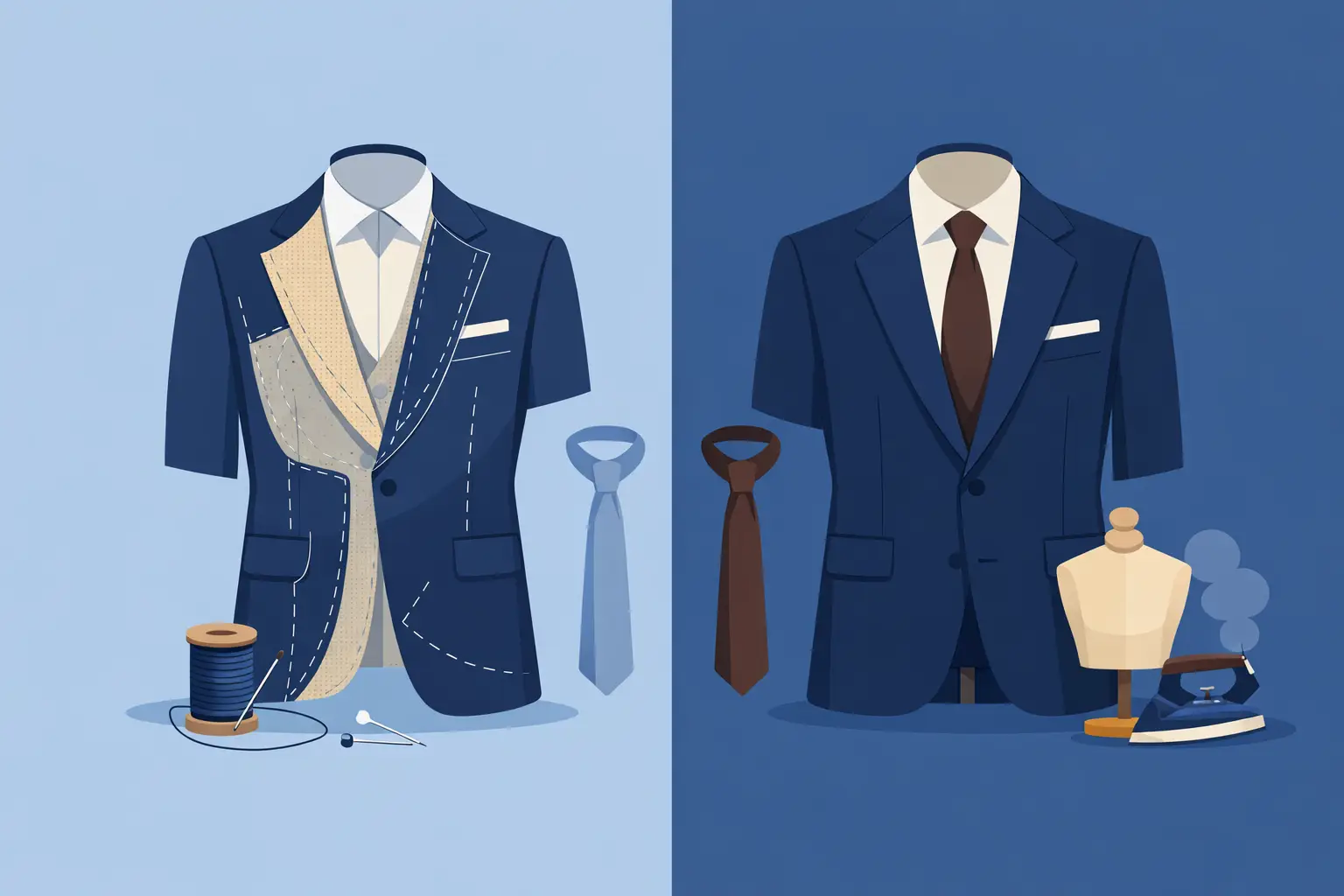
A coat is rarely just a single layer of fabric with a hemmed sleeve. Many have a full lining, sleeve-head support, interlining for warmth, reinforced hems and hand-finished details. Tweed, cashmere, melton wool and technical fabrics all respond differently to unpicking, pressing and restitching.
A fully lined coat requires the lining to be opened and then closed cleanly after the alteration. The lining must be slightly shorter than the outer cloth to prevent it from pulling at the cuff when the arm moves. Too much lining length creates bunching. Too little restricts movement and can strain the seams.
Heavy cloth also needs a proper press. Wool can develop shine, seam impressions or a flattened surface if pressed carelessly. A good alteration is not merely measured and sewn. It is shaped through heat, moisture and restraint so the finish appears original rather than altered.
Certain coats are more difficult than others. A trench coat with storm cuffs, a leather coat, a quilted jacket and a coat with zipped sleeve vents all demand specialist handling. Leather leaves permanent stitch holes, while quilting can lose its alignment if cut without planning. In these cases, shortening may be possible, but it should be assessed garment by garment rather than assumed.
Measure before any fabric is cut
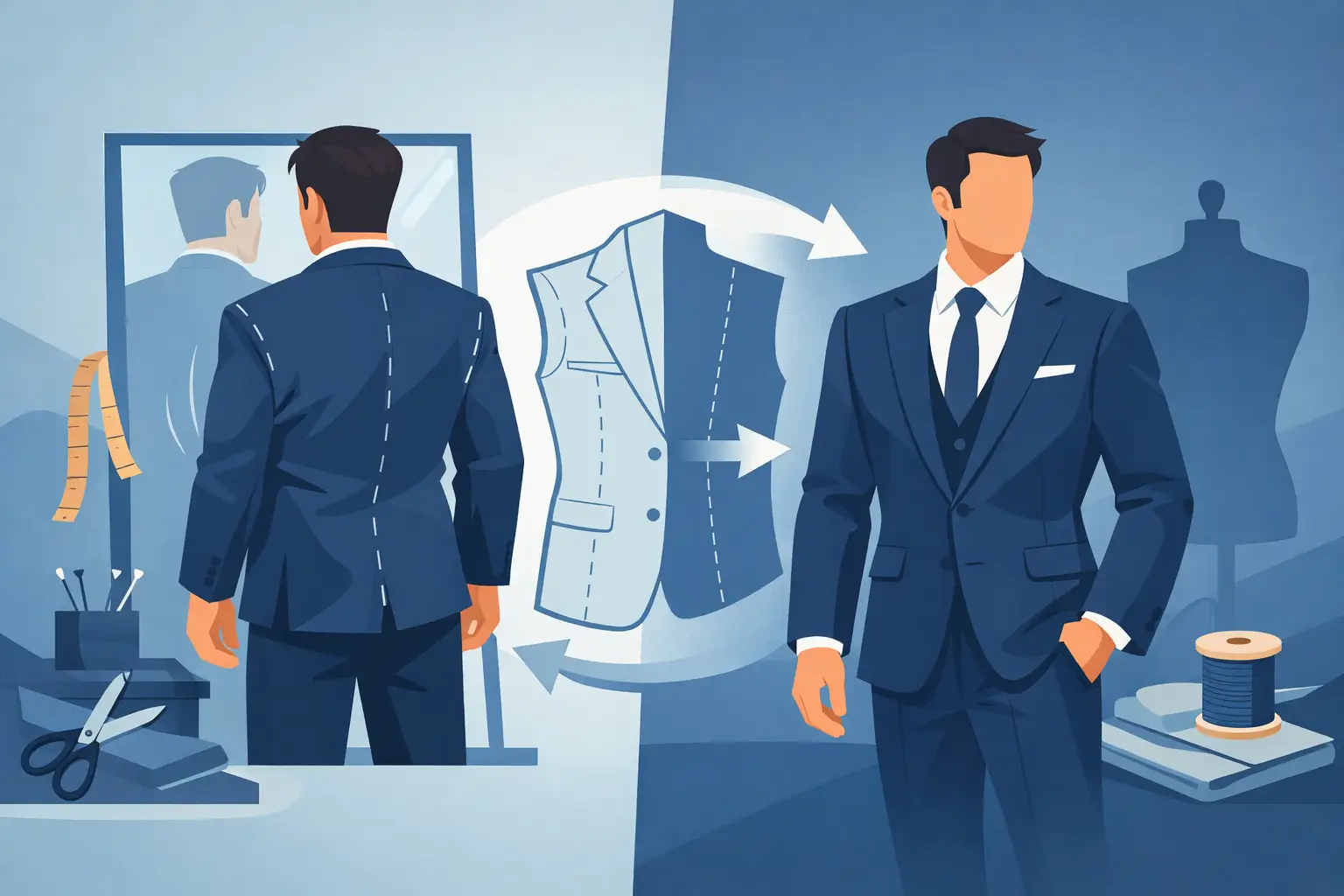
Before work begins, put on the coat with your usual jacket or knitwear and stand naturally. A tailor will pin the proposed new length while checking both sleeves independently. Few people stand perfectly square, and one arm is often fractionally lower or longer than the other. Matching both sleeves to a single flat measurement can create a visibly uneven result when worn.
The coat should also be checked in motion. Reach forwards, sit down and put your hands in your pockets. A sleeve that looks perfect while standing still may feel restrictive when driving or travelling. For formal overcoats, this balance between a crisp wrist length and useful movement is part of the garment’s refinement.
If your coat has cuff buttons, ask to see the proposed positioning before the alteration is approved. The spacing above the cuff should look intentional, not crowded. On a bespoke-quality garment, these small visual intervals are what separate a convincing finish from an obvious compromise.
Can you shorten coat sleeves at home?
For an unlined casual coat with a plain cuff, confident home sewists may be able to shorten sleeves from the hem. Even then, accuracy is essential. You need to mark the new length with the coat worn, allow for the hem depth, keep the side seams aligned and press the cloth with appropriate protection.
For a lined wool overcoat, structured coat or any sleeve with buttons and vents, home alteration is rarely worth the risk. Once cloth has been cut, there may be no spare length to correct an error. Poor pressing can also leave a permanent mark on fine wool or cashmere.
The cost of professional work reflects the construction being handled, not simply the number of stitches. An experienced tailor protects the garment’s original balance, handles the lining correctly and makes a judgement on whether cuff or shoulder work will produce the better result. At Manndiip, that judgement begins with the wearer, the coat’s construction and the finish expected from it.
When shortening is not the best answer
Occasionally, long sleeves signal a broader fit issue. If the shoulders extend beyond your own, the armholes sit low or the chest is excessively large, shortening the cuffs alone will not make the coat look truly tailored. The sleeve may still appear wide, or it may twist because the shoulder is not sitting correctly.
Equally, a dramatic reduction can distort the sleeve’s taper. Removing several centimetres from the cuff can leave the arm too narrow at the wrist or make the buttons look disproportionately high. In those situations, a more involved alteration, or a coat that is better suited to your frame, may be the more elegant investment.
A well-shortened coat sleeve should never announce the work that has been done. It should simply allow the coat to sit with greater precision, frame the hands cleanly and lend the entire outfit the composed, considered presence that fine outerwear deserves.