Leather braces for men are not a novelty accessory reserved for period costume or black-tie photographs. Chosen with care, they introduce a deliberate line through the torso, hold tailored trousers exactly where they should sit and bring a quiet authority to an outfit. They are particularly effective when the cut of the trousers, the cloth and the occasion call for more considered dressing than a belt can provide.
A well-made pair does more than support the waistband. It changes the way trousers fall from the waist, preserving a clean front and an unbroken drape through the leg. For men who value precision in their wardrobe, that difference is immediately visible.
Why braces change the line of tailored trousers
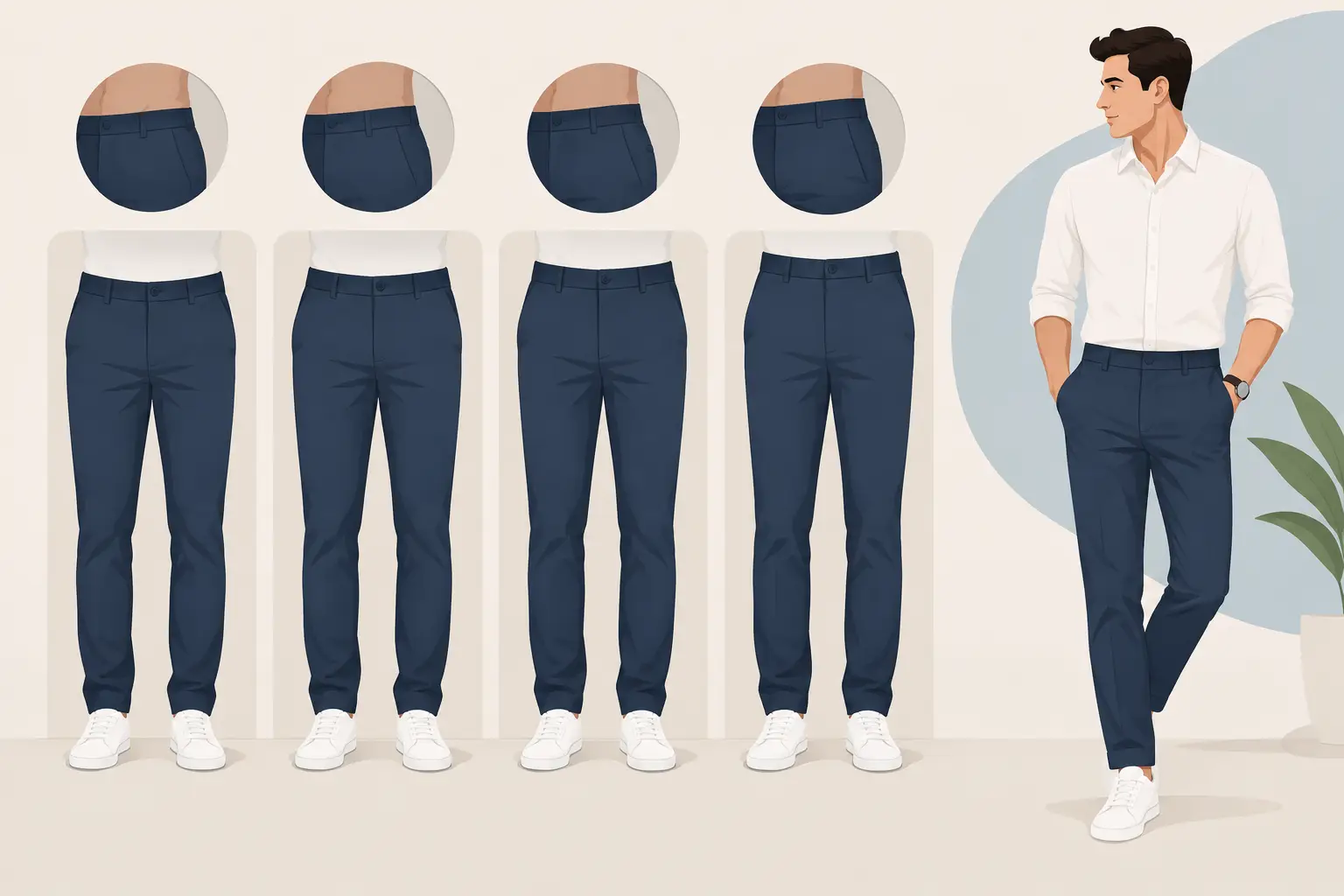
A belt grips the waistband and can gather cloth at the waist, particularly when sitting or moving through a long day. Braces suspend the trousers from the shoulders instead. This allows the waistband to rest at its intended height, while the trouser front remains flatter and the pleats, if present, retain their shape.
The result is especially refined with high-rise trousers. A higher waist lengthens the leg line and gives the jacket a more balanced foundation, but it needs to stay in position to work properly. Braces make that possible without the visual interruption of a belt cutting across the middle of the body.
This is why they have long belonged in formal and business wardrobes. They are practical, certainly, but their greater value is architectural. They support the construction of the outfit from beneath the jacket, where the best tailoring often does its work quietly.
Choosing leather braces for men
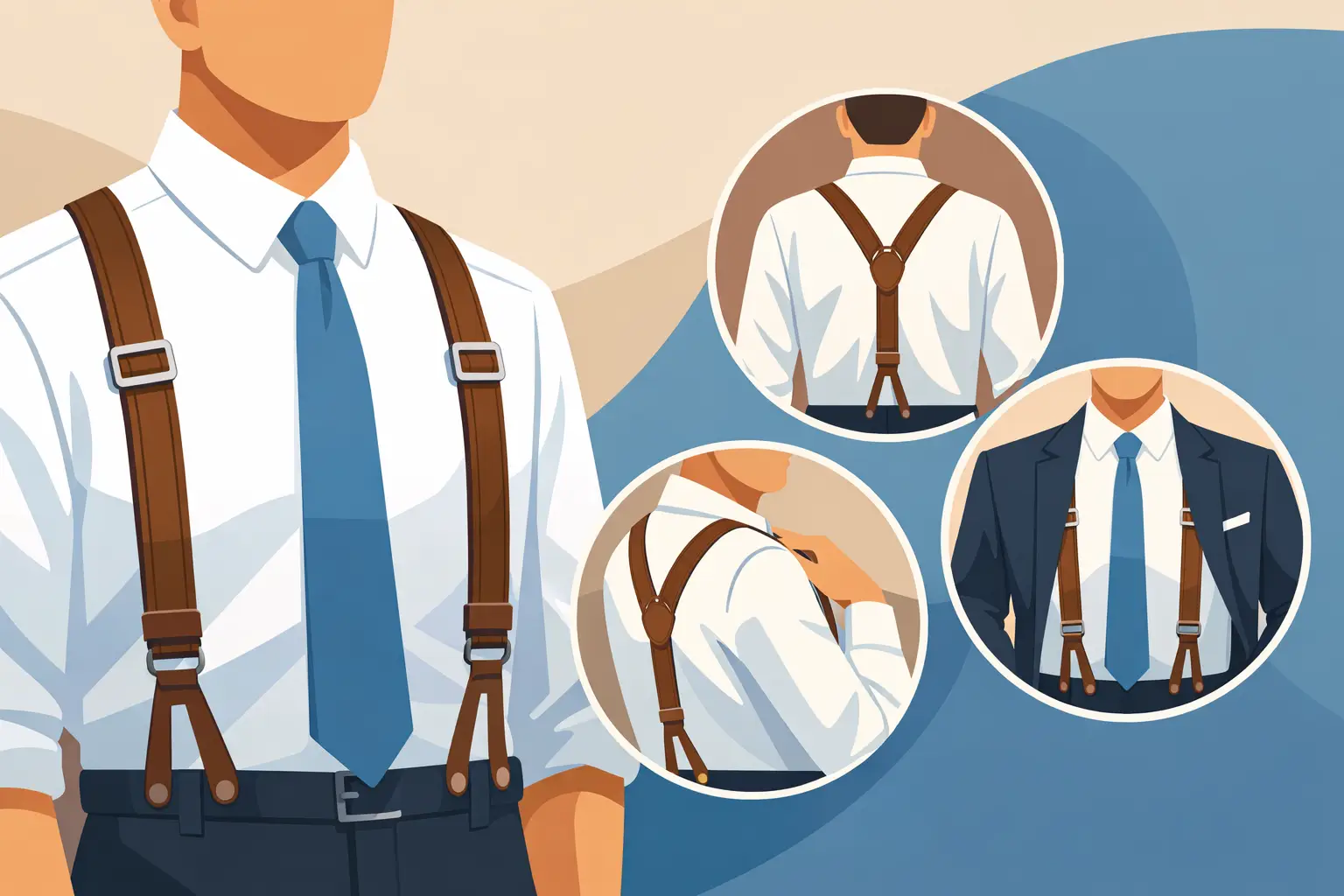
The phrase can describe two distinct styles. Traditional braces often use a woven elastic body with leather button ends and a leather back patch. This offers comfort, movement and a classic tailored appearance. Fully leather braces are more striking, more structured and generally better suited to occasionwear, country-inspired looks or a wardrobe with a confident individual point of view.
Neither is automatically superior. Elastic-backed braces are usually the more comfortable choice for a full day at the office, a wedding breakfast and an evening reception. Full leather has a more assertive finish, but it requires a considered fit and will feel less forgiving as the day progresses. The right choice depends on whether discretion or visual impact is the priority.
Colour should relate to the rest of the outfit rather than match every element exactly. Dark brown leather works naturally with navy, mid-grey, olive and tweed tailoring, especially when paired with brown shoes. Black leather remains the sharpest option for charcoal, black and formal evening dress. Burgundy can bring depth to a neutral suit, while tan leather is best kept for lighter cloths and more relaxed settings.
The metal hardware deserves the same attention. Brass-toned fittings add warmth to brown leather and country textures. Silver-toned hardware feels crisper with black leather, cooler greys and formal suiting. Small details such as these do not need to announce themselves, but inconsistency can distract from an otherwise carefully composed look.
Button fastenings versus clips
For a tailored wardrobe, button fastenings are the proper choice. They attach to buttons sewn inside the waistband and keep the exterior of the trousers clean. The connection is secure, discreet and aligned with the character of custom or well-altered trousers.
Clip-on braces offer convenience and can be useful when trying the look for the first time. Yet clips can damage fine cloth over time, create unnecessary bulk at the waistband and rarely look as resolved beneath a jacket. If braces will become part of your regular rotation, adding brace buttons to suitable trousers is a small alteration with a substantial return in polish.
The fit: supportive, never strained
Braces should hold the trousers at the natural waist without pulling them upwards. When correctly adjusted, the trouser waistband sits comfortably around the upper hip or waist, depending on its cut, and the straps lie flat over the shirt. There should be no visible tension at the front buttons, no pulling at the back and no sense that the waistband is being lifted towards the ribcage.
Begin by putting on the trousers at their proper height, then adjust the braces while standing naturally. Walk, sit and raise your arms before deciding they are right. The fit must work in motion, not merely in front of a mirror. If the straps continually slip from the shoulders, the issue may be their length or placement, but it can also indicate a jacket or shirt that is too narrow across the shoulders.
Never wear a belt with braces. Both perform the same function, and combining them makes the waistline appear crowded rather than purposeful. Equally, braces cannot compensate for trousers that are fundamentally too large. They should support a well-fitting waistband, not suspend excess cloth.
Getting the trouser rise right
Braces look most natural with mid- or high-rise trousers. This is partly historical, but mainly practical. Low-rise trousers sit too far down the body for the straps to create an elegant line, and the result can feel forced. With a higher rise, the trousers meet the waist where the body offers a stable anchor, producing the long, clean silhouette that braces are designed to enhance.
For bespoke or made-to-measure trousers, the placement of the brace buttons can be planned alongside the waistband shape, side adjusters and pleat direction. At Manndiip, this level of consideration is what turns an accessory into part of a coherent sartorial wardrobe rather than an afterthought.
Wearing braces with a suit
Under a business suit, leather braces should usually remain a private detail. Choose restrained tones, a fine shirt and a jacket that closes comfortably without strain. When the jacket comes off in a meeting, at a dinner or during a wedding reception, the braces reveal an extra layer of intention rather than a costume-like flourish.
For weddings, braces can lend distinction to a three-piece suit or a tailored two-piece with a higher trouser rise. Brown leather complements navy, tobacco, forest green and textured wool, while black leather is more fitting for sharp monochrome palettes. The groom should consider the overall visual language of the day: rustic venues and tweed invite warmer leather; a city ceremony or formal evening setting benefits from cleaner, darker choices.
With black tie, restraint matters. Traditional white or black formal braces are preferable to conspicuous leather. The purpose of evening dress is an immaculate silhouette, not an accessory statement. Leather can work for creative black-tie interpretations, but it is a choice for men who understand the dress code well enough to depart from it with intention.
Beyond the suit: tweed, denim and knitwear
Leather braces come into their own with country tailoring. Worn with tweed trousers, a brushed cotton shirt and a substantial knit, they add texture without relying on loud colour. Dark brown leather against earthy cloth has a permanence that suits autumn gatherings, country weddings and relaxed weekends where tailoring remains part of the pleasure.
They can also work with denim or heavier chinos, provided the trousers have a suitable rise and the rest of the outfit is equally considered. A plain Oxford shirt, merino knit and leather boots create a grounded combination. Avoid pairing bold braces with overly distressed denim, slogan T-shirts or excessive accessories. The contrast between refined leather and deliberately casual clothing can look accidental rather than individual.
Care that keeps leather looking distinguished
Leather needs modest, regular care. Wipe away surface dust with a soft dry cloth, keep braces away from prolonged heat and avoid folding them sharply for storage. If the leather begins to feel dry, use a very small amount of suitable leather conditioner, testing it discreetly first. Over-conditioning can soften the leather excessively or darken the finish.
Do not hang braces by one strap for months at a time, particularly if they include elastic. Lay them flat or hang them evenly to preserve their shape. After a wet journey, allow the leather to dry naturally at room temperature rather than placing it near a radiator.
The most convincing way to wear braces is to let them serve the tailoring. Choose a pair with quality leather, proper fastenings and a proportion that suits your frame, then build the trousers and shirt around their purpose. When the jacket comes off, the effect should feel inevitable: considered, comfortable and entirely your own.