A well-cut suit has always done more than meet a dress code. It establishes presence before a word is spoken, creating a clean line through the shoulder, chest and trouser that changes how a man stands and moves. The most compelling men’s suiting trends build on that principle: less concerned with novelty, more focused on ease, texture and a clearly personal point of view.
The direction is sophisticated rather than showy. Tailoring is becoming more expressive, but it remains grounded in proportion, quality cloth and impeccable fit. For the modern professional, groom or discerning dresser, the aim is not to chase every change in fashion. It is to select details that make a suit feel current now and assured for years to come.
Men’s Suiting Trends: A More Relaxed Authority
The dominant shift in contemporary tailoring is towards a softer, more natural silhouette. This does not mean shapeless or casual. A suit should still frame the body with precision, but the construction is lighter, the chest less rigid and the overall effect more effortless.
A softly tailored jacket follows the shoulder rather than exaggerating it. The waist is gently suppressed, giving shape without the constricted feel of an aggressively slim cut. This is particularly effective for men who want a polished business suit that can be worn from a morning meeting through to dinner without looking overly formal.
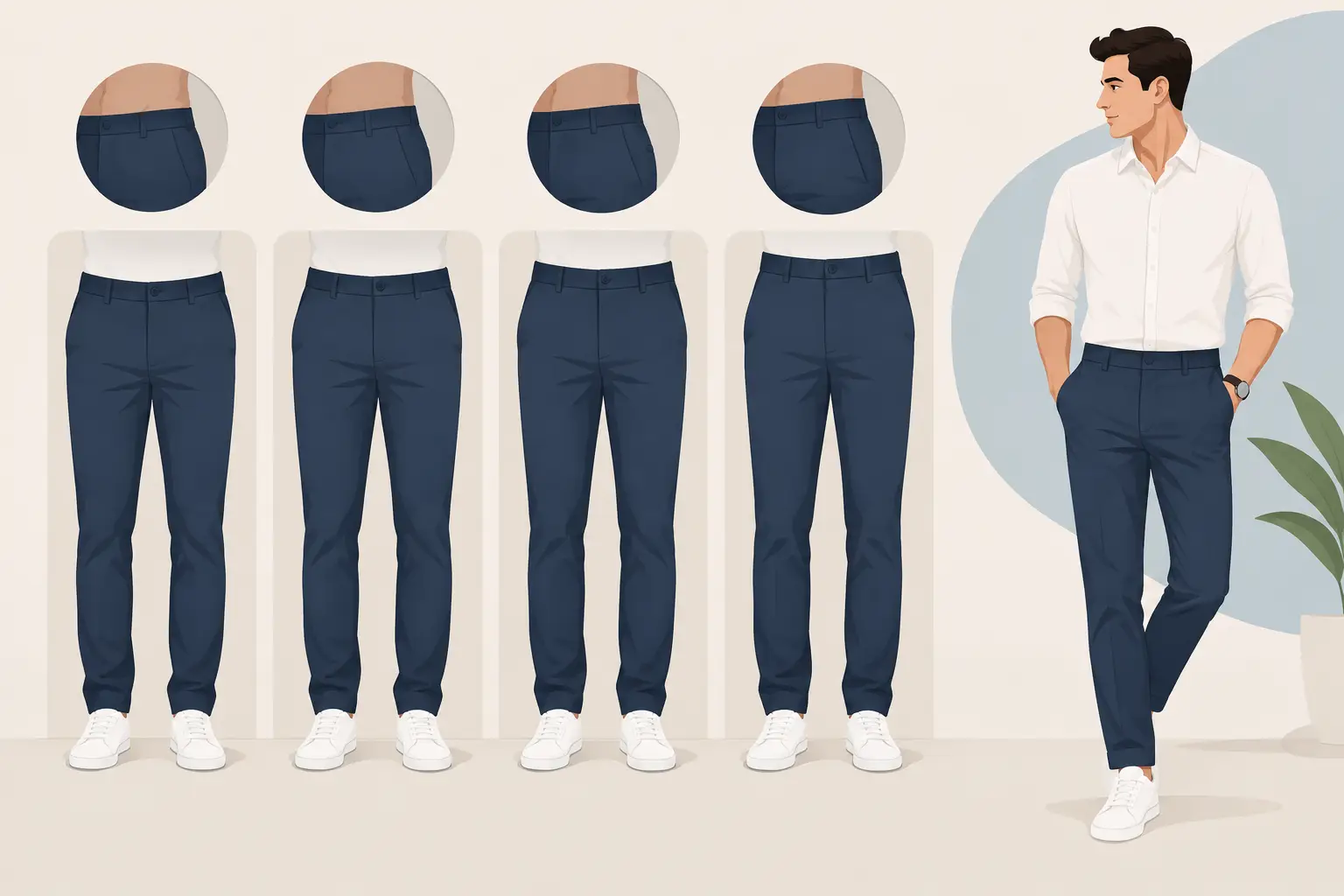
Trousers are also gaining room. A higher rise, a fuller thigh and a clean, controlled drape are replacing the ultra-narrow trouser of recent years. Single or double pleats can add both comfort and visual depth, especially when paired with a jacket that has sufficient length to balance the silhouette. The result is more flattering than a skin-tight fit for most physiques.
There is a necessary distinction between relaxed and oversized. Excess cloth at the shoulder, a collapsing chest or trousers that pool carelessly at the shoe will never read as elegant. The best contemporary cut is considered at every point: enough ease for movement, enough structure to maintain a sharp outline.
Texture Is Reclaiming Its Place
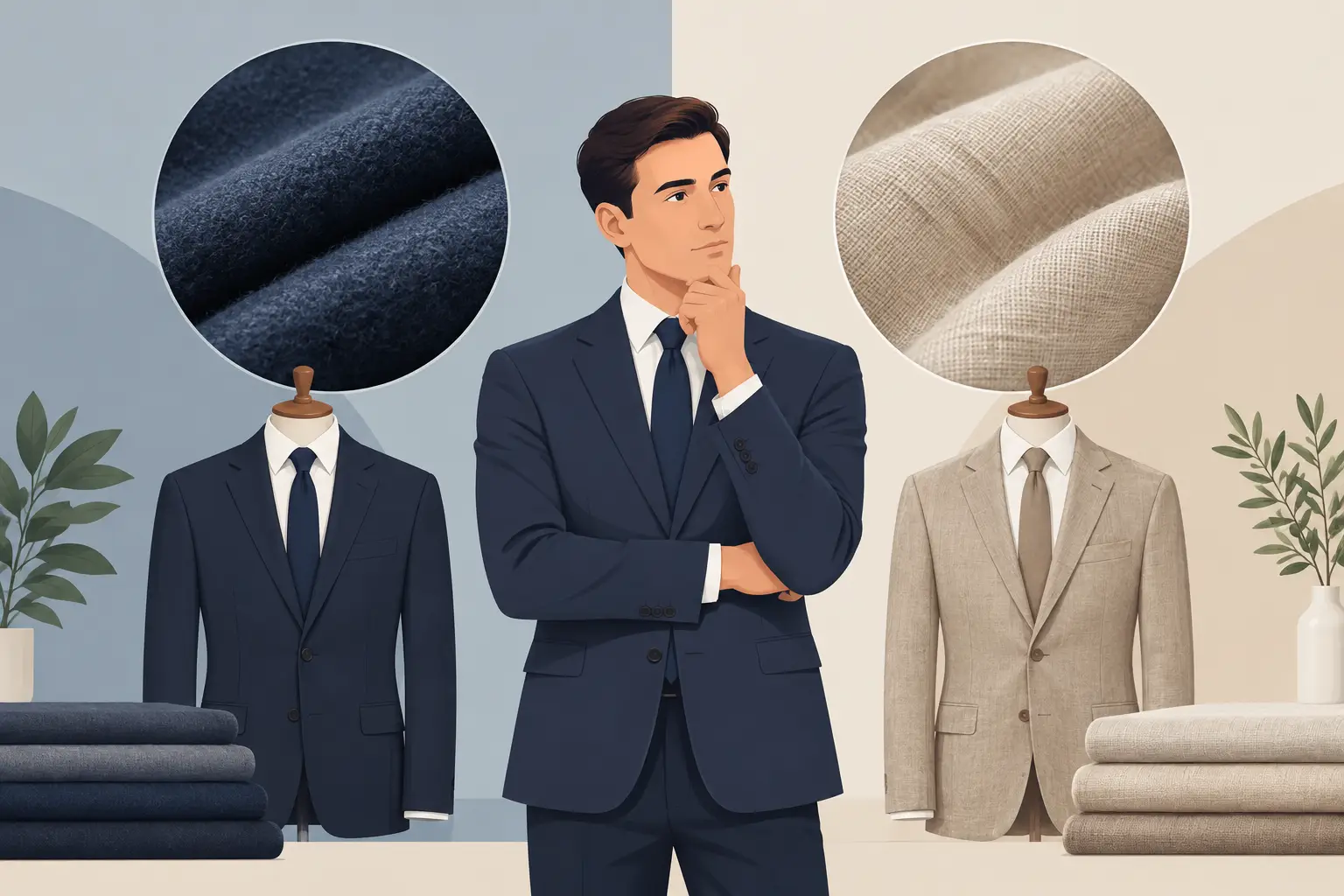
Smooth navy worsted will always deserve a place in a considered wardrobe, particularly as a first business suit. Yet texture is increasingly where character enters the conversation. Open-weave hopsack, fine birdseye, subtle nailhead, brushed flannel and crisp high-twist cloth each give a suit a different personality without relying on loud pattern.
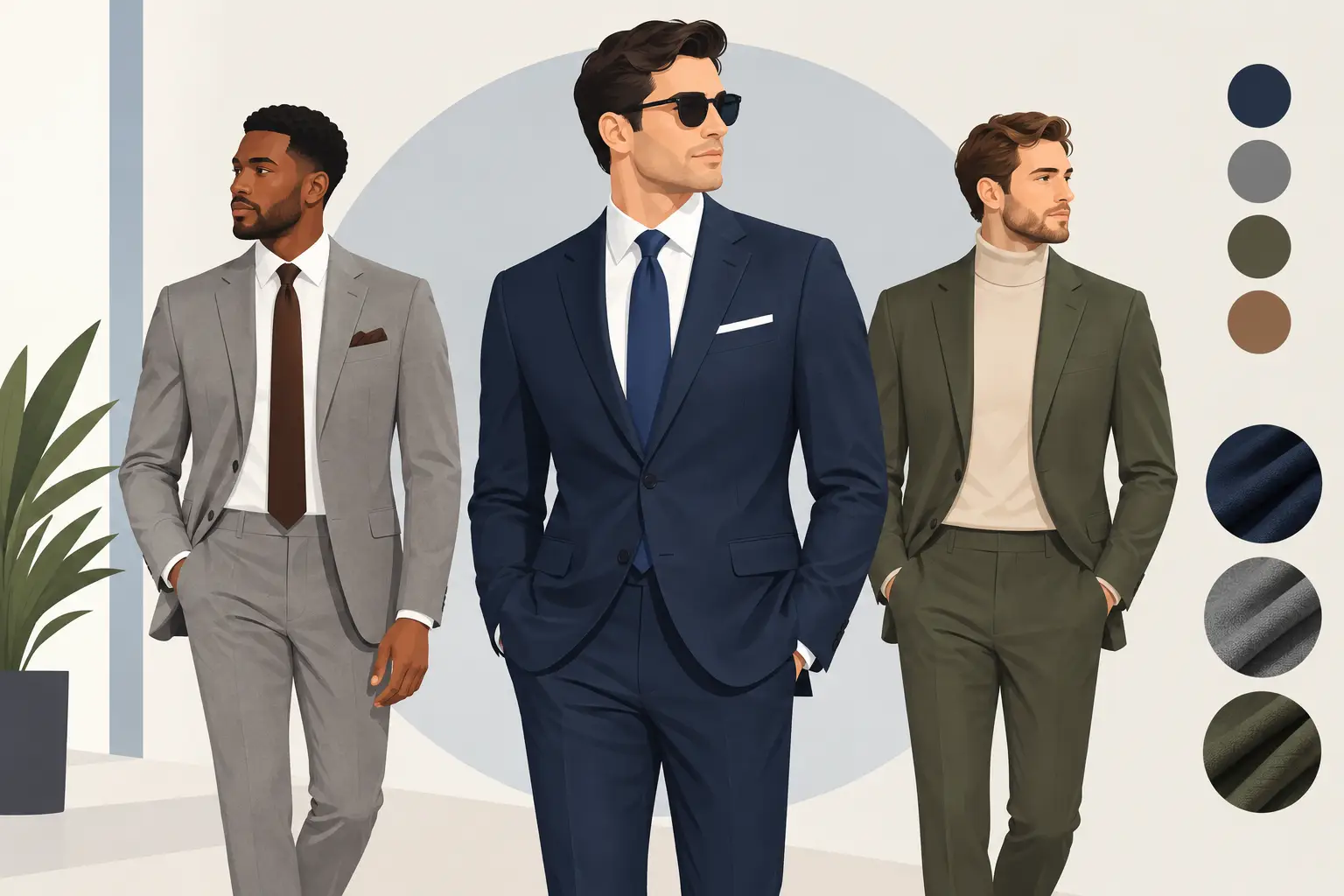
For the office, a mid-blue or charcoal suit in a dry, textured weave has more depth than a flat, polished finish. It catches light with restraint and works beautifully with a white, pale blue or softly striped bespoke shirt. For social engagements, earthy tones such as tobacco, olive, warm brown and stone offer a confident alternative to the expected navy and grey.
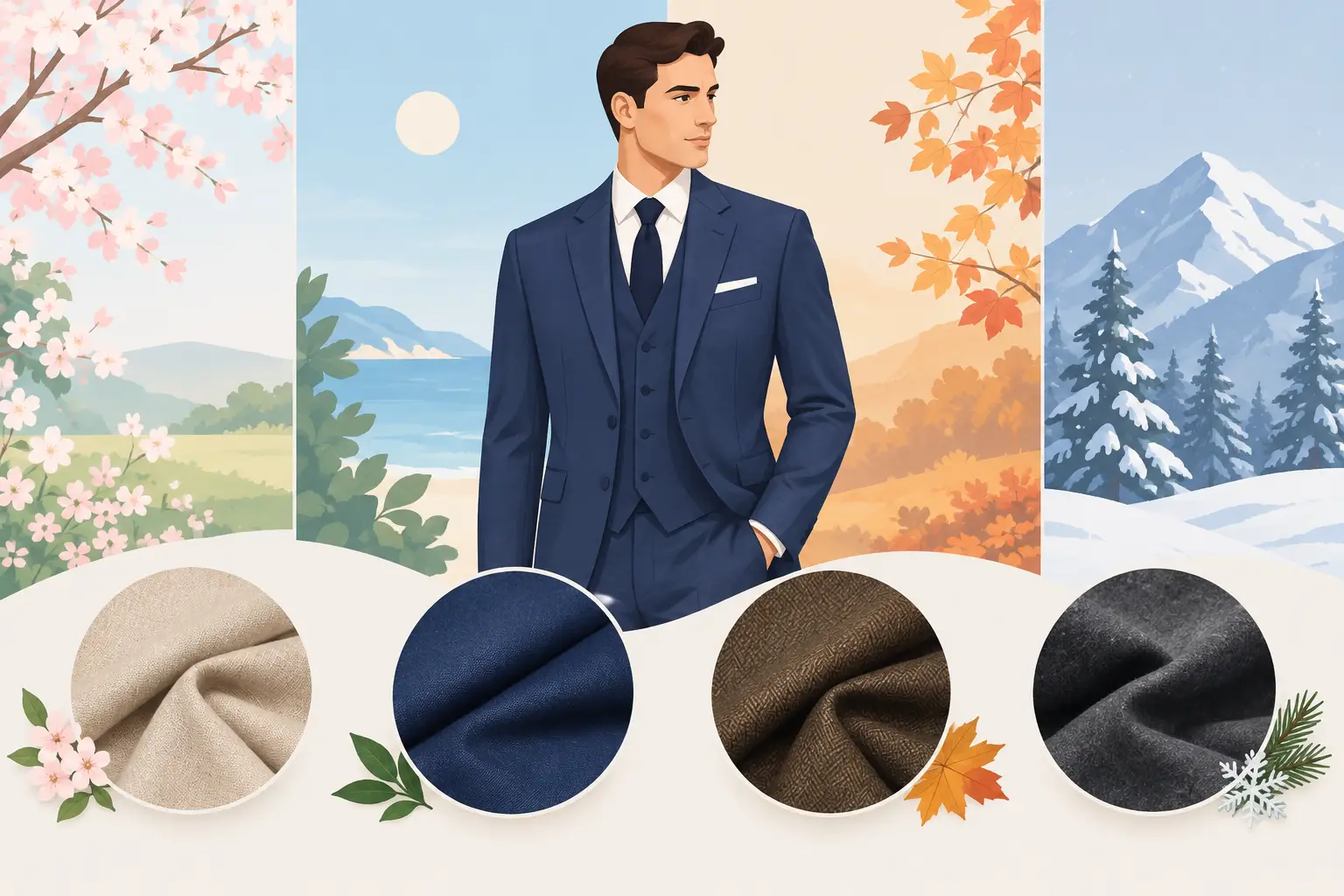
Fabric must always be chosen with its purpose in mind. A lightweight open weave offers breathability and an elegant matte surface, but may not be ideal if your working day involves constant travel in harsh weather. Flannel is exceptional in the colder months, though its softer finish naturally feels less formal than a fine worsted. The right cloth is not simply attractive on the hanger. It must suit the occasion, climate and frequency of wear.
Pattern is returning too, albeit with discretion. A refined Prince of Wales check, a narrow chalk stripe or a restrained windowpane can make a suit distinctive while preserving versatility. Pattern works best when the scale is appropriate to the wearer and the remaining elements are kept quiet. A patterned suit already has a voice; it does not need a competing tie, pocket square and shirt.
The return of brown and considered colour
Brown tailoring has moved firmly beyond country wear. Deep chocolate, espresso and dark tobacco are exceptionally refined choices for autumn, winter and evening occasions, while lighter brown and beige tones are well suited to spring weddings or destination events. Unlike black, which can appear severe in daylight, brown has warmth and pairs naturally with sky blue, cream, white and muted pink.
Green is another considered option, particularly in deep olive or forest tones. It brings individuality to a business-casual environment and lends itself naturally to tweed, flannel and textured cloth. These colours are most successful when the fit is disciplined and the accessories are measured. A fine leather belt, carefully chosen shoes and a pocket square with tonal interest are usually all that is required.
Details That Signal Personal Style
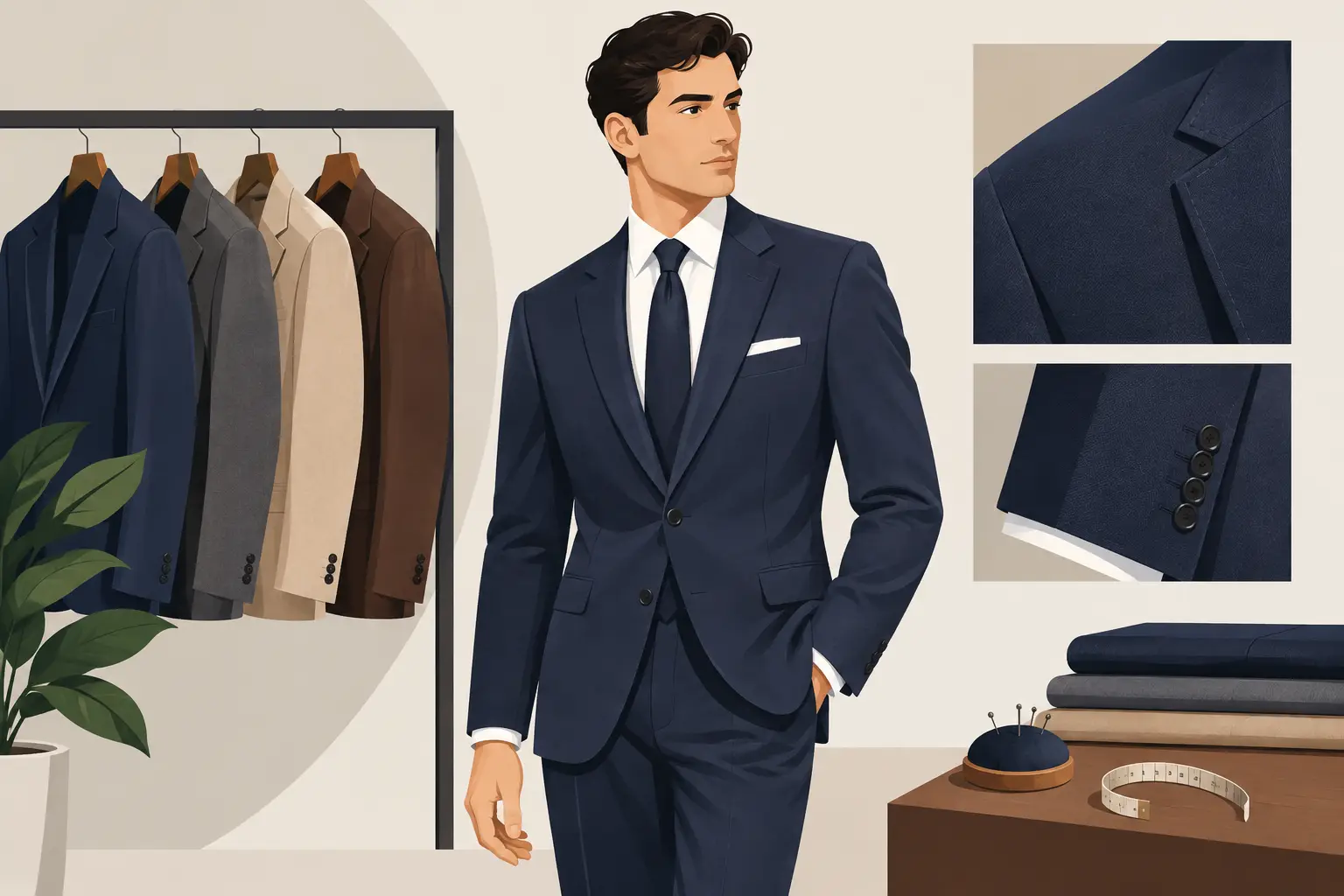
Current tailoring favours garments that look chosen rather than copied. That may be a broader notch lapel on a single-breasted business suit, a sharp peak lapel for a wedding jacket or a double-breasted cut with a lower button stance. These are not decorative afterthoughts. Lapel width, gorge position, pocket style and button placement influence how the jacket frames the torso.
The double-breasted suit continues to earn its place because it offers presence without needing flamboyant colour. In a deep navy, charcoal or brown cloth, it can be remarkably versatile. It is especially flattering for taller men or those who want to create a stronger shoulder line. However, its cut must be exact. A double-breasted jacket that is too tight across the front or too long through the skirt loses the elegant authority that makes it appealing.
High-waisted trousers, side adjusters and a clean waistband are also becoming more prominent. Side adjusters offer a refined alternative to a belt and preserve an uninterrupted line from jacket to trouser. They are not compulsory, but they are a worthwhile consideration for a suit intended for formal events or for a man who appreciates traditional tailoring details.
Personalisation should never become clutter. Contrast buttonholes, vivid lining and elaborate embroidery may suit a specific wedding brief, but they can limit how often a garment is worn. A private detail inside the jacket, a distinctive but restrained lining or a carefully selected monogram can offer individuality with greater longevity.
Suiting for the Occasion, Not the Algorithm
A versatile wardrobe is built around the life you lead. Trends are useful only when translated into the settings where you need to look your best.
For business, begin with navy and charcoal in finely textured wool. A softer shoulder and moderately generous trouser will feel modern, while a clean single-breasted two-button jacket remains the most dependable choice. If your professional setting is more expressive, introduce a subtle check, rich brown or muted green as a second or third suit rather than replacing the foundations.
For weddings, the opportunity for personality is greater. A groom may choose a three-piece suit for ceremony and photographs, then remove the waistcoat later in the evening. Mid-blue, forest green, brown and light neutral tones can all work superbly, depending on the season and venue. The key is harmony: the suit should complement the setting and feel elevated beside the bridal party without becoming a costume.
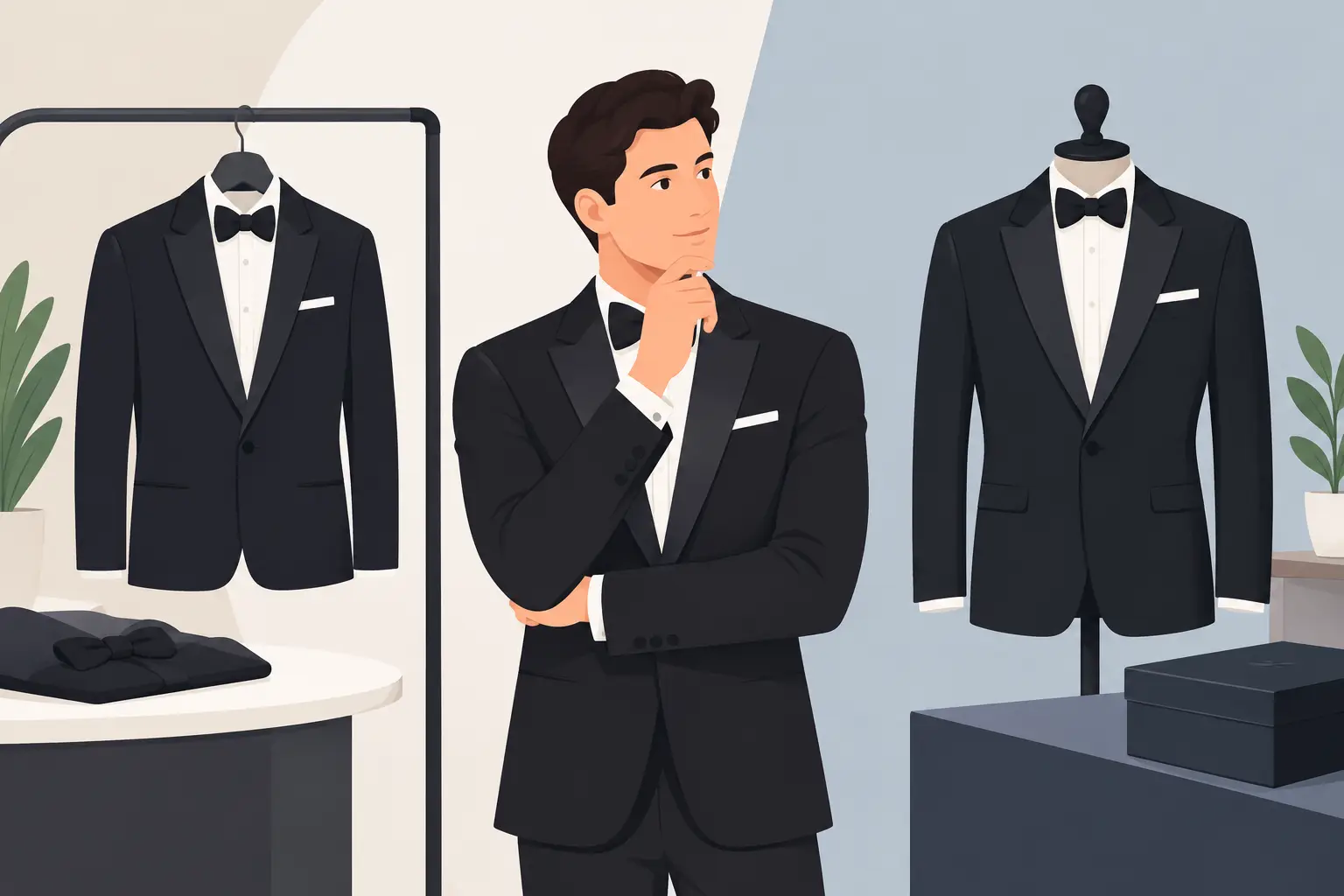
For black tie, fashion should be approached with particular discipline. A midnight blue dinner jacket, black grosgrain or silk facings, a properly cut trouser and a hand-tied bow tie remain difficult to improve upon. Velvet can be striking for winter evenings, but only when the occasion genuinely invites it. Formalwear rewards restraint because its power lies in proportion and finish.
Country and tweed tailoring has its own logic. Weight, texture and a richer palette are part of its appeal, but the garment should still be cut cleanly through the shoulder and chest. A tweed jacket with flannel trousers may offer more flexibility than a full matching suit, while a three-piece tweed suit is a strong choice for autumn weddings and rural celebrations.
The Fit Is the Trend That Endures
No fashionable lapel, cloth or colour can compensate for poor fit. The shoulder should sit precisely at the natural shoulder point. The collar should rest cleanly against the neck. The jacket should fasten without strain, and its sleeves should reveal a measured amount of shirt cuff. Trousers should sit comfortably at the waist, with enough room to sit and move while retaining a purposeful line.
This is where made-to-measure and bespoke tailoring offer a meaningful advantage. A pattern can be shaped around posture, shoulder balance, stance and proportion rather than forcing the body into a standard template. Even a favourite ready-to-wear suit can be transformed by expert alterations, particularly through the waist, sleeve length and trouser line.
At Manndiip, the focus is not on applying a trend indiscriminately. It is on interpreting the best of modern tailoring through the individual wearer – his proportions, commitments and desired impression. That is the difference between owning a suit and having one that feels entirely your own.
Choose the trend that gives you more confidence when you enter the room, not the one that will feel dated by next year. A softer shoulder, richer cloth or better-proportioned trouser can refresh your wardrobe, but precision is what turns those choices into lasting sartorial sophistication.