
A morning suit makes its entrance before the champagne has been poured, not after the first dance. If you are asking when should men wear morning suits, the simplest answer is for the most formal daytime occasions, particularly where tradition, ceremony and a clearly stated dress code call for it. Yet wearing one well involves more than arriving in a tailcoat. Its power lies in understanding the setting, respecting the host and ensuring every line is precisely tailored.
What makes a morning suit different?
A morning suit is the highest standard of formal daywear for men. Its defining piece is the morning coat: usually black or charcoal, cut away at the front and falling into long tails at the back. It is worn with contrasting striped or checked trousers, a waistcoat, formal shirt, tie and polished black shoes.
The silhouette is elegant but deliberate. The coat should skim the torso, sit cleanly through the shoulders and sweep away from the waist without pulling. Unlike a dinner jacket, which belongs to eveningwear, a morning suit is designed for daylight. This distinction is not a minor technicality. It is the foundation of correct formal dress.
Traditionally, black is the most formal choice, while charcoal grey offers a slightly softer and more versatile interpretation. Buff, dove grey or pale blue waistcoats can introduce ceremony and personality, provided the overall look remains refined rather than theatrical.
When should men wear morning suits?
Morning suits are worn for formal events held during the day, generally before 6pm. The invitation is your first guide. If it says “morning dress”, “formal day dress” or “morning suit”, the expectation is clear. There are, however, several occasions where the dress code may be implicit rather than printed.
A formal wedding
A traditional British wedding is the occasion most closely associated with morning dress. It is especially appropriate for church ceremonies, stately-home receptions, country-house celebrations and weddings with a formal daytime timetable. The groom, best man, fathers and ushers often wear matching or complementary morning suits, creating a composed visual line in photographs and throughout the ceremony.
Guests should not assume a morning suit is required simply because a wedding is elegant. Wear one when the invitation specifies it, when you are part of the wedding party, or when you know the couple is hosting a conventionally formal celebration. For a relaxed barn wedding, registry-office ceremony or late-afternoon reception, a beautifully cut lounge suit may be the more considerate choice.
The groom has greater licence to distinguish himself through a carefully chosen waistcoat, tie, boutonniere or subtly different coat cloth. Even then, restraint matters. A groom should look exceptional, not disconnected from the formality of his party.
Royal, ceremonial and civic occasions
Morning dress remains appropriate at certain royal garden parties, formal civic ceremonies, races and traditional public occasions. Royal Ascot is the most widely recognised example: in the Royal Enclosure, morning dress is required for men, with detailed rules governing the coat, waistcoat, trousers, tie, socks and shoes.
For these events, correctness is part of the occasion. A black or grey morning coat, single-breasted waistcoat, grey-and-black striped trousers, white or pale-coloured shirt, tie and black shoes form the dependable foundation. A top hat may be worn where tradition permits, but it should be carried with confidence and never treated as costume.
A daytime formal event with a traditional dress code
Certain christenings, formal memorial services, diplomatic receptions and ceremonial luncheons may call for morning dress. Here, the host’s guidance takes priority over assumptions. If the event begins at midday but continues well into the evening, morning dress can still be correct if that is the stated code. The event’s formality and tradition matter as much as the clock.
The daytime rule – and its exceptions
The classic rule is straightforward: morning dress is for daytime; white tie or black tie is for evening. If a formal event begins after 6pm, a dinner jacket is usually the natural choice. A morning suit worn to an evening-only event can look out of place, however impressive the tailoring.
Weddings create the most common exception. A ceremony may begin in the early afternoon and run into the evening, but the groom and wedding party can remain in morning dress throughout. They dressed for the ceremony and its formality, not for the hour at which the final toast is made.
Guests should follow the invitation rather than impose rules of their own. If the invitation requests black tie for an evening wedding reception, change accordingly. If it specifies morning dress for the full celebration, a morning suit remains entirely proper.
How a morning suit should fit
Morning dress has little tolerance for compromise. Rental garments often fail at the shoulder, sleeve, trouser break and waistcoat length, creating an effect that is more fancy dress than formalwear. A morning coat is a highly distinctive pattern: the balance of its skirts, the suppression at the waist and the proportion of the cutaway front all need to work with the wearer’s build.
The shoulder should lie flat and clean, with no collapse below the collar. The coat should fasten comfortably at the waist without dragging across the chest, while the tails should fall evenly and move freely when walking. Sleeves should reveal a measured amount of shirt cuff. Trousers should sit at the natural waist, with a neat line through the leg and little break over the shoe.
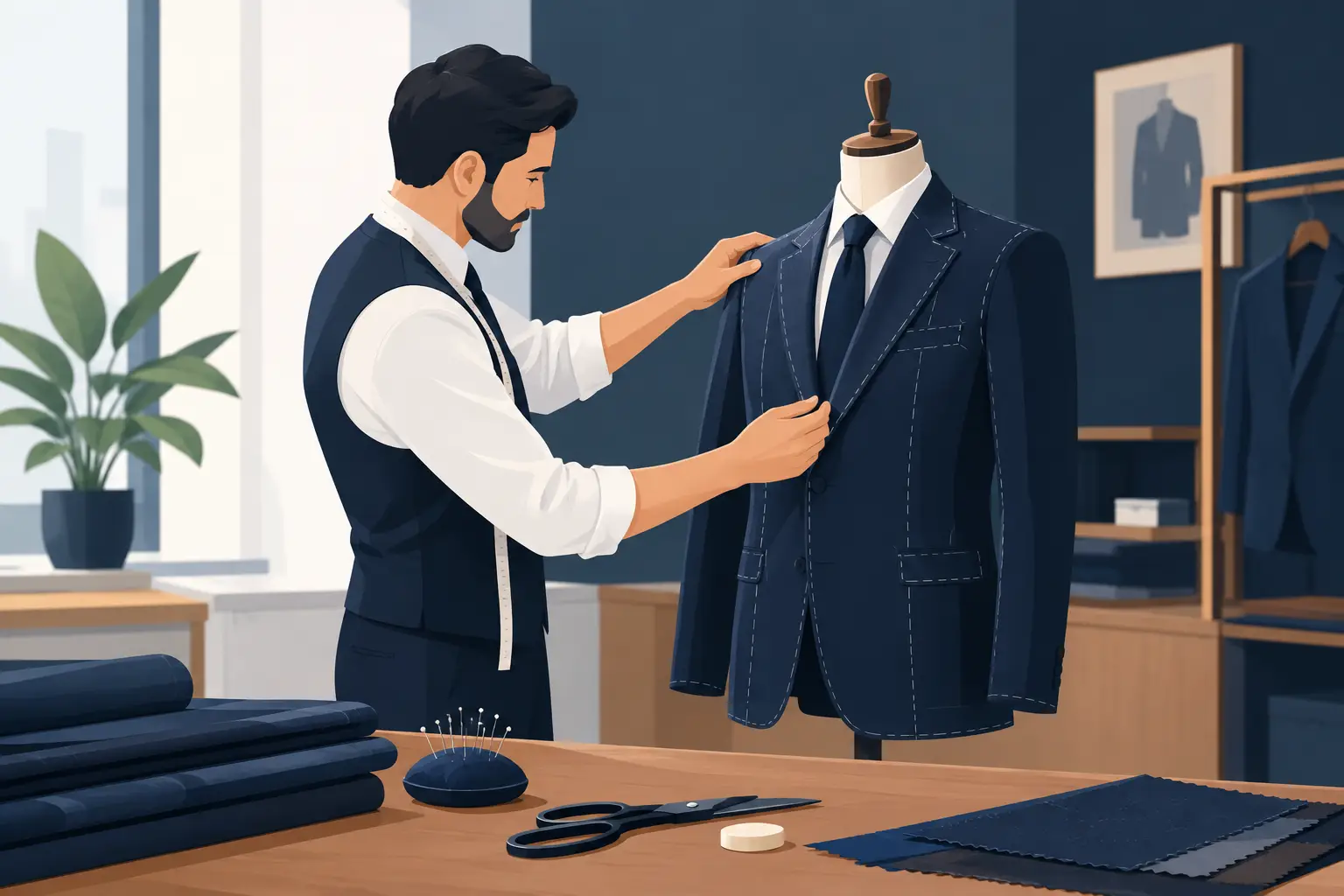
The waistcoat deserves particular attention. It should cover the trouser waistband fully, remain smooth when you stand and sit, and complement rather than compete with the tie. A bespoke or properly made-to-measure approach allows the coat, trousers and waistcoat to be balanced as one composition, rather than assembled as separate garments.
At Manndiip, that balance begins with the individual client: posture, shoulder angle, stance and personal preference all influence how a formal garment is cut. The result should feel composed from every angle, not merely convincing in the mirror for a moment.
Choosing the right details
A morning suit is formal, but it is not uniform. The details offer scope for quiet individuality when selected with care. A crisp white shirt with a turn-down collar is the safest choice, though a pale blue shirt can work beautifully for a wedding. Choose a silk tie with a restrained pattern or woven texture, rather than a glossy novelty finish.
Black Oxford shoes are the most formal option. They should be impeccably polished, with plain black socks long enough to preserve an uninterrupted line when seated. Brown shoes, loafers and highly decorative footwear weaken the formality of the ensemble.
A pocket square can add a final note of elegance, but it should not duplicate the tie exactly. A white linen square, folded simply, is timeless. Boutonnieres should be fresh, proportionate and coordinated with the wedding flowers without becoming oversized.
Avoid a belt. Morning trousers are traditionally cut with side adjusters or braces, which preserve a cleaner waist and improve comfort through a long day. This is one of those small construction choices that separates considered formalwear from an improvised outfit.
When not to wear a morning suit
Not every important occasion requires the highest level of daywear. A morning suit is usually too formal for a standard business event, cocktail party, evening gala or smart restaurant booking. It is also not an appropriate substitute for black tie.
At a wedding where the couple has requested lounge suits, wearing morning dress can pull focus and create an unintended contrast in group photographs. Style should demonstrate confidence, but never at the expense of the hosts’ wishes. The best-dressed man in the room is often the one who understands the brief perfectly.
If the occasion sits between formal and relaxed, a three-piece suit in navy, charcoal or mid-grey can deliver similar presence with greater flexibility. The quality of the cloth, sharpness of the cut and precision of fit will still communicate occasion and status.
A morning suit is not simply something to wear because the event is significant. It is a mark of respect for a particular kind of daylight ceremony, where tradition and personal presentation meet. When the invitation, timing and setting align, choose one that has been cut for you – then let the confidence come from knowing every detail is exactly where it should be.