You can forgive a sleeve that is a touch long. You can even live with a waist that is slightly generous. But if the shoulders are wrong, the entire jacket looks borrowed – and it will never move with the calm authority a tailored coat should have.
The shoulder is the jacket’s architecture. It sets the silhouette, dictates how the sleeve hangs, and controls whether the cloth sits cleanly across your chest and back. Get it right and everything reads intentional: sharper posture, cleaner lines, more presence. Get it wrong and even an expensive suit starts to look like an off-the-peg compromise.
How should a suit jacket fit shoulders?
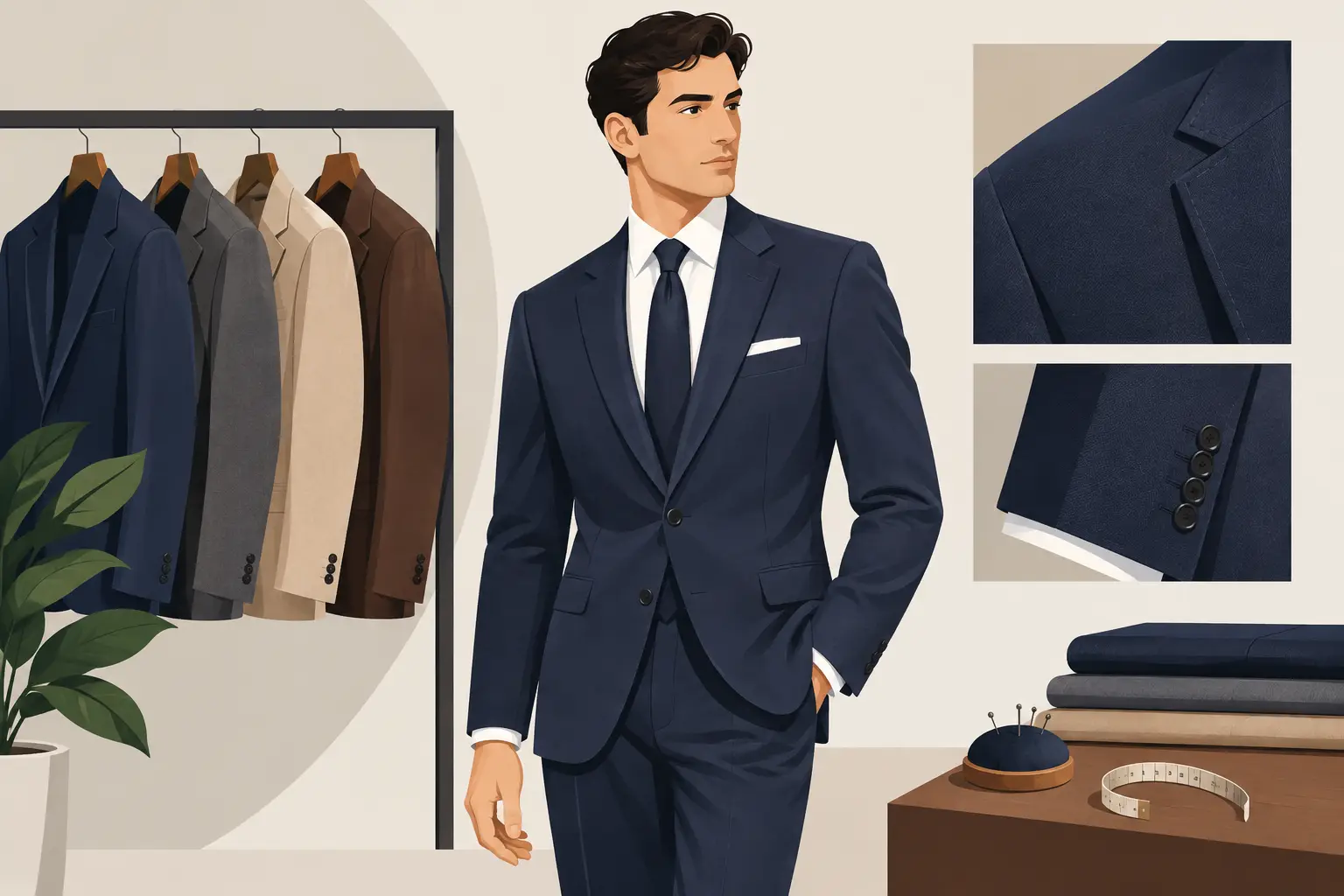
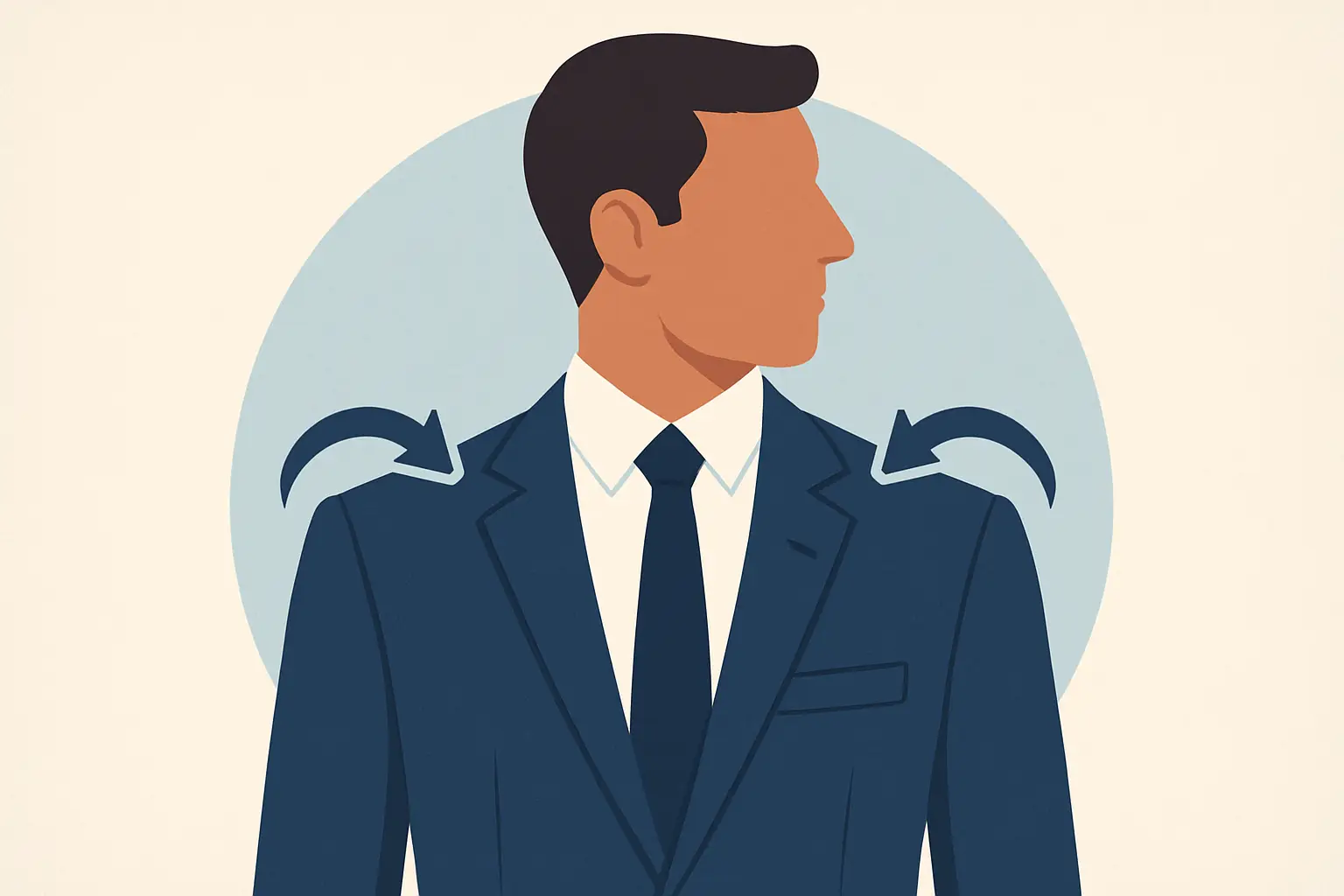
At its best, the shoulder of a suit jacket should sit precisely where your natural shoulder ends and your arm begins, creating a clean line from collar to sleeve with no collapsing, pinching, or protruding fabric.
That sounds simple, but “where your shoulder ends” varies dramatically between men. Some have square shoulders and a prominent shoulder bone; others slope; others carry more muscle through the deltoid; others have slightly forward posture. The aim is not to force every body into the same shape. The aim is to shape the jacket so it looks effortless on your body.
A correct shoulder fit gives you three immediate signals: the seam lies flat, the sleeve falls cleanly, and the upper chest and back drape without strain. You should feel supported, not constrained.
The shoulder seam: your first and most honest indicator
Look at the seam that joins the body of the jacket to the sleeve. In a well-fitting jacket, that seam should land at the top of your shoulder, right at the point where the shoulder transitions into the arm.
If the seam sits beyond that point, the jacket is too wide. Visually, your frame looks droopier and less athletic, and the sleeve tends to twist or collapse. If the seam sits inside the point of your shoulder, the jacket is too narrow. The cloth will pull, the sleeve will fight your movement, and the whole upper body looks tense.
Do not be fooled by the idea that “a bit of extra shoulder is fine”. Extra shoulder rarely reads as relaxed in tailoring. It reads as imprecise.
Clean drape across the upper chest and back
Shoulders do not exist in isolation. When the shoulder is correct, the cloth should settle across the upper chest without diagonal drag lines and across the upper back without tightness.
If you see horizontal pulling across the back near the shoulder blades, the jacket may be too narrow through the upper back or the armhole may be cut too low. If you see diagonal lines radiating from the shoulder towards the chest, the shoulder line may be fighting your posture, or the front may be too tight.
This is why shoulder fit is as much about pattern and balance as it is about centimetres. A jacket can measure “right” and still sit wrong if your stance is forward, your shoulders are rounded, or one shoulder sits lower than the other.
Roping, divots, and the myths men repeat in changing rooms
There are a few common shoulder issues that men either misdiagnose or accept as normal.
A “divot” is a small hollow or dent at the top of the sleeve head. It often appears when the sleeve is not set cleanly into the armhole, or when the shoulder is too wide and the extra cloth has nowhere to go. A tiny hint of this can occur depending on padding, cloth, and construction, but obvious divots are a warning that the jacket is not sitting as intended.
“Roping” is a raised ridge at the sleeve head. In some houses it is a deliberate style choice, giving a more assertive, structured shoulder. The key is intention. If roping looks uneven, lumpy, or mismatched from left to right, it is not style – it is poor set.
Then there is shoulder “collapse”, where the sleeve head looks tired and the shoulder line caves in. This can happen with very soft tailoring and lighter cloths, but if it makes you look slumped in an otherwise formal suit, the jacket is failing at its job.
The pinch test and why you must be careful with it
You will hear men say: “If you can pinch an inch at the shoulder, it fits.” That rule is unreliable.
Shoulder fit is not about spare cloth you can grab. It is about how the canvas, padding (if any), and sleeve head interact with your body in motion. Some structured shoulders will feel firm with very little pinch, yet fit perfectly. Some overly wide shoulders will let you pinch plenty and still look wrong.
If you want a practical check, do this instead: stand naturally, then relax your arms at your sides. The sleeve should hang straight, and the shoulder should look clean from the front and back. If the sleeve swings backwards or forwards at rest, the shoulder and armhole are likely out of balance.
Movement: the real test of shoulder fit
A suit is not a statue. You need to be able to greet clients, reach for a pint, get in and out of a car, and hug your partner at a wedding without feeling like you are wrestling your own jacket.
Lift your arms to about 45 degrees, as if you are reaching for something on a shelf. A well-cut jacket will move with you, and then settle back into place. If the entire jacket rides up dramatically and stays there, the armhole may be too low or the shoulders too tight. If the sleeve pulls sharply and you feel restriction at the top of the arm, the shoulder width or sleeve pitch may be wrong.
One nuance: very high armholes, typical of refined tailoring, can feel closer at first. The reward is control – the jacket moves with your arm rather than dragging the whole body of the coat upwards. That is not discomfort for its own sake; it is precision.
Structured vs soft shoulders: what you should choose
“How should a suit jacket fit shoulders” also depends on the kind of presence you want.
A structured shoulder (with padding and a defined line) gives a more authoritative silhouette. It can sharpen a sloping shoulder and create a cleaner, more commanding frame for business or formalwear. The risk is that if the structure is too aggressive for your build, it can look like costume rather than confidence.
A soft shoulder (minimal padding, more natural line) reads relaxed and modern, particularly in lighter cloths or summer tailoring. The risk is that if the shoulder is too soft for your posture, the jacket can look tired or casual when the occasion demands polish.
Neither is “better”. The best shoulder is the one that complements your body and aligns with the role the suit is meant to play in your wardrobe.
Common shoulder fit problems and what they really mean
If one shoulder looks higher, it may be you rather than the jacket. Most men have some degree of asymmetry. A good fitter will notice this immediately and balance the jacket so the shoulder line appears level, without forcing your body into an artificial stance.
If the shoulders look correct standing still but the sleeves twist when you move, the issue is often sleeve pitch – the angle at which the sleeve is set relative to your natural arm position. This is common in ready-to-wear and can be improved with skilled alterations, but it is not always straightforward.
If the jacket looks fine open but pulls when buttoned, you may assume the shoulders are too small. Often the real problem is that the chest or waist is too tight, which then drags the shoulder line out of position.
Can shoulder fit be altered?
This is the question that saves men money – or costs them more.
Minor shoulder refinements are sometimes possible, particularly small adjustments to clean up the shoulder line or correct subtle imbalance. However, significant shoulder alterations are complex because the shoulder is integrated with the collar, armhole, sleeve head, canvas, and often the structure that gives the jacket its shape.
In practical terms, if a jacket is dramatically too wide or too narrow in the shoulders, it is usually better to choose a different size or commission a garment made to your measurements rather than attempting heroic surgery.
This is why we treat the shoulder as the non-negotiable starting point in fittings. Once the shoulders are right, the rest of the jacket can be shaped with far more freedom and far less risk.
What to look for when buying off-the-peg
If you are shopping ready-to-wear, choose the jacket that fits best in the shoulders first, even if the waist and sleeve length are not perfect. Sleeves and waist suppression are routinely alterable. Shoulders are not.
Try on the jacket with the shirt you would actually wear, stand naturally (do not square yourself up like a mannequin), and check the shoulder seam placement. Then walk, sit, and raise your arms slightly. A jacket that only looks good frozen in place is not a jacket you will enjoy wearing.
Also pay attention to your most frequent use case. If it is a wedding suit, you will be photographed hugging, dancing, and turning. If it is a business suit, you will be reaching, typing, and shaking hands. The shoulder must hold its line through real life, not just under boutique lighting.
When bespoke or custom makes the difference
Certain physiques make shoulder fit especially difficult off-the-peg: pronounced slopes, very square shoulders, forward posture, one shoulder lower than the other, or a muscular upper body paired with a narrower waist. In these cases, bespoke or proper custom work is less indulgence and more efficiency – you stop compromising, and your jacket starts behaving.
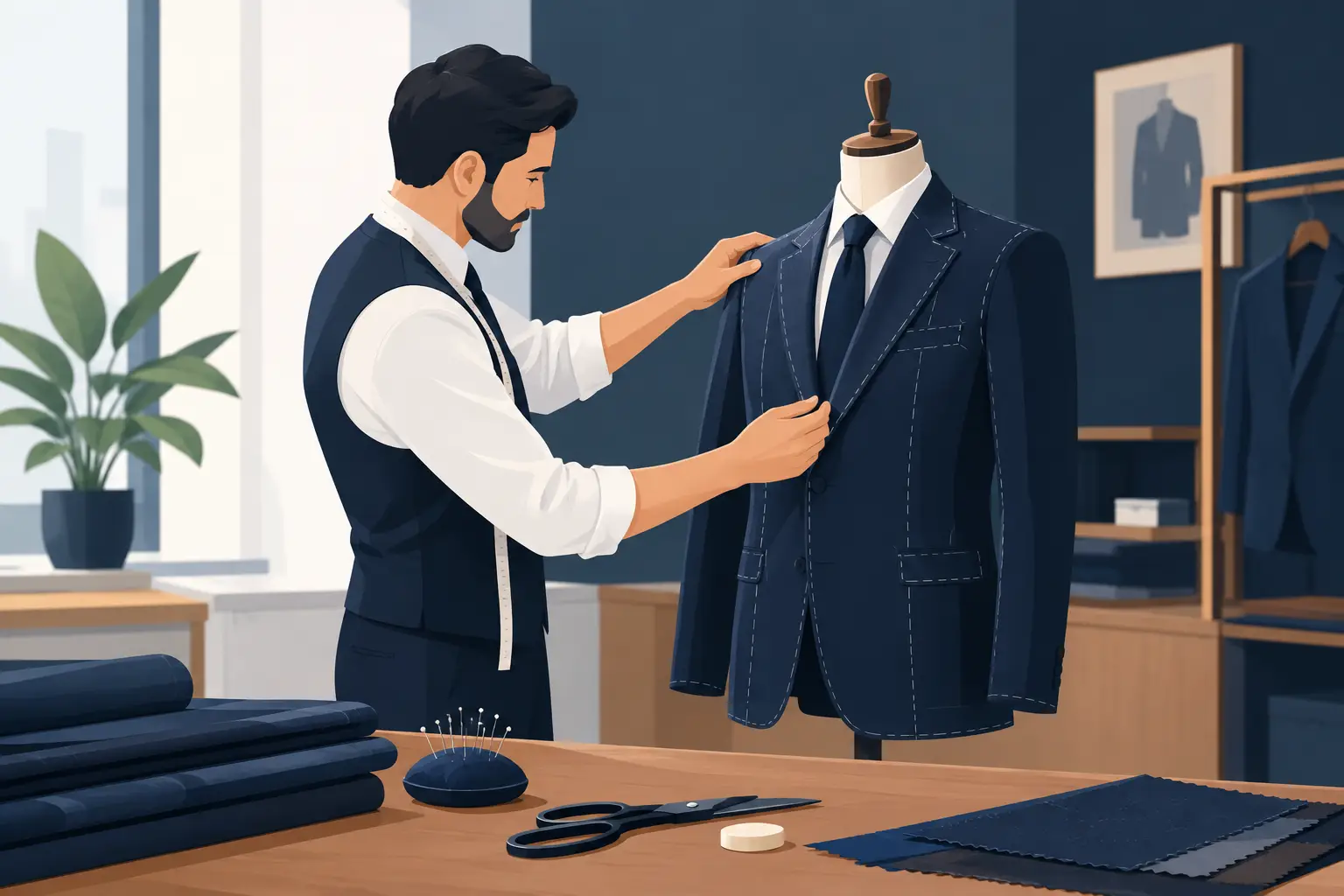
A tailoring house will not only measure shoulder width, but also assess posture, shoulder angle, and how your arms rest. That is the difference between “it fits” and “it looks like it was built for you”. If you want that level of precision, Manndiip designs and cuts with shoulder balance as the foundation, then refines the rest of the silhouette around it.
A final way to judge it: does it make you stand better?
The best shoulder fit is quietly transformative. You should not feel squeezed, padded up, or corrected. You should simply look a touch more composed – as if your posture has improved and your proportions have sharpened.
When you find a jacket where the shoulders sit cleanly and the cloth settles without argument, trust that feeling. It is the rarest part of suit shopping, and it is the moment a suit stops being clothing and becomes presence.