Your suit can be beautifully cut, the cloth can be exceptional, and the shoulders can sit perfectly – yet one detail will still give the game away from across a room: sleeve length. Get it right and you look considered, precise, quietly authoritative. Get it wrong and even a premium suit can read as borrowed.
Sleeve length is also where “rules” collide with real bodies. Wrist shapes vary, posture changes how cloth falls, and different jackets are designed to behave differently. The goal is not to chase a number. It is to create the right proportion, in motion, with your shirt and jacket working together.
Suit sleeve length rules: the clean standard
The most reliable starting point is a relationship, not a measurement: the jacket sleeve should finish so that a small band of shirt cuff is visible.
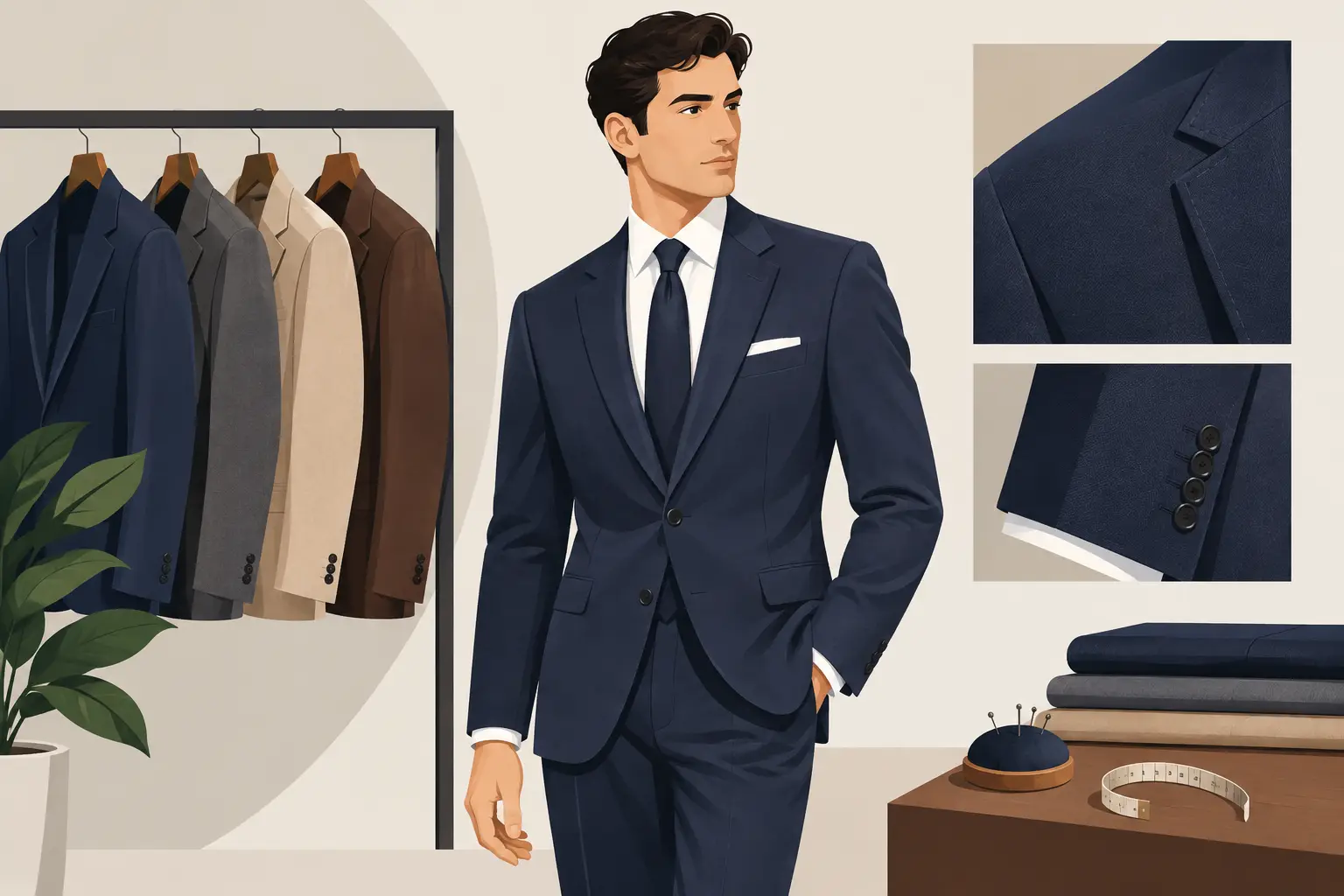
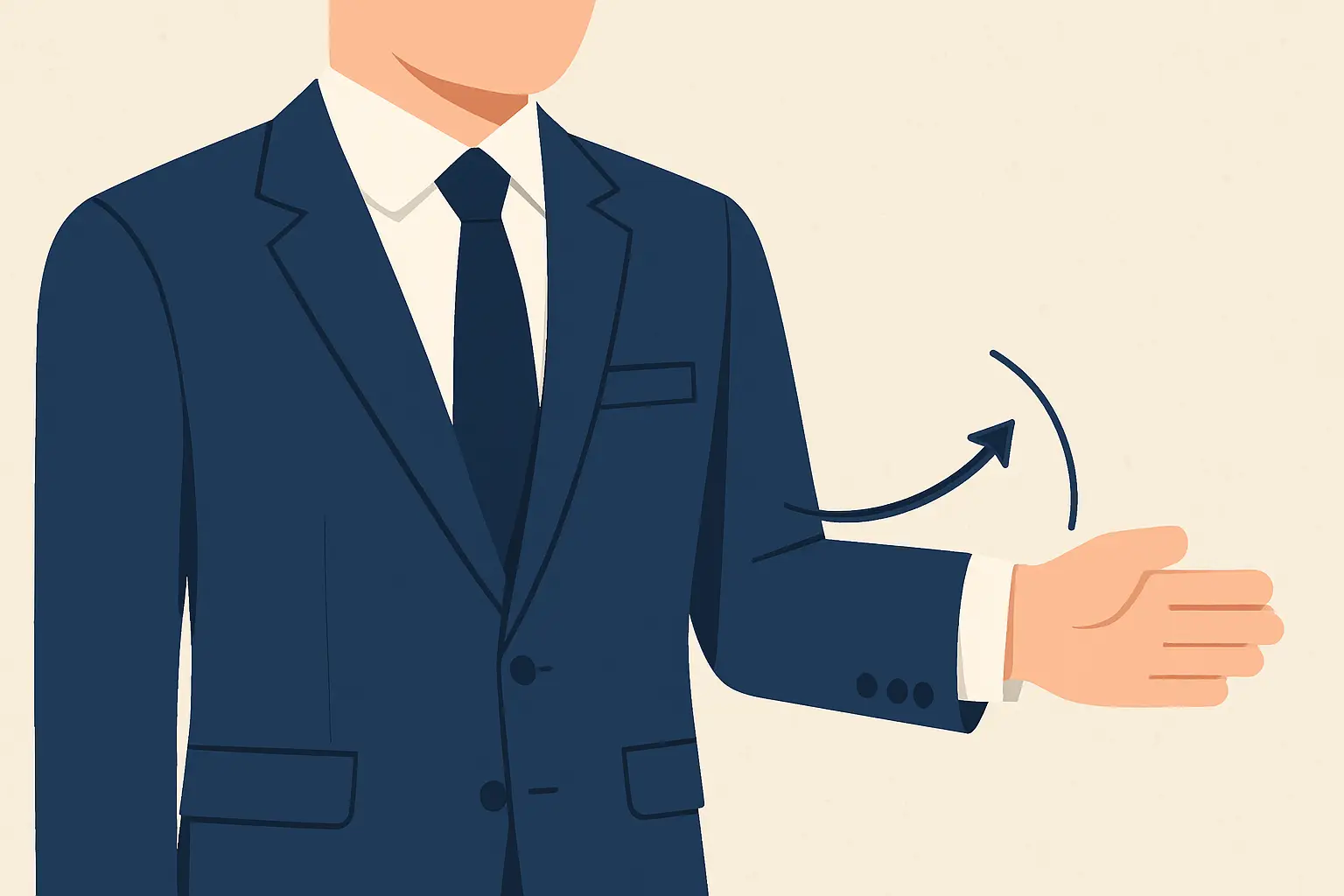
In practice, that usually means around 1 to 1.5 cm of shirt cuff showing when your arms are relaxed at your sides. On some men it reads closer to 2 cm, especially with longer arms or a slightly shorter jacket sleeve cut for a sharper, more modern line. Less than 0.5 cm often looks timid or accidental. More than 2 cm can start to look like the jacket is undersized.
This is the heart of suit sleeve length rules because it preserves hierarchy. The jacket frames the shirt, the shirt frames the cuff, and your watch (if you wear one) sits as a controlled accent rather than a distraction.
A crucial caveat: you evaluate this with your arms down, not with your hands on a desk or gesturing. Jackets ride up when you reach. That movement is normal. If you try to “fix” ride-up by adding length, you typically end up with sleeves that swallow your hand when standing.
Where the jacket sleeve should end on the wrist
A well-finished jacket sleeve tends to end around the wrist bone, often close to where your wrist creases when you bend your hand. That’s a useful anatomical reference because it stops the sleeve looking like it is drifting towards the knuckles.
But wrists are deceptive. Some men have prominent bones; others have a smoother line. Some wear a watch daily that changes how the sleeve breaks. The sharper visual check is this: when you look straight on, the jacket sleeve should not cover the base of your thumb joint. If it does, the sleeve is likely too long, and you will struggle to show cuff without an unnaturally long shirt sleeve.
If the sleeve finishes too high, the jacket can look mean or “shrunken”, and your proportions can skew – especially on formalwear where elegance relies on calm, elongated lines.
The shirt cuff is part of the equation (and often the real culprit)
Many sleeve-length problems are actually shirt problems.
Your shirt cuff should sit at the wrist, not halfway up the forearm. When buttoned, it should be snug enough to stay put, but not tight enough to pinch. If the cuff is loose, it will slide down and disappear under the jacket, and you will think your jacket sleeves are too long. If it is too tight, it can ride up and exaggerate cuff show.
For most men, a shirt sleeve that reaches the base of the thumb joint (when your arm is relaxed) is a sensible reference. That allows the cuff to sit at the wrist once the sleeve is bent naturally.
If you’re commissioning a suit and shirts together, you can set this relationship deliberately. If you are working with existing shirts, you may need to choose which shirts define the “rule” for your jacket sleeves, otherwise you will constantly be chasing a moving target.
Formalwear, business suiting, and tweed: the rules shift slightly
Not all suits speak the same language, so sleeve proportions should match the context.
Business suits: controlled cuff show
For business, cuff show should read as intentional but restrained. Around 1 to 1.5 cm is a strong benchmark. It communicates neatness and confidence without calling attention to itself.
This matters in boardrooms and client settings because the eye is drawn to hands – you’re gesturing, holding documents, shaking hands. Sleeve length becomes part of your “professional finish”.
Wedding and formal: crisp lines, no fuss
On wedding suits and black tie-inspired tailoring, the look should be especially clean. Excess cuff can look busy next to satin facings, formal shirts, and jewellery. Aim closer to 1 cm, and ensure the shirt cuff itself is immaculate.
If you are wearing a watch on a wedding day, consider whether you want it seen. A slightly cleaner sleeve length can keep the focus on the suit and the occasion.
Tweed and country wear: a touch more ease
With tweed or heavier country cloth, a fraction more jacket sleeve length can look correct because the fabric has visual weight. Too much cuff show can appear sharp in a way that clashes with the relaxed character of the cloth. You still want the shirt cuff visible, but you can keep it discreet.
Button stance, sleeve width, and why “length” is not a single number
Sleeve length is judged in three dimensions: where it finishes, how it hangs, and how wide it is.
A sleeve that is slightly too long can be forgiven if it is slim enough to sit cleanly at the wrist and show cuff. A sleeve that is too wide can look longer than it is, because it drapes over the hand and collapses. That is why alterations that narrow the sleeve can suddenly make the length look correct.
Button stance also plays a role. If a jacket is cut with a higher buttoning point and a shorter skirt, a slightly shorter sleeve often feels proportionate. If the jacket is longer and more traditional, the sleeve can carry a touch more length without looking off.
This is where suit sleeve length rules become less about “always 1.5 cm” and more about designing the whole silhouette.
The common mistakes that make sleeves look wrong
Most sleeve issues fall into a handful of predictable patterns.
The first is measuring with arms bent. If you check sleeve length while holding a phone, steering wheel, or laptop bag, you will convince yourself the jacket is too short. Always return to a neutral stance.
The second is wearing short shirt sleeves under a correctly tailored jacket. The jacket then looks too long, but it is the shirt that is failing the proportion.
The third is ignoring posture. A forward-rolled shoulder or a pronounced stoop can make sleeves appear longer at the front. A tailored sleeve can be set to balance this, but it has to be assessed in a fitting, not guessed from a mirror selfie.
The fourth is copying a look without matching the cut. Many celebrity fits show more cuff because the jackets are intentionally shorter with higher armholes, allowing mobility without excess length. If you try to replicate the cuff show with a low armhole, the sleeve will simply ride up and twist.
Alterations: what is easy, what is risky
Sleeve length is one of the most worthwhile alterations when it’s done properly, because it instantly improves the “bespoke impression” of a suit.
If your jacket has plain sleeves without functioning buttonholes, shortening or lengthening at the cuff is usually straightforward. If it has working buttonholes (surgeon’s cuffs), altering from the cuff is more complex, because the button and buttonhole placement must remain balanced.
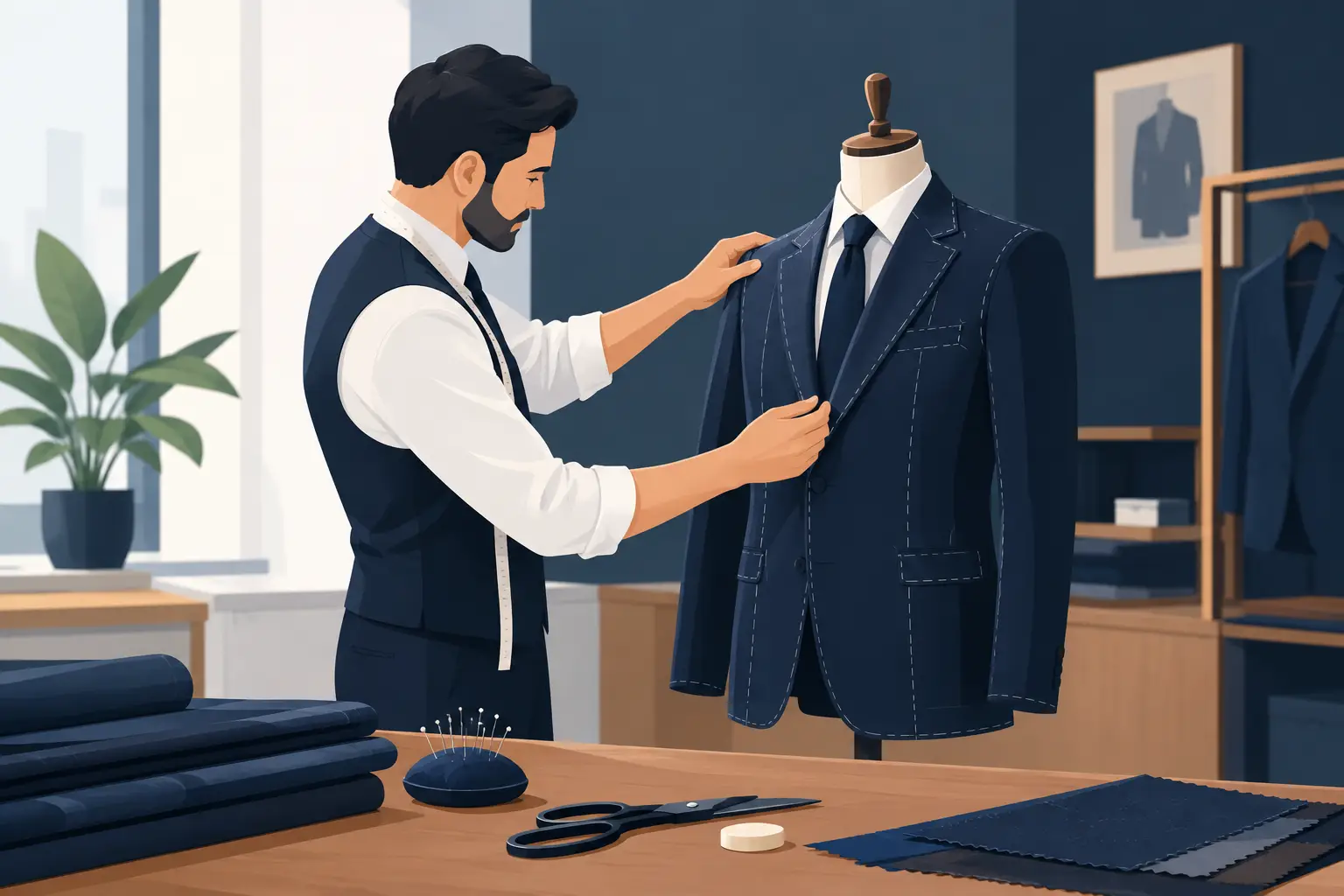
In higher-end tailoring, sleeves are often adjusted from the shoulder. This preserves the cuff details and the sleeve shape, but it is more labour-intensive and requires a tailor who understands sleeve pitch and balance.
There is also a limit to how much can be let out. Many jackets have only a small reserve of cloth at the cuff. If you need significant extra length, you may be looking at a remake or a different jacket entirely.
If you are unsure, a proper fitting in front of an experienced cutter or alterations tailor is the fastest way to avoid wasting money on the wrong fix. This is precisely the kind of detail-led adjustment we handle at Manndiip, because sleeve length is never just “take off a centimetre” – it is about protecting the line of the whole garment.
A practical way to check sleeve length at home
You do not need special tools, but you do need consistency.
Wear the shirt you most often pair with the suit, buttoned at the cuff. Put on the jacket, stand naturally, and let your arms fall. Look for a clean band of cuff – present on both sides and broadly even.
Then do one movement test: reach forward as if to shake hands. Some ride-up is normal. If the sleeve climbs so far that the shirt cuff disappears completely, your jacket may be too short, the armhole too low, or the sleeve pitch may not match your posture.
Finally, check symmetry. If one sleeve looks consistently longer, it may reflect shoulder height differences. Many men have one shoulder lower. A good tailor can balance this so the jacket reads level.
The rule that separates “fits” from “flatters”
The best sleeve length is the one that makes your hands look elegant and your proportions look intentional. If you have long arms, you may need slightly more cuff show to avoid the jacket looking dragged down. If you have shorter arms, too much cuff show can make the jacket look cropped and the forearm look shorter.
There is also your personal signature. Some men prefer a crisp, contemporary cuff reveal. Others favour a quieter, more traditional finish. Both can be correct, provided the shirt and jacket are cut to support the choice.
A suit is a language of small margins. Sleeve length is one of the margins people notice instantly, even if they cannot explain why. Aim for calm precision, and your whole look reads more deliberate – the kind of polish that doesn’t ask for attention, it simply holds it.