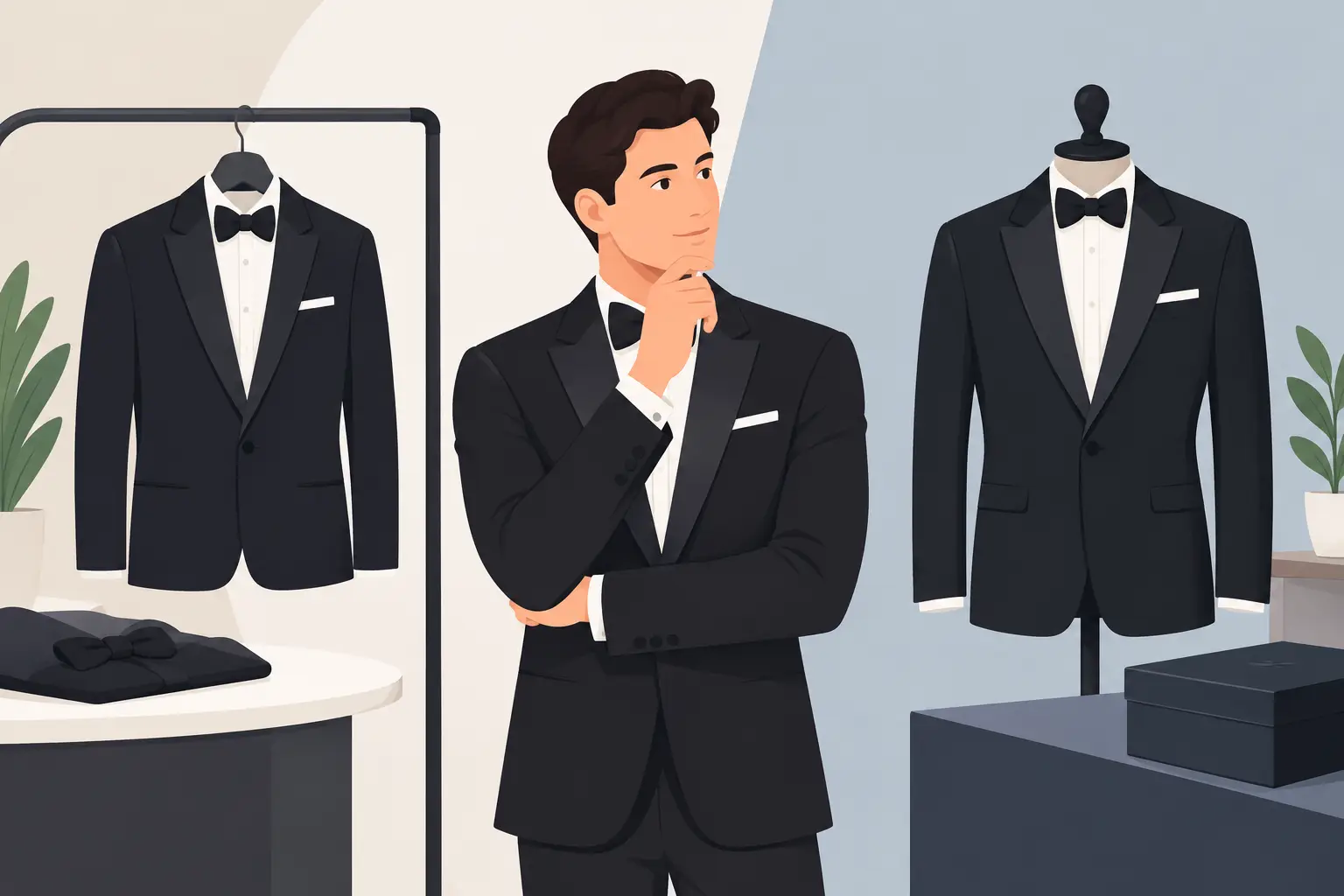
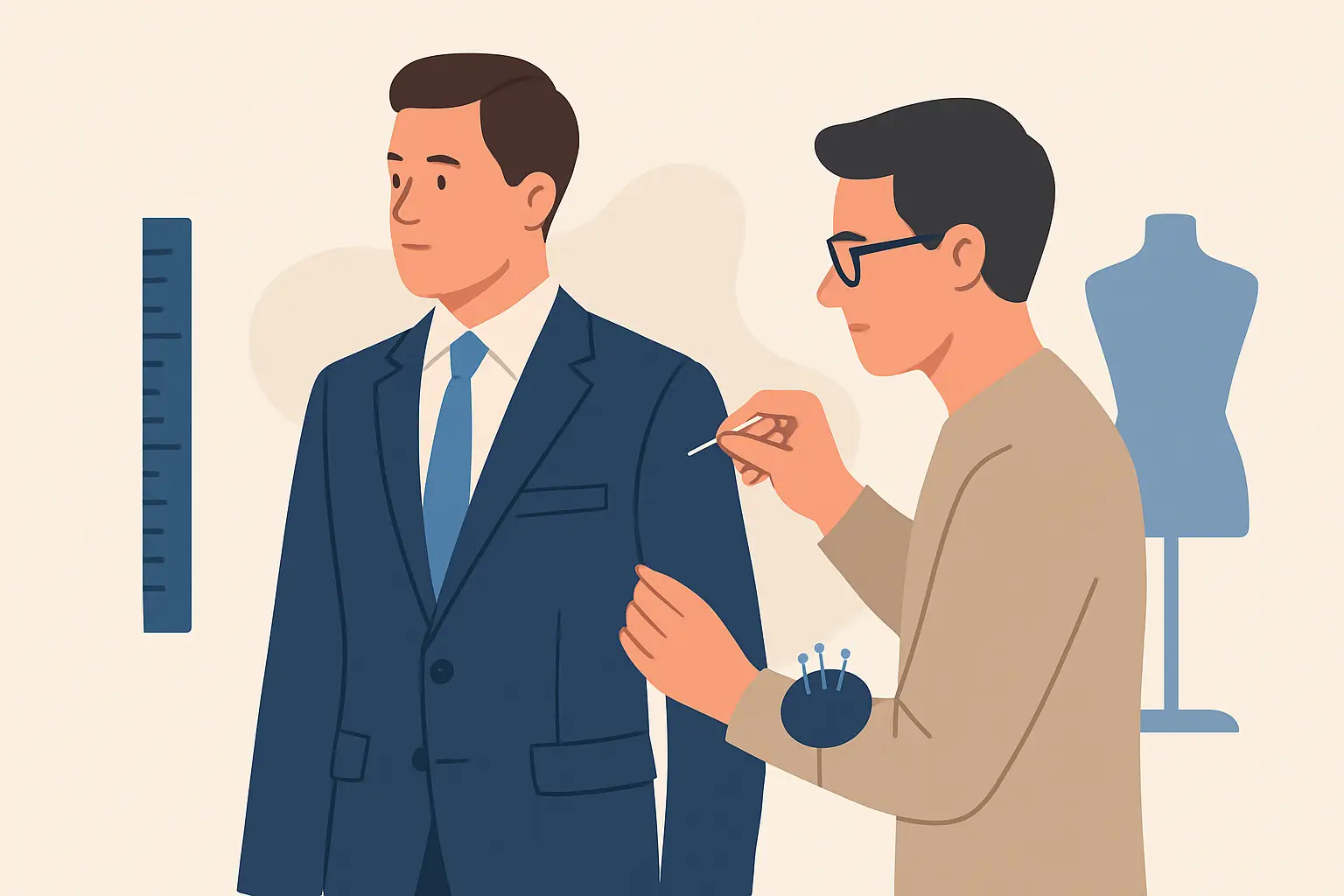
You try on the jacket, button it up, and the mirror tells the truth: the shoulders look promising, but the body balloons. From the side you can pinch out an inch or two of cloth and suddenly the silhouette sharpens – cleaner chest, neater waist, stronger V-shape. The question is simple, and it comes up constantly in professional wardrobes and wedding fittings alike: can a suit jacket be taken in?
Yes, in many cases. But a truly good alteration is not about “making it smaller”. It is about refining the jacket’s shape without disturbing its balance – the way it hangs from the shoulders, how the fronts sit when buttoned, how the vents behave, and whether the sleeve and collar still look effortless.
Can a suit jacket be taken in, and by how much?
Taking in a suit jacket usually means reducing the circumference through the waist and sometimes the chest, so the jacket follows the body more closely. Most well-made jackets have enough inlay (extra cloth) in the side seams and centre-back seam to allow controlled reshaping.
As a broad rule, taking in by 2-4 cm around the waist is commonly achievable on a tailored jacket without drama. More is sometimes possible, but it depends on the original cut, the seam allowance available, and whether the jacket can be rebalanced afterwards. A jacket that is merely “relaxed” through the body is a strong candidate. A jacket that is two sizes too big is often a false economy – you may reduce the waist, but the shoulders, chest height, and scye (armhole) will still read oversized.
A skilled tailor will also consider where the excess actually sits. Some men carry looseness at the small of the back (typical when posture differs from the original pattern), while others need the fronts cleaned up so the quarters don’t flare. The best results come from shaping that respects the jacket’s intended lines.
What a tailor checks before taking a jacket in
Before any stitch is unpicked, the jacket needs to be assessed like a piece of architecture. A neat waist means nothing if the collar lifts or the fronts kick open.
First comes the shoulder. If the shoulder is too wide, too square, or the sleeve-head collapses, “taking in the body” won’t fix the overall impression. Shoulder alterations exist, but they’re complex, time-consuming, and not always cost-effective on an average jacket.
Next is length and button stance. A jacket that is too long can make the waist look messier than it is; a button point that sits too low can exaggerate a boxy shape. Length can sometimes be shortened, but it affects pocket placement and proportions. Button stance is usually left alone.
Then there’s balance: does the jacket hang evenly from front to back? If the back length effectively looks short (often due to a prominent seat or forward posture), the vents may strain, and taking in the waist can make that strain worse. If the fronts already gape, pulling the waist in too aggressively can cause the lapels to spring open and create diagonal drag lines.
Finally, the tailor checks the internal construction. A fused jacket (common on high-street suits) behaves differently from a fully canvassed or half-canvassed one. Canvassed coats generally respond more elegantly to reshaping, but they also demand more care so the internal layers remain smooth.
How a suit jacket is taken in (what actually happens)
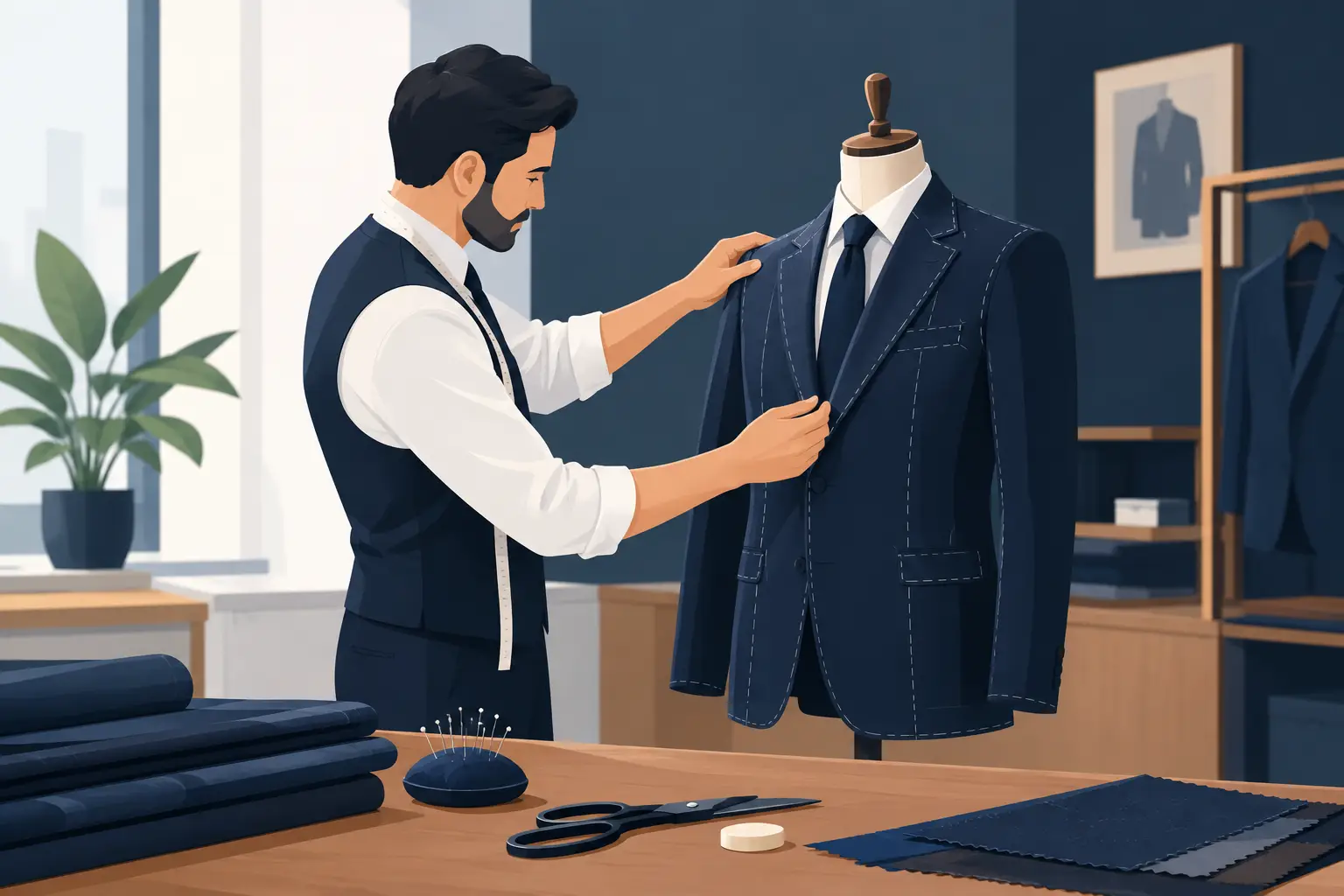
Most jacket “taking in” is performed through the side seams, the centre-back seam, or a combination of both. Doing it properly means managing the exterior cloth and the internal structure together.
If the jacket has side seams, they’re an efficient place to remove excess because they allow the tailor to sculpt the waist while keeping the back panels clean. If the jacket’s shape needs refining through the spine and small of the back, the centre-back seam becomes the main tool.
Vented jackets add another consideration. With double vents, the tailor must preserve a clean overlap so the vents lie flat and don’t splay when you move. With a single vent, too much reduction can cause the vent to pull open, which looks and feels cramped.
The lining usually has to be opened and re-set so it doesn’t strain or billow. That’s part of why a proper alteration costs more than it appears – you’re not paying for two quick seams, you’re paying for careful dismantling and reconstruction.
When taking in goes wrong: signs to watch for
A jacket can be made smaller and still look worse if the shape is forced. The warning signs are easy to recognise once you know them.
If you see diagonal lines radiating from the button to the side seams, the fronts are under stress. If the lapels no longer lie flat against the chest and instead “float” or spring away, the jacket has lost its clean front balance. If the vents bow open, the back has become too tight through the seat or hips. And if the collar lifts away from the shirt collar, the back neck has been disturbed.
There’s also a subtler issue: distortion of pattern. Many suit fabrics have checks, stripes, or a visible weave line. Over-altering can shift those lines so the jacket looks “twisted” even when it’s technically smaller. A good tailor aims for invisibility – the jacket should look like it was always meant to fit this way.
What cannot be fixed by taking in
Taking in is powerful, but it is not magic. There are problems that belong to pattern and proportion rather than circumference.
Shoulders remain the gatekeeper. If they’re too wide, the sleeve will often hang awkwardly and the jacket will look borrowed. Likewise, a low armhole (a large scye) limits how clean and close the body can be taken in because the jacket needs room to move. You can make the waist narrower, but the overall impression will still be roomy.
If the jacket is too tight across the upper back or chest, taking in won’t help – you would need letting out, and only if there is enough inlay. If the jacket’s length is fundamentally wrong for your frame, a small waist alteration won’t restore proportion.
And if the cloth has been weakened by prior alterations, heavy pressing, or wear at stress points, an aggressive take-in can shorten the jacket’s life.
Suit jacket taking in vs made-to-measure: what to choose
If you already own a good jacket with strong shoulders and quality cloth, taking it in is often the most intelligent route. You keep the garment you like and elevate it into something that reads intentional and precise.
If the jacket is a compromise across multiple areas – shoulders, chest, sleeve pitch, and length – alterations become an exercise in chasing diminishing returns. In that scenario, made-to-measure or bespoke is not indulgence; it’s efficiency. The garment is built to your posture and proportions, so the “fit” isn’t created by correction, it’s created by design.
The most refined wardrobes often use both: bespoke for cornerstone pieces (business navy, wedding suit, formal eveningwear) and alterations to keep existing garments current as your body and style evolve.
Cost and turnaround: what’s realistic
Pricing varies by construction and by how much dismantling is required. A straightforward waist suppression can be modest, while a more involved reshaping that requires reworking the lining, vents, and internal layers costs more.
Turnaround also depends on season. Wedding months and winter tailoring periods fill diaries quickly, so if you have an event date, book early. A well-taken-in jacket should feel relaxed when you move – you should be able to sit, reach forward, and walk without the fronts pulling or the vents snapping open.
If you want a precise assessment rather than a guess, an in-person fitting is where the truth emerges. At Manndiip, we look at your jacket the way we would a new commission: shoulders first, then balance, then shape – because elegance is never just “smaller”, it’s controlled.
How to prepare for your fitting (and get the result you actually want)
Bring the shirt you intend to wear most often with the jacket, and the shoes you’re likely to pair it with. Small differences in collar height and heel height can change how a jacket sits.
Be clear about your preference: sharp and close, or classic with breathing room. Many men ask for “slim” when what they really want is “clean”. The best tailoring reads confident, not constricted.
And resist the temptation to over-correct. A jacket should skim the body, not cling to it. The moment the fabric starts to show strain, you’ve traded sophistication for discomfort – and discomfort always shows.
A suit jacket can often be taken in beautifully, but the smartest goal is not a number on the tape. It’s the moment you button it, see the line from shoulder to waist settle into place, and realise you’re no longer wearing a jacket – you’re wearing your jacket.