A wedding suit can be flawlessly cut and still look unfinished if the chest pocket reads as an afterthought. The pocket square is small, but it sits right in the line of sight – close to the face, close to the boutonniere, and in every photograph where you turn slightly toward the camera. Fold it well and you look considered. Fold it poorly and it can look like a napkin you found on the way in.
This is the craft of it: a wedding pocket square fold should feel intentional from three metres away, and refined up close. It should sit securely all day, harmonise with the suit and shirt, and suit the formality of the ceremony. Here’s how to fold a pocket square for wedding wear in a way that looks composed, not overworked.
Before you fold: choose the right square and the right scale
The best fold starts before your hands touch the cloth. Weddings are long days – hugs, movement, sitting, dancing, and plenty of chances for the square to slump. Fabric choice and size determine whether your fold holds its shape or collapses by the drinks reception.
A classic linen or cotton pocket square is your most reliable option for sharp architectural folds. It grips itself slightly, creases cleanly, and sits upright without constant fussing. Silk brings a richer lustre that can look exceptional in evening light, but it is more likely to slide down inside the pocket, especially in a smoother suit cloth. If you want silk, consider a puff fold rather than a rigid edge, and accept that it may need a discreet adjustment once or twice.
Size matters more than most men realise. Many ready-made squares are too small, forcing you to over-fold and creating a thick bundle that pushes the pocket outward. As a rule, you want enough depth below the fold to anchor the square in the pocket, with a top that looks light and controlled. If your square is small, use less elaborate folds and prioritise stability.
Colour-wise, aim for coordination rather than matching. Your tie and pocket square being identical can look overly “set”. Instead, echo one tone from the tie, the bridesmaids’ palette, or a detail in the boutonniere, then keep the rest quieter. White is timeless for weddings, but an off-white or cream can be kinder against a softer shirt and certain complexions.
The three wedding-appropriate folds (and when to use each)
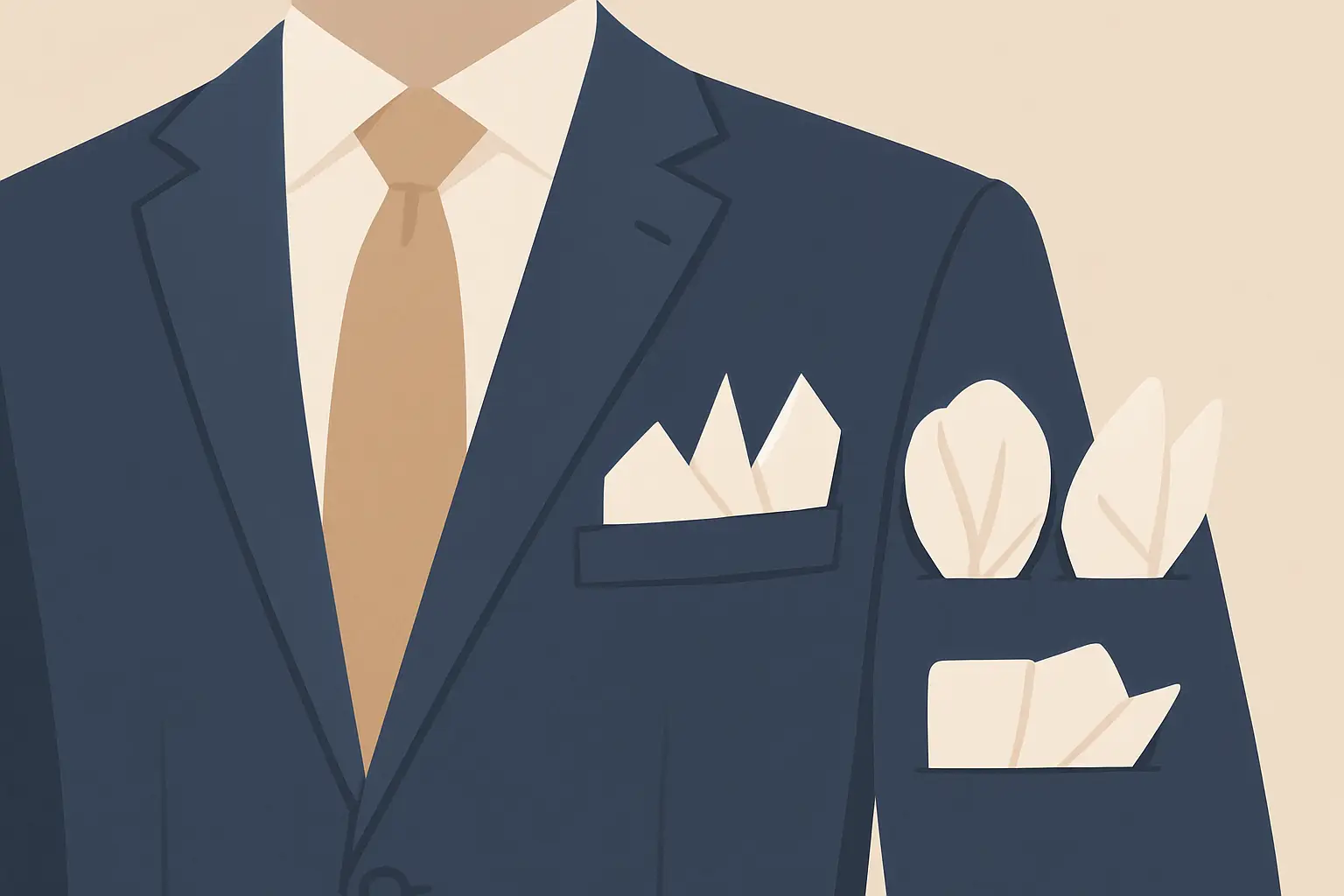
There are dozens of folds, but weddings reward restraint. The goal is elegance, not novelty. Most grooms and guests only need three: the TV fold for formal clarity, the one-point for a touch of shape, and the classic puff for a relaxed romantic finish.
The TV fold (presidential): crisp, formal, always correct
If you’re in a morning suit, a black tie look, or a clean modern wedding suit with a sharp lapel line, the TV fold is the most disciplined choice. It frames the chest without competing with a tie, and it looks immaculate in photos.
Start with the square flat in a diamond shape. Fold the bottom corner up to meet the top corner, creating a triangle. Now fold the left corner across to the right, but don’t aim for perfect halves – offset it slightly so the fold line isn’t too bulky. Fold the right corner across to create a neat rectangle. You’re aiming for a width that sits just inside your breast pocket, not forcing the pocket open.
Fold the bottom up behind the rectangle until the height looks right, leaving enough fabric below to anchor it. Place it in the pocket with the straight edge visible, ideally showing about 1 to 1.5 cm. Any more can look theatrical; any less can disappear.
Trade-off: the TV fold is unforgiving. If your pocket is narrow, or the square is too thick, you may see bunching at the corners. When that happens, use fewer internal folds and accept a slightly softer line rather than forcing a perfect rectangle.
The one-point fold: structured, but with a touch of personality
When you want something sharper than a puff but less formal than a flat bar, the one-point fold is the groom’s quiet advantage. It mirrors the V-shape of a jacket opening and works beautifully with notch lapels and most tie knots.
Lay the square flat in a diamond. Fold the bottom corner to the top corner to make a triangle. Now fold one side across towards the centre, then fold the other side across so they overlap, creating a narrower triangle. Adjust the width so it will fit your pocket cleanly.
Fold the bottom up behind until the height suits your pocket depth. Insert it so a single point rises above the pocket line – roughly 2 to 3 cm is usually enough to be seen without looking like a paper aeroplane.
Trade-off: points can droop in silk, and they can look fussy if you create multiple tips. For a wedding, one point looks confident. Two or three points can feel more like a night out than a ceremony, unless the styling is deliberately bold.
The classic puff: romantic, forgiving, and ideal for silk
The puff fold is the answer when you want polish without looking overly engineered. It suits textured pocket squares, silk, and patterned designs because it shows off colour in a softer way. It is also the easiest to refresh discreetly.
Pinch the centre of the square between thumb and forefinger and lift it so the fabric drapes down. With your other hand, gently gather the hanging fabric to create a loose stem. Now fold the bottom of the stem up once or twice until it will sit securely in the pocket.
Place it in the pocket and shape the top into a rounded puff. You want it to look like it belongs there, not like it is trying to escape. A little asymmetry is part of the charm.
Trade-off: the puff can look too casual if it is oversized. Keep the volume modest for a wedding, particularly if you are wearing a tie with a strong pattern or a bold boutonniere.
How to keep your fold upright all day
A pocket square that disappears into the pocket halfway through the ceremony is more common than men admit. The solution is usually not constant adjustment – it is better technique.
First, don’t overstuff the pocket. When the folded base is thicker than the pocket can accommodate, friction works against you and the square will shift. Reduce internal layers and aim for a flatter base.
Second, use depth. You want enough fabric below the pocket line to act like an anchor. If the visible portion is tall but the base is short, gravity wins every time.
Third, consider the pocket itself. Some jacket breast pockets are cut slightly angled, and some are surprisingly shallow. If you notice the square slipping, a puff fold with a thicker stem can hold better than a sharp fold.
Finally, accept that the best-looking squares are often lightly imperfect. A wedding is a live event. A slight change in shape reads as natural, whereas a constantly re-creased edge can look tired.
Matching the fold to the wedding dress code
The fold should speak the same language as the suit.
If you are wearing morning dress, keep it traditional: white linen in a TV fold is the standard for good reason. It complements the structure of a morning coat and the formality of the occasion.
For black tie weddings, a crisp white linen or silk-linen blend in a TV fold is a clean choice. A puff can work if the rest of the look is softened, but you want to avoid anything that feels playful.
For modern lounge suits, you have more freedom. A one-point fold gives shape without shouting, and a classic puff looks excellent with a slightly more relaxed tie knot or an open collar at an evening reception.
If you are skipping a tie entirely, choose a fold that adds intention. The TV fold can look too rigid in a tieless outfit unless the suit is very sharp. The one-point or a controlled puff tends to look more balanced.
A tailor’s eye: small adjustments that make it look bespoke
A pocket square sits in the same visual zone as your lapels and tie. That means proportions matter. If your lapels are wide and your tie is substantial, a tiny sliver of square can look timid. If your lapels are slim and your square is towering, it overwhelms.
Aim to relate the visible height of the square to the tie knot. With a larger knot, show a little more square. With a smaller knot or a no-tie look, keep the square modest.
Also, watch the relationship between the square and the boutonniere. If you are wearing a flower, let the square support it rather than compete. A white square with a clean edge is often the most elegant frame for a boutonniere, while a heavily patterned square can make the chest look busy.
If you want this detail to feel effortless rather than guessed, it helps to have the suit cut and finished with these accessories in mind. At Manndiip, we routinely style fittings with ties, shirts, and pocket squares so the final look is coherent in real light, not just on a hanger.
Common pocket square mistakes at weddings
The quickest way to make a premium suit feel average is to treat the pocket square as a matching accessory set. Identical tie and square fabric can look like hirewear, even if the suit is bespoke.
Another frequent mistake is over-folding. If the square creates a visible bulge and distorts the pocket line, it draws attention to itself for the wrong reason. The breast pocket should look crisp, not strained.
Finally, avoid making the fold too perfect if the rest of the outfit is softer. A razor-straight TV fold with a textured tweed suit and an open collar can look disconnected. Let the formality of the fold match the formality of the cloth.
FAQs
How far should a pocket square show at a wedding?
For a TV fold, 1 to 1.5 cm looks formal and controlled. For a one-point, 2 to 3 cm is usually enough. For a puff, aim for a rounded shape that sits just above the pocket line without ballooning.
Can I wear a pocket square without a tie?
Yes, and it can look exceptionally refined when done with restraint. Choose a one-point or a neat puff, keep the colour palette calm, and make sure the shirt collar and jacket lapels are well-pressed and sitting correctly.
Should the pocket square match the bridesmaids’ dresses?
It can echo a tone, but direct matching can look overly themed. A better approach is to pick up one colour from the palette and soften it – for example, a muted sage rather than a bright green.
A wedding pocket square is not there to prove you know folds. It is there to signal composure. Choose one fold, do it cleanly, and let the rest of your presence – posture, fit, and ease – carry the day.