A jacket can be beautifully made, cut from fine cloth, and finished with real care – yet if the shoulders are wrong, the whole silhouette suffers. This is the point many men discover the hard way: trouser hems are straightforward, waists are manageable, sleeves are routine, but shoulder work sits in a different league entirely.
So, can shoulders be altered on jacket garments? Sometimes, yes. But the better answer is that shoulder alterations are among the most complex changes a tailor can undertake, and they are not always wise, cost-effective, or visually perfect. Whether the adjustment is worthwhile depends on how the jacket is built, how far the fit is off, and what exactly needs correcting.
Can shoulders be altered on jacket designs?
Yes, jacket shoulders can be altered, though only in limited and carefully judged circumstances. The shoulder is the structural anchor of the coat. It governs how the sleeve hangs, how the chest sits, where the lapel breaks, and how the whole garment frames the body.
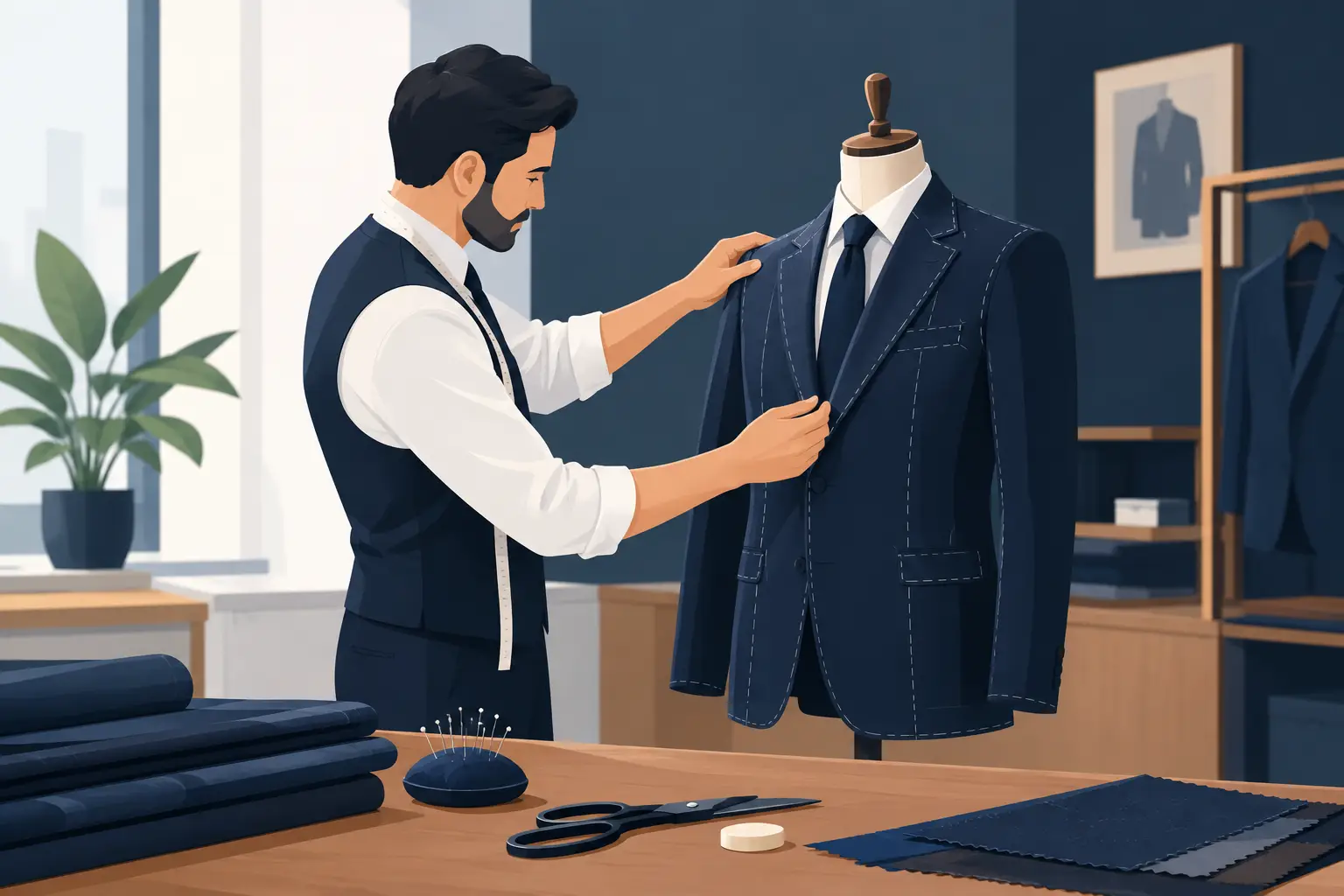
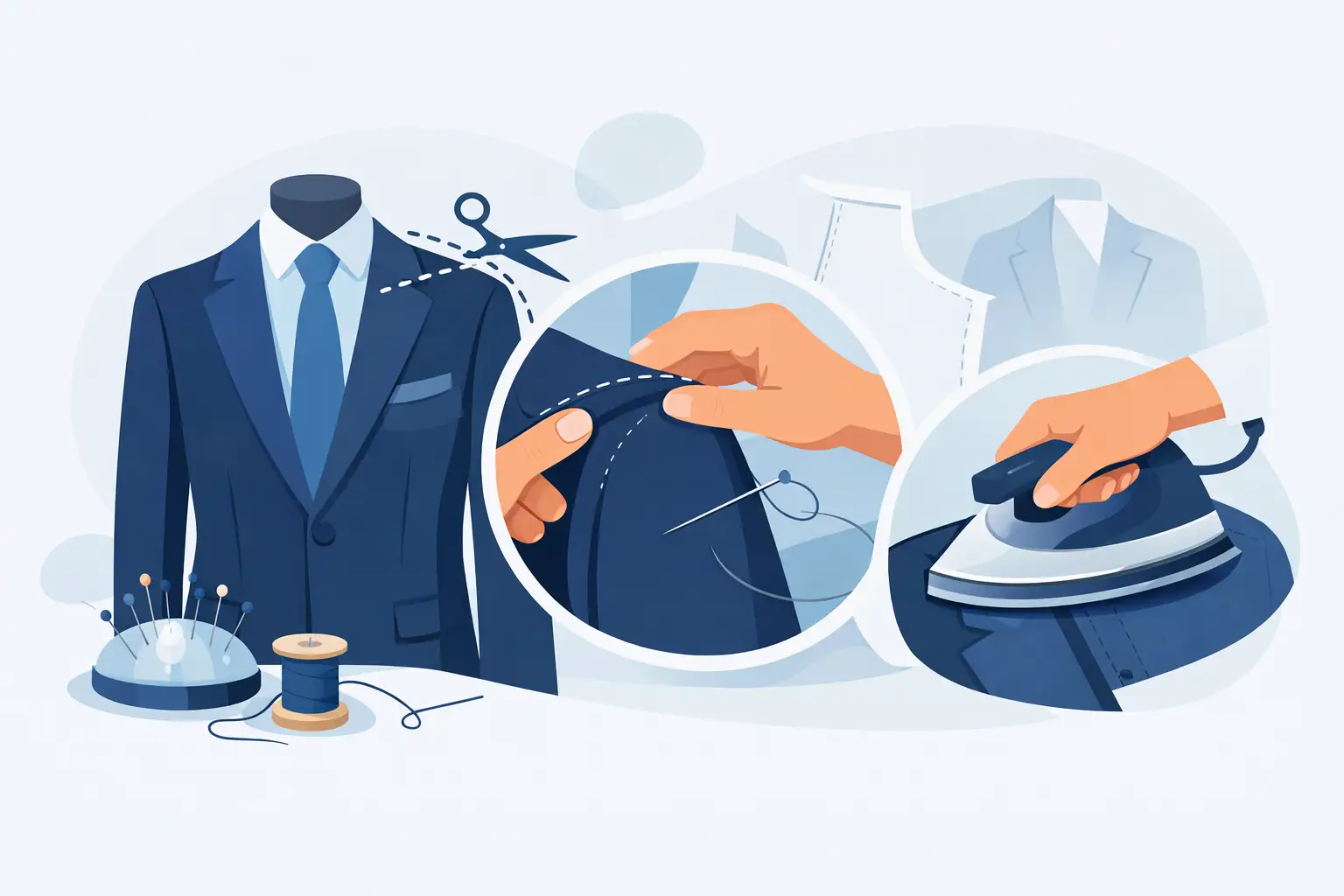
This is why experienced tailors are cautious when clients ask for shoulder changes. Unlike taking in the waist or shortening a sleeve, altering the shoulder means disturbing one of the most engineered areas of the jacket. The sleeve often has to be removed, the shoulder line reshaped, the padding or roping reconsidered, and the balance restored so the coat still hangs cleanly.
A small correction can be possible. A major correction often becomes a reconstruction job.
Why shoulder alterations are so difficult
The shoulder looks simple from the outside. In reality, it is a layered piece of tailoring architecture. Beneath the cloth, you may have canvas, wadding, sleeve head rolls, shoulder pads, chest pieces and seam allowances that all work together to create shape.
When the shoulder is adjusted, each of those elements may need to be opened, re-cut, reduced or rebuilt. That is before accounting for the sleeve pitch – the angle at which the sleeve is set into the armhole. If that pitch is wrong after an alteration, the jacket can twist, pull, or collapse in a way that no amount of pressing will disguise.
This is also why a shoulder problem can be misdiagnosed. What appears to be a shoulder issue may actually come from the neck, chest, posture, or sleeve setting. A jacket that collapses near the shoulder might need balance correction rather than narrower shoulders. A divot beneath the shoulder line might be a sleeve-head problem, not a width problem.
A good tailor does not simply agree to the alteration. He diagnoses the cause first.
What shoulder changes are actually possible?
There are some shoulder adjustments that can be carried out successfully. Narrowing the shoulder width slightly is usually more feasible than making it wider. If the shoulder extends beyond your natural frame by a modest amount, a skilled tailor may be able to reduce it and re-set the sleeve for a cleaner line.
Reducing excess padding is also possible in certain jackets. If the coat feels too structured or creates an artificial square shape, the internal padding may be softened or reshaped. This can refine the silhouette without fully re-cutting the shoulder.
Some corrections involve the slope rather than the width. If one shoulder sits lower than the other – common in real bodies, especially men who carry a bag on one side or have a strong dominant arm – padding and internal adjustments may improve balance.
What is much harder is widening narrow shoulders. There is rarely enough inlay to create convincing width, and even when cloth can be added, the result is seldom elegant. Likewise, dramatic reshaping of a heavily structured shoulder is risky. The more built-up the jacket, the more complicated the job.
When the alteration is worth doing
The best candidates for shoulder alteration are premium jackets with good cloth, strong construction, and a fit issue that is specific rather than universal. If the garment fits well through the chest, collar, waist and length, but the shoulders are only slightly too wide, the work may be justified.
This is especially true for a jacket with sentimental or wardrobe value. A wedding suit, a cherished dinner jacket, or an otherwise exceptional business coat may deserve the labour involved.
It can also make sense when the jacket is of higher quality than what you are likely to replace it with at the same spend. Fine tailoring often merits more serious repair because the underlying construction gives the tailor something worth preserving.
The question is not only can it be done. The real question is whether the result will honour the standard of the garment.
When it is better to leave it alone
If the shoulders are wrong by more than a small margin, caution is sensible. A jacket that is significantly too broad, too narrow, or badly imbalanced may technically be alterable, but not to a standard that justifies the cost.
There is also the issue of proportion. If the shoulders are off, the jacket may also be too large in the chest, armhole, sleeve width and overall balance. At that point, one alteration leads to another, and you are no longer fine-tuning. You are attempting to remake a garment that was never right for your frame.
Lower-priced fused jackets are another area where restraint matters. These garments often do not respond as beautifully to major alteration because the internal structure is simpler and less forgiving. You can spend a surprising amount and still end up with a result that looks merely acceptable.
For clients who care about a polished, authoritative silhouette, acceptable is rarely the target.
Signs your jacket shoulders are wrong
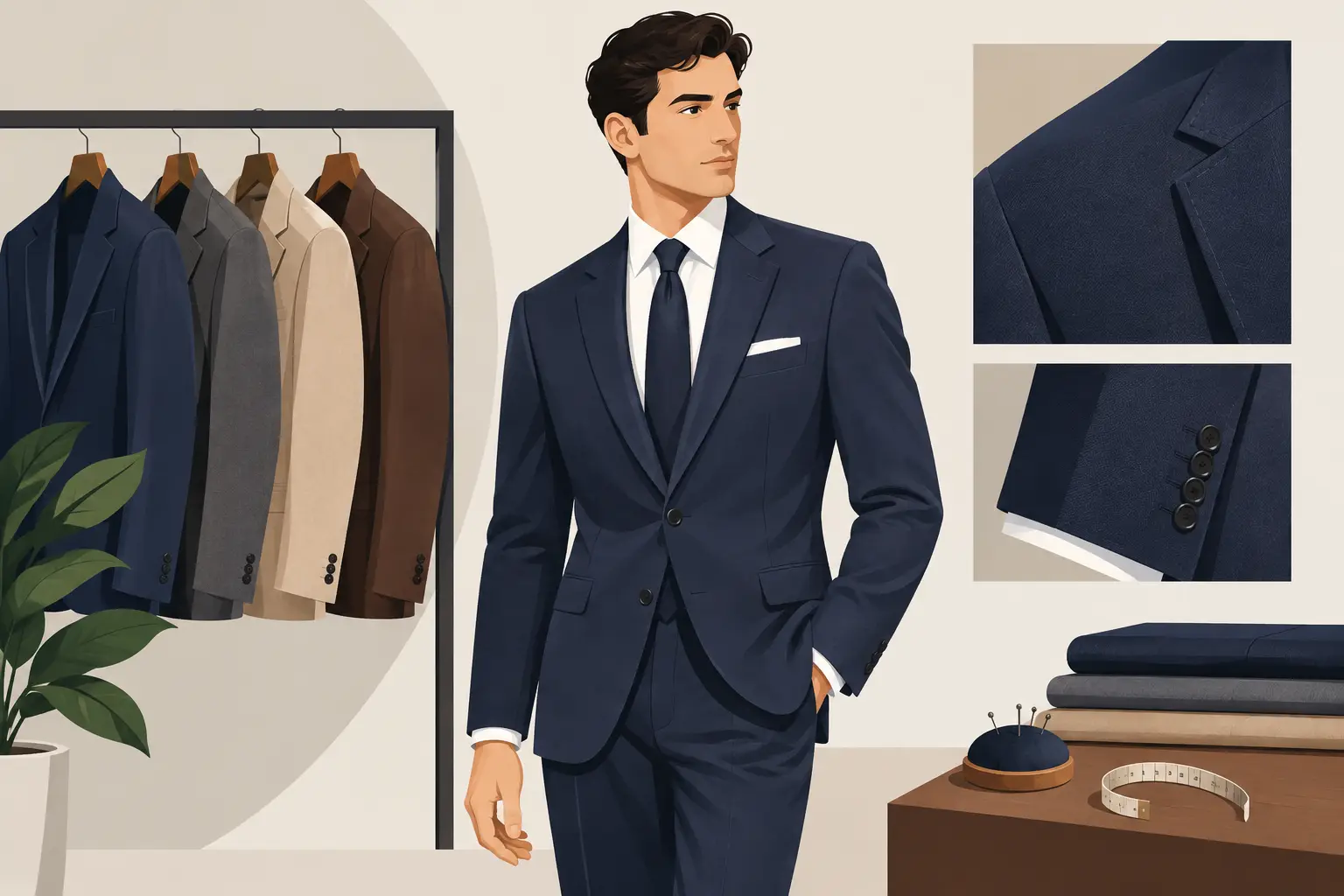
A shoulder that extends noticeably past your natural shoulder bone often looks borrowed rather than tailored. The sleeve may appear to drop from the arm rather than flow from the body.
Indentations or ripples near the sleeve head can indicate excess width, poor sleeve pitch, or imbalance. Raised folds from the collar towards the shoulder can point to posture or neck fit issues. If one side sits cleanly and the other collapses, asymmetry in your stance may need to be addressed internally.
Another common sign is restriction. If the shoulder is too narrow, the jacket may pinch across the upper back and create drag lines when you move your arms forward. In that case, the problem is structural, and there may be little room to correct it attractively.
This is where a fitting with an expert matters. The eye of a trained tailor can separate a true shoulder fault from a symptom caused elsewhere.
What a tailor will assess first
Before deciding whether shoulders can be altered on jacket styles, a tailor will usually assess three things: construction, severity, and value. Construction tells him how the coat is built and how much can be opened and reshaped. Severity tells him whether the issue is minor refinement or major surgery. Value determines whether the labour is sensible against the worth of the garment.
He will also look at your natural posture. Few men stand perfectly symmetrical. One shoulder may slope more than the other. One arm may hang slightly forward. The neck may sit erect or stooped. Fine tailoring accommodates these realities. Off-the-peg tailoring often does not.
That is why shoulder fit should never be judged on a hanger. It must be judged on the body, in motion, and from several angles.
Alteration versus starting from scratch
There is a point where alteration ceases to be the refined choice. If a jacket needs extensive shoulder reconstruction, chest correction and balance work all at once, commissioning a proper made-to-measure or bespoke piece is often the more elegant decision.
A garment designed around your shoulder line from the beginning will always sit more convincingly than one forced into shape after the fact. You gain cleaner drape, sharper posture, and the quiet authority that comes from clothing behaving exactly as it should.
For many men building a business wardrobe or preparing for a wedding, this is the more intelligent investment. Instead of rescuing a compromise, you begin with precision.
At Manndiip, this is often where the conversation becomes most valuable: understanding whether a garment deserves expert alteration or whether your standards are better served by commissioning one that reflects your frame and intentions from the first cut.
The most sensible answer
If you are asking can shoulders be altered on jacket pieces, the truthful answer is yes – but only sometimes, and never casually. Small refinements can be transformative in the right hands. Major changes can become expensive experiments with uncertain results.
The shoulder is the line that introduces the entire jacket. When it is right, everything beneath it looks composed, assured and meticulously crafted. When it is wrong, no fine cloth or elegant buttoning stance can fully rescue the impression.
If you are in doubt, do not ask whether the alteration is possible in theory. Ask whether it will produce a result worthy of the jacket, and worthy of you.