A winter suit has a different job from one cut for June. It must hold its line in cold air, feel substantial without becoming cumbersome, and carry a richer visual weight that suits the season. The best winter cloths do more than keep you warm – they shape the entire character of the garment, from how the trouser falls to how the jacket moves across the shoulders.
For a gentleman building a serious wardrobe, fabric is not a finishing detail. It is the foundation. Choose well, and your suit looks composed, elegant and entirely appropriate from boardroom to evening event. Choose poorly, and even a well-cut garment can feel thin, flat or simply out of place.
What makes the best fabrics for winter suits?
Warmth matters, of course, but not in isolation. The best fabrics for winter suits balance insulation, breathability, drape and resilience. A cloth that is too heavy can feel oppressive indoors. One that is too soft may lose shape with regular wear. A fabric that looks handsome in the bunch may not perform as well once tailored into a structured jacket.
This is why winter suiting is rarely about chasing the thickest cloth available. It is about selecting a fabric with enough body to sit beautifully on the frame, enough texture to suit the season, and enough refinement to match the occasion. For business, you may want subtle depth and polish. For country wear or less formal dressing, more pronounced texture often works better.
The weave, yarn and finishing all matter as much as the fibre itself. A brushed wool flannel behaves very differently from a crisp worsted, even if both begin with wool. The right choice depends on how and where you intend to wear the suit.
Wool flannel remains the benchmark
If there is one answer to the question of the best fabrics for winter suits, wool flannel is usually where the conversation starts. For good reason. It has softness, warmth and a muted richness that feels immediately seasonal, while still retaining the elegance expected of tailored clothing.
Flannel is typically woven from wool and then brushed to raise a fine nap on the surface. That finish gives the cloth its characteristic softness and gentle visual depth. Mid-grey flannel trousers are a classic for precisely this reason, but in a full suit, flannel can look exceptionally distinguished in charcoal, navy, dark brown or forest green.
The appeal of flannel is its versatility. It can be tailored into a business suit that looks authoritative without seeming severe, or into a more relaxed double-breasted suit with a touch of old-world charm. It drapes well, especially in slightly heavier weights, and it flatters the body by skimming rather than clinging.
There are trade-offs. Flannel is not the ideal fabric for heavy rain, and very brushed versions can mark a little with regular abrasion. It is also warmer than a year-round cloth, so if your days involve overheated trains, offices and restaurants, weight should be chosen with care.
Tweed offers depth, texture and character
Tweed is one of the most distinctive winter suit fabrics available, and one of the most misunderstood. Many men admire it but assume it is too rustic for modern wear. In reality, the right tweed can be remarkably elegant, particularly when cut with precision and worn with confidence.
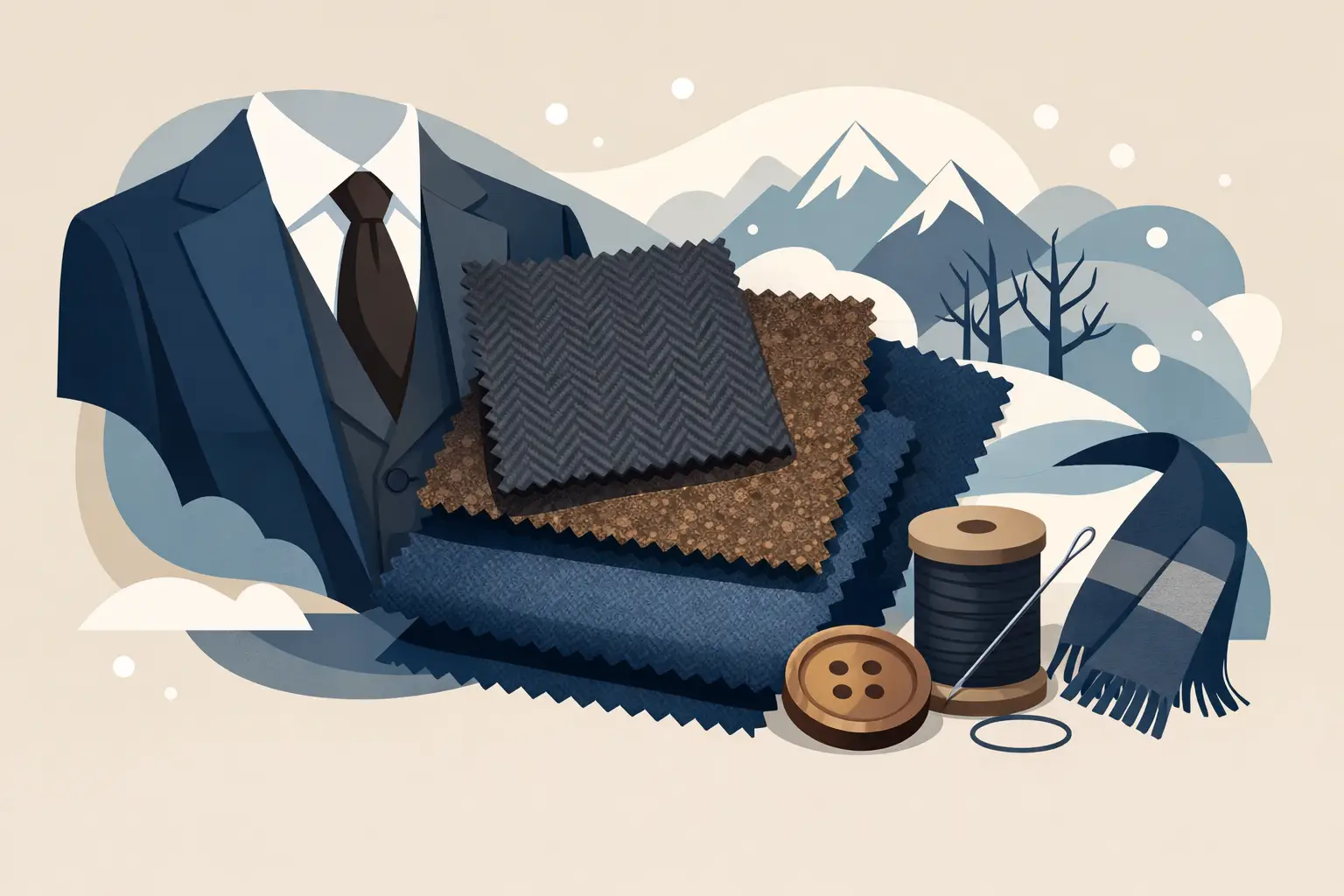
Traditional tweed is a hard-wearing woollen cloth with visible texture and often a complex blend of colours running through the yarn. That mixture creates visual depth that a flat plain weave cannot replicate. Browns, olives, greys and muted blues all come alive in tweed, especially under natural winter light.
For country weddings, seasonal events, or a wardrobe with a little more personality, tweed is an excellent choice. It has presence. It photographs beautifully. It also layers effortlessly with knitwear, waistcoats and overcoats.
Where tweed requires judgement is formality. A bold check or rough, chunky handle may not be right for conservative corporate settings. A finer donegal or a softer, more refined tweed can bridge that gap, but not every tweed belongs in every room. The cloth must match the life of the wearer.
Heavy worsted wool for cleaner business dressing
Not every winter suit needs visible texture. For some men, especially those building a business wardrobe, a clean worsted wool in a heavier weight is the smarter choice. It offers warmth and structure while maintaining a sleek, crisp appearance.
Worsted wool is made from longer fibres that are combed before spinning, producing a smoother finish than flannel or tweed. In winter weights, it can still feel substantial and protective, but with a sharper, more formal surface. This makes it well suited to city suiting, important meetings and occasions where understatement carries more authority than texture.
A dark navy or charcoal worsted in a 13oz to 15oz weight can perform brilliantly in colder months. It resists creasing better than many lighter cloths, travels well, and transitions more easily between office and evening wear.
The compromise is aesthetic rather than practical. Heavy worsted does not have the softness or seasonal romance of flannel, nor the character of tweed. It is more restrained. For many wardrobes, that is exactly the point.
Cashmere and wool blends add luxury, but not always durability
Cashmere has a reputation that draws immediate attention, and understandably so. It is soft, warm and undeniably luxurious. In winter suiting, however, pure cashmere is rarely the first recommendation. A suit must withstand movement, friction and regular wear. Pure cashmere can be delicate for that role.
Where cashmere excels is in blends. A wool-cashmere cloth can deliver a softer hand and richer finish than standard wool while retaining better resilience than cashmere on its own. For men who want a winter suit with a quietly indulgent feel, this is often a compelling middle ground.
That said, blends vary enormously. Some are beautifully balanced. Others are chosen for marketing appeal more than performance. If the suit is for frequent business use, durability should remain a priority. Cashmere may be a pleasure, but it should not come at the expense of shape and longevity.
Corduroy and moleskin – stylish, but more selective
There are winter fabrics that sit just outside classic suiting yet deserve a place in the discussion. Corduroy and moleskin are two of them. Both can make superb tailored garments, but they are more niche and should be chosen with intention.
Corduroy has warmth, texture and a certain confidence when tailored well. A dark chocolate or deep navy cord suit can look superb in a creative professional setting or for smart-casual evening wear. It has personality in abundance. It is less convincing, however, in highly formal environments.
Moleskin, with its dense cotton surface and suede-like feel, is excellent for trousers and jackets, though less common for full suits. It provides comfort and visual richness, but it is not as traditionally sartorial as wool. These fabrics work best for men with an established wardrobe who want variation rather than a first and only winter suit.
Choosing by occasion matters as much as choosing by cloth
The right winter fabric depends on where the suit will live. For business, a heavier worsted or refined flannel is usually the soundest investment. Both provide seasonal substance without compromising polish.
For weddings and formal celebrations, flannel can be superb, particularly in deep navy or charcoal, while certain refined tweeds lend a memorable sense of individuality to countryside venues. For social wear and statement tailoring, tweed, corduroy and more textured cloths come into their own.
This is where bespoke advice earns its place. Two men can ask for the same winter suit and need completely different answers. One may need a formal city suit that layers under an overcoat and wears neatly all day. Another may want a striking seasonal garment for weekend events and festive occasions. The cloth should support the purpose, not fight it.
Weight, drape and comfort are the details that change everything
When clients ask about winter fabric, they often begin with fibre and colour. Those matter, but weight and drape are what make the suit feel right on the body. A 14oz flannel behaves differently from a lighter 11oz version. A firm tweed creates a stronger silhouette than a softer one. These nuances affect comfort, movement and overall presence.
Heavier cloths often drape more elegantly and can be more flattering, particularly in trousers. They tend to hang cleanly and recover well after wear. Yet heavier is not automatically better. If you spend much of your day indoors, a cloth that feels comfortable across changing temperatures may serve you better than one chosen solely for heft.
At Manndiip, this is why fabric selection is always tied to cut, construction and the client’s lifestyle. The best winter suit is not simply warm. It is meticulously considered, so the cloth, silhouette and finishing all work in concert.
If you are choosing just one winter suit, start with a dark flannel or a substantial worsted wool. Both offer elegance, versatility and longevity. If your wardrobe already has those foundations, tweed is often the most rewarding next step. The finest cloth is the one that makes you feel entirely at ease in your own presence – composed, distinctive and properly dressed for the season.