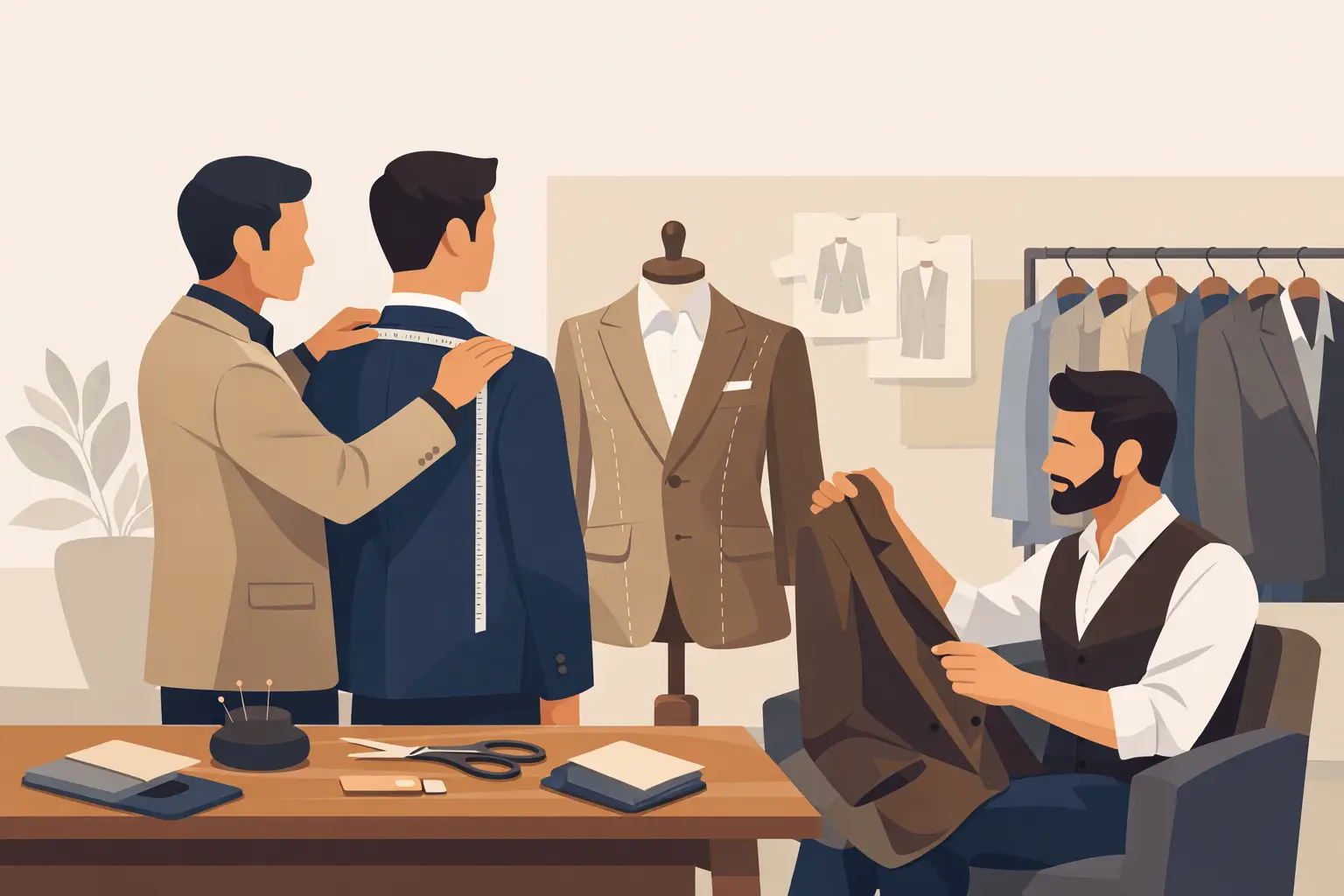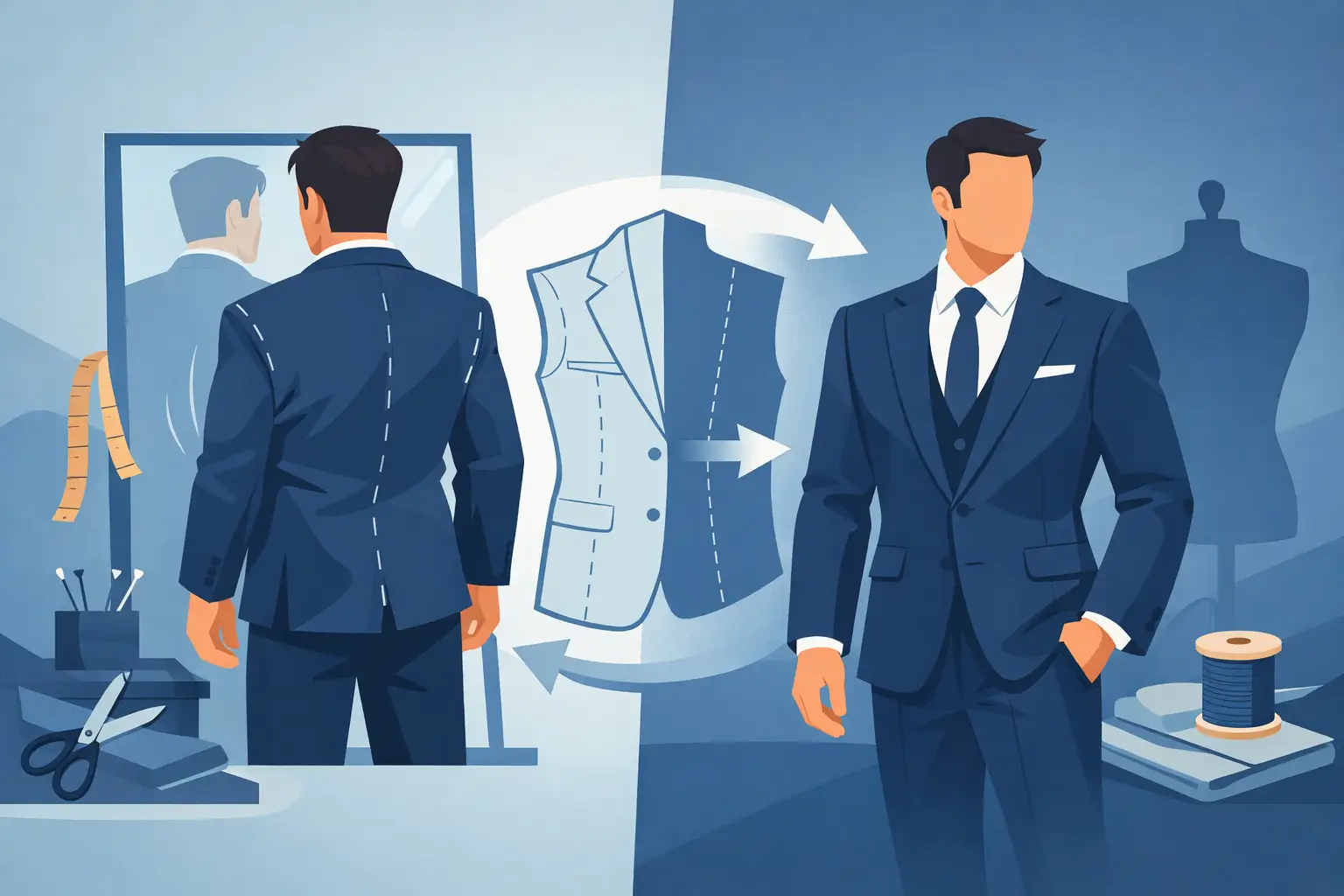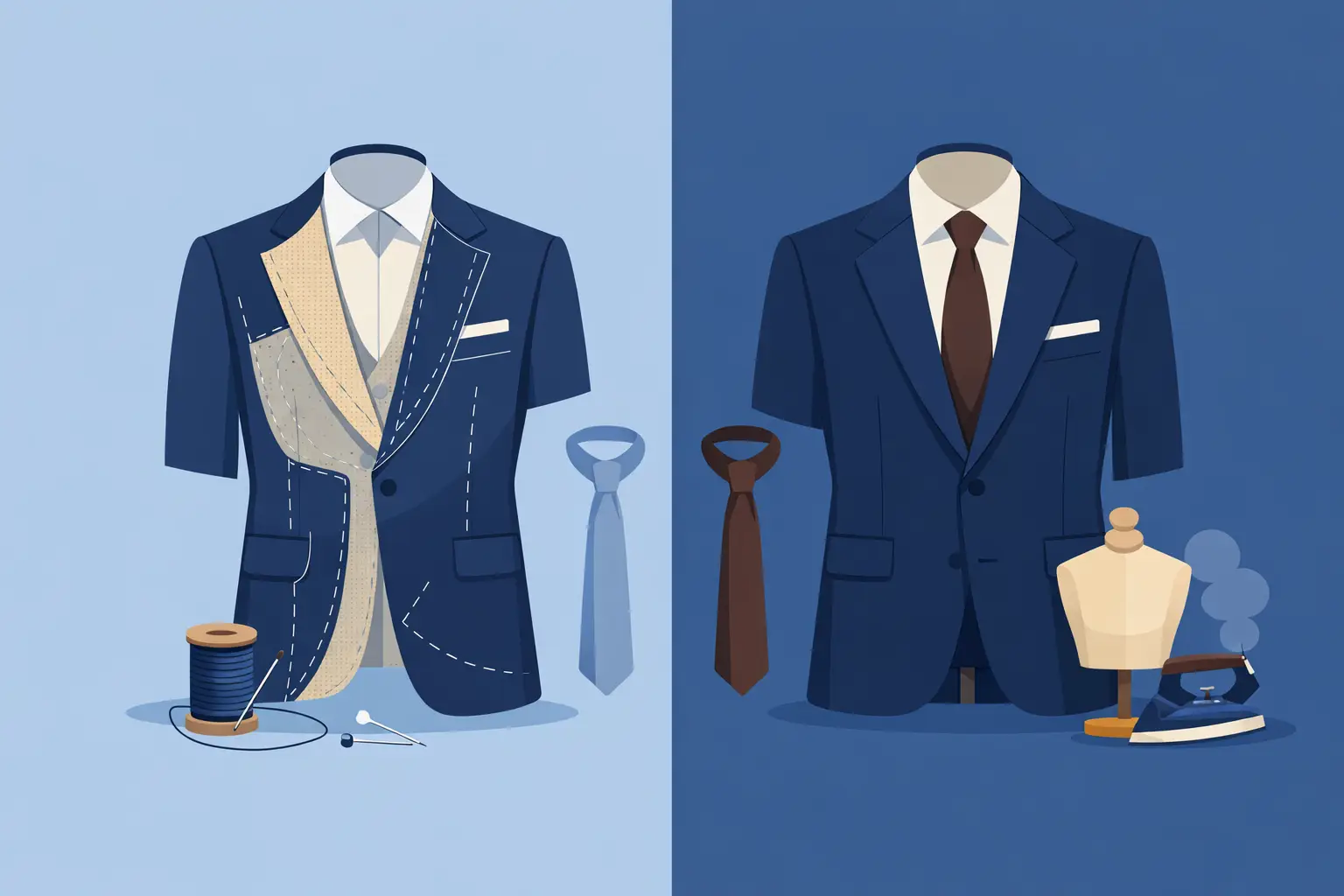
A three-piece suit asks more of tailoring than a standard two-piece. The waistcoat sits at the centre of the composition, which means every line has to work harder – the jacket length, trouser rise, button stance and suppression through the waist all need to speak the same language. That is why bespoke three piece suit design is not simply a matter of adding a waistcoat. Done properly, it creates a more composed, more authoritative silhouette that feels considered from every angle.
For a client, that difference is immediate. You stand straighter. The jacket opens cleanly without losing shape. The waistcoat frames the shirt and tie rather than fighting them. Whether the suit is intended for boardroom use, a wedding, black-tie adjacent formality or a refined country wardrobe, the value lies in balance. A three-piece suit should look complete with the jacket on, and equally assured when the jacket comes off.
What bespoke three piece suit design really changes
The waistcoat alters the architecture of the entire outfit. In ready-to-wear tailoring, it is often treated as an accessory. In bespoke cutting, it becomes a structural decision. The trouser rise may need to sit higher so there is no shirt showing between trouser waistband and waistcoat edge. The jacket quarters may need opening or closing depending on how much of the waistcoat should be visible. Even the lapel width can be adjusted to keep proportions harmonious.
This matters because a three-piece suit draws the eye to the torso. If the cloth is too stiff, the middle can appear boxy. If the waistcoat is too long, the legs look shortened. If the jacket is too neat while the waistcoat is too full, the whole effect feels unresolved. Bespoke avoids these tensions by building the suit around the man wearing it rather than around a standard block.
The result is not only aesthetic. Comfort improves as well. A well-cut waistcoat should sit close without pinching when seated, and the armholes must be shaped to allow movement without exposing the shirt awkwardly. Precision here is what separates elegance from costume.
The foundation of a strong three-piece suit
Every successful three-piece begins with proportion. Height, shoulder line, chest shape and posture all affect the right balance between jacket, waistcoat and trousers. A taller client may carry a longer line and a lower buttoning point with ease. A broader or shorter client often benefits from a cleaner front, slightly higher fastening and careful control of waistcoat depth.
Fabric choice comes next, and it changes the personality of the suit more than most first-time buyers expect. A navy worsted offers clarity and discipline, making it ideal for business and formal professional wear. Mid-grey or charcoal has quiet authority and works particularly well where versatility matters. For weddings, richer textures and lighter seasonal cloths can bring more character – think fresco in warmer months, flannel in cooler ones, or subtle checks that reveal themselves only at close range.
The cloth also affects how the waistcoat behaves. Lightweight fabric can drape elegantly but needs enough body to hold shape through the front. Heavier cloth creates presence and depth, though it can feel too substantial if the occasion is summer or the wearer prefers a lighter touch. There is no universal best choice. The right cloth depends on climate, frequency of wear and the impression you want the suit to leave.
Why the waistcoat deserves more attention
The waistcoat is where bespoke skill becomes especially visible. Its cut has to flatter the torso without appearing tight, and its opening has to complement the shirtfront and tie. Some men suit a higher, more closed waistcoat that gives a formal, elongated line. Others benefit from a lower opening that shows more tie and softens the effect.
Single-breasted waistcoats remain the most versatile. They are clean, elegant and easy to wear across business and occasion settings. Double-breasted waistcoats have more presence and can look superb in formal or celebratory contexts, but they ask for confidence and sharper judgement on proportion. They are less forgiving if the rest of the suit is not cut with equal care.
Details matter here. The number of buttons, the shape of the hem, whether revers are included, and the position of the welt pockets all influence the tone. A plain-bottomed waistcoat can feel contemporary and understated. A pointed finish adds traditional character. Neither is automatically superior. What matters is consistency with the wider suit and with the wearer.
Bespoke three piece suit design for different occasions
For business, restraint usually wins. A dark navy or charcoal three-piece with a well-defined shoulder and clean waist suppression projects authority without needing obvious flourishes. The waistcoat is particularly useful in professional settings because it preserves a polished appearance once the jacket is removed. If your working day involves meetings, presentations or formal client interaction, that extra layer of structure earns its place.
For weddings, the priorities shift slightly. The suit still needs discipline, but there is more room for personality. Cloth with subtle lustre, tonal texture or a refined check can photograph beautifully and bring distinction without excess. The key question is whether the suit should serve only the wedding day or continue into your wider wardrobe afterwards. If longevity matters, avoid details so specific that they limit future wear.
Formal and evening-adjacent three-pieces call for a different kind of judgement. Black is not always the answer unless the dress code truly demands it. Deep midnight blue, charcoal or rich bottle green in the right cloth can carry greater depth and sophistication. The finish should remain controlled – this is where fine tailoring speaks loudest.
Country and tweed interpretations are more textural and relaxed, yet they still rely on precision. A three-piece in tweed can appear wonderfully assured, provided the pattern scale suits the wearer and the cut avoids heaviness. Too much bulk through the body and the suit can become cumbersome. The goal is substance, not stiffness.
The small decisions that shape the final result
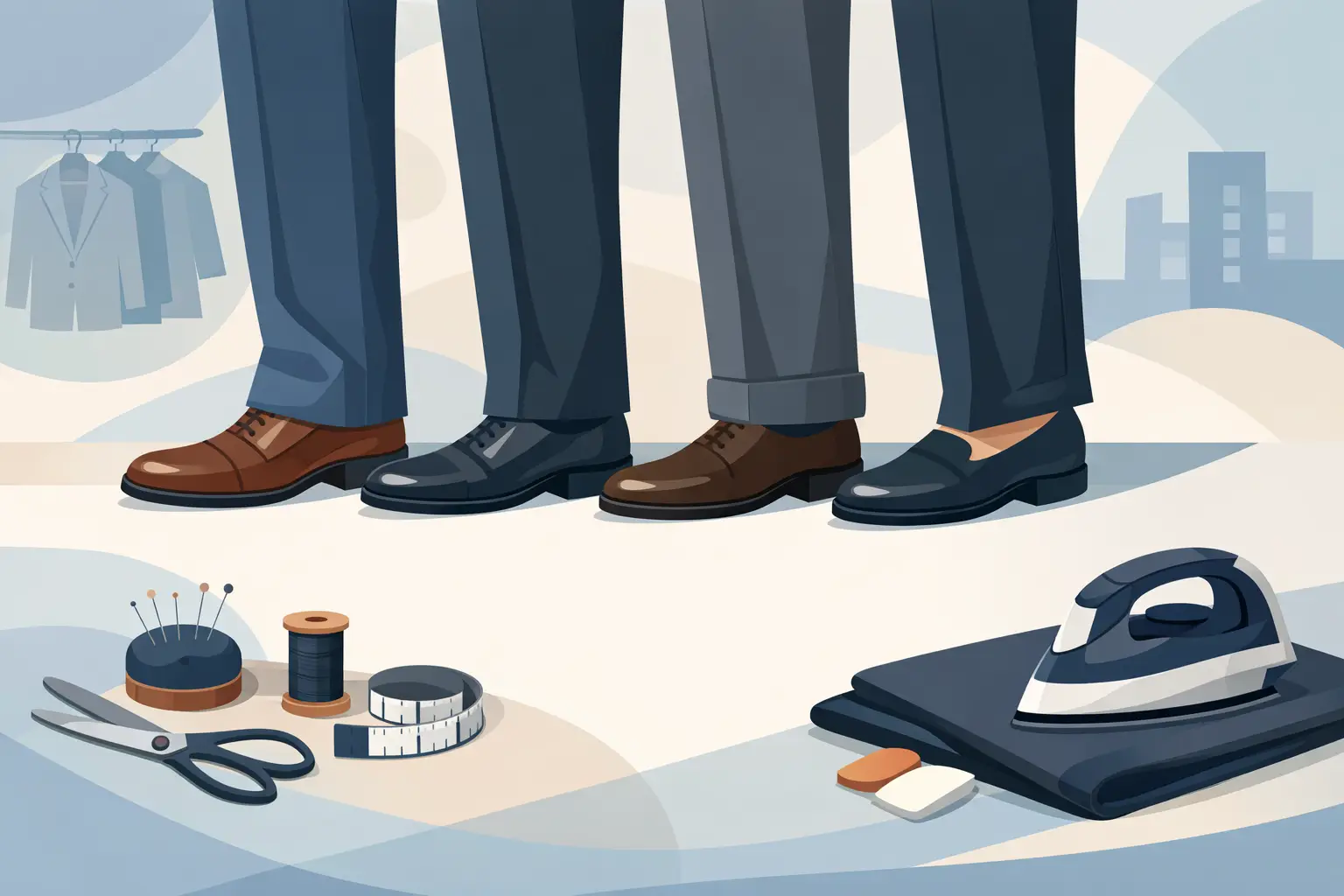
Clients often focus first on fabric and overlook the impact of construction details. Yet these are the decisions that make a suit feel personal. Lapel shape changes the visual width of the chest. Pocket style can make the coat appear more formal or more easy-going. Side adjusters on the trousers create a cleaner waistline beneath the waistcoat than a belt would. The trouser break, pleats or flat front, and width through the leg all contribute to whether the suit reads classic, contemporary or somewhere intelligently in between.
Lining is another detail worth handling with care. A bold contrast can be appealing, but subtlety often ages better. The same is true of button choice, stitching and monogramming. Bespoke should express individuality, not chase novelty.
This is where an experienced tailoring house adds real value. The best guidance does not push a house style onto every client. It interprets body shape, occasion and personal taste, then refines each choice until the suit feels inevitable rather than forced. At Manndiip, that process is built around precision fit and a distinctly personal approach to style, because the strongest garments are the ones that feel unmistakably your own.
Why bespoke is worth it in a three-piece
A two-piece can sometimes hide compromise. A three-piece rarely does. If the balance is off, the waistcoat exposes it. If the trouser rise is wrong, the break in the line is obvious. If the chest or waist suppression is misjudged, the silhouette loses authority. Bespoke earns its place because it solves these issues at pattern level, before they become visible in wear.
There is also the matter of longevity. A well-made three-piece suit is one of the most versatile garments a man can own when it has been designed intelligently. Worn together, it offers ceremony and polish. Separately, the jacket and trousers can support business dressing, while the waistcoat can add structure to more relaxed formal looks. That only works, however, if the original design is disciplined enough to outlast a passing trend.
The best bespoke tailoring does not shout about craftsmanship. It lets you feel it in the sleeve pitch, the collar that sits cleanly against the neck, the waistcoat that lies flat, and the way the coat maintains shape through the day. These are quiet achievements, but they are the reason a truly bespoke three-piece is remembered.
If you are considering one, think beyond the idea of owning a suit and focus on what you need it to say. The right three-piece should not merely fit your frame. It should sharpen your presence, carry your character and still feel right long after the occasion that first prompted it.