A suit can look impressive on the hanger and still fall apart the moment it meets a real body. The shoulder collapses, the collar lifts, the trouser line breaks awkwardly, and what should signal authority instead feels slightly off. That is why the bespoke suit fitting process explained properly matters so much. True bespoke is not simply about choosing a cloth and waiting for a finished garment. It is a measured, observed and refined process that shapes cloth around posture, proportion and personal style.
For a client investing in business suiting, wedding tailoring or formalwear, the fitting journey is where the difference is made. It is also where many first-time buyers realise bespoke is less mysterious than they expected. The process is exacting, yes, but it is also highly personal. Every stage exists to bring the garment closer to the man wearing it.
What bespoke really means
A bespoke suit begins from scratch. A unique pattern is drafted for the individual, rather than adapting an existing block in limited ways. That distinction matters because no two men carry themselves in quite the same manner. One shoulder may sit lower than the other, the chest may be fuller on one side, or the stance may shift slightly forward from years spent at a desk.
A well-cut bespoke garment accounts for these subtleties from the beginning. It does not merely chase tightness or a fashionable silhouette. It seeks balance, clean lines and comfort in motion. The finest result is one that appears effortless because every hidden decision has been made with care.
The bespoke suit fitting process explained step by step
The first consultation
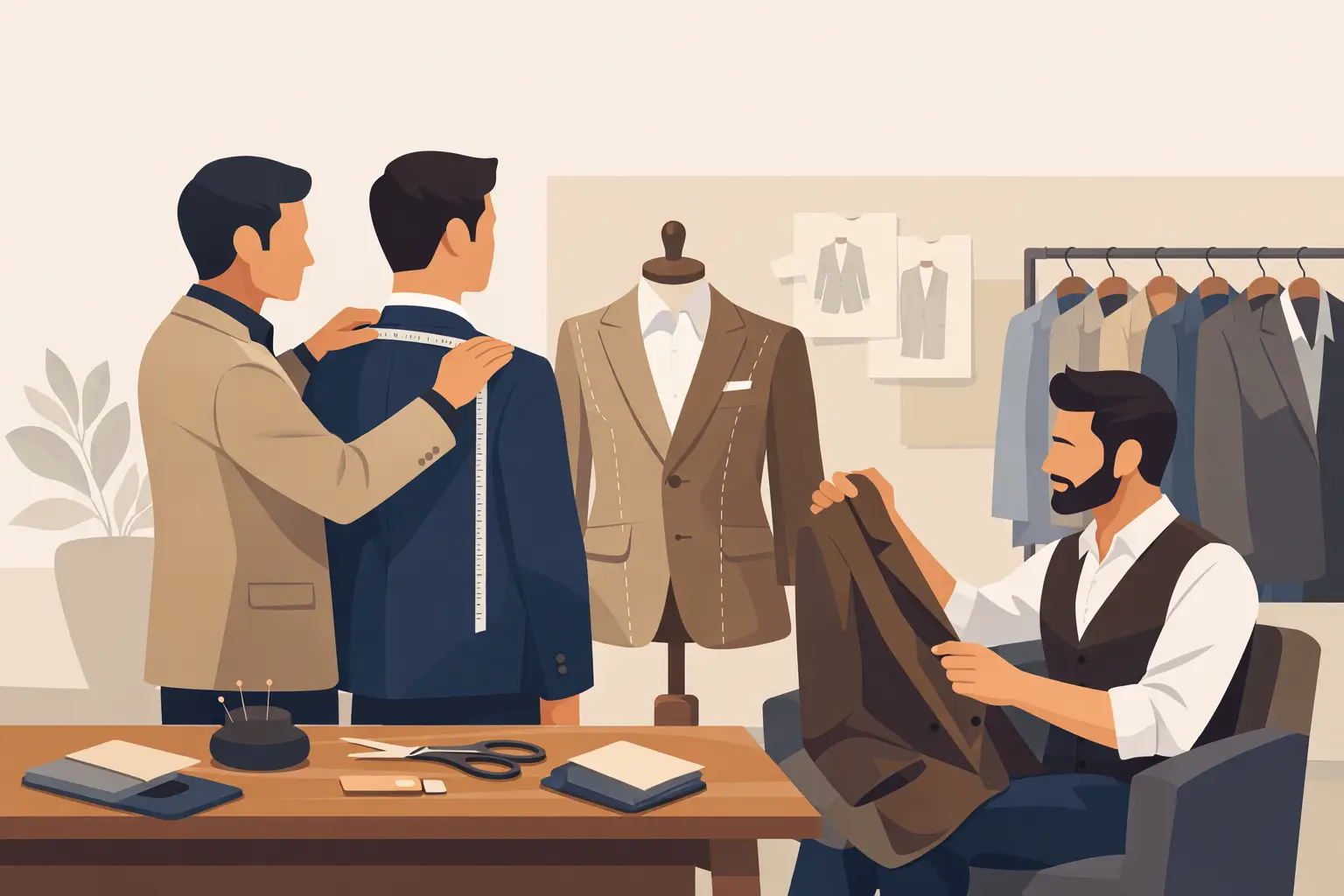
The opening appointment is part style conversation, part technical assessment. A tailor will discuss where the suit will be worn, how often, what image it needs to project, and how the client wants to feel in it. A boardroom suit requires different priorities from a wedding suit. Equally, a man building his first proper wardrobe may need versatility, while a returning client may want something more expressive in cloth or cut.
This is also where fabric, lining, lapel shape, pocket style, fastening, trouser design and finishing details begin to take shape. These choices are not decorative extras. They influence drape, formality, weight and how the suit performs over time. A sharper shoulder and structured chest create one impression. A softer construction with more natural drape creates another. Neither is universally right. It depends on the wearer, the occasion and the desired character of the garment.
Measuring and body assessment
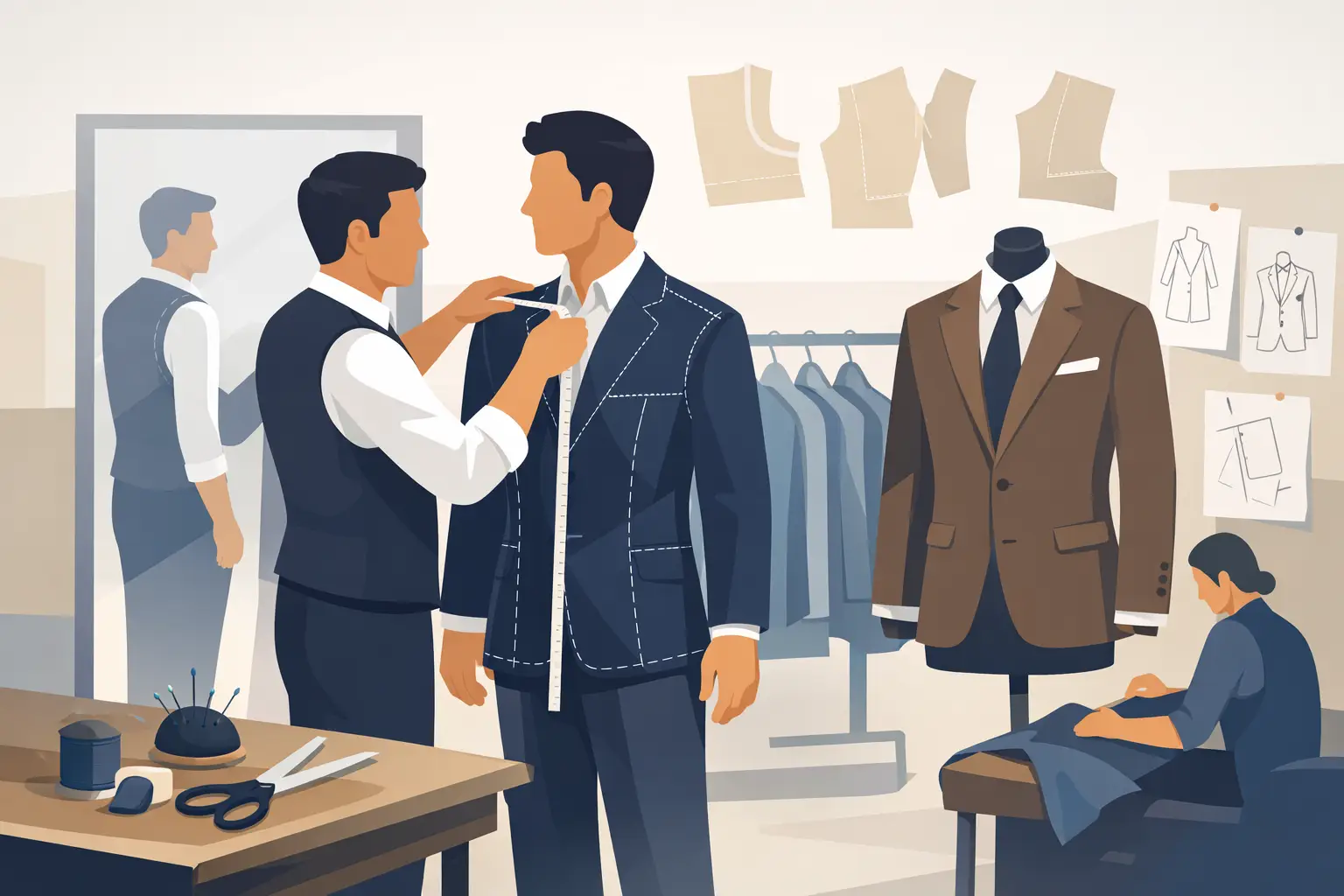
Once the design direction is agreed, measurements are taken in detail. This goes far beyond chest, waist and inside leg. The tailor studies posture, shoulder slope, arm position, seat shape, prominence of the shoulder blades, neck stance and the relationship between upper and lower body.
An experienced cutter is not just recording dimensions. He is reading the figure. Two men with the same nominal size can require entirely different patterns because one stands erect and broad through the chest while the other carries more shape through the abdomen and sits lower at the shoulder. Precision here saves compromise later.
Pattern cutting and cloth preparation
From those measurements and observations, an individual paper pattern is drafted. This is one of the defining features of proper bespoke tailoring. The pattern becomes the blueprint for how the suit will sit and move.
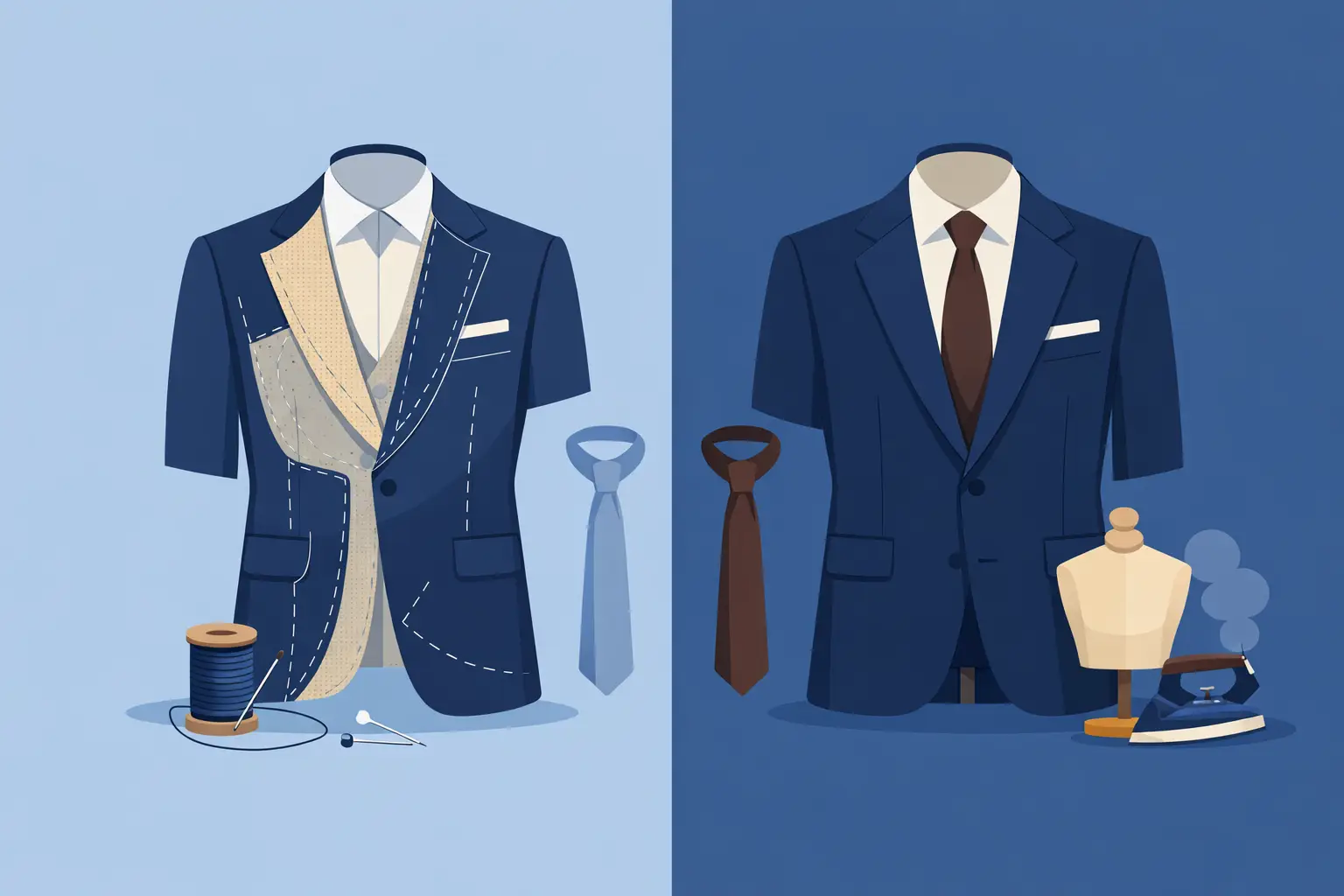
The chosen cloth is then cut with seam allowances and shaping in mind. At this stage, decisions about structure become especially important. Canvas, chest piece, padding and internal balance all affect the final silhouette. A suit intended for frequent business wear may benefit from resilient structure and a dependable drape. A wedding suit may lean towards a cleaner, more sculpted line with heightened visual presence.
The fittings themselves
The baste fitting
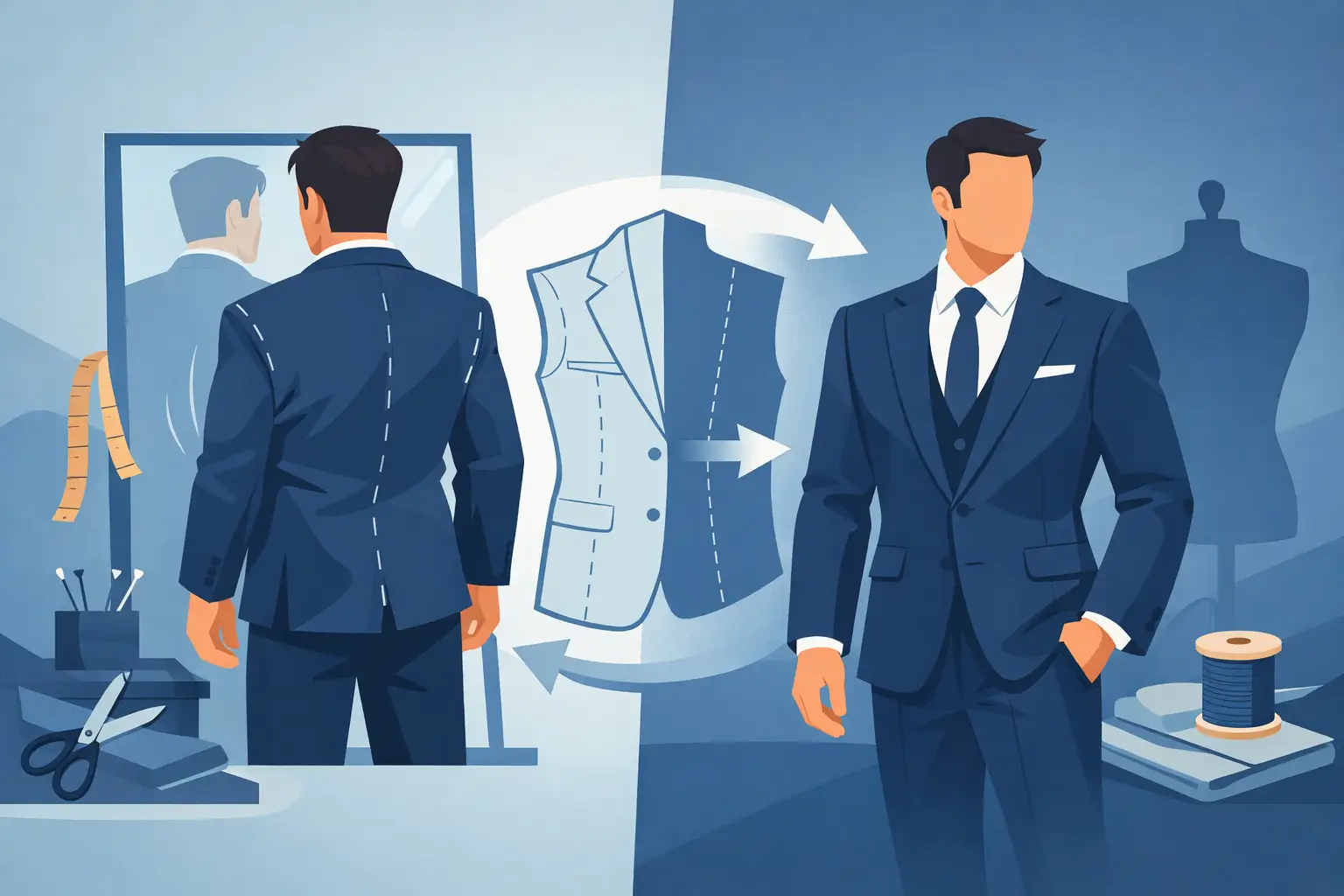
The first fitting often takes place when the suit is loosely assembled in a preliminary state, sometimes referred to as a baste fitting. This is where the garment begins to reveal whether the pattern is behaving as intended on the body.
At this point, the tailor checks balance through the front, back and sides. He observes how the coat hangs from the neck and shoulders, whether the chest is clean, whether the waist suppression is flattering without strain, and whether the skirt hangs evenly. Trouser rise, seat, thigh line and break are reviewed in equal detail.
For the client, this stage can be surprising. The suit is not meant to look finished. It may feel raw and slightly unfinished because it is. The purpose is correction, not polish. If the right shoulder needs adjustment, if one sleeve pitch is affected by the way the arm rests, or if the trouser balance changes when the client walks, this is the time to address it.
The forward fitting or second fitting
Once the initial corrections are made, the suit is reassembled with more of its final structure and shape. Now the fitting becomes more refined. The broad architecture should already be right, allowing attention to move to cleaner details.
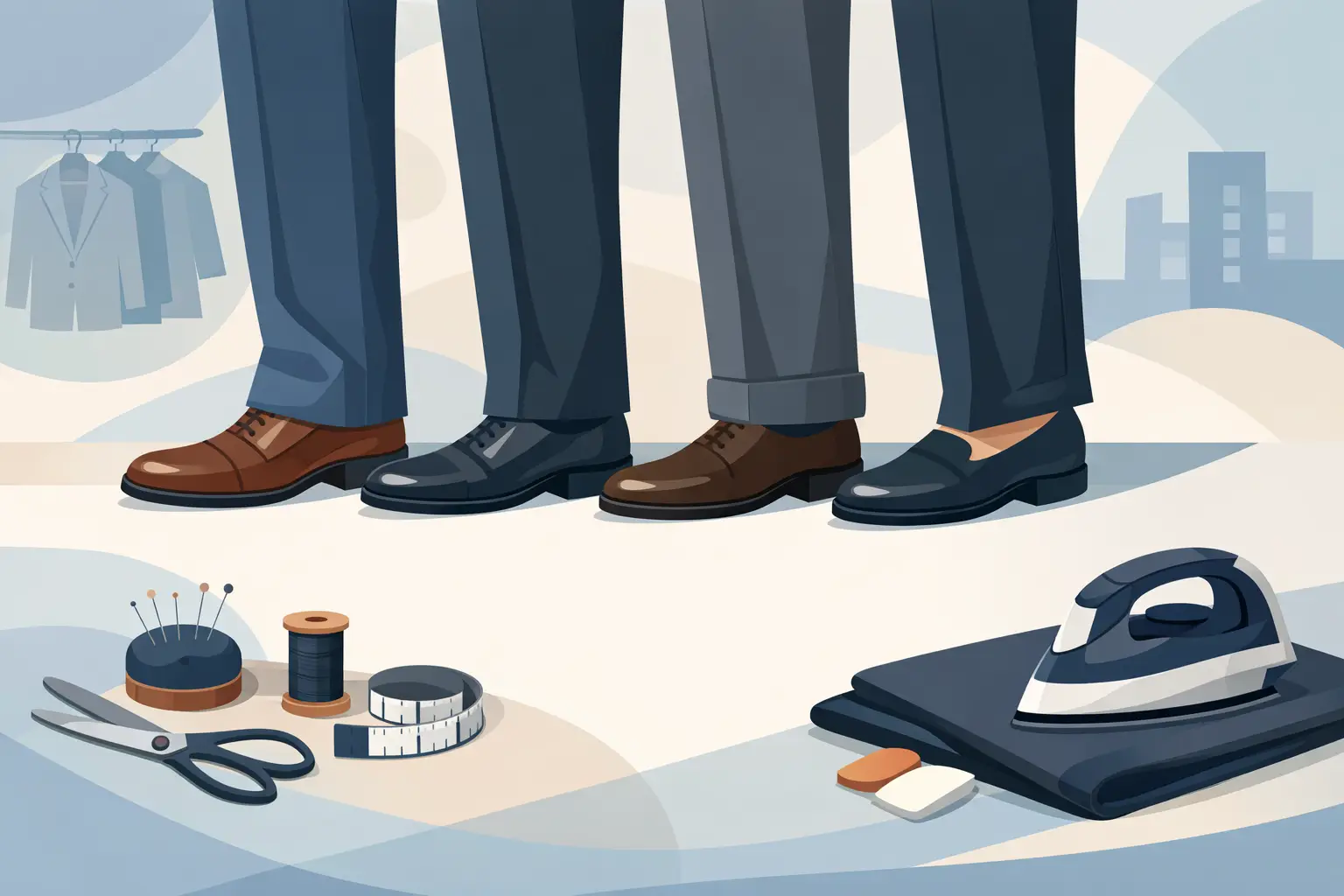
The collar should sit close to the neck without gaping. The lapels should roll with ease rather than buckle. The sleeve length must frame the shirt correctly, and the trouser line should fall cleanly without unnecessary drag. Small changes here can alter the whole impression of the suit. A quarter inch at the cuff, a touch more room across the back, a sharper taper through the waist – these are subtle on paper and transformative in wear.
The final fitting
The final fitting confirms that the garment now performs as one coherent whole. By this stage, the suit should feel settled on the body rather than imposed upon it. The client should be able to button the coat comfortably, sit without strain, and move naturally through the shoulders and arms.
This is also where finishing details receive proper attention. Button stance, pocket position, trouser hem, brace buttons, side adjusters and hand-finished elements all contribute to the final standard. In a premium tailoring house, these are not afterthoughts. They are part of the visual discipline that gives a bespoke suit its quiet authority.
What a great fitting should achieve
The best bespoke tailoring does not simply make a man look slimmer or broader, though it may do both depending on the brief. Its real achievement is visual harmony. The suit should align with the wearer’s proportions, flatter his stance and support the role the garment is meant to play.
For business wear, that might mean composure and credibility without stiffness. For wedding tailoring, it may mean presence, elegance and ease across a long day. For formalwear, it is usually about precision, restraint and confident line. In every case, comfort matters because discomfort always shows. A man tugging at his jacket or adjusting his waistband never looks fully assured.
Why bespoke involves judgement, not just measurements
This is the point often missed in simplified explanations of the bespoke suit fitting process explained online. Bespoke is not a mathematical exercise alone. Judgement is central to it.
Take waist suppression. Too little, and the coat lacks shape. Too much, and it appears strained or theatrical. The right amount depends on body type, cloth weight and personal taste. The same is true of trouser width, jacket length and shoulder expression. A fashionable choice may look striking for one season, but a more considered proportion often wears better over years.
That does not mean bespoke must be conservative. It means style works best when supported by sound cutting. A peak lapel can be bold and elegant. A softer shoulder can feel modern and relaxed. A tweed suit can carry country character without appearing heavy. The difference lies in how well those choices are edited for the individual.
How clients can get the most from the process
Honesty helps. If a suit is for a wedding, say whether you want classic polish or more personality. If it is for work, mention how often you travel, whether you sit for long periods, and if you prefer braces or a beltless trouser. Wear the shoes you expect to pair with the suit if possible, and the shirt style you are most likely to wear. These details give the fitting context.
It also helps to stay open to expert guidance. Clients often arrive with a strong visual reference, but what suits a celebrity campaign image may not suit a different frame, complexion or occasion. A good tailor will translate taste into something more flattering and enduring.
At Manndiip, this is where craftsmanship and styling work together. The goal is never just to produce a garment that fits in a technical sense. It is to create one that carries presence, distinction and confidence the moment it is worn.
A properly fitted bespoke suit should feel less like a purchase and more like a decision made well. When the line is right, the cloth is balanced, and the cut honours the man wearing it, dressing well stops being effort. It becomes part of how you present yourself to the world.