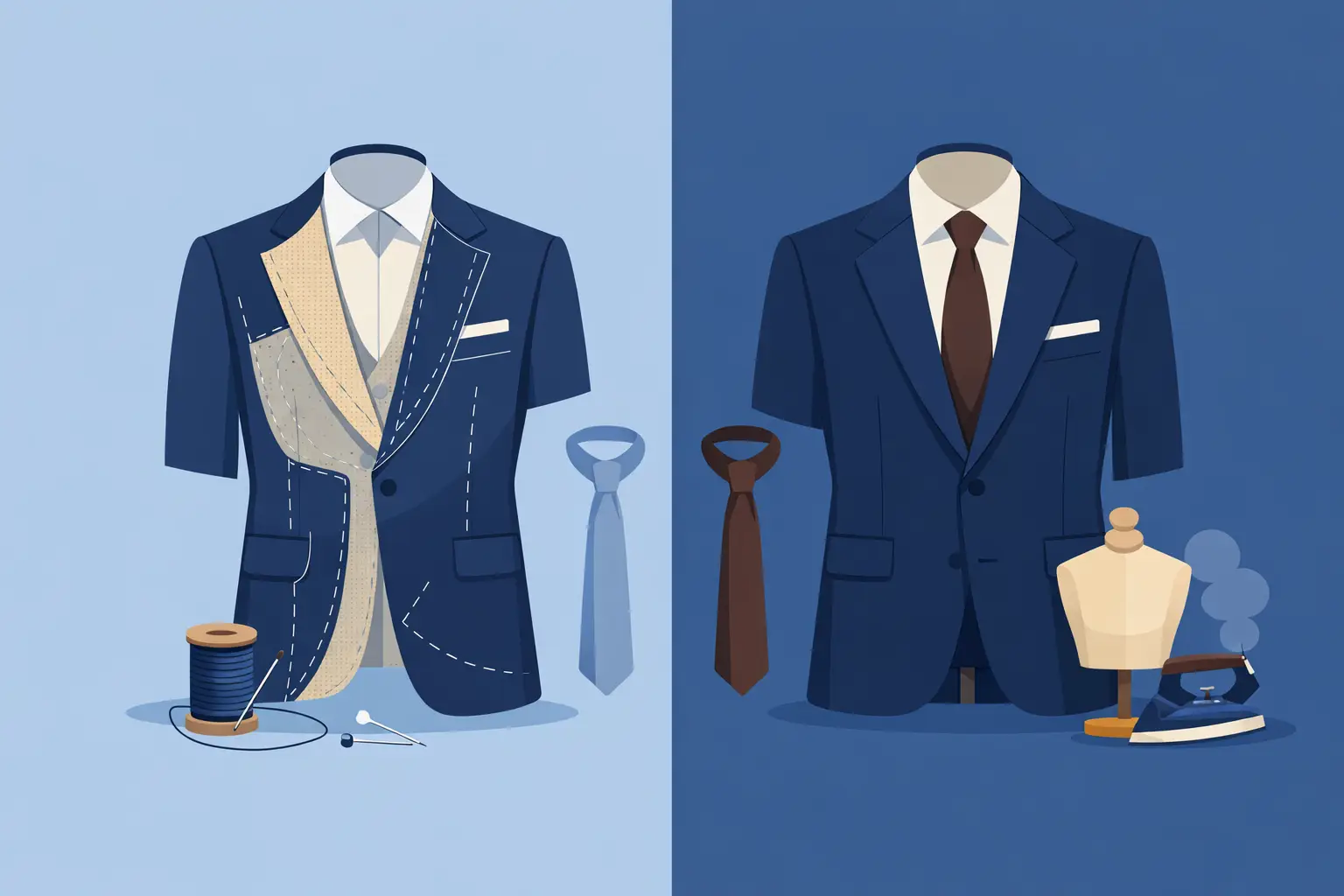

A crowded rail can still leave you with nothing appropriate to wear. That is usually the moment a man starts asking how to build a capsule suit wardrobe – not as a fashion exercise, but as a practical way to look consistently polished without owning a dozen forgettable suits.
A well-considered capsule wardrobe is not about austerity. It is about precision. Each suit, shirt, coat and accessory should earn its place by working harder, pairing more easily and presenting you at your best across business, formal and social settings. For men who value impeccable fit and quiet authority, that approach makes far more sense than buying reactively.
What a capsule suit wardrobe should do
A strong capsule suit wardrobe should cover three demands with ease: professional credibility, occasion dressing and day-to-day versatility. If one suit only works for one event, it may still be beautiful, but it is not doing much for the rest of your wardrobe.
The goal is not to reduce style to uniformity. It is to create a tightly edited foundation of garments that can be recombined with confidence. That usually means fewer pieces, better cloth, more thoughtful colour choices and a cut that supports your build rather than fighting it.
For most men, the sweet spot is between three and five suits, supported by shirts, ties, footwear, outerwear and a small number of well-made accessories. Whether you stop at three or build towards five depends on your working week, how often you attend weddings or formal events, and whether your office still expects tailoring as standard.
How to build a capsule suit wardrobe from the suit up
If you are deciding how to build a capsule suit wardrobe properly, start with the suits themselves before thinking about finer details. The foundation matters most.
1. Begin with navy
If you buy one suit first, make it a dark navy two-piece in a versatile cloth with enough structure to hold its shape well. Navy carries authority in business settings, photographs elegantly, and is easier to dress up or down than black. It works with white, blue and subtle striped shirts, and it pairs naturally with brown or black shoes depending on the exact tone.
The cut should be clean and balanced rather than trend-led. A slightly suppressed waist, well-proportioned lapels and neat shoulders will outlast any seasonal fashion. This is where bespoke or carefully judged custom tailoring proves its value, because the smallest adjustments in balance and proportion can change how assured a suit feels on the body.
2. Add a mid-grey suit
Your second suit should usually be mid-grey. It broadens the wardrobe immediately because it offers a different register from navy without becoming difficult to style. Grey is especially useful if you split time between corporate meetings, smart lunches and events where a dark business suit can look too severe.
Choose a plain cloth or a very restrained texture. Loud checks may charm you in the fitting room, but they limit repeat wear. A mid-grey suit with refined simplicity gives you room to express character through tie, shirt and pocket square instead.
3. Choose a darker formal option
The third suit depends on your life. For some men, that means a charcoal suit for senior business settings and evening functions. For others, particularly those attending black tie alternatives, winter weddings or more formal dinners, it may be a deep midnight or dark charcoal three-piece.
This is where occasion and profession begin to shape the capsule. If your diary is heavy with client-facing work, charcoal will likely serve you better than anything obviously statement-led. If ceremonies and evening events feature more often, a richer cloth or waistcoat combination may be the smarter investment.
4. Only then consider texture or pattern
Once the core three are in place, the fourth and fifth suits can introduce personality. This might be a subtle Prince of Wales check, a brown suit with real depth, or a tweed ensemble for country wear and cooler months. These pieces add richness, but they should come after the essentials, not before them.
That order matters. Men often buy the interesting suit first and then realise it cannot carry the weekly workload. A capsule wardrobe is built on reliability, then refined with character.
Fabric, weight and seasonality
Cloth selection is where many wardrobes become either highly efficient or quietly frustrating. A capsule should not force you into wearing the wrong weight for the season.
For year-round British wear, a mid-weight wool is usually the strongest starting point. It drapes cleanly, resists creasing better than many lighter cloths, and performs well across most temperatures. If you wear suits daily, you may later want lighter options for summer and a flannel or heavier wool for winter, but the first pieces should be broadly serviceable.
Texture also deserves thought. Smooth worsted cloth is the most versatile and formal, while hopsack or fresco can be excellent for warmer months and more relaxed business settings. Flannel offers softness and authority in autumn and winter, though it is less useful for high summer or very formal daytime occasions. There is no single perfect answer – only the cloth most aligned with how and where you actually dress.
Fit is not a detail. It is the whole point.
A capsule wardrobe fails quickly if the fit is mediocre. With fewer garments in rotation, each piece is seen more often and judged more closely. A suit that pulls across the button, collapses at the collar or breaks clumsily at the shoe does not become acceptable because the fabric is expensive.
The advantage of tailored clothing lies in proportion as much as measurement. The right shoulder expression, sleeve pitch, trouser line and jacket length all contribute to a cleaner silhouette. Men with athletic builds, sloping shoulders, prominent seat or asymmetry often discover that ready-to-wear can only do so much. Bespoke and precise alterations exist to correct exactly those issues.
That is also why a capsule wardrobe often costs less in the long term than repeated compromise. When each garment is meticulously crafted to sit properly on the body, you wear it more, replace it less often and feel more certain every time you put it on.
The supporting pieces that make the wardrobe work
Suits get the attention, but the shirts and accessories determine how many combinations you can create.
Start with white and pale blue shirts in high-quality cotton. They carry most of the workload and suit almost every business and formal requirement. After that, a subtle stripe and perhaps a soft neutral can add variety. Keep collars elegant and proportionate to your jacket lapels.
Ties should follow the same logic as the suits: versatile first, expressive second. A navy grenadine, a burgundy silk and a restrained patterned option will cover most settings. Pocket squares are best used with discipline. One white linen square and one or two handmade silk or printed options are enough to add distinction without tipping into excess.
Your shoes should be equally considered. Black Oxfords remain the formal anchor. Dark brown Oxfords or Derbies pair effortlessly with navy and grey and often feel slightly more relaxed for day wear. Belts, if worn, should be refined and well matched, while leather braces can add both comfort and a quietly sophisticated finish when styled correctly.
Do not neglect outerwear. A sharply cut overcoat in navy, charcoal or camel extends the wardrobe through the colder months and protects the line of the suit beneath. It should feel like part of the same visual language, not an afterthought thrown on at the door.
Common mistakes when building a capsule suit wardrobe
The most common mistake is buying for aspiration alone. There is nothing wrong with ambition in dress, but a double-breasted chalk stripe is no substitute for a dependable navy suit if you need tailoring for work three times a week.
Another mistake is confusing minimalism with deprivation. A capsule is not impressive because it is small. It is impressive when every piece is beautifully chosen and fully useful. Three excellent suits are better than eight average ones, but only if those three genuinely cover your life.
The third mistake is ignoring maintenance. Rotation, pressing, proper hanging and timely alterations all protect the wardrobe. Even exceptional tailoring loses authority when it is shiny at the seat, frayed at the hem or carrying the memory of old proportions after your body has changed.
Build slowly and build well
The best capsule wardrobes are rarely bought in one sweep. They are assembled with judgement, beginning with what you will wear most and expanding where there is a clear gap. That slower approach usually leads to better decisions on cloth, cut and purpose.
For a man refining his wardrobe with care, the question is not how many suits he can own. It is whether every garment contributes to a sharper, more self-assured version of him. If you build with that standard in mind, the wardrobe becomes more than efficient – it becomes unmistakably your own.
If you want that process guided with precision, a personalised tailoring consultation at Manndiip can help translate lifestyle, fit and occasion into a wardrobe that feels resolved rather than merely assembled.