
A waistcoat tells the truth about a suit. Jackets can disguise a little extra cloth, and trousers can be adjusted with relative ease, but a waistcoat sits close to the body and reveals immediately whether the fit is considered or careless. If you have ever wondered how tight should a waistcoat fit, the answer is simple at first glance: close, clean, and controlled. The more precise answer lies in how it behaves when you stand, sit, breathe and move.
A well-cut waistcoat should feel secure without feeling restrictive. It ought to shape the torso, sharpen the line of the chest, and create a neat transition to the waistband of the trousers. What it should not do is pull, gape, buckle or leave excess cloth floating around the midsection. The right fit is not about making it as tight as possible. It is about creating a refined silhouette that looks composed from every angle.
How tight should a waistcoat fit through the body?
Through the chest and waist, a waistcoat should sit close enough to follow your shape, but never so firmly that the buttons strain. When buttoned, the front should lie flat against the shirt. You should not see horizontal pulling lines radiating from the buttons, nor should the cloth separate slightly at the fastening points. That is usually the clearest sign that the garment is too tight.
At the same time, too much room is equally unflattering. If the cloth blouses out at the sides or balloons at the lower front, the waistcoat is too loose. A waistcoat is meant to add structure, not softness. The ideal fit gives you a trim, elegant profile while still allowing a full breath and comfortable movement through the ribcage.
This is where many ready-to-wear waistcoats fall short. They are often cut with generic proportions, which means a man with a broader chest, a fuller stomach, or a more athletic back can end up choosing between too tight in one area and too loose in another. Proper balance matters. The fit should feel intentional across the whole torso, not merely acceptable at the button stand.
The buttons should sit flat, not fight for space
A properly fitted waistcoat should button smoothly with no tension. You should be able to fasten it easily while standing, and it should remain neat without pulling when you are in conversation, walking into a meeting, or standing through a wedding ceremony. If you need to hold your breath to close it, it is too small. If it fastens but the fronts pull apart as soon as you move, it is still too small.
Equally, a waistcoat should not hang away from the shirt once buttoned. Gaps along the chest or around the lower ribs weaken the line of the suit and make the whole outfit feel less polished. A cleaner fit through the front gives the wearer that composed, sculpted look associated with true sartorial sophistication.
As a rule, the bottom button is often left undone on single-breasted waistcoats, particularly in more traditional tailoring. Even so, the fit above it still needs to be clean. Leaving the final button open should look elegant and deliberate, not like a workaround for a waistcoat that is under strain.
Length matters as much as tightness
When men ask how tight should a waistcoat fit, they often focus only on the waist. In practice, length is just as important. A waistcoat should cover the waistband of the trousers completely, with no shirt showing between the two. That small strip of exposed shirt instantly disrupts the refinement of a three-piece suit.
The length should also be proportionate to your height and rise of trouser. A waistcoat that is too short can make the torso appear compressed and unfinished. One that is too long can cut into the line of the legs and feel heavy. In bespoke tailoring, this is adjusted carefully so the waistcoat complements both the jacket and the wearer’s build.
Higher-rise trousers generally allow a more elegant waistcoat line, because the two garments meet naturally at the waist. Lower-rise trousers can make correct waistcoat length more difficult, especially off the peg.
The armholes and sides should feel neat
A good waistcoat sits high under the arm without digging in. If the armholes are cut too low, the waistcoat can feel sloppy and expose too much shirt. If they are too high and tight, the garment becomes uncomfortable quickly, particularly when sitting or reaching forward.
At the sides, the waistcoat should skim the body. It should not flare out at the hips or pull back sharply from the front. Side seams that sit neatly help create a flattering V-shape through the torso. This is especially important for men wearing waistcoats in business and formal settings, where the impression needs to be quietly authoritative rather than fussy.
The back also plays a part. Many waistcoats have a rear adjuster, but this is for fine-tuning, not rescue work. It can tidy the shape slightly at the back waist, yet it cannot correct a front that is too tight or a body that is cut in the wrong proportion.
How should a waistcoat feel when sitting?
A waistcoat should feel closer when you sit down. That is normal. Your torso expands, the front shortens slightly, and the cloth is asked to do more. The key question is whether it still feels composed or starts to resist your posture.
If the buttons pull sharply, the fronts buckle, or the armholes pinch, it is too tight. If the waistcoat remains smooth enough and you can sit comfortably through dinner, a ceremony or a day at the office, the fit is likely correct. Tailoring is never static. It must work in motion as well as at attention.
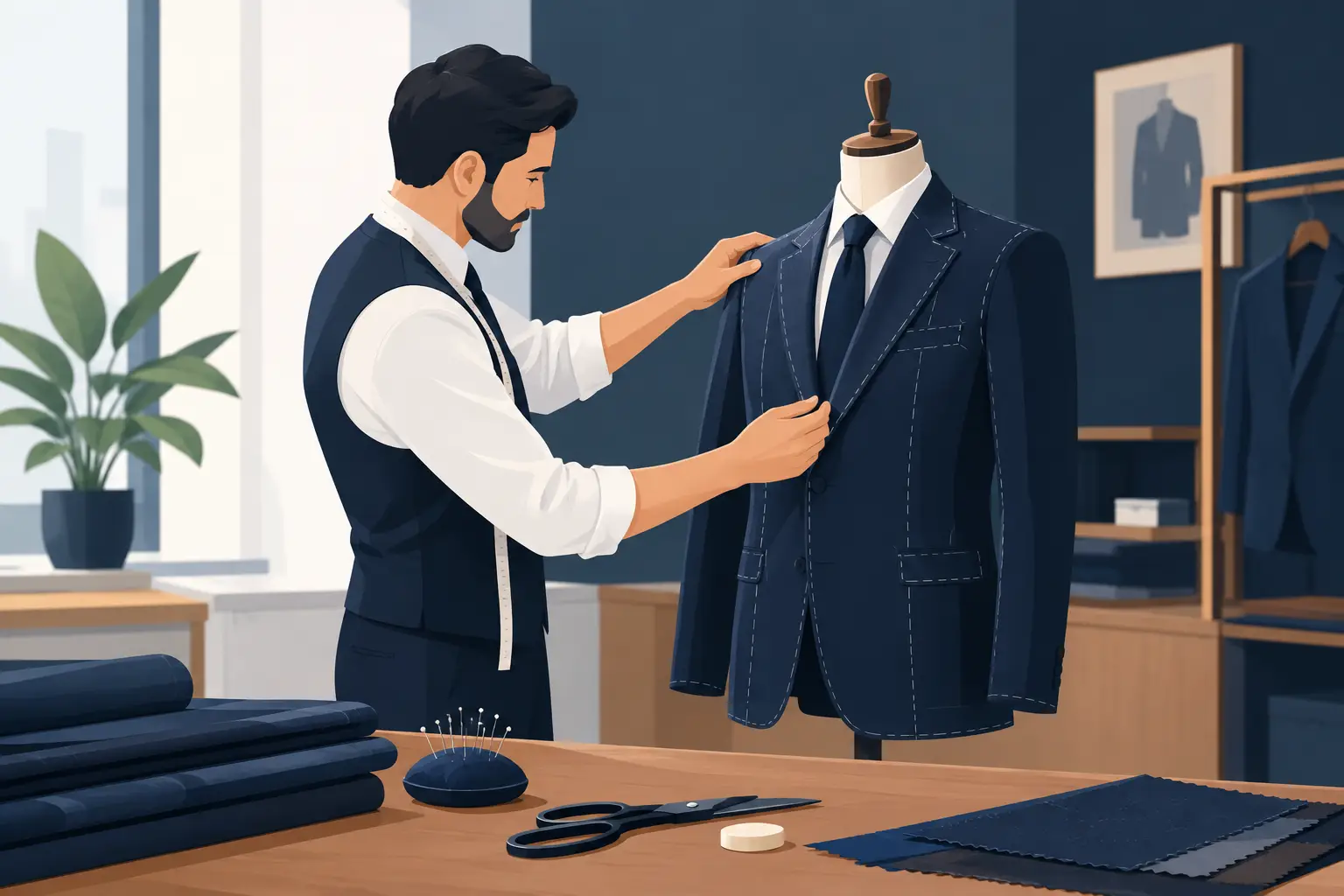
This is one reason a fitting with an experienced cutter is so valuable. The best fit is judged not only by measurements, but by how the garment behaves on the body. Precision comes from seeing where the cloth settles, where the balance shifts, and where the shape needs refining.
Different body shapes need different solutions
There is no single universal answer to how tight should a waistcoat fit because men are built differently and wear tailoring for different purposes. A lean man may benefit from a little more shape through the waist to create presence. A broader man may need slightly more ease through the front so the waistcoat sits cleanly without pulling.
For men with a prominent stomach, the goal should not be to force a severe taper. That usually causes the fronts to spread and the hem to kick out. A more elegant approach is to shape the waistcoat in a way that follows the body cleanly, giving structure without strain. Good tailoring flatters by respecting proportions, not fighting them.
For athletic builds, the challenge is often the drop from chest to waist. Ready-made waistcoats may fit the chest but then hang loose around the middle, or fit the waist while feeling constrained higher up. This is where bespoke or expert alterations make the most visible difference.
Cloth, cut and purpose all affect the fit
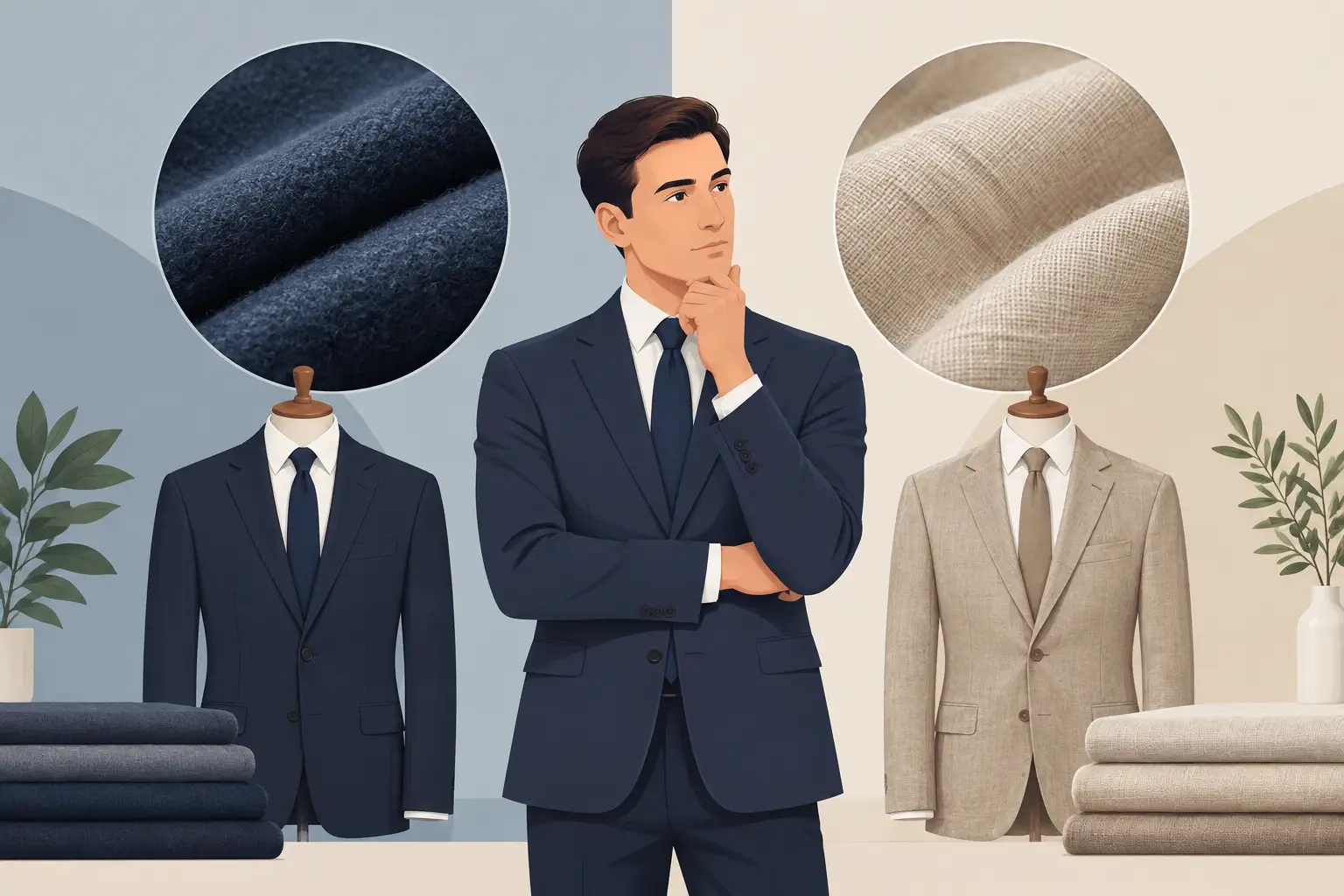
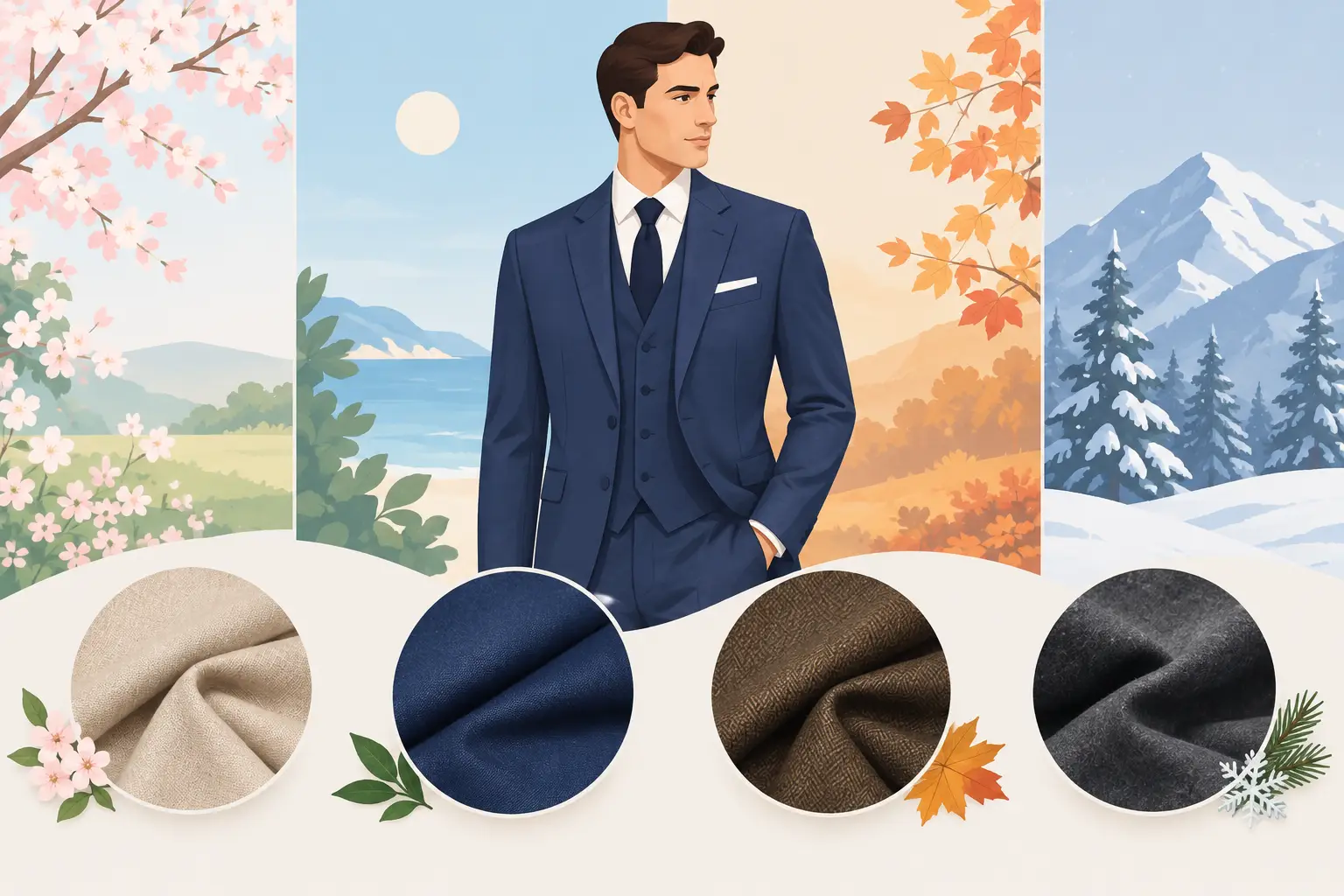
A lightweight linen waistcoat for summer will behave differently from a structured wool waistcoat for business wear or a more substantial tweed piece for country dressing. Softer cloths can reveal tension more quickly, while heavier fabrics may hold their shape even when the fit is slightly off.
The cut matters too. A double-breasted waistcoat tends to feel more enclosing than a single-breasted one. A low-cut evening waistcoat has different visual priorities from a higher-closing business style. Wedding waistcoats are often worn for long days with plenty of standing, sitting and movement, so comfort matters as much as elegance.
That balance is where craftsmanship shows. The finest waistcoats do not merely fit in the fitting room. They hold their line across the demands of real wear.
The clearest signs your waistcoat fits properly
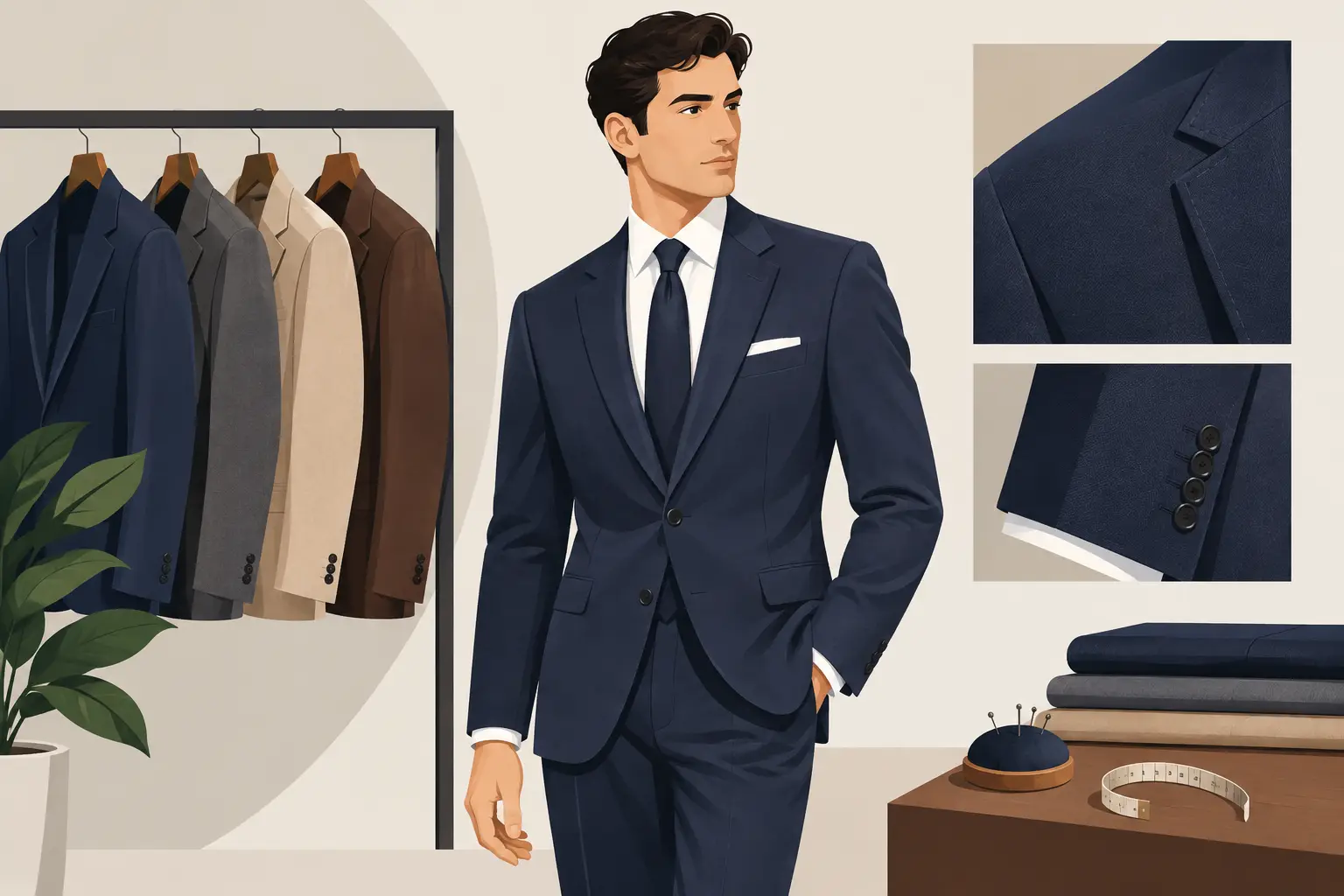
A good waistcoat looks calm. The front lies flat, the buttons fasten without effort, the waistband is covered, and the chest feels shaped rather than squeezed. You can breathe, sit and move naturally, but the garment still maintains a sharp silhouette.
If there is pulling at the buttons, gaping at the armholes, loose cloth at the waist, or shirt visible above the trousers, the fit needs attention. Sometimes that means a small alteration. Sometimes it means the pattern itself is wrong for your frame.
At Manndiip, this is precisely why fit is approached as both technical discipline and personal styling exercise. A waistcoat must serve the body in front of us, the occasion it is intended for, and the standard the wearer expects from tailored clothing.
The right waistcoat should never feel like armour, nor should it feel forgettable. It should sit with quiet confidence, adding shape, polish and authority the moment you button it up.