A jacket can look expensive on the hanger and still fall short the moment you put it on. The shoulder may sit too wide, the waist may collapse, or the sleeve might finish awkwardly over the cuff. That is where the question of made to measure vs alterations becomes more than tailoring jargon. It becomes the difference between simply owning clothes and wearing garments that carry authority.
For many men, the two services sound similar because both improve fit. In practice, they solve very different problems. One starts with a new garment built around your proportions. The other refines an existing piece so it sits better on the body you have now. Knowing which route to choose can save time, money and disappointment, particularly when the garment in question is meant for work, a wedding or a formal event where every detail is visible.
Made to measure vs alterations: the core difference
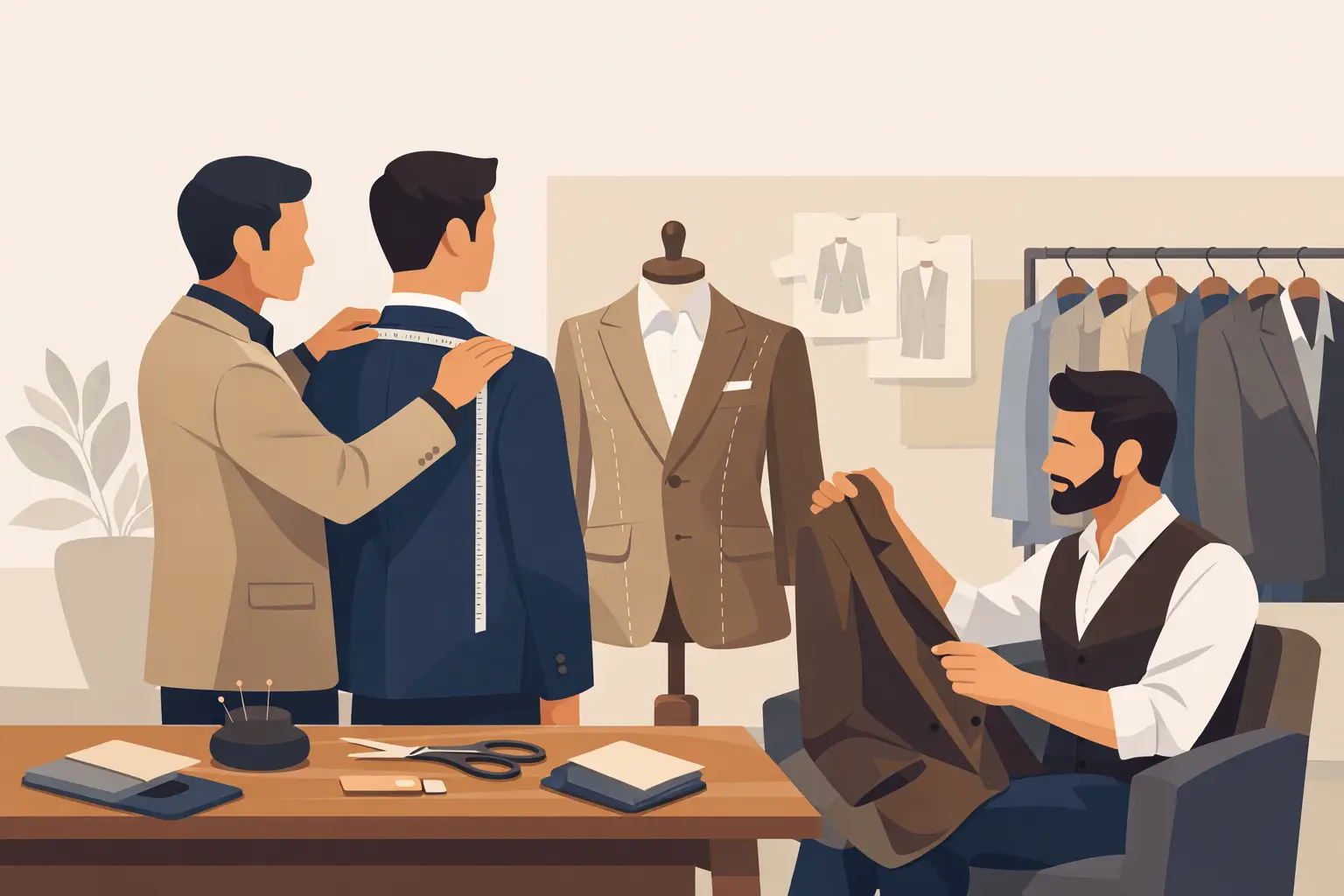
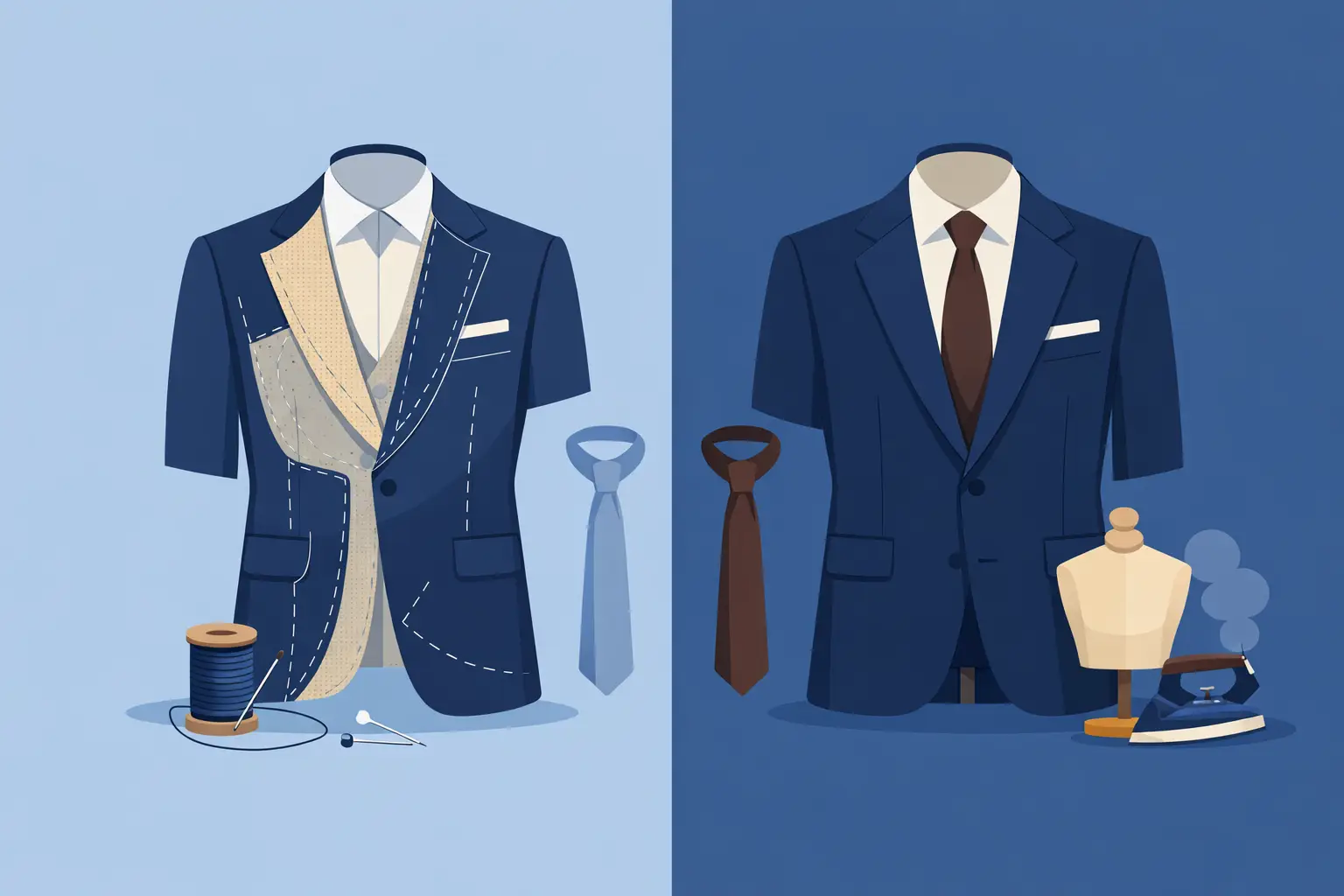
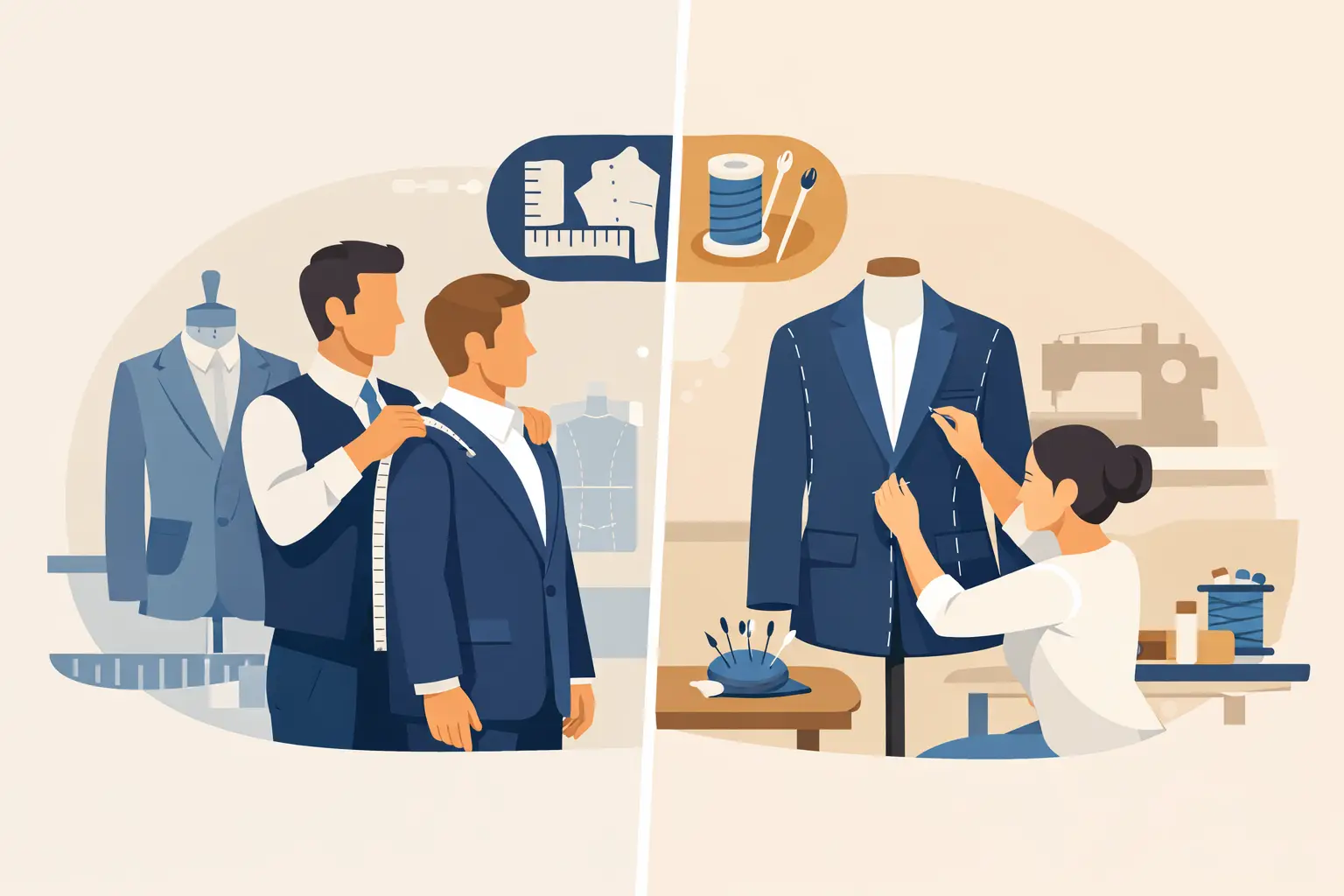
Made to measure begins before the garment exists. A base pattern is selected, then adjusted to your body measurements, posture and fit preferences before the suit, jacket, shirt or coat is cut and assembled. You are not merely buying a standard size and asking for a few tweaks. You are commissioning a garment that is shaped with your frame in mind from the outset.
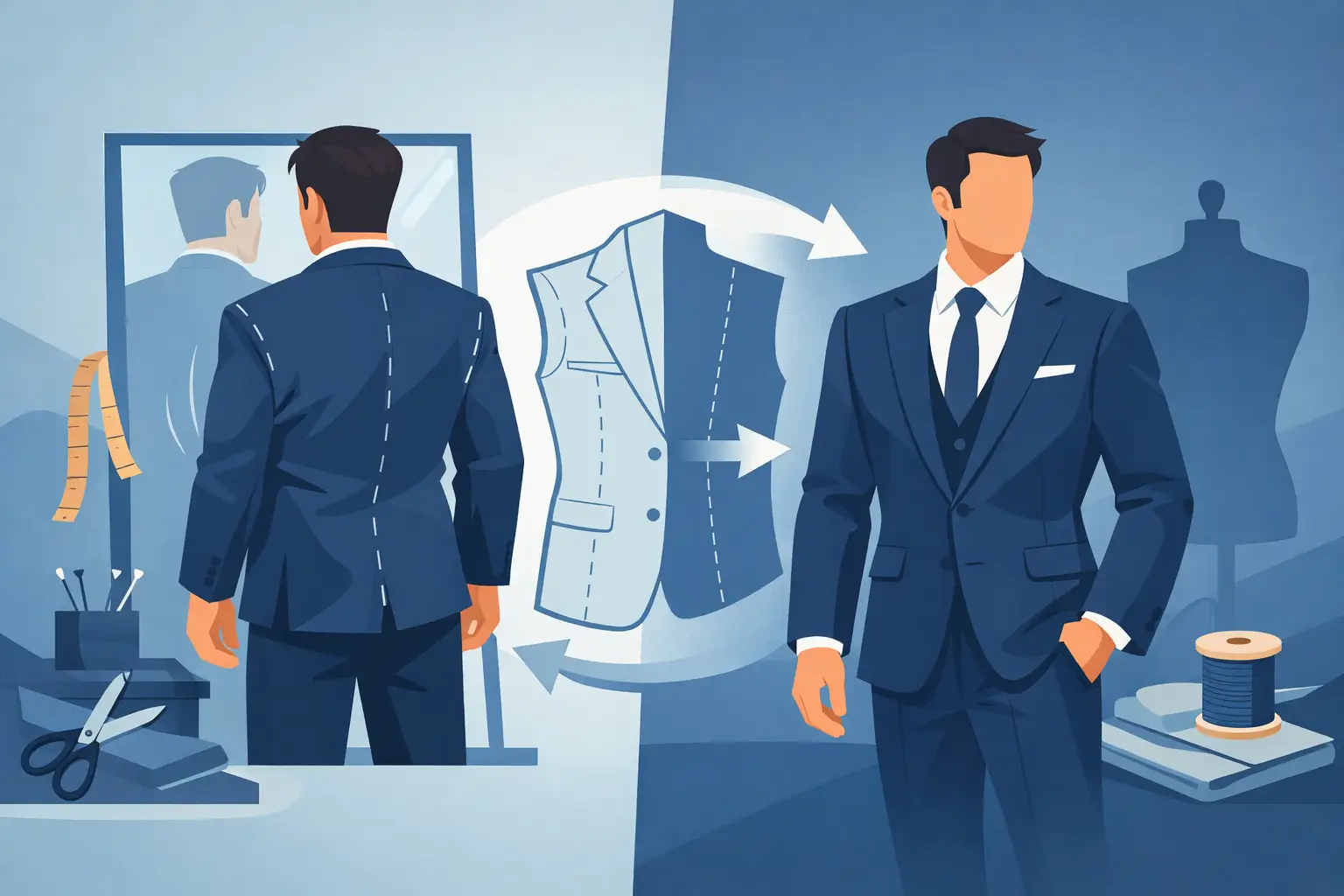
Alterations, by contrast, begin with a finished garment. That garment may be ready-to-wear, vintage, inherited, or even made to measure from a previous commission. The tailor works within the limits of what is already there – its seam allowances, balance, construction and cloth. Alterations can improve a great deal, but they do not turn every off-the-peg purchase into a clean-sheet custom piece.
This is the point many clients only discover after buying a suit they hoped could be “fixed” later. Some elements are straightforward to refine. Trouser hems, waist suppression, sleeve length and tapering can all make a dramatic difference. But if the chest is collapsing, the armhole is cut too low, or the shoulder line is fundamentally wrong, the result will always be a compromise.
When made to measure is the better investment
If the garment matters, made to measure usually repays the decision. A business suit worn weekly, a wedding suit photographed from every angle, or an overcoat intended to last several seasons all benefit from being conceived properly rather than corrected afterwards.
The advantage is not simply that it fits more neatly. It is that the whole garment is proportioned correctly. The button stance can flatter your torso. The lapel width can balance your shoulders. The trouser rise can work with your height and shape. The coat length can create presence rather than cut you off visually. These are not finishing touches. They are structural decisions.
Made to measure also gives you control over style and function. A man who spends his week in the City may need a different drape, cloth weight and pocket configuration from someone commissioning a three-piece wedding suit or a tweed jacket for country wear. The purpose of the garment informs the pattern, fabric and finishing from the beginning.
For first-time buyers, this often brings reassurance. You are not expected to know every technical term. A good tailoring house guides you through cloth, silhouette and detail so the final result feels personal, refined and entirely wearable. That guidance is part of the value.
When alterations are exactly the right choice
Alterations have their own place and should not be treated as a lesser service. In many wardrobes, they are essential. If you already own a quality suit that fits reasonably well but needs sharpening through the waist, shortening at the sleeve or a cleaner trouser line, alterations are often the most sensible route.
They are also valuable when your body changes. Weight fluctuation, changes in training, or shifts in how you want a garment to sit can all justify revisiting pieces you already own. A jacket that once felt correct may now need more shape. Trousers may require adjustment at the waist or seat. Shirts may benefit from suppression through the body for a cleaner line under tailoring.
For occasionwear, alterations can be particularly useful when timing is tight. If a suit is already in your wardrobe and the event is near, an experienced tailor can often bring it back into form far more quickly than commissioning a new garment.
There is also the matter of sentiment. Some pieces are worth preserving because of their cloth, provenance or personal history. In those cases, alterations are not simply practical. They are restorative.
The limits of alterations
The most useful way to think about alterations is this: they can refine proportion, but they cannot rewrite architecture. If the shoulder is too broad, the gorge sits oddly, the collar will not hug the neck, or the balance is wrong front to back, the work becomes more complex, more expensive and sometimes not worthwhile.
This is why fit should never be judged by one measurement alone. A jacket can feel roomy and still be impossible to alter elegantly if its structure is at odds with your frame. Equally, a pair of trousers with generous seam allowance may be reshaped beautifully even if they look unpromising at first glance.
Construction matters as much as size. Fused garments can be less forgiving than canvassed ones. Delicate cloth may not tolerate repeated intervention. Patterned fabrics such as checks require careful alignment when taking in seams or shortening sleeves. A precise result depends on whether the garment was worth building on in the first place.
Made to measure vs alterations for different wardrobe needs
For business dressing, made to measure often makes the stronger case. Daily wear exposes every flaw quickly. A collar that lifts away from the neck, a trouser waist that shifts through the day, or a jacket that strains when buttoned all undermine the polished presence professional dressing relies on. If you wear tailoring regularly, a proper made-to-measure foundation usually offers better long-term value.
For weddings, the decision depends on significance and timing. If you are the groom, made to measure is usually the right answer. The garment must perform from morning through late evening, photograph impeccably and reflect the tone of the occasion. If you are a guest with a good suit already in hand, alterations may be all that is needed.
For formalwear, there is little room for approximation. Dinner jackets and black tie trousers rely on exact proportion. Satin facings, sleeve exposure, trouser line and jacket suppression all need to be balanced carefully. A modest alteration can sharpen an existing piece, but if the foundation is wrong, the elegance never quite arrives.
For casual or everyday items, alterations often make perfect sense. Denim hemming, waist adjustments and small refinements to shirts, skirts or dresses can extend the life of garments significantly. Precision still matters, but the cost-benefit calculation is different from that of a suit designed to carry status and occasion.
Cost, value and the hidden false economy
Clients sometimes compare the price of made to measure with the price of an alteration and assume the cheaper option is automatically better value. That is understandable, but not always accurate.
If you buy a mediocre suit and spend repeatedly trying to correct it, you may still end up with a garment that never feels entirely right. The cloth may be ordinary, the balance may remain off, and the finishing may limit how far the tailor can take it. What looked economical becomes expensive through frustration.
A well-made garment commissioned properly tends to earn its keep more gracefully. It fits better, wears better and asks less of you each time you put it on. That is particularly true when the garment forms part of your working identity or marks a once-in-a-lifetime occasion.
On the other hand, not every wardrobe need requires a fresh commission. If the garment is fundamentally sound, alterations can deliver exceptional value. The smart decision is not about spending more. It is about spending in the right place.
How to decide with confidence
If you are choosing between made to measure and alterations, start with three questions. Is the garment already good in cloth and construction? Is the fit problem localised, such as sleeve length or waist suppression, or is it structural? And how important is the garment to your image or occasion?
If the piece is well made and only needs refinement, alterations are often the elegant answer. If the garment matters deeply and the fit issues begin at the shoulder, chest or overall balance, made to measure is the wiser path.
At Manndiip, this distinction is part of the consultation itself. A client should be told honestly whether a garment is worth altering or whether it deserves to be made properly from the beginning. That candour protects the wardrobe as much as the budget.
Good tailoring is not about forcing every client towards the same service. It is about reading the garment, the body and the purpose with precision. Sometimes that means reshaping what you own. Sometimes it means starting afresh so the final result carries the quiet confidence only true fit can create.
The best choice is the one that lets your clothes look intentional the moment you walk into the room.