A shirt can look expensive on the hanger and still fail the moment you put it on. The collar pinches, the cuff disappears under the jacket, the chest pulls when you move, and the whole effect is lost. That is exactly why a proper guide to bespoke shirt measurements matters – not as a technical exercise, but as the foundation of a shirt that feels composed, comfortable and unmistakably yours.
A bespoke shirt is not simply a standard pattern adjusted up or down. It is a garment built around posture, proportion, movement and preference. Two men with the same chest size may need entirely different shirts if one has a forward shoulder, a prominent chest, longer arms or a preference for a cleaner, closer silhouette. Good measurements capture the body. Great measurements capture how the body lives inside the garment.
Why a guide to bespoke shirt measurements matters
The quality of a bespoke shirt is judged long before anyone notices the cloth or the finishing. It starts with how the collar sits around the neck, how the shoulder line follows the body, and whether the sleeve and cuff meet the jacket correctly. If those areas are wrong, even the finest cotton cannot rescue the result.
Measurement is also where elegance and practicality meet. A business shirt needs enough room for a full day at a desk, in meetings and on the move. A wedding shirt may call for a sharper, more sculpted line under a dinner jacket or morning coat. A casual bespoke Oxford can tolerate a little more softness. Precision is never about making everything tight. It is about making every dimension intentional.
The core bespoke shirt measurements
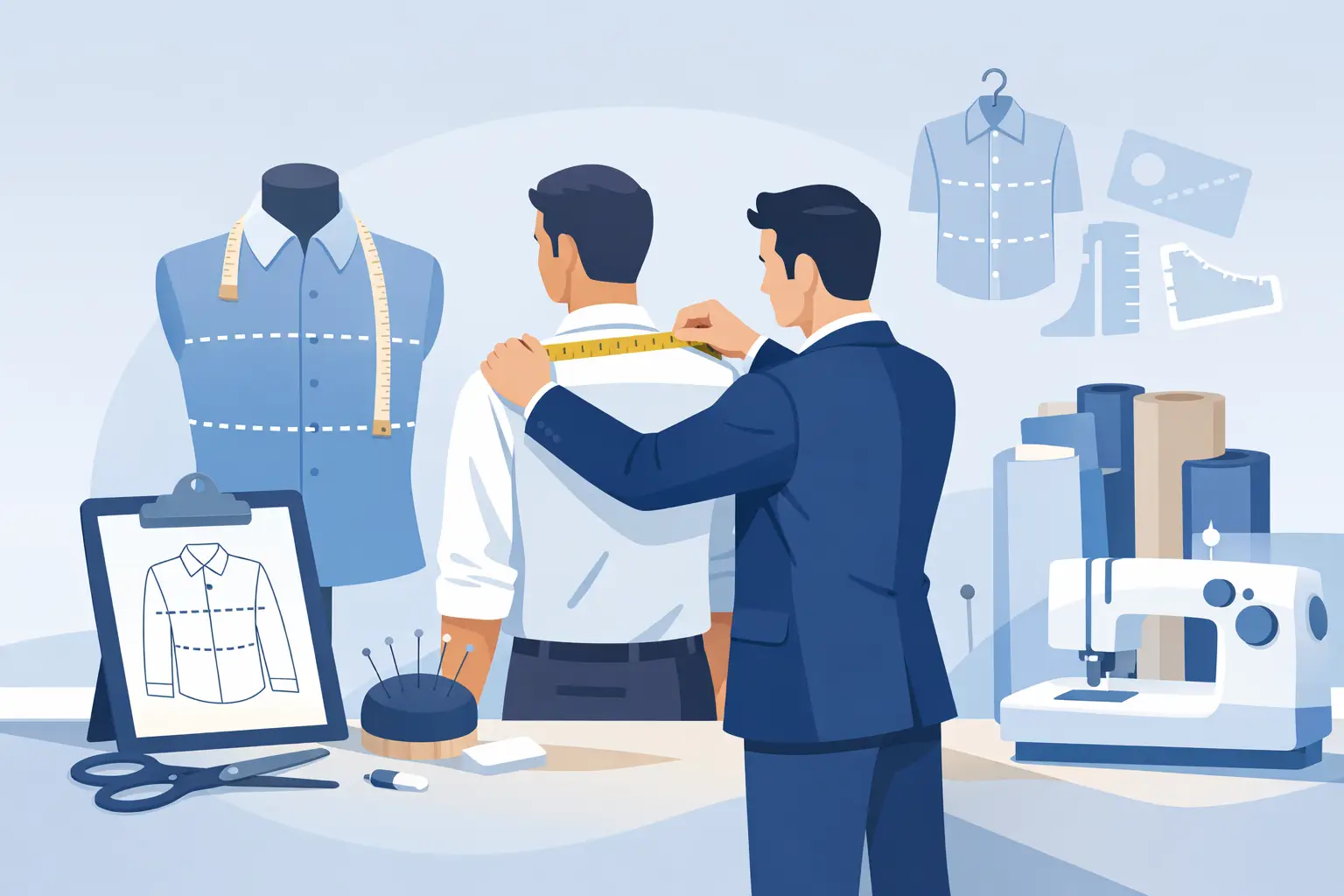
The first and most obvious measurement is the neck. This determines collar comfort, but it should never be treated in isolation. A collar that measures correctly when standing stiffly can still feel restrictive once the shirt is buttoned, tied and worn for several hours. The right neck measurement allows breathing room while keeping the collar clean against the neck without visible gaping.
Chest measurement comes next, though this is less simple than wrapping a tape around the fullest part of the torso. A shirtmaker considers the chest in relation to shoulder shape, scapula prominence and how much ease is required. A fitted business shirt for wear under tailoring needs control through the chest without strain at the placket. Too much cloth creates billow and breaks the line of the jacket. Too little causes pulling at the buttons.
The waist is equally important, particularly for men who want a refined silhouette. Off-the-peg shirts often assume a generic drop from chest to waist, which is why so many shirts balloon around the midsection or, conversely, cling awkwardly. Bespoke measuring accounts for whether you prefer a clean drape, a close cut, or a little extra comfort when seated.
Hip measurement affects how the shirt falls below the waist and whether it stays tucked in properly. This is often overlooked, yet it makes a considerable difference for men who wear shirts all day with tailored trousers. If the shirt is too narrow at the hip, it pulls and rides up. Too wide, and it bunches unattractively.
Shoulder width sets the visual framework of the shirt. The shoulder seam should follow the natural shoulder point as closely as possible, but posture changes the ideal placement. Sloping shoulders, square shoulders and one shoulder sitting lower than the other all need to be considered. This is one of the clearest distinctions between a truly bespoke approach and a generic made-to-measure adjustment.
Sleeve length is another area where precision shows. The correct measurement depends not just on arm length but on how the sleeve hangs from the shoulder, how much cuff you want visible under a jacket, and whether the shirt is intended mainly for suiting or standalone wear. One arm is often slightly longer than the other, and a well-cut shirt quietly accounts for that.
Cuff measurement shapes both comfort and finish. A cuff should pass over the watch side if required, sit neatly at the wrist bone and complement the wearer’s preference, whether that is a rounded barrel cuff for business or a more formal double cuff. The goal is ease without sloppiness.
Shirt length matters for balance and function. A shirt worn primarily tucked into high-waisted tailored trousers may need a different length from one designed to sit neatly with chinos. This is where style intention starts to influence the measurement process directly.
What a tailor is really assessing
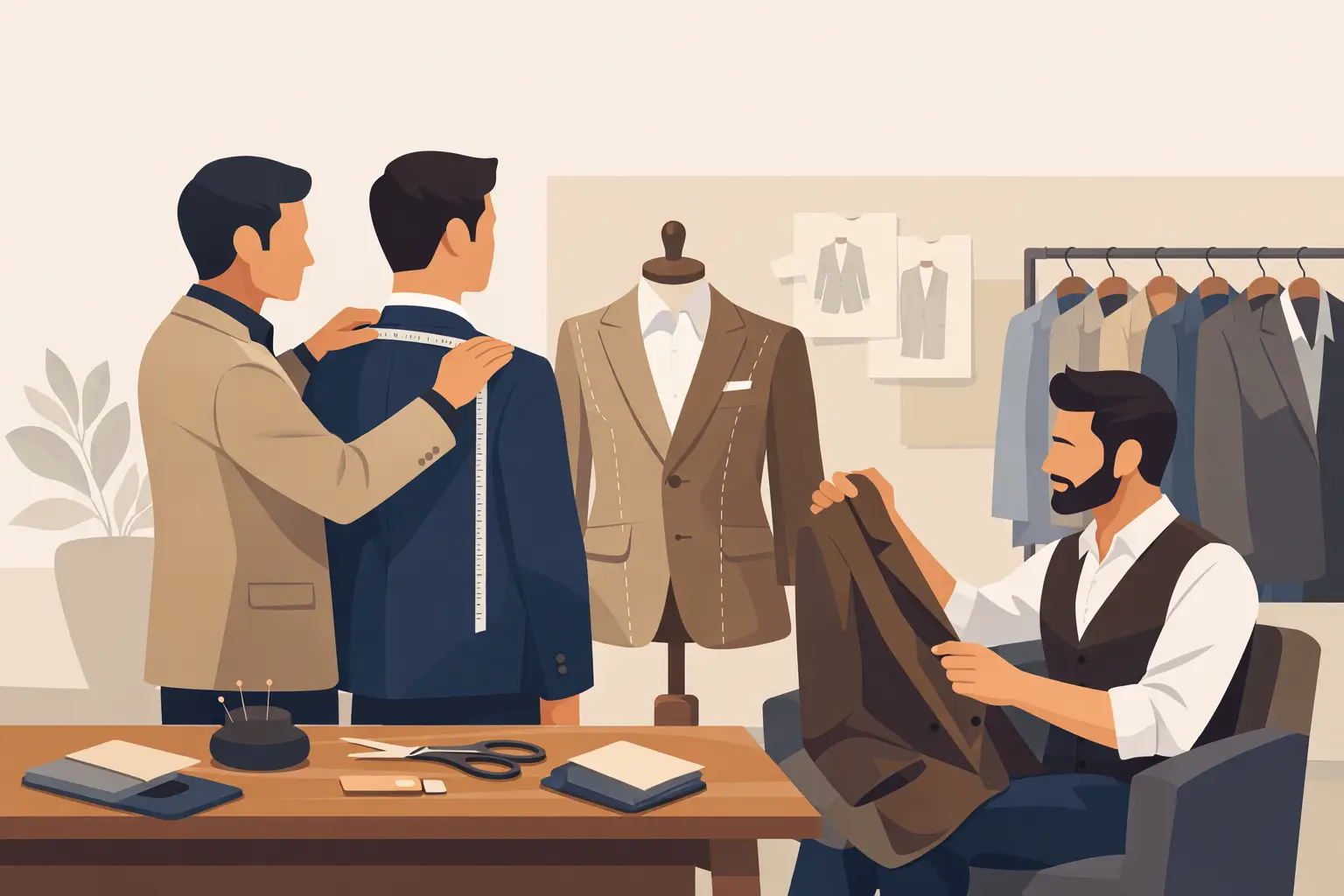
A tape measure alone does not create a superior shirt. An experienced tailor is reading the body in three dimensions. Posture is a major part of that. A man who stands erect through the chest will wear a shirt differently from someone with rounded shoulders or a slight forward neck. The same numerical measurement can produce different outcomes depending on stance.
Body asymmetry is another factor. Very few clients are perfectly symmetrical. One shoulder may slope more, one arm may hang differently, the chest may be more developed on one side, or the seat and hips may affect how the shirt falls. Bespoke does not ignore these realities in pursuit of a theoretical ideal. It incorporates them so the finished garment appears balanced.
Preference also plays a role. Some men want a decisive, clean silhouette with minimal excess cloth. Others prefer a touch more ease through the waist and sleeve for comfort. Neither is inherently right. What matters is that the shirt reflects the client’s life, wardrobe and personal standard of dress.
Common mistakes with shirt measurements
The most common mistake is chasing a number rather than a result. Clients sometimes focus on obtaining a slimmer chest or tighter waist because that sounds sharper. In practice, a shirt that is too lean can distort at the button line, pull across the back and limit movement. Elegance requires control, not compression.
Another mistake is measuring over bulky clothing or relying on old shirt sizes as a precise reference. Ready-to-wear sizing varies significantly between makers. A 15.5 inch collar in one brand can feel very different in another depending on collar stand, shape and ease allowance.
There is also a tendency to ignore end use. A shirt for daily business wear, a formal evening shirt and a weekend linen shirt should not all be measured and cut identically. Cloth weight, collar style, cuff choice and intended pairing with tailoring all affect how the dimensions should be interpreted.
How fittings refine the measurements
Even excellent initial measurements benefit from a fitting process. This is where the shirt moves from good to exact. A fitting reveals where the sleeve pitch needs adjustment, whether the collar stand sits correctly, and how the body shape translates from paper to cloth.
This stage is especially valuable for first-time bespoke clients. Many men know when a shirt feels wrong but cannot always identify why. A skilled tailor can translate that reaction into a technical correction, whether the issue is across the back, through the forearm, at the cuff or around the waist suppression.
At Manndiip, that process is treated as part of the craft rather than an inconvenience. Precision is built through observation and refinement, not guesswork.
Preparing for your measuring appointment
If you are commissioning a bespoke shirt, arrive with clarity on how you intend to wear it. If it is for business, think about whether it will sit beneath structured suiting most days. If it is for a wedding, consider collar style, tie choice and the shape of your jacket. If it is a more versatile wardrobe piece, be honest about whether you favour a crisp formal line or a softer expression.
Wear or bring the kind of watch you usually use if cuff fit matters. Mention any recurring frustrations with off-the-peg shirts, such as collars that gap, sleeves that fall short, or excess cloth around the waist. These details are as useful as the tape itself.
It also helps to accept that the best shirt measurement is rarely the one that sounds smallest. The best one is the one that allows the shirt to sit cleanly when standing, move properly when reaching, and retain its shape throughout the day.
The difference you can feel
A properly measured bespoke shirt does not announce itself through gimmicks. You notice it in quieter ways. The collar stays composed. The cuff lands where it should. The shirt remains tucked, the placket stays neat, and the body follows your frame without strain or excess. It supports the suit, the tie and the occasion rather than fighting them.
That is the real value of a guide to bespoke shirt measurements. It brings clarity to what many men have tolerated for years as normal poor fit. Once a shirt is cut with true regard for your proportions, posture and preferences, it becomes very difficult to accept anything less. And that is where a strong wardrobe begins – with garments measured not merely to your size, but to your standard.