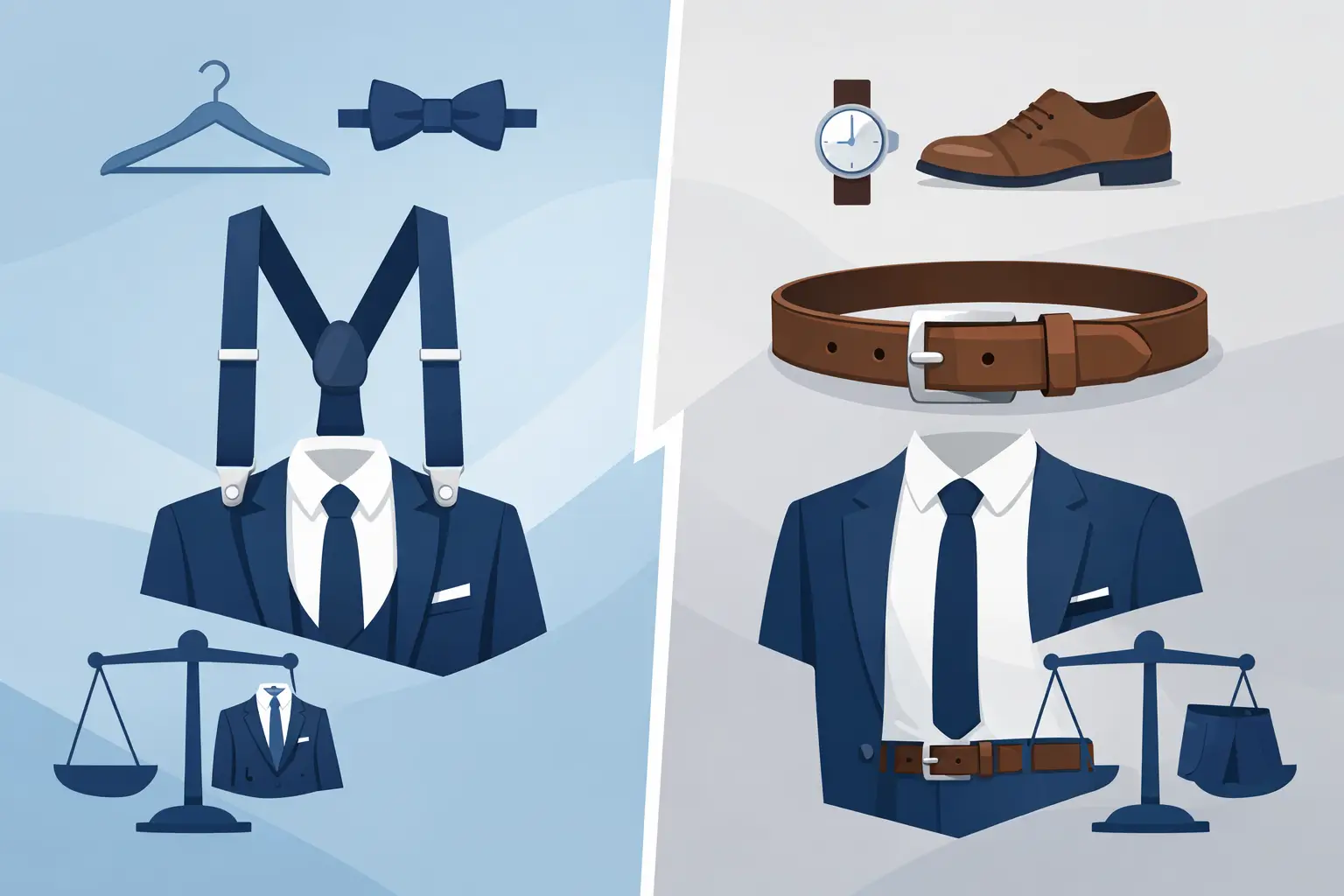
The quickest way to disturb a beautifully tailored suit is to hold it up with the wrong thing. In the debate around braces vs belt for suits, the real question is not which is more fashionable, but which creates the cleaner line, the better fit, and the more assured impression.
For a man who invests in tailoring, this is not a minor detail. It affects how the trousers sit through the waist and seat, how the jacket drapes, and how polished you appear once the jacket comes off. The right choice should feel considered, not improvised.
Braces vs belt for suits: the essential difference
A belt cinches the waistband inwards from the sides. Braces suspend the trousers from the shoulders, allowing them to hang from their natural line. That single distinction changes the entire silhouette.
With a belt, the waistband is pulled tight around the midsection. On casual trousers, chinos, denim, and many business-casual looks, that makes perfect sense. It is practical, familiar, and visually neat when the outfit welcomes a little structure at the waist.
With braces, the trousers are not being tightened around the body at all. Instead, they fall more cleanly from the waist, with less bunching at the front and less strain across the seat. In tailored clothing, that often produces the more elegant result.
This is why many of the finest suit trousers are designed with side adjusters or brace buttons rather than belt loops. The aim is not merely to keep them up. The aim is to preserve the line of the garment.
Why braces often look better with tailoring
If your priority is sartorial sophistication, braces usually have the upper hand. They support high-waisted or mid-rise trousers especially well, keeping the cloth sitting where the cutter intended. The crease remains cleaner. The front stays flatter. The leg hangs with more fluidity.
That matters most in formal and occasionwear. Morning suits, dinner suits, and wedding tailoring all benefit from a trouser line that appears uninterrupted and precise. A belt can visually cut the body in half, particularly under a closely fitted jacket or waistcoat. Braces avoid that interruption.
They are also kinder to the structure of the trousers themselves. Pleated fronts, heavier wool cloths, and side-tab waists tend to behave better when suspended rather than cinched. If you have ever noticed your waistband rising at the back or dipping at the front after a few hours of wear, braces often solve the problem.
There is a comfort advantage too. A belt relies on pressure. Braces rely on balance. For long days at the office, weddings that stretch from ceremony to dance floor, or black tie events where you are seated and standing repeatedly, that difference is easy to appreciate.
When a belt makes more sense
None of this means belts are wrong. It means they suit certain garments and settings better than others.
A belt is the more versatile option for wardrobes that move between tailoring and smart casual dressing. If you wear a suit in a modern corporate setting, remove your jacket frequently, and want a simple, understated finish, a well-chosen leather belt can work perfectly well. It is particularly effective with slimmer-cut trousers that are designed with loops and intended to sit slightly lower on the waist.
Belts also feel more intuitive for many men. If you are buying your first tailored suit and want a familiar styling choice, a belt may offer confidence. There is no sense choosing braces purely because they sound more refined if you will spend the day adjusting them or feeling overly conscious of them.
The key is proportion. A bulky belt with a large buckle has no place with refined tailoring. For suits, the belt should be slim, elegant, and made from quality leather with a discreet buckle. It should support the outfit, not announce itself.
Braces vs belt for suits in formalwear and weddings
Formalwear sharpens the distinction. If you are wearing black tie, braces are almost always the better choice. The cleaner waistline suits the formality of the dress code, and a belt introduces unnecessary visual clutter. Tuxedo trousers are traditionally designed without belt loops for good reason.
For weddings, the answer depends on the style of the suit and the role you are playing. A groom in a three-piece suit, particularly in a richer cloth or a more structured cut, often benefits from braces. They maintain elegance throughout the day and keep the waistline neat beneath the waistcoat. For groomsmen in simpler lounge suits, belts can still work, provided they are consistent, restrained, and properly matched.
Country tailoring, tweed suits, and double-breasted styles also tend to pair beautifully with braces. These garments carry presence and character, and braces support that old-world discipline without feeling theatrical when worn correctly.
The fit question most men overlook
The braces-versus-belt decision should begin with the trouser cut, not the accessory drawer.
A properly tailored trouser should fit comfortably around the waist without requiring a belt to rescue it. If trousers only stay in place when cinched tightly, the fit is wrong. Likewise, braces should not be used to hoist up overly generous trousers that collapse through the seat.
This is where bespoke and alterations make the conversation far more useful. The rise, waistband shape, balance, and drape all influence whether braces or a belt will perform better. Men with a prominent seat, an athletic build, or a fuller midsection often find braces create a more flattering line because they remove the need to tighten the waist excessively. Men in slimmer, lower-rise suit trousers may prefer a belt because the cut was built around that finish.
The detail on the waistband matters too. Belt loops suggest a belt. Side adjusters or a clean waistband suggest braces or no additional support beyond the trouser’s own fit. Mixing all options on one pair can dilute the elegance. The best tailored garments tend to be decisive.
Style, age, and confidence
Some men hesitate over braces because they fear looking old-fashioned. Usually, the opposite is true. When the suit is cut well and the braces are chosen with restraint, they read as intentional and sophisticated.
The problem comes when braces are treated as novelty. Bright elastic, flashy clips, or overly performative styling can make them feel costume-like. For tailored dressing, leather-ended braces in muted tones are the stronger choice. They should complement the cloth, not compete with it.
A belt, by contrast, is easier to wear badly simply because it is so common. The wrong leather, the wrong width, or a shiny buckle can lower the standard of the whole outfit. Familiar does not always mean foolproof.
Confidence matters here. If you stand better in braces and appreciate the discipline they bring to the line of a suit, they will serve you well. If a belt feels more natural and your tailoring is cut to accommodate it, that confidence will show too. Personal style should feel assured, not borrowed.
So which should you choose?
If the suit is formal, the trousers sit higher on the waist, or the cut prioritises drape and elegance, choose braces. They are usually the superior option for men who care deeply about line, comfort, and traditional tailoring principles.
If the suit is more contemporary, the trousers were designed with loops, or your wardrobe needs one solution that moves easily between office tailoring and smart casual dressing, choose a belt. Just choose one with the same care you would apply to your shoes or cloth selection.
For many well-dressed men, the right answer is not one or the other forever. It is knowing which each does best. A wardrobe becomes more refined when every detail is selected in service of the garment, the occasion, and the man wearing it.
At Manndiip, that is often where the difference lies – not in following a rule for its own sake, but in understanding how construction, fit, and finishing work together to shape presence.
The smartest choice is the one that lets your suit sit beautifully, move cleanly, and look as though every element was considered from the very beginning.