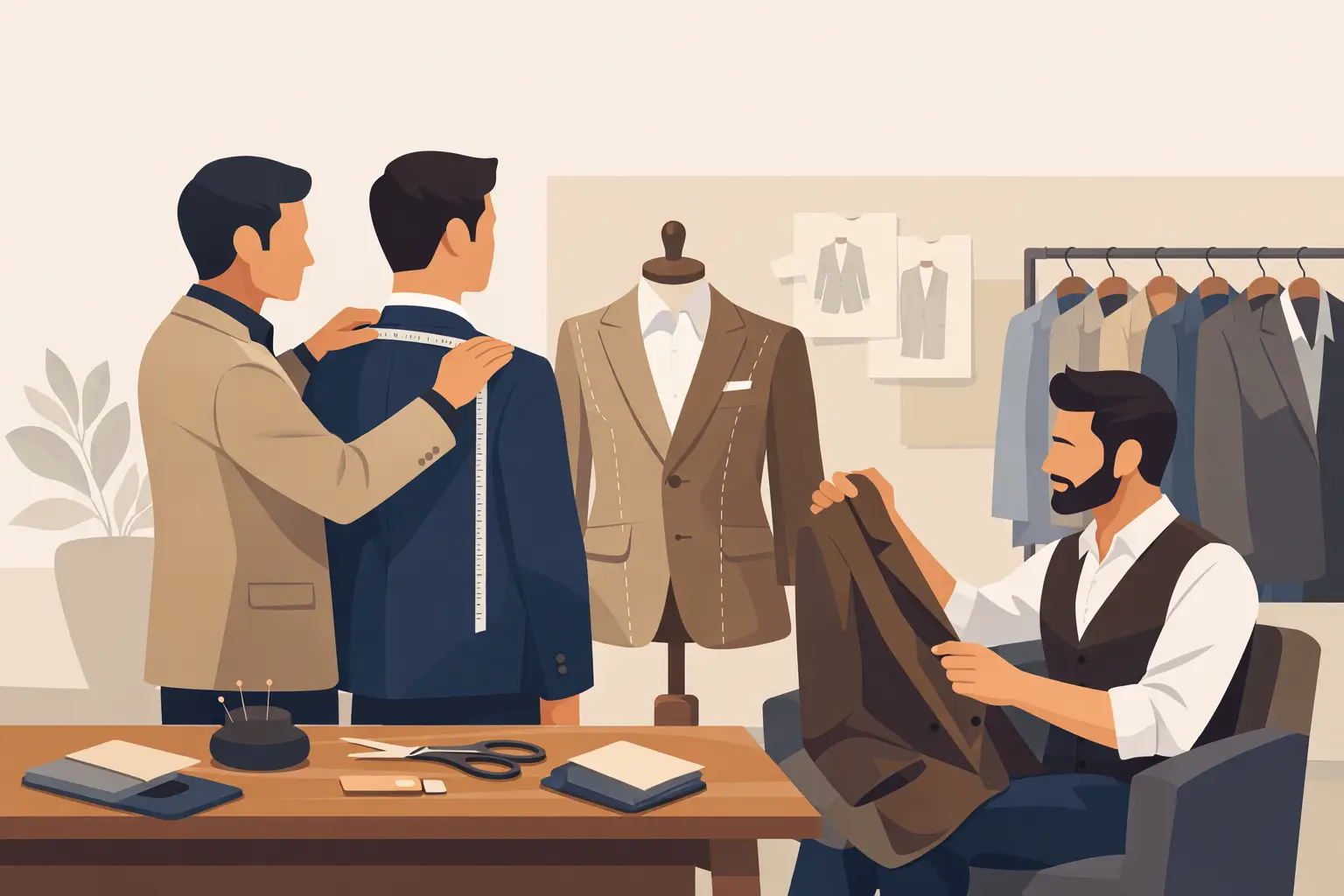
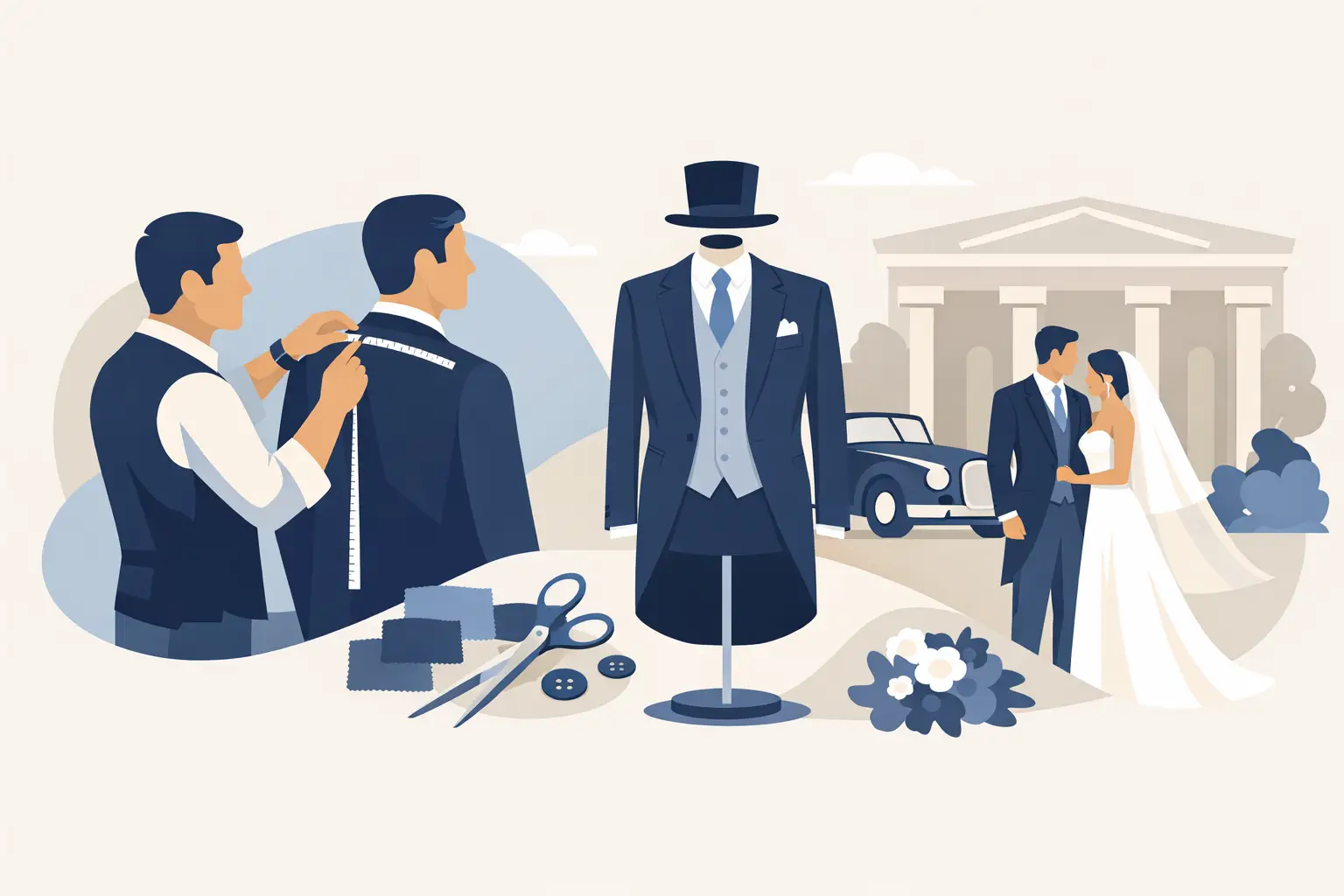
At 10.30 on a wet Thursday morning, our client arrived with the same concern many grooms carry into their first appointment: he wanted to look distinguished, not dressed up. That is the tension at the heart of case study wedding morning suit commissioning. A morning suit carries centuries of formal tradition, yet on the wedding day it still has to feel like an extension of the man wearing it – natural in stance, elegant in proportion, and precise under scrutiny from every angle.
For this client, the brief was clear. The ceremony was a classic church wedding followed by a formal reception, with photographs planned across a country house and gardens. He wanted the authority and ceremony of a traditional morning coat, but without stiffness or theatricality. He was also conscious that ready-to-wear options often looked either too rented, too short in the body, or too generic through the shoulder and chest. He did not want costume. He wanted proper tailoring.
Why a wedding morning suit commissioning matters
A morning suit is one of the most exacting garments in classic menswear. It is less forgiving than a lounge suit and more revealing of proportion. If the waist suppression is heavy-handed, the coat can feel contrived. If the skirt balance is wrong, the side profile collapses. If the trouser rise or taper is misjudged, the entire line from waistcoat to shoe loses authority.
That is why wedding morning suit commissioning deserves more than a quick measurement and a fabric book. The garment has to work in motion as much as at rest. A groom stands, walks, sits, greets guests, embraces family members and spends much of the day being photographed. Every construction choice has a visible effect.
In this case, the client was tall, athletic, and slightly stooped through the upper back from years at a desk. Off-the-peg morning coats pulled away at the collar and flared inelegantly over the seat. He also had one shoulder marginally lower than the other, something hardly noticeable in casual clothing but obvious in structured formalwear. These are exactly the details bespoke tailoring exists to resolve.
The consultation: setting the line of the garment
The first appointment was not only about measurements. It was about visual language. We discussed the formality of the venue, the bride’s gown, the season, the scale of the wedding party and how traditional he wished the look to feel. There is no single correct version of a morning suit. Some clients prefer a sharper city silhouette with a firmer shoulder and clean chest. Others suit a softer expression, particularly for country settings or summer weddings.
For this commission, the decision was a charcoal black morning coat with a gently shaped waist, paired with traditional striped trousers and an ivory waistcoat. That combination preserved the integrity of morning dress while softening the contrast near the face in photographs. It also gave the groom enough presence to stand apart from guests in business suiting without appearing overworked.
Cloth selection mattered. A morning coat should hold its line through the chest and skirt, so overly lightweight fabric rarely performs well. Equally, a cloth that is too heavy can feel dense and severe, especially across a long wedding day. We chose a wool with enough body to maintain drape and enough resilience to remain crisp from ceremony to evening. The stripe on the trousers was selected with restraint – formal, readable, but not exaggerated.
Case study wedding morning suit commissioning in practice
Once the design direction was agreed, the technical work began. Morning coats are cut with a very different visual purpose from standard jackets. The front sweeps away from the waist, exposing the waistcoat and creating a clean opening through the body. The skirt length must be calibrated to the wearer’s height, leg line and seat shape. Too short, and the coat appears mean. Too long, and it overwhelms.
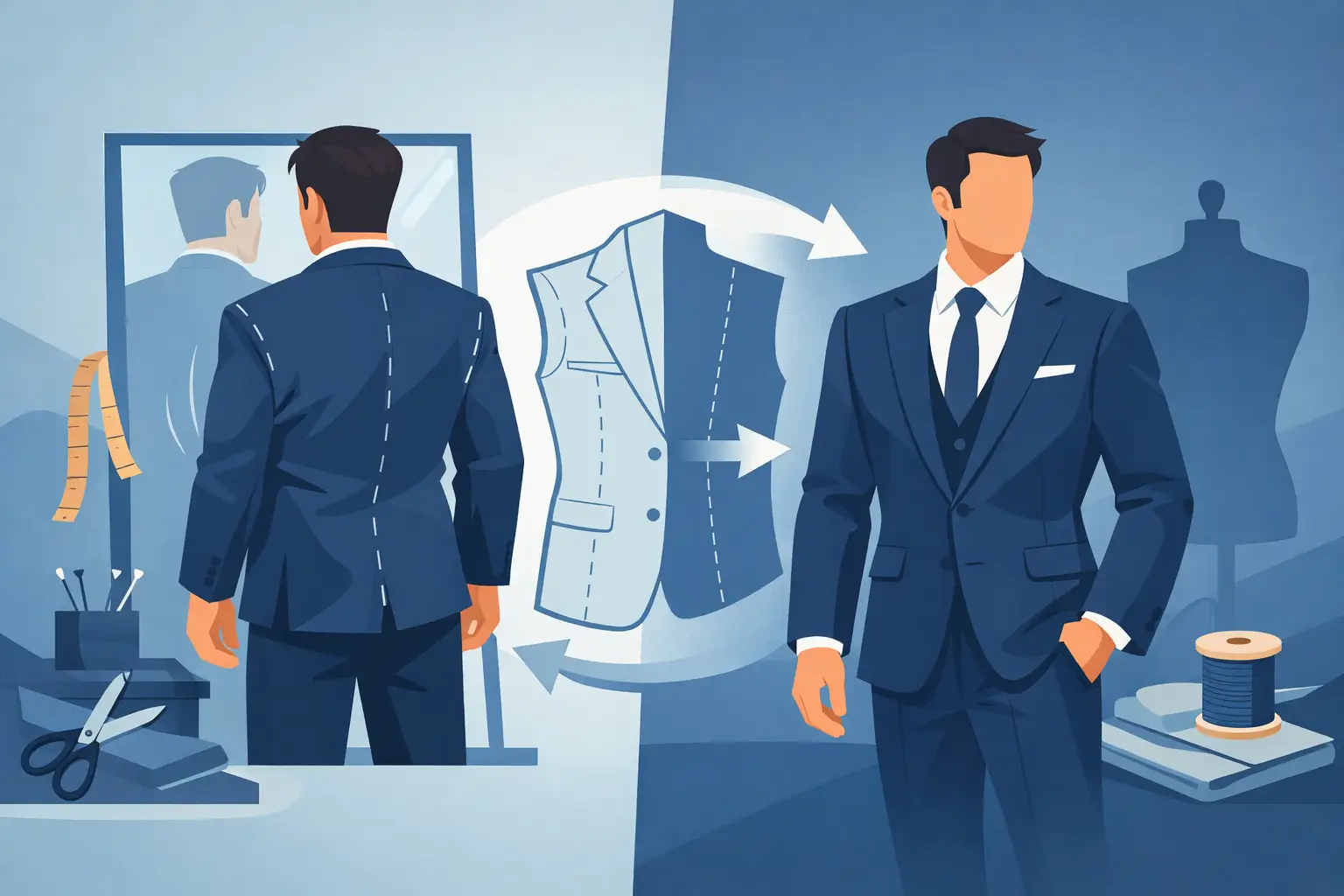
Our client’s posture meant the pattern required correction through the upper back and collar. Without that, the cloth would break untidily beneath the neck and the front balance would tilt backwards. The shoulder line was adjusted asymmetrically to account for the natural drop on one side, allowing the coat to sit level when worn. This is the kind of invisible precision that separates a commissioned garment from something merely altered.
The waistcoat also demanded careful thought. A wedding waistcoat should frame the tie knot and shirt front cleanly while sitting close enough to the body to avoid bubbling beneath the coat. In this case, a double-breasted style was considered, but a single-breasted low-cut waistcoat proved the better choice. It lengthened the torso, complemented the groom’s proportions and kept the overall look refined rather than overly ceremonial.
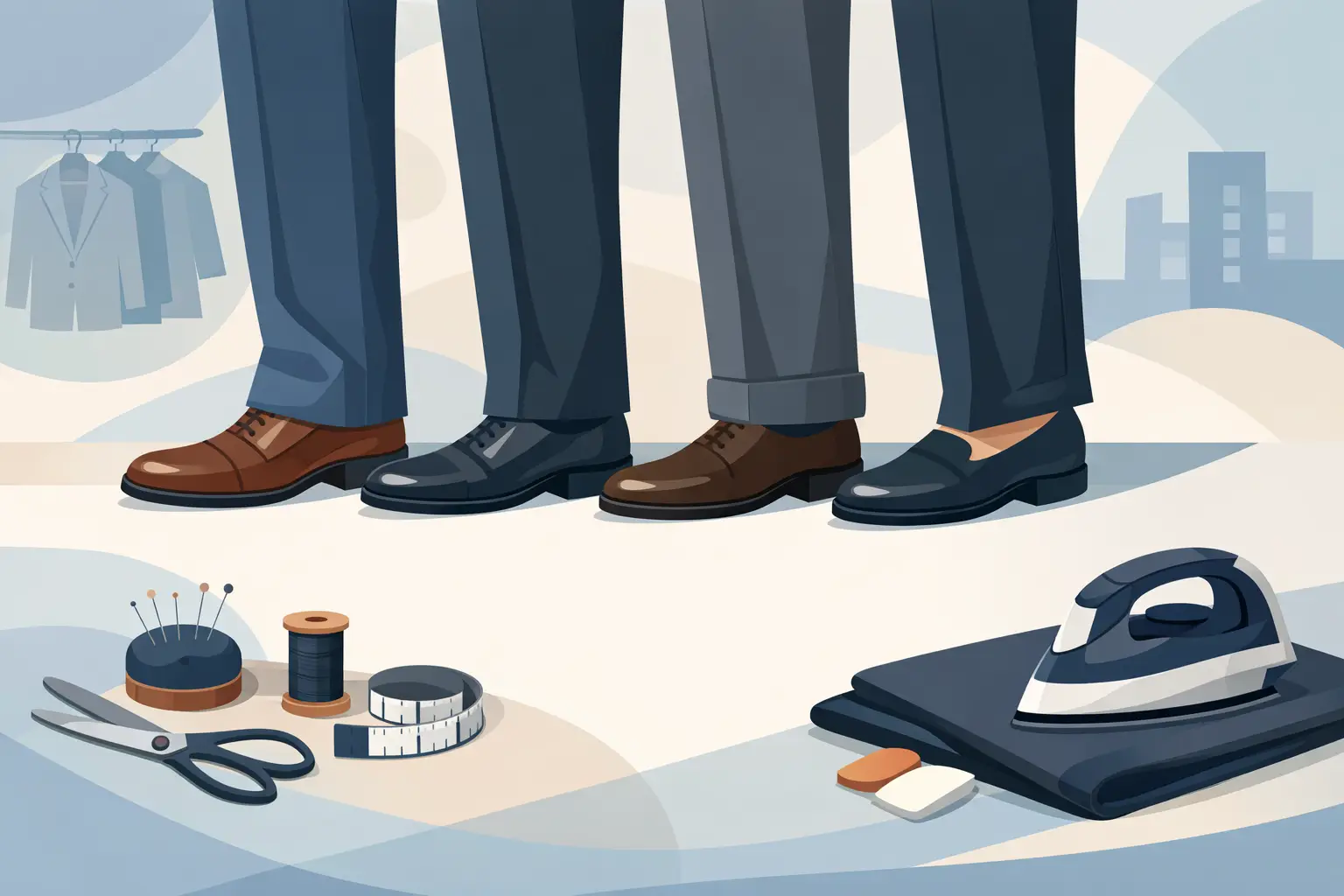
Trousers were cut with a higher rise to meet the waistcoat properly and preserve the uninterrupted vertical line morning dress is known for. This is one of the most common failures in hired formalwear – low or middling-rise trousers create a visible gap and undermine the architecture of the whole ensemble. Here, the rise, brace position and leg shape were all set to deliver elegance rather than fashion.
The fittings: where elegance is earned
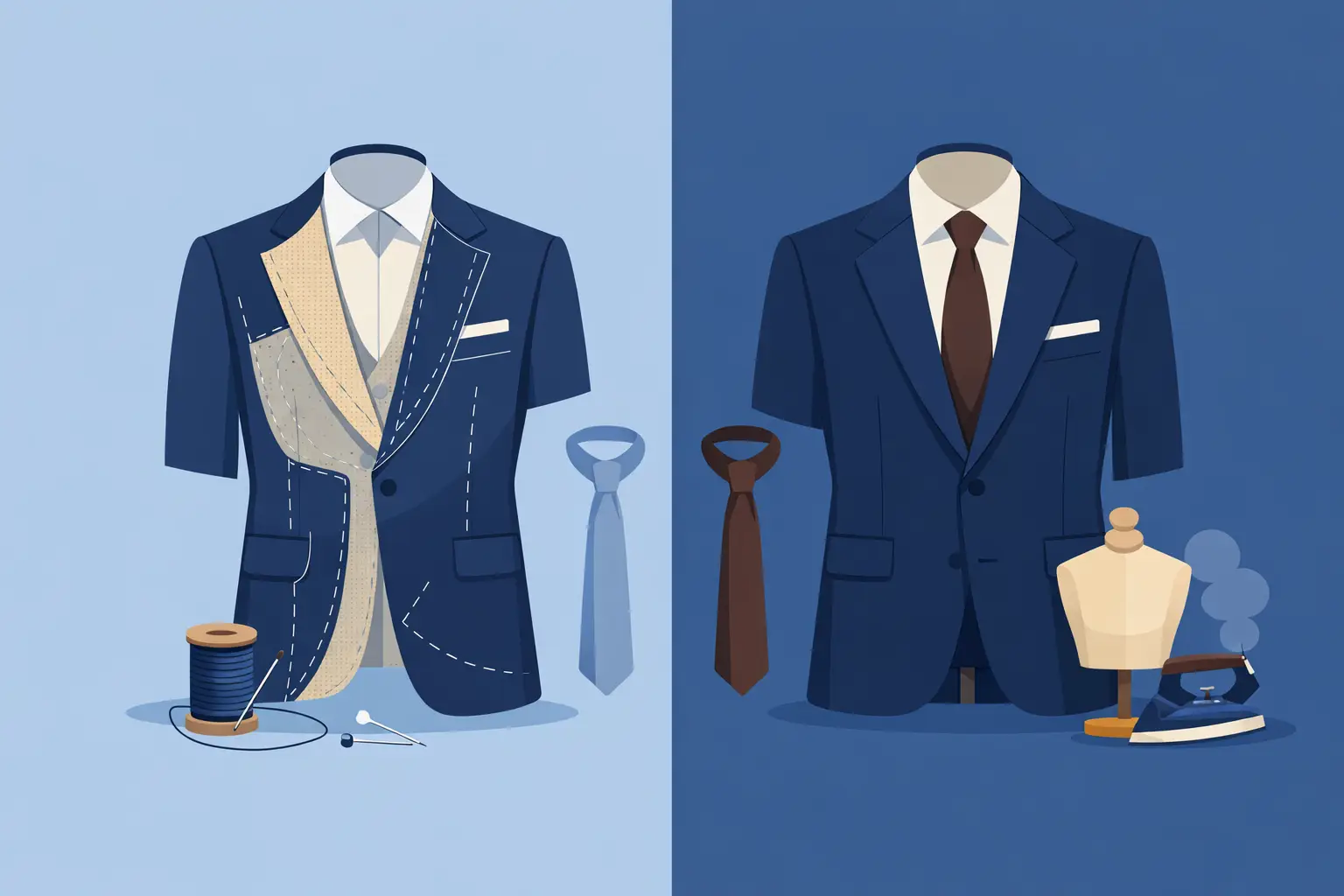
The baste fitting revealed what the paper pattern could not. The coat already showed promise through the chest and shoulder, but the front edge needed a fraction more control so it swept away cleanly without kicking. The skirt was shortened slightly to sharpen the profile, and the waist suppression was moderated by a touch. Wedding tailoring should flatter, certainly, but the groom still has to breathe, move and enjoy the day.
At the second fitting, the line had settled beautifully. The collar hugged the neck, the chest looked composed rather than strained, and the skirts hung evenly. Attention then shifted to refinements – cuff exposure, waistcoat opening, trouser break and the exact stance of the lapel roll. These are not decorative concerns. They determine whether the result feels merely expensive or genuinely distinguished.
The shirt and accessories were chosen to support, not compete. A crisp white shirt with a structured collar gave the face clarity. A silk tie in a restrained tone added polish without distracting from the morning coat. Pocket square choice stayed equally disciplined. Weddings invite sentiment, but formalwear still benefits from edit and control.
Trade-offs every groom should understand
A strong case study wedding morning suit commissioning process is valuable because it exposes the trade-offs early. Tradition offers a framework, not a prison. For example, a black coat is the most orthodox choice, but dark charcoal can photograph with more softness depending on the light and venue. An ivory waistcoat often flatters wedding photography, yet buff or dove grey may be more appropriate if the event leans especially formal.
Likewise, not every groom wants a pronounced waist. On a lean frame it can look elegant, but on a broader or more muscular build a subtler suppression often appears stronger. Peak lapels can lend drama, though many morning coats are better served by a classic notch depending on the cut and the wearer’s features. The right decision is rarely the loudest one. It is the one that makes the man look assured.
There is also the question of reuse. A wedding morning coat is not an everyday garment, and some clients understandably weigh that against the investment. Yet the commissioning process is not wasted on a single day. Trousers can be remade or duplicated, waistcoats can be adapted, and the pattern itself becomes a foundation for future formal commissions. More importantly, when the occasion is singular, the value lies in being correctly dressed for it.
The final result
By the final fitting, the transformation was striking not because the garment shouted, but because it settled everything. The groom stood better. The shoulder line appeared cleaner. The coat moved with him rather than against him. In photographs taken on fitting day, the morning suit carried exactly the quality he had asked for in the first consultation – distinguished, not dressed up.
That is the real measure of bespoke formalwear. It should never wear the man. It should bring his bearing into focus and allow the day itself to take centre stage. For clients commissioning wedding attire at this level, that assurance is not a luxury add-on. It is the point.
At Manndiip, we see this often with ceremonial tailoring. Men arrive thinking they need a suit. What they actually need is proportion, balance and guidance. A morning suit simply makes that truth more visible. If your wedding calls for formal dress, give the garment the seriousness it deserves – because when the cut is right, confidence stops being something you perform and becomes something you carry.