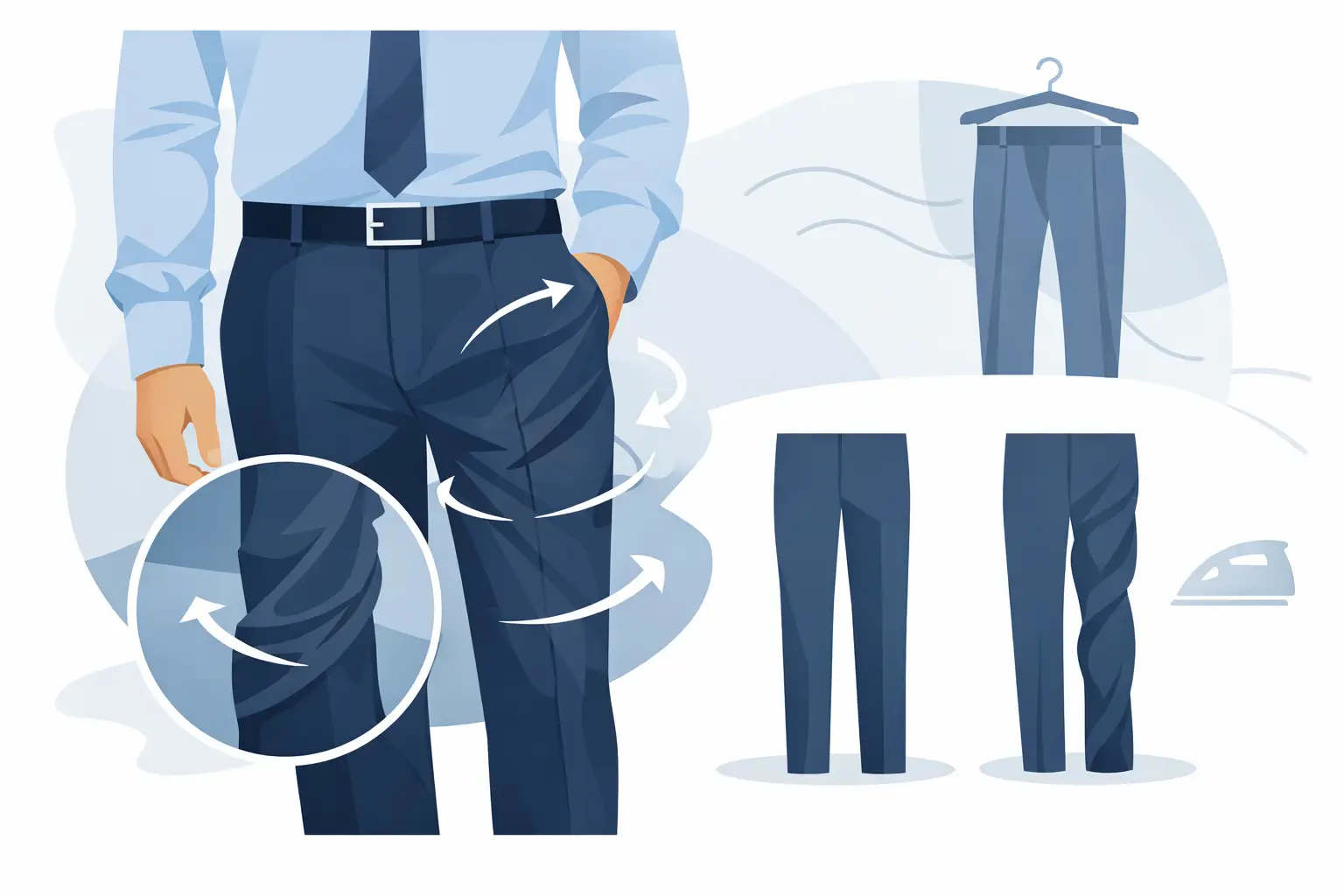
You notice it first in motion. The crease that should run cleanly down the front starts drifting towards the inside of the leg, the hem swings off line, and suddenly a sharp suit looks faintly unsettled. If you have ever wondered why do suit trousers twist, the answer is rarely one simple fault. More often, it is a conversation between body shape, cutting, balance, cloth behaviour, and the standardised assumptions built into ready-to-wear.
Twisting is not merely a cosmetic irritation. In tailored clothing, the line of a trouser matters because it affects the entire silhouette. When the leg rotates, the garment stops reading as precise. The effect can be subtle in the fitting room and far more obvious after an hour of wear, particularly at the office, at a wedding, or during any occasion where posture, movement and impression all count.
Why do suit trousers twist in the first place?
At its core, trouser twisting happens when the fabric is being asked to sit in a different position from the one the pattern intended. Trousers are cut around an idea of how the waist, seat, thigh, knee and lower leg align. Real bodies are more individual than that. One man may stand with a slight bow in the legs, another with prominent calves, another with a forward thigh, another with one hip subtly higher than the other. None of this is unusual. It simply means a generic trouser block may not hang cleanly.
The most common cause is rotational imbalance through the leg. If the top of the trouser is sitting correctly but the lower section is being pulled by the shape of the thigh, knee or calf, the cloth turns to relieve tension. That is when the side seam creeps forward or back and the crease no longer points where it should.
There is also the question of grain. In well-cut tailoring, the trouser leg is drafted so the fabric grain supports a clean vertical fall. If the pattern is off, or if the cloth has been cut slightly out of grain, the twisting may be present from day one. On cheaper garments, this is more common than many men realise. Speed of manufacture leaves little room for careful matching and balancing.
Fit problems that create a twisted leg
A trouser can twist even when the waist feels comfortable. This is where many men are caught out. They judge the fit by whether it fastens and whether the seat feels acceptable, but the leg line tells a more technical story.
If the thigh is too tight, the fabric can rotate around the fullest part of the leg. If the seat depth is wrong, the trouser may be dragged off balance before the leg even begins. If the rise is too short, the garment can pull upward and inward, forcing the seams to shift. If the knee position of the trouser does not match your natural knee, the cloth may break and turn as you walk.
Even hem width plays a part. A very tapered trouser on a man with athletic calves can begin to spiral because the lower leg has nowhere to fall cleanly. This is one reason style should never be separated from anatomy. A silhouette that looks elegant on the hanger may work against the wearer in practice.
Body asymmetry matters more than most men think
Very few people are perfectly symmetrical. One leg may turn out slightly more than the other. One foot may pronate. One hip may sit a touch higher. In everyday clothing these details often go unnoticed, but suiting is less forgiving because it is designed to look composed and architectural.
A skilled cutter recognises these asymmetries and cuts for them rather than pretending they do not exist. That is often the dividing line between trousers that merely fit and trousers that hold their line through a full day of wear.
Construction faults and cloth issues
Not all twisting is caused by the wearer. Sometimes the garment itself is at fault.
If the leg panels were not aligned properly during cutting, the cloth grain may be distorted before the trousers are even assembled. If pressing has been done carelessly, the crease may be set in the wrong place, creating the illusion of twisting or exaggerating a mild imbalance. Fusings, pocket bags, and internal waistband tension can also interfere with how the trousers settle on the body.
Cloth character matters too. A lighter weight wool can reveal twisting more readily because it has less structure to disguise imbalance. A cloth with a pronounced stripe or check makes any rotation obvious. Conversely, a slightly heavier cloth with good recovery may hang more cleanly, though it cannot fully correct a poor cut.
This is why two pairs of trousers in the same nominal size can behave entirely differently. The issue is not just size. It is engineering.
Why ready-to-wear trousers often struggle
Ready-to-wear trousers are cut for efficiency, not for your exact proportions. They are based on a standard block that assumes a certain relationship between waist, seat, thigh, knee and stance. If your body falls outside that model, even modestly, the leg can start to rotate.
This does not mean every off-the-peg trouser is flawed. It means there is a limit to how accurately a mass-produced garment can account for individual posture and shape. For a man who values a polished line, particularly in business or formalwear, that limit becomes noticeable.
The challenge grows when trend-led cuts are involved. Slim silhouettes can look striking, but they demand a higher degree of precision. The less ease there is in the leg, the less room there is for error. A small mismatch in balance that might go unnoticed in a fuller trouser becomes obvious in a tapered one.
Can twisted suit trousers be altered?
Sometimes yes, sometimes not. The answer depends on where the problem begins.
If the issue is a poorly set crease, a pressing correction may improve matters. If the leg is slightly too narrow at the calf or knee, letting out that area can reduce the rotational pull. If the waistband is sitting off level, adjusting the waist balance may help the whole trouser hang more cleanly.
However, if the twist comes from the original draft being wrong for your stance or body shape, alterations have limits. A tailor can refine many things, but reconstructing the entire leg balance of a finished trouser is more complex and not always commercially sensible. This is especially true if there is little inlay to work with or if the cloth has already been cut too aggressively.
A proper fitting should identify whether the issue is alterable or structural. There is no value in pretending every twisted trouser can be rescued completely. Precision tailoring is about honest diagnosis as much as skilled execution.
How bespoke cutting prevents trouser twisting
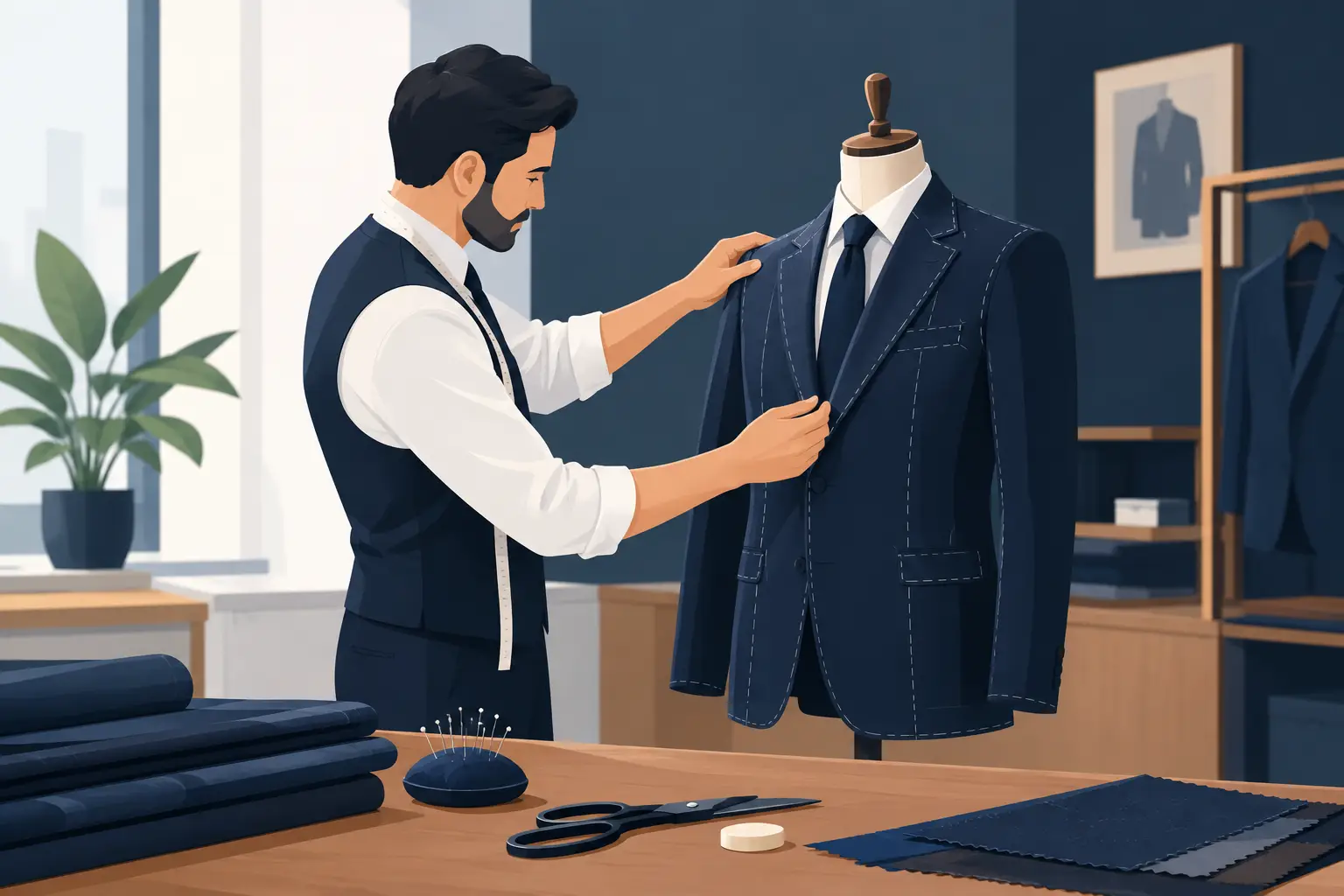
The strongest solution is to address the problem before the cloth is cut. Bespoke and carefully executed custom tailoring allow the trouser pattern to be built around your posture, your balance, and the actual shape of your legs.
That may involve adjusting the fork, changing the pitch of the leg, shifting the crease position, balancing the rise, or allowing more room in a specific area while keeping the silhouette refined elsewhere. These are not dramatic flourishes. They are technical refinements that create visual calm.
At Manndiip, this level of correction is part of what elevates a suit from respectable to exceptional. When the line of the trouser is resolved properly, the jacket appears cleaner, the wearer stands better, and the whole ensemble reads with greater authority.
Signs your trousers need expert assessment
If the side seam visibly rotates, if the crease refuses to stay centred, if one leg twists more than the other, or if the problem appears in several pairs from different brands, it is worth having the fit assessed properly. Equally, if the twisting only appears once you walk or sit, that suggests a balance issue rather than a simple pressing fault.
Bring the shoes you actually wear with the suit. Trouser hang is influenced by stance and footwear more than many clients expect.
What to look for when trying on suit trousers
Stand naturally rather than adopting a fitting-room pose. Look at where the crease falls over the thigh and knee, and check whether the side seam is truly at the side of the leg. Walk, sit, turn, then stand again. Trousers that only behave when you are motionless are not cut well enough.
Pay attention to the back view as well. Twisting often announces itself there first, especially if the calf is catching the cloth or the leg is being pulled inward from the seat. A mirror tells the truth quickly.
The best trousers should feel almost uneventful. They do not fight your body, and they do not need constant straightening. They simply hold their line.
A suit should lend composure, not require management. If your trousers twist, that is not vanity speaking – it is the garment telling you something about its cut. Once that message is understood, the solution becomes far more elegant than endless compromise.