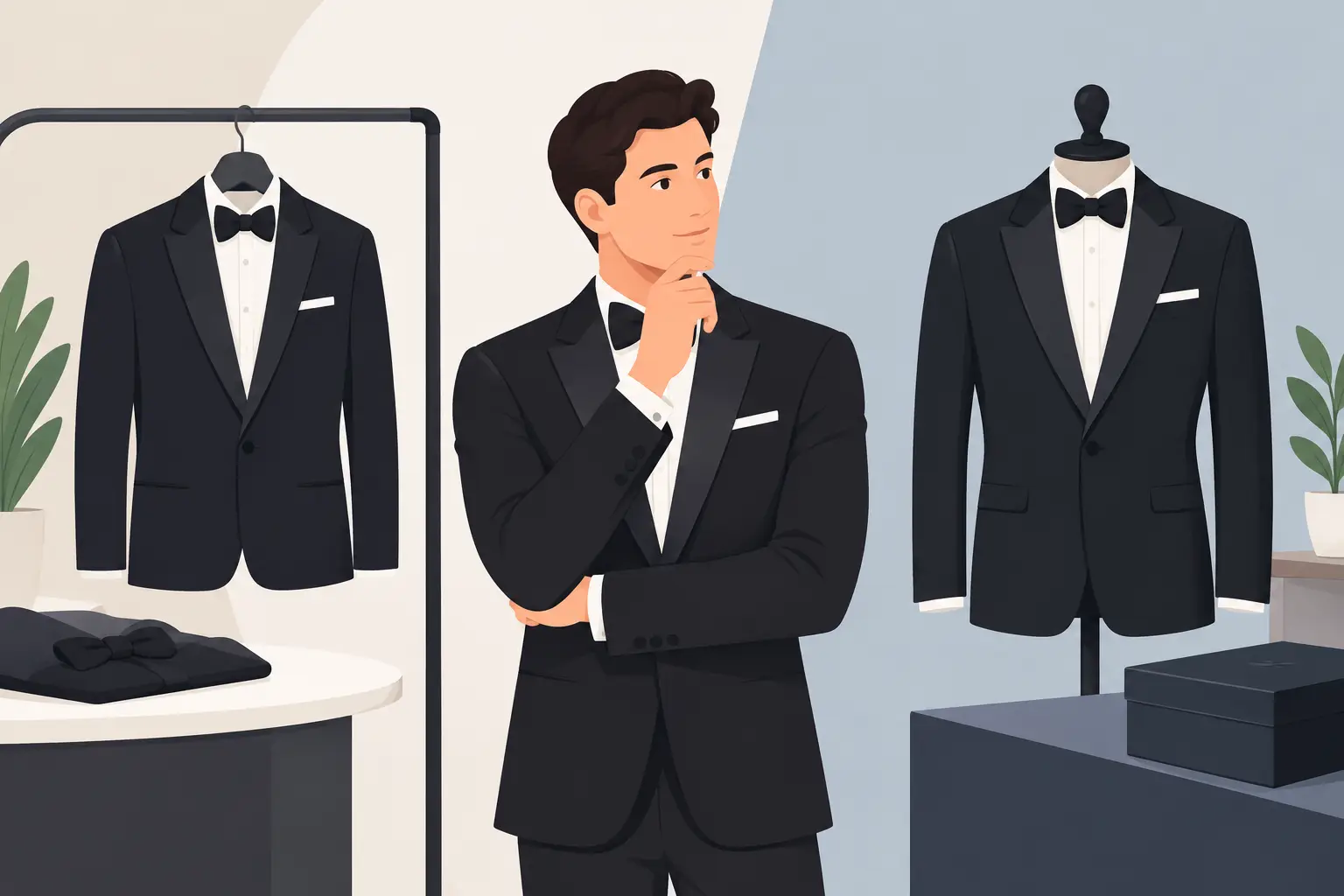

A powerful chest and shoulders can look exceptional in tailoring – until a ready-to-wear jacket starts pulling at the button, collapsing at the waist, or straining across the upper back. That is where a bespoke suit for athletic build example becomes genuinely useful. It shows not only what an athletic frame should look like in a suit, but why proportion, suppression and balance matter far more than simply sizing up.
Men with athletic proportions often assume they are difficult to fit because their body sits outside standard sizing logic. In truth, the challenge is not the body. The challenge is clothing drafted for a straighter block. When the chest, shoulders, seat and thighs are more developed, a suit must be cut to follow shape with intention. Otherwise, the result is either restrictive through the top half or baggy everywhere else.
What a bespoke suit for athletic build example should show
A proper example starts with the relationship between the shoulders, chest and waist. On an athletic man, the drop from chest to waist is usually more pronounced than standard sizing allows. Off-the-peg tailoring often compensates by fitting the chest first and leaving excess cloth through the midsection. That creates a diluted silhouette – broad on top, shapeless below.
A bespoke cut approaches this differently. The chest is allowed enough room for movement and clean drape, while the waist is sculpted with more precision. The effect should be masculine and elegant rather than aggressive. Good tailoring does not exaggerate the body into caricature. It refines it.
Equally, a useful example will show a clean collar, a smooth line over the shoulder blades and sleeves that hang without twisting. Athletic clients frequently develop tension across the upper back and rear sleeve if the pattern has not accounted for muscle distribution. This is where bespoke drafting earns its place. It responds to posture and contour, not just circumference.
The jacket details that matter most
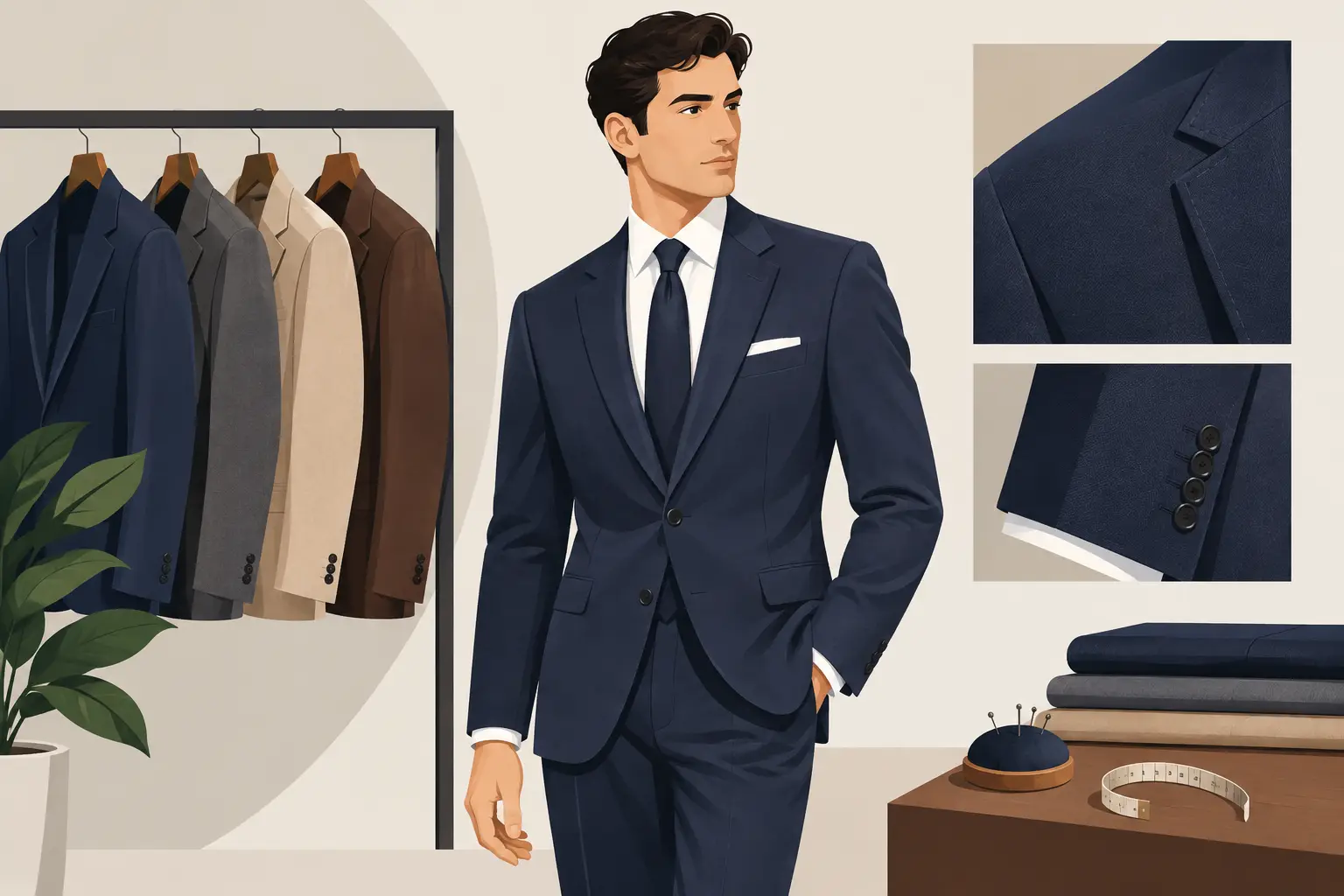
The jacket is where athletic proportions are either elevated or mishandled. A well-cut bespoke jacket should sit close to the body without appearing tight. That sounds obvious, yet there is a fine distinction between shaped and strained.
The shoulder should follow the natural line of the body, not extend it unnecessarily. Men with developed deltoids rarely benefit from heavy padding or overbuilt roping. Too much structure can make the upper half appear blocky. In most cases, a softer, cleaner shoulder gives better balance and lets the chest do the work.
Button stance matters more than many realise. Set too high, and the jacket can look perched and restrictive across a fuller chest. Set too low, and the torso may seem longer and less composed. For an athletic build, the fastening point often needs careful adjustment to flatter the ribcage while maintaining clean waist suppression.
Lapel width also deserves attention. Broad chests tend to carry a slightly fuller lapel with confidence, but proportion is everything. A lapel that is too narrow can look mean against a wider frame. Too broad, and the coat begins to feel theatrical. Bespoke allows that middle ground where strength and sophistication meet.
Length is another frequent issue. Shorter jackets can make the torso appear top-heavy, especially if the client has strong glutes and thighs. A correct coat length restores visual harmony, covering the seat neatly and giving the silhouette authority rather than trend-led sharpness.
An example in practice
Consider a client with a 42-inch chest, a 32-inch waist, strong shoulders, prominent seat and athletic thighs. In ready-to-wear, he might buy a size that accommodates the chest, only to find the waist loose, the skirt flaring and the trousers tight through the seat.
In a bespoke version, the jacket would be drafted with enough chest allowance to prevent drag lines from the button point to the side seam. The waist would be suppressed to follow the torso cleanly, but not so aggressively that the front quarters spring open. The back would include the right blade and back width to allow movement without excess cloth pooling beneath the collar. The sleeve head would be set to complement the shoulder line, and the cuff pitch would account for posture.
This is the difference between a suit that merely closes and one that looks composed from every angle.
Trousers for athletic builds are rarely straightforward
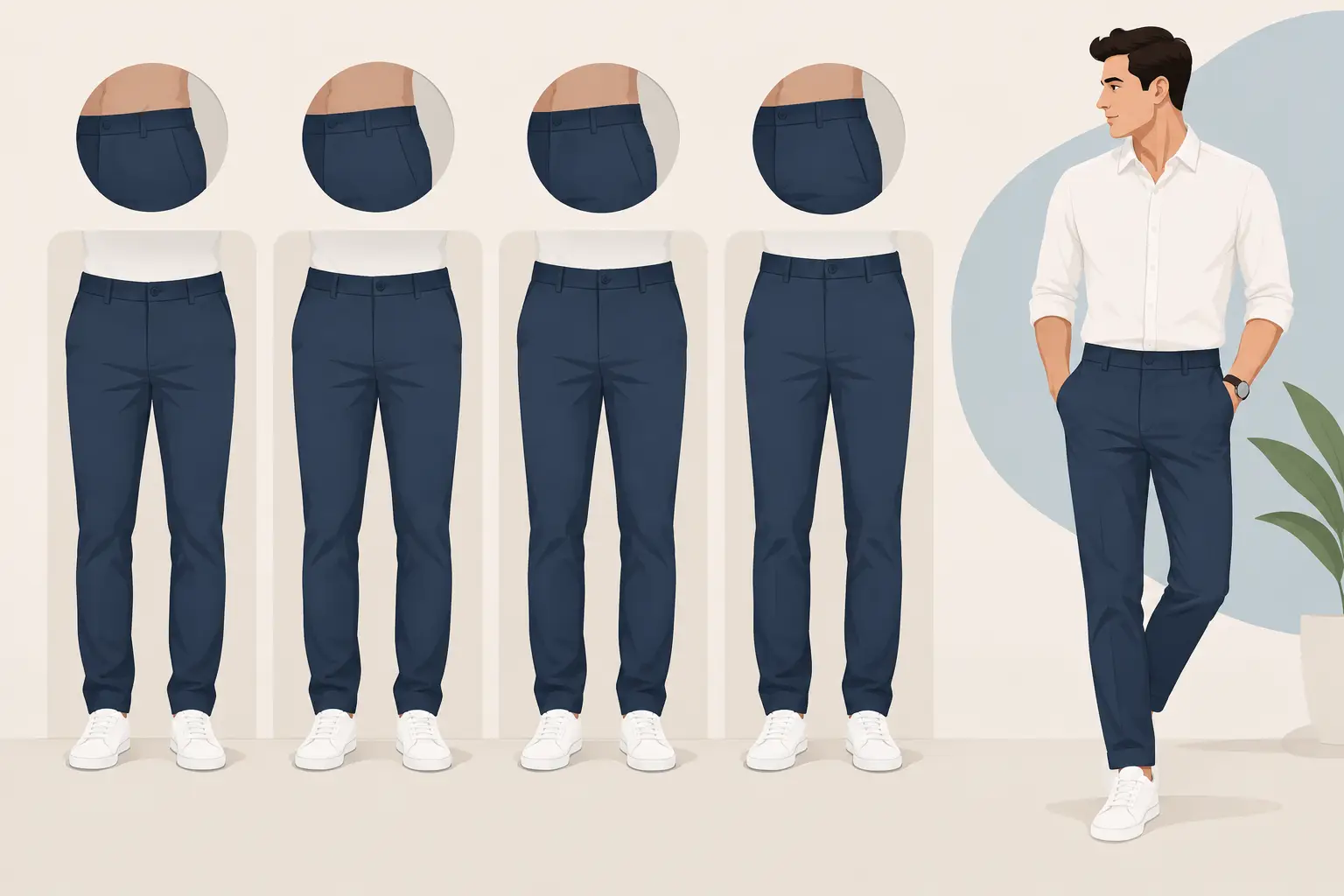
Most athletic men know the frustration of trousers that fit the waist but grip the thighs, or fit the thighs but billow at the waist. Bespoke solves this by treating the lower half as an architectural problem rather than a stock size.
A strong seat requires enough length and shape through the back rise. If this is ignored, the trouser will pull, dip at the rear waistband or create horizontal stress lines beneath the seat. On the other hand, too much allowance produces a heavy, untidy back view. Precision is the entire point.
The thigh should skim, not clamp. Many men assume a close trouser is inherently smarter, but over-tightness across developed quadriceps spoils the line and quickly looks uncomfortable. A better cut leaves measured room through the thigh, then tapers with discipline from knee to hem. That gives a clean silhouette without denying the reality of the body underneath.
Pleats may also be worth considering. Flat-front trousers are often the default suggestion, yet on some athletic clients a single pleat offers superior drape and comfort, particularly in formal or business tailoring. It depends on how weight is distributed and how clean a front can be maintained when seated and moving.
Fabric choice changes the result
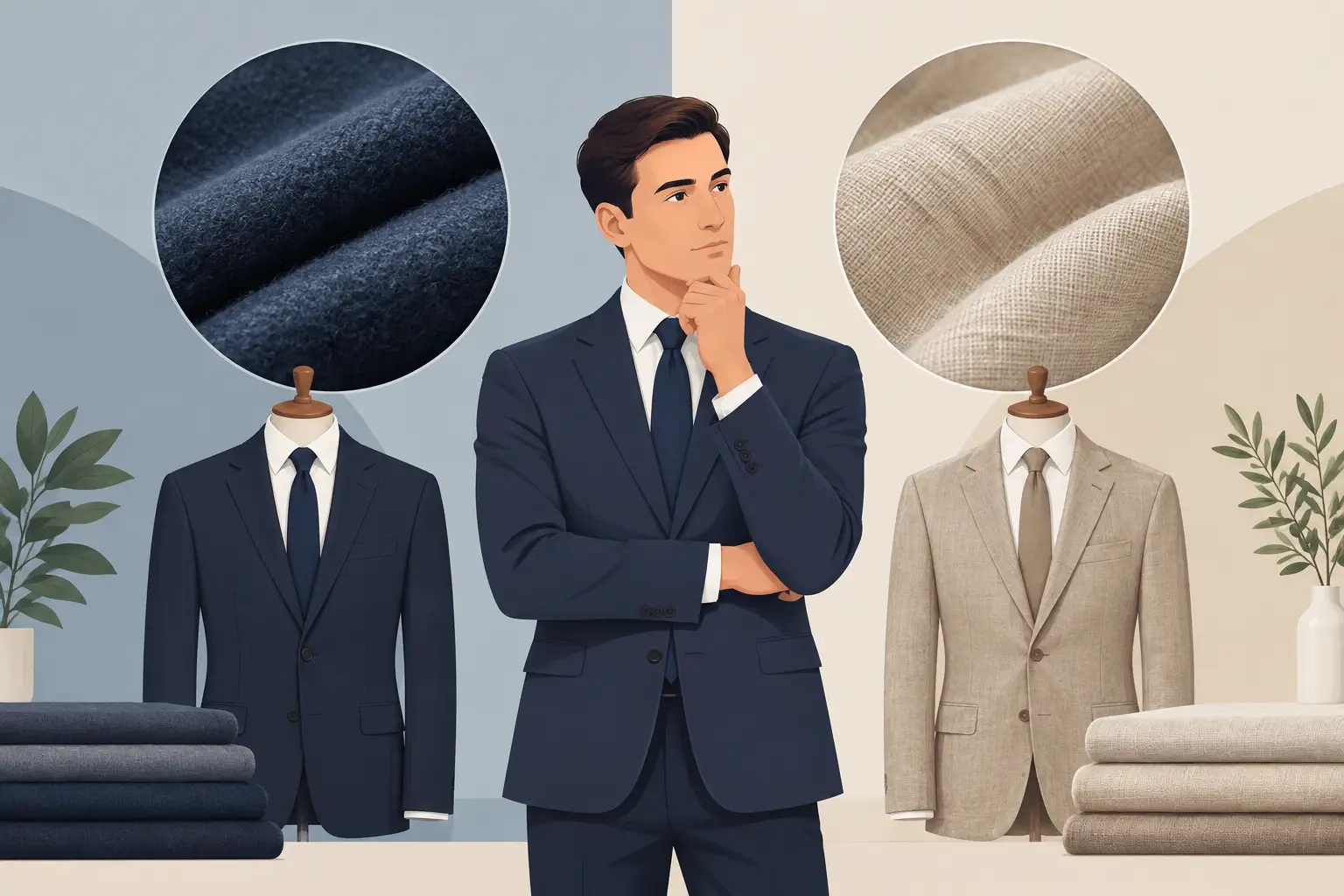
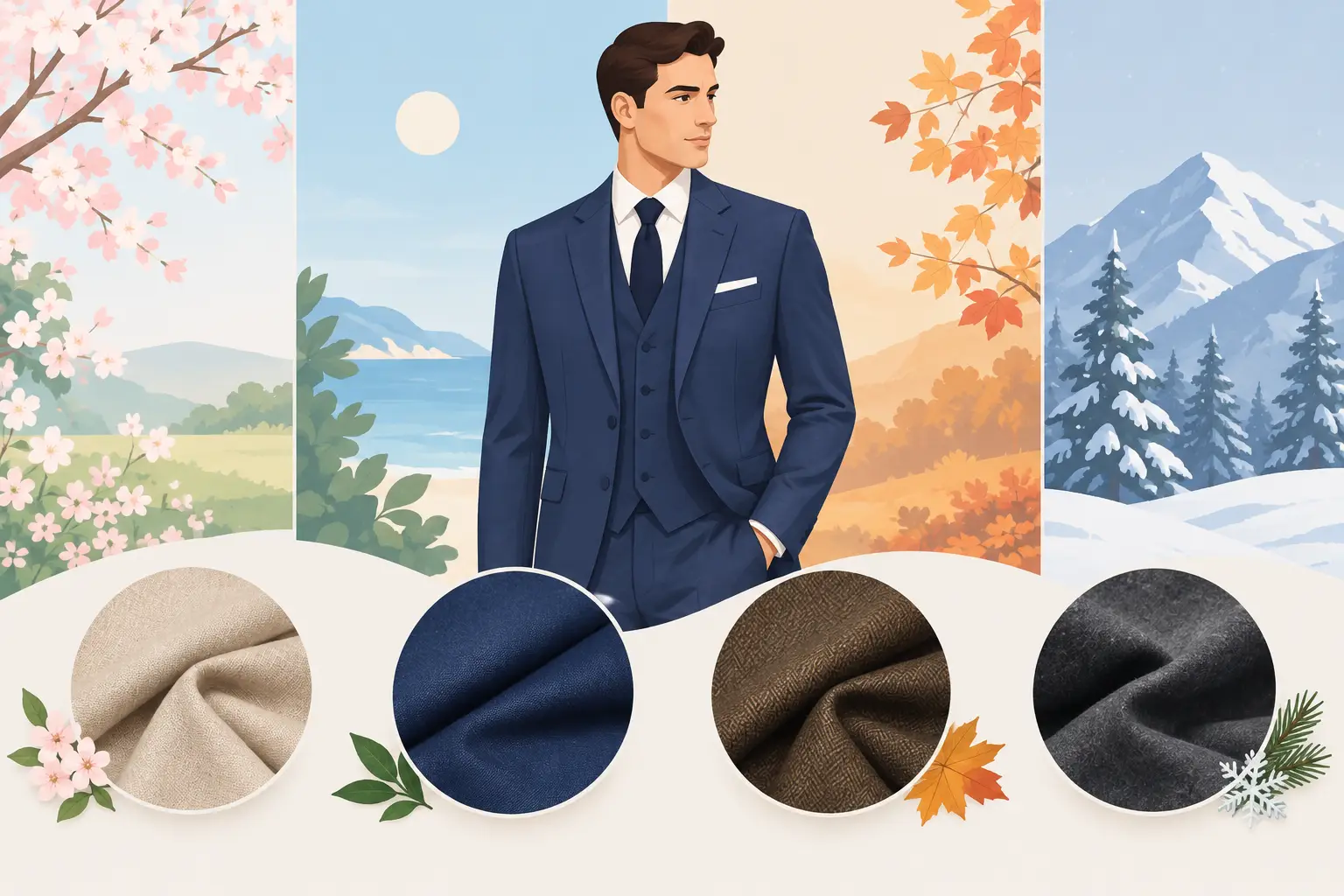
An athletic frame can carry cloth beautifully, but the wrong fabric can magnify every fitting error. Very lightweight cloth may cling to the body and reveal strain if the cut is not exact. Very stiff cloth can make a broad frame appear cumbersome. The best option often sits in the middle – a cloth with enough body to drape cleanly and enough resilience to move well.
For business suits, a mid-weight worsted wool is usually a strong choice. It holds shape, presents well in professional settings and allows the line of the jacket to remain crisp through the day. For weddings or evening occasions, a finer cloth may bring elegance, though it still needs enough structure to flatter the figure.
Pattern also deserves restraint. Bold checks across a muscular chest or seat can become visually noisy if the fit is not impeccable. Plain cloths, subtle textures and disciplined stripes tend to create a cleaner, more commanding impression.
Where athletic clients often go wrong
The most common mistake is chasing slimness instead of precision. An athletic body already provides presence. It does not need forcing into a narrower, tighter template. When a suit is overly reduced, every point of strength becomes a point of tension – button pulling, pocket flare, trouser whiskering, lapel bowing.
The second mistake is overcompensating with extra room. Some men, frustrated by restrictive tailoring, start buying larger jackets and fuller trousers. This may feel easier, but it sacrifices shape and polish. A premium suit should follow the body with discipline, not hide from it.
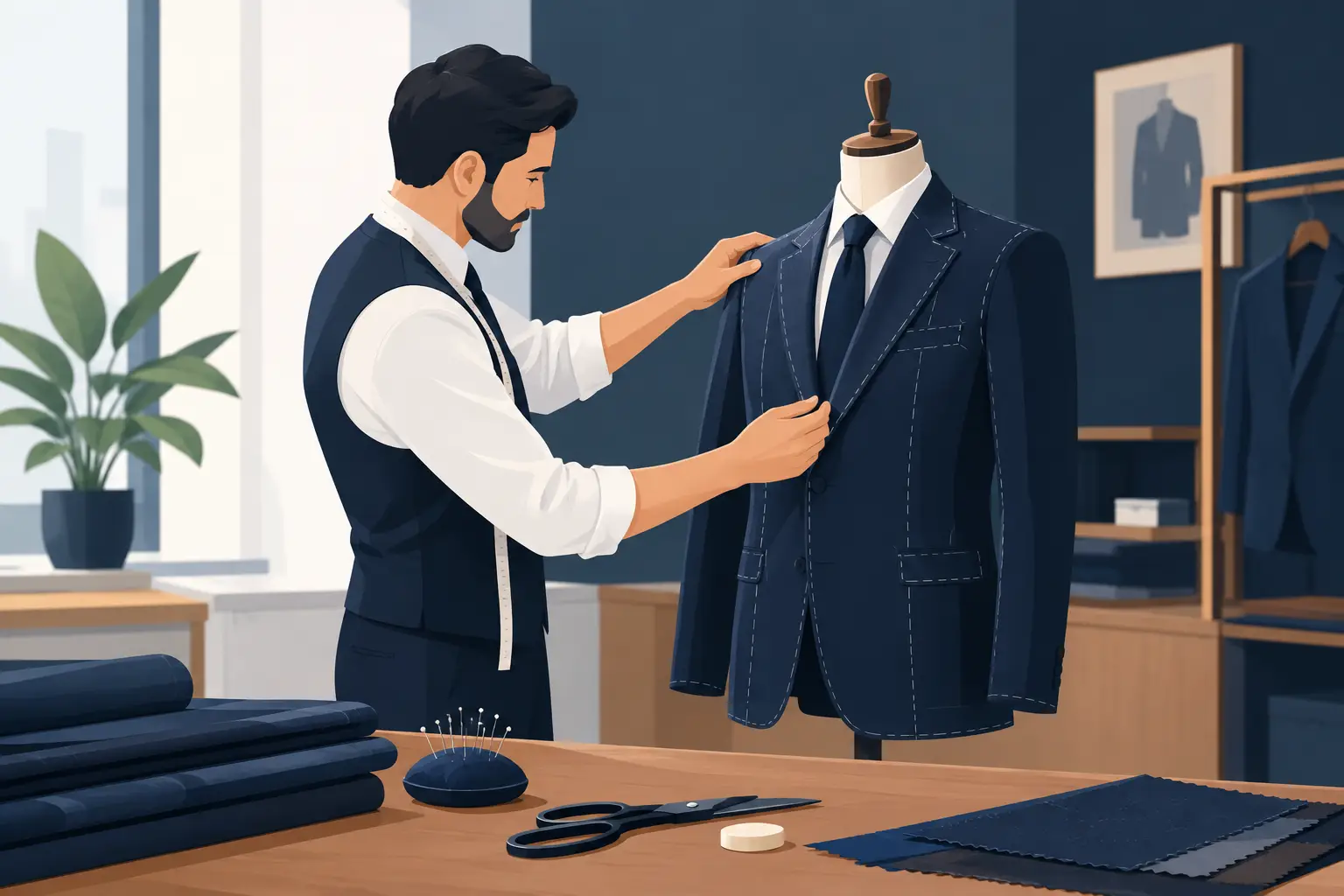
The third is ignoring alterations. Even an excellent made-to-measure garment may need refinement once worn. Athletic proportions can reveal small imbalances that only become obvious in movement. A serious tailoring house treats fitting as a process, not a single appointment.
Why bespoke is especially valuable here
A true bespoke process does more than record measurements. It interprets physique, stance and intention. Two men may share the same chest and waist numbers, yet require entirely different cuts because one carries more fullness in the upper back, another in the seat, and each stands differently.
That is why the best bespoke suit for athletic build example is not merely a photograph of a fitted man. It is a demonstration of pattern intelligence. It shows how a coat can honour broad shoulders without stiffness, shape the waist without pinching, and balance strong legs without bulk.
For first-time clients, that level of personalisation is often the moment tailoring starts to make sense. They realise fit is not about squeezing into an ideal. It is about building a garment around the body they actually have, and doing so with judgement.
At Manndiip, that principle sits at the heart of the process. Precision cutting, meticulous finishing and informed styling allow an athletic client to look polished rather than overworked, powerful rather than overdone.
A well-made suit should never ask you to downplay your frame or fight against it. The right one gives it structure, composure and presence – the sort that is felt before a word is spoken.