
A room notices the right suit before a word is spoken. That is why a bespoke suit for boardroom presence example is so useful – it turns an abstract idea like authority into visible, wearable decisions about cut, cloth and proportion. In senior meetings, investor presentations and client negotiations, your suit does not need to shout. It needs to communicate certainty, composure and discernment with absolute control.
Off-the-peg tailoring can look respectable, but the boardroom is rarely kind to approximation. A jacket that pulls when you reach for a document, trousers that collapse untidily over the shoe, or shoulders that sit a touch too broad all send the same message: close enough. Bespoke exists at the opposite end of that equation. It refines the silhouette to your posture, your movement and the impression you want to make.
What a bespoke suit for boardroom presence example really looks like
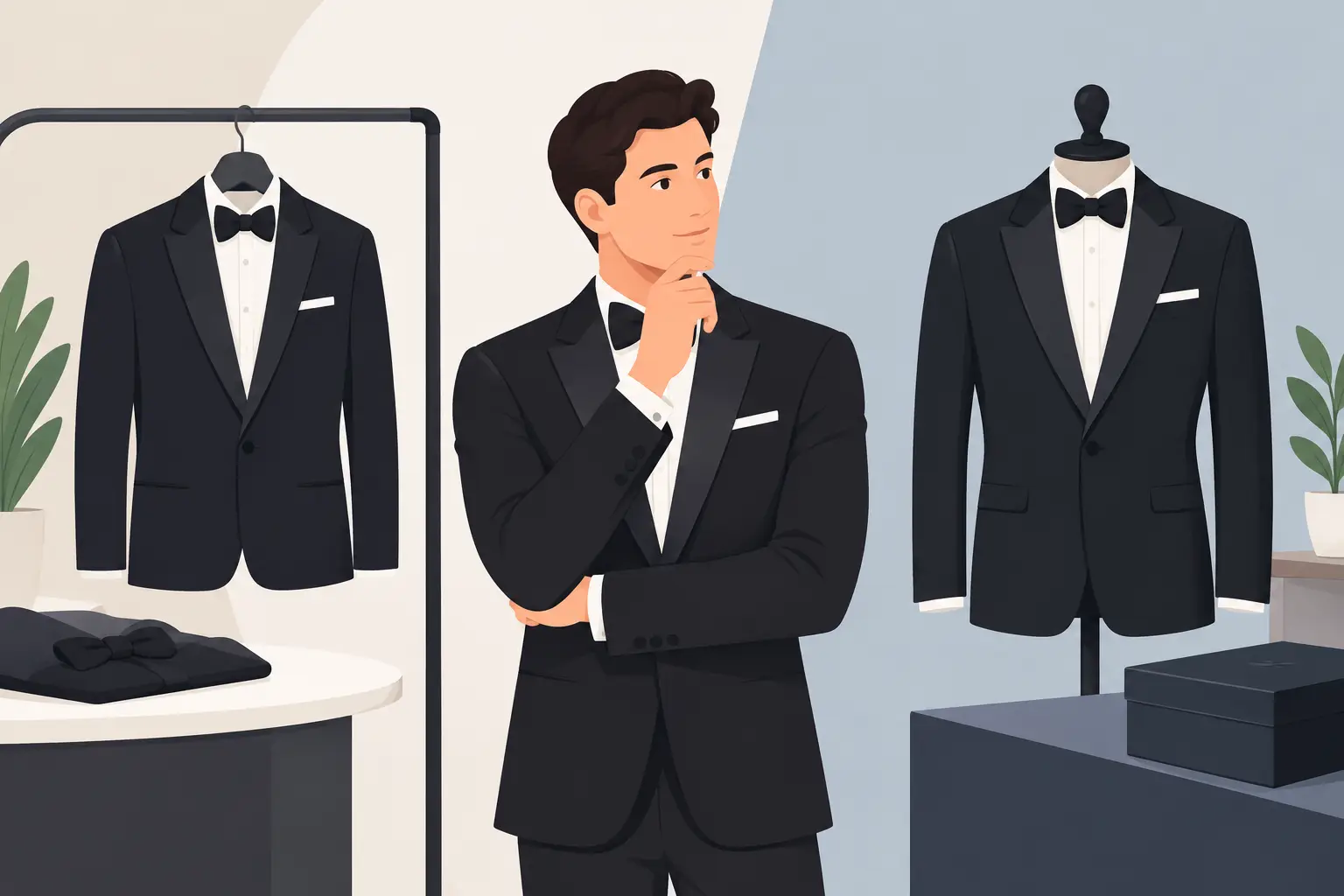
Consider a senior finance director in his early forties, broad through the chest, slightly sloping at one shoulder, and frequently in front of clients. He wants authority without flash, polish without stiffness, and enough versatility to move from quarterly reviews to evening dinners. The correct answer is not simply a navy suit. It is a precisely considered navy suit.
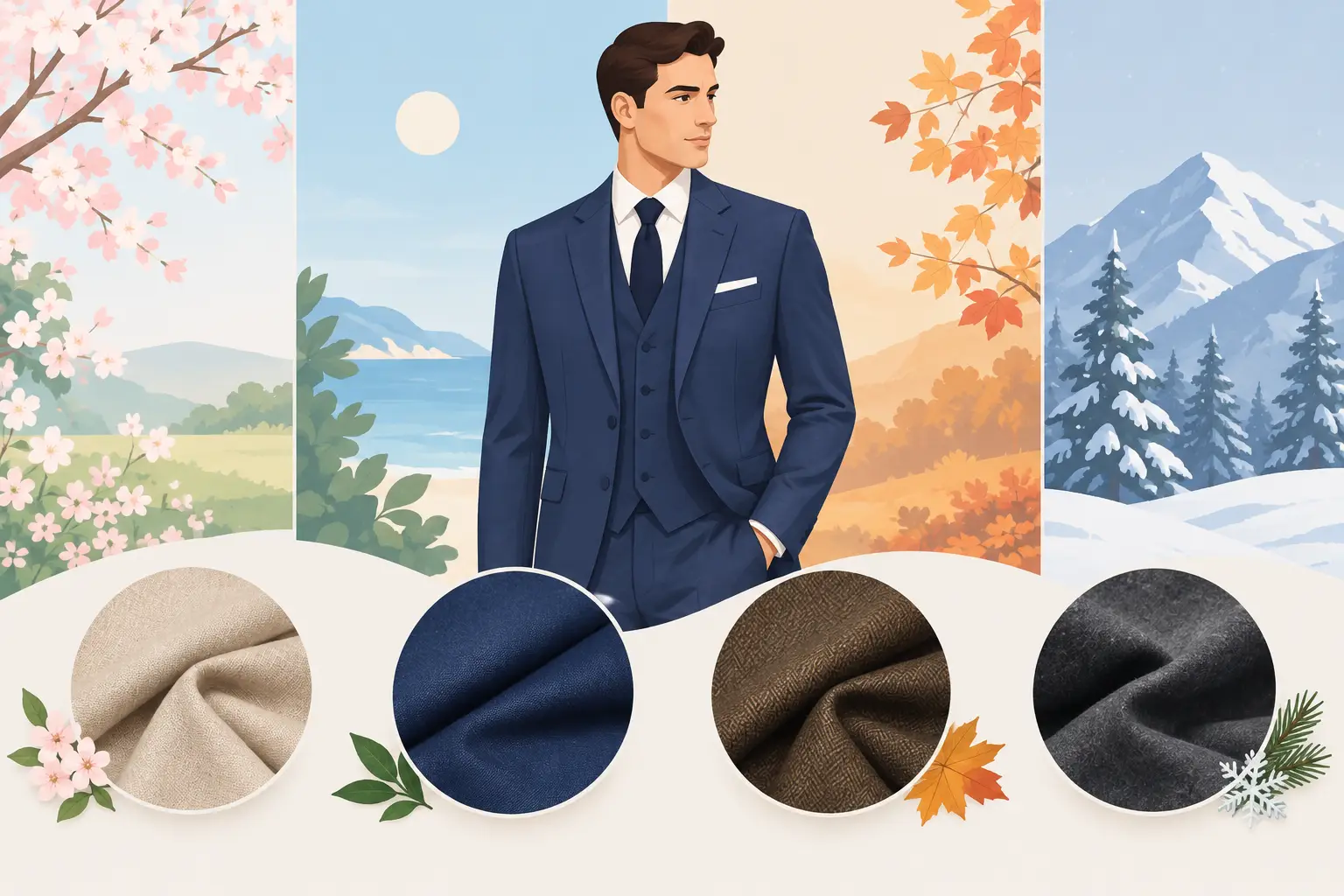
In this example, the cloth is a high-twist worsted wool in a deep midnight navy, around the 280g to 320g range. That weight matters. Too light, and the suit can look flimsy under boardroom lighting while creasing too quickly through a long day. Too heavy, and it risks feeling dense and overly formal, particularly if he travels. A refined worsted offers a clean drape, resilience and a subtle lustre that reads expensive without appearing decorative.
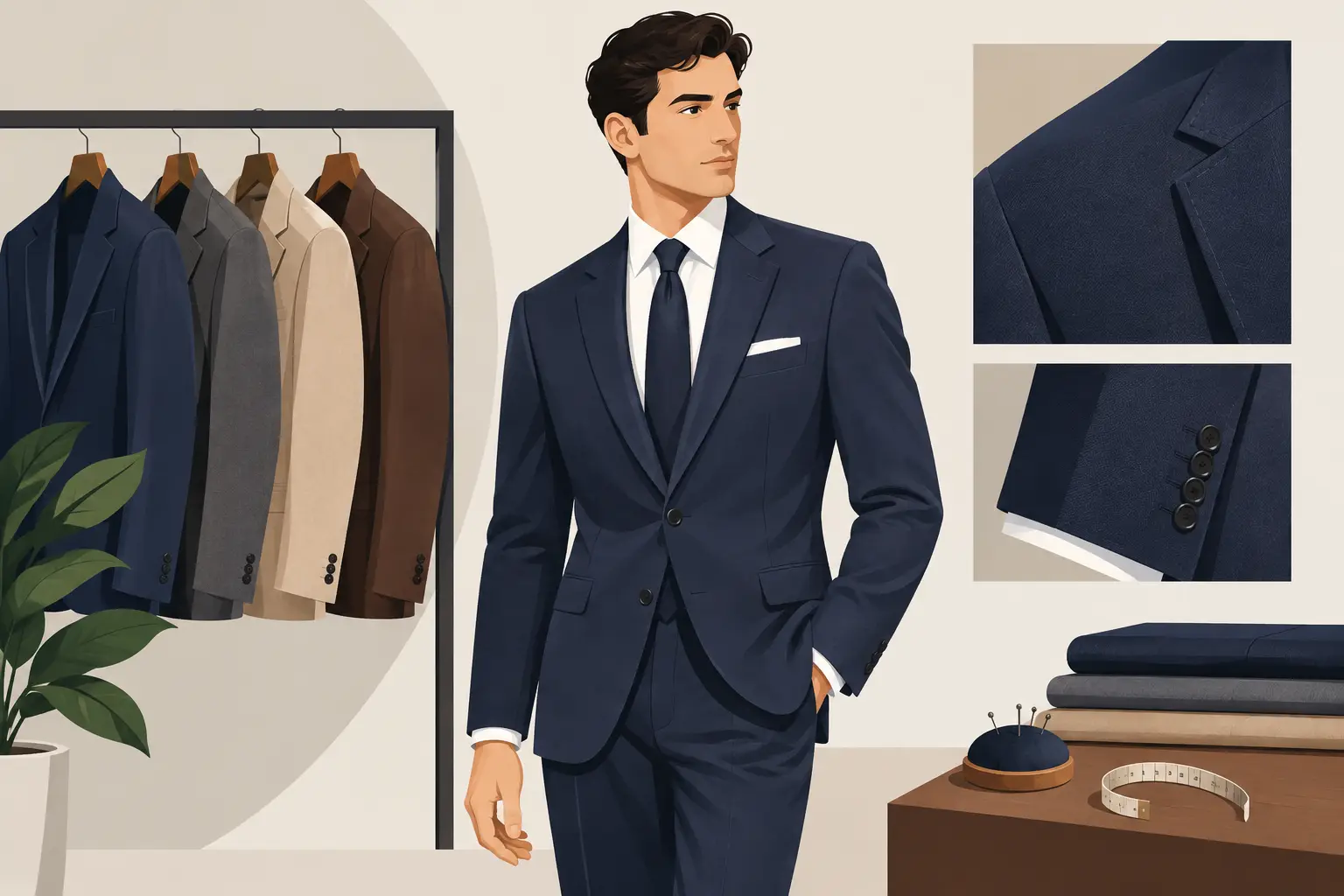
The jacket is single-breasted with a two-button fastening, lightly structured through the shoulder and shaped neatly at the waist. The lapels are moderately wide – not fashion-led, not narrow and timid. That balance frames the chest properly and gives the torso a stronger line. The quarters are slightly open, which introduces elegance, while the length covers the seat fully and anchors the whole silhouette.
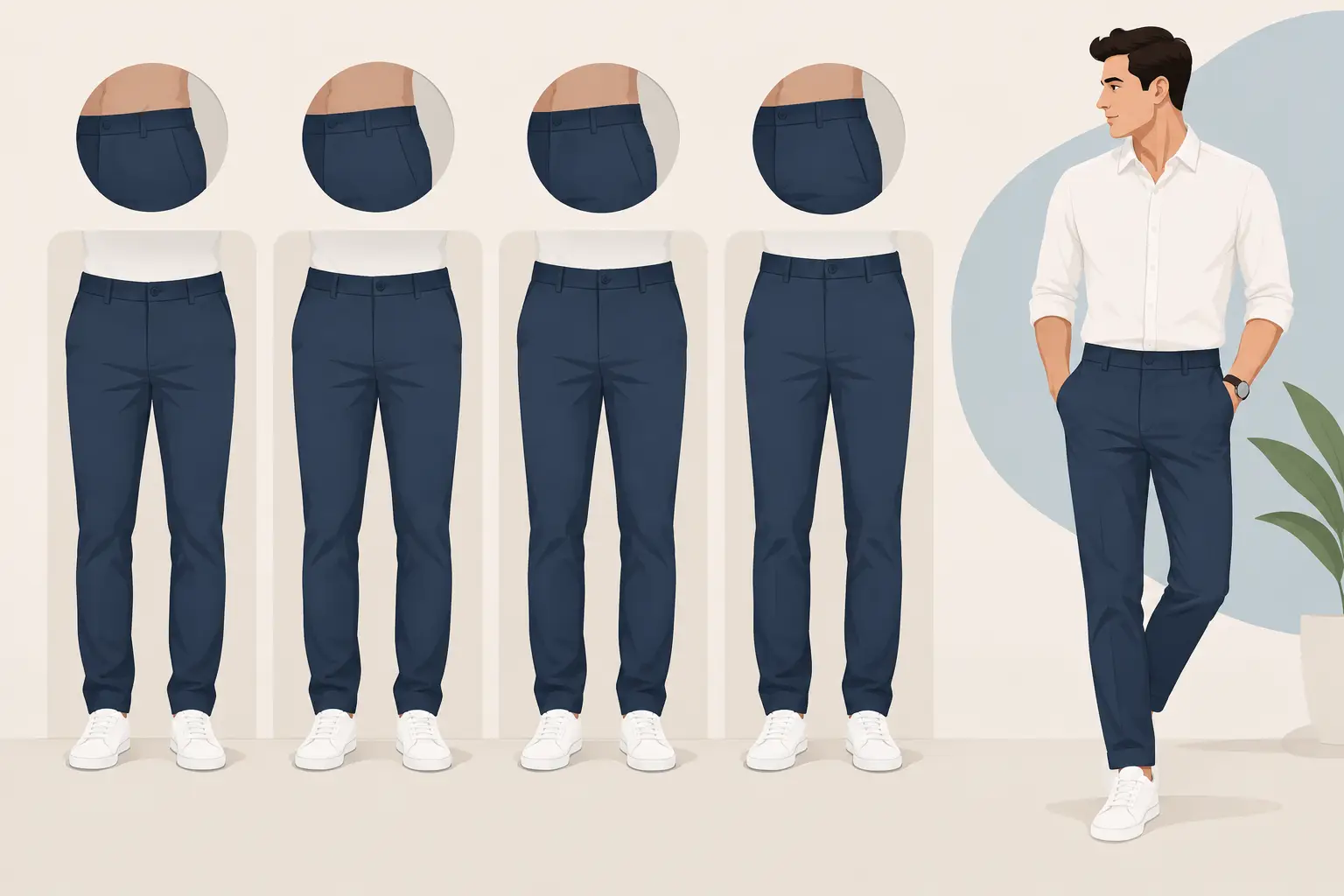
Trousers sit at the natural waist rather than low on the hip. That single choice often transforms a business suit. A higher rise lengthens the leg line, supports the jacket cleanly and avoids the unsettled gap that appears when a man sits in meetings wearing low-rise ready-to-wear trousers. The leg is tailored with enough room through the thigh for comfort, then falls to a clean, decisive break over a dark Oxford shoe.
None of this is theatrical. That is precisely the point.
Why boardroom presence starts with cut, not decoration
Men often assume presence comes from visible luxury – a brighter tie, an obvious label, a more aggressive silhouette. In reality, senior dressing is more exacting. Presence usually comes from restraint handled well. The jacket should make your shoulders look composed rather than enlarged. The waist suppression should suggest shape without strain. Sleeves should show a measured amount of shirt cuff, not a flourish.
A boardroom suit works best when people register the result before they notice the details. If they are thinking, he looks exceptionally well put together, the tailoring is doing its job. If they are thinking about the suit itself, there is a chance it is trying too hard.
This is where bespoke has a distinct advantage. It accounts for your natural asymmetry, stance and habits. If one shoulder drops, the pattern is adjusted. If you spend much of the day seated, balance and trouser rise can be cut accordingly. If your chest is prominent and your waist trim, the front can be shaped to flatter rather than flatten. These are not minor corrections. They are the difference between a suit that merely fits and one that strengthens your presence.
The quiet authority of proportion
Proportion is one of the least discussed and most decisive elements in business tailoring. A taller man may need a slightly lower button stance to balance his torso. A shorter man may benefit from a cleaner skirt line and carefully judged lapel width to avoid looking boxed in. A broad frame calls for structure, but not bulk. A slimmer frame needs shape, but not severity.
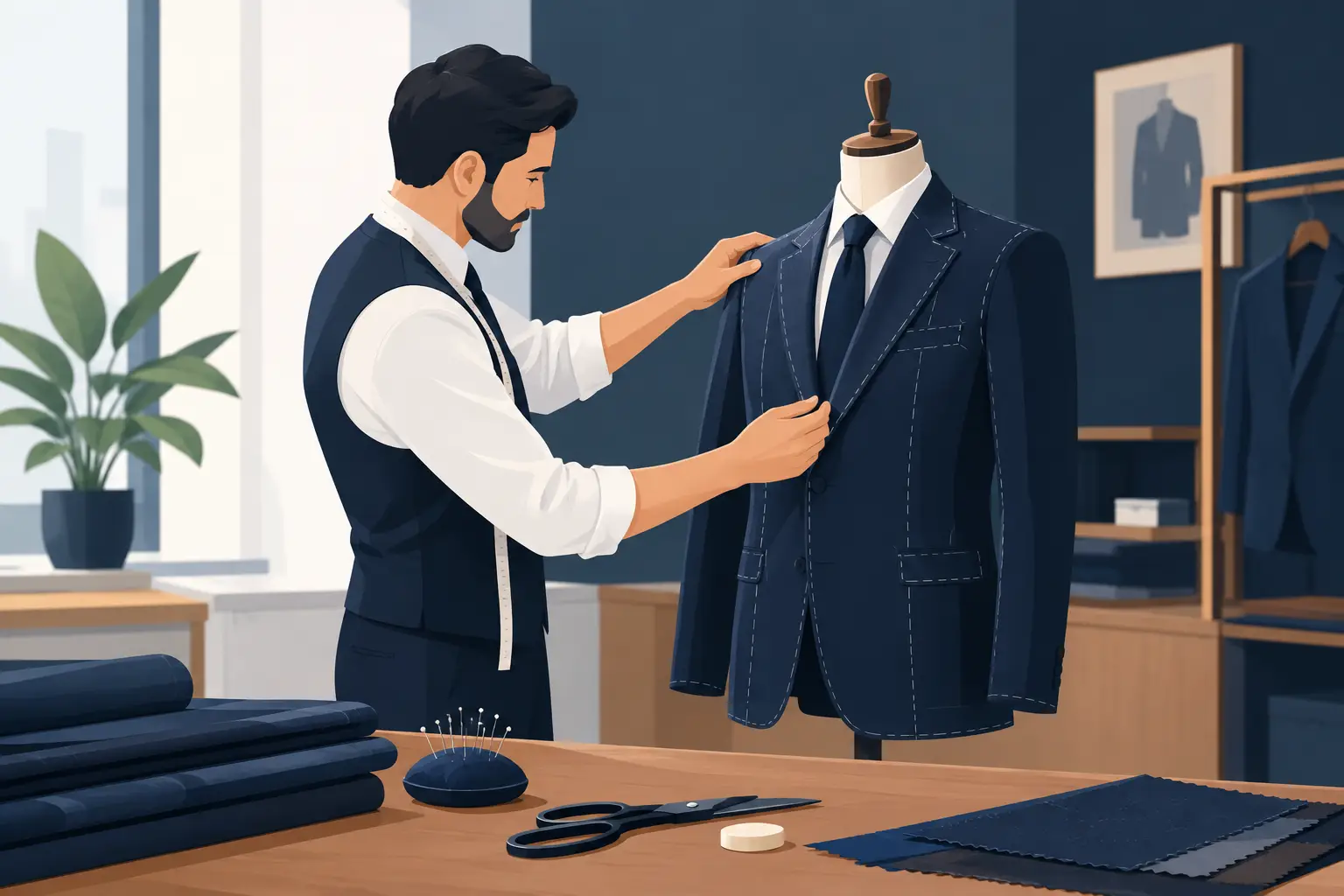
The best bespoke tailors read these variables quickly. They are not simply taking measurements. They are assessing how to create command through line.
Cloth choices that support authority
If this bespoke suit for boardroom presence example were executed in the wrong fabric, the effect would weaken immediately. Cloth carries meaning. For serious business settings, navy and charcoal remain the strongest foundations because they signal discipline and judgement. Mid-grey can work beautifully in certain sectors, particularly advisory or creative leadership roles, but it tends to feel less commanding than dark navy in high-stakes meetings.
Pattern should be handled with care. A fine pinstripe can project confidence, though it also carries more overt financial connotations and can feel too assertive depending on your industry. A subtle self-stripe or plain weave is often more versatile. For many professionals, the ideal boardroom cloth is one that reveals its quality up close rather than from across the room.
Texture also matters. A smooth worsted reads cleaner and more formal than a pronounced flannel. Flannel is elegant and deeply sophisticated in cooler months, but it introduces softness. That may be perfect for a private office, less so for a room where crispness helps. It depends on role, season and corporate culture.
Details that elevate without distracting
Small details should support the suit’s authority, not compete with it. Horn buttons in a dark tone give depth without contrast. Side adjusters can create a cleaner waistline than a belt, though some men prefer the familiarity of belt loops for daily wear. A half or full lining depends on comfort and climate, but the outer line must remain clean in either case.
Shirt and tie choices complete the message. A pale blue or crisp white shirt offers the clearest framework. Ties should have substance – grenadine, fine silk twill or a subtle woven texture all work well. Loud sheen and novelty patterns do not. A white linen pocket square can be elegant, but even that is optional in stricter environments.
The trade-offs: what bespoke can and cannot do
Bespoke is powerful, but it is not magic. It will not compensate for poor posture, lack of grooming or a misunderstanding of context. Nor should every boardroom suit be cut in the same way. A founder in a modern technology business may need softer tailoring than a barrister or a corporate chairman. The aim is not uniformity. It is alignment.
There are also practical trade-offs. A very structured jacket can look superb standing, but if you travel constantly and spend much of the day seated, a slightly softer build may serve you better. A superfine cloth may feel luxurious in the hand, yet a more durable wool is often the wiser choice for frequent wear. Elegance in business dress usually comes from choosing what performs well over time, not what impresses for ten minutes.
That is where a tailoring house such as Manndiip earns its place. The true value is not simply in making the garment. It is in guiding the client towards the right garment for his life, his role and the image he needs to project consistently.
How to judge whether your suit has boardroom presence
The simplest test is not in front of a mirror. It is in motion. Button the jacket, sit down, stand up, reach across a table, place your hands in your trouser pockets, walk at a natural pace. The suit should remain composed. The collar should stay close to the neck. The lapels should lie flat. The trouser line should remain clean without twisting or pooling.
Then consider the visual impression. Does the jacket give your torso shape? Do the shoulders look assured but natural? Is the overall effect calm and expensive, or busy and self-aware? The best boardroom tailoring tends to make the wearer appear more decisive, not more decorated.
That is the enduring lesson of any strong bespoke suit for boardroom presence example. Authority in dress is rarely about excess. It is about precision used in service of character. When a suit is meticulously cut to your frame and chosen with the setting in mind, it does more than sharpen your appearance. It allows you to enter the room looking exactly as if you belong there.