
The moment your suit disappears under a mediocre coat, the authority of the whole outfit drops. For men who take business dress seriously, outerwear is not an afterthought. The best overcoat styles for business wear protect the line of the jacket beneath, sharpen the silhouette, and carry the same sense of intent as the tailoring underneath.
A business overcoat should do more than keep out the cold. It should lengthen the frame, sit cleanly over a jacket, and move with polish from commute to client meeting to evening engagement. That means choosing with the same care you would bring to a suit – paying close attention to cut, cloth, proportion and finish.
What makes an overcoat right for business wear
The first consideration is structure. A business overcoat must accommodate tailoring without strain, which is why casual outerwear so often falls short. If the chest pulls, the sleeve head collapses, or the skirt kicks out over the suit jacket, the impression is instantly compromised.
Length matters just as much. For professional wear, an overcoat should usually fall somewhere around the knee, or just above it. Too short, and it can look insubstantial over a suit. Too long, and it may feel theatrical unless the wearer is particularly tall or the cut is handled with confidence. The most versatile point is a length that covers the jacket hem fully while maintaining a clean vertical line.
Fabric also changes the character of the garment. A compact wool or wool-cashmere blend offers warmth and refinement without excessive bulk. Heavier coatings can be superb in deep winter, but if they become too weighty or coarse, they may overwhelm finer business tailoring. The right cloth should feel substantial, not stiff.
Best overcoat styles for business wear by occasion and wardrobe
Not every business wardrobe calls for the same overcoat. A man in navy city suits five days a week needs something different from someone whose office dress leans more contemporary, or who moves regularly between formal appointments and smart-casual settings.
The single-breasted overcoat
If there is one style that earns its place in almost every professional wardrobe, it is the single-breasted overcoat. Clean, understated and highly adaptable, it works beautifully over most business suits and remains the safest choice for men buying their first proper coat.
Its strength lies in restraint. A three-button or concealed-button front, neat lapel line and well-balanced skirt create a silhouette that feels polished without appearing overstated. In navy, charcoal or deep black, it carries from boardroom to dinner with ease.
This is often the wisest option for men with a slimmer frame, or for those who prefer a modern business look. It avoids excess fabric at the front and layers neatly over a jacket. That said, it still needs enough room through the chest and upper back. A trim coat should never become a tight coat.
The double-breasted overcoat
For greater presence, the double-breasted overcoat is difficult to surpass. It brings a sense of sartorial authority that suits formal business environments particularly well, especially when worn over a structured suit and proper leather shoes.
The extra cloth across the front provides warmth, but the real appeal is visual. A well-cut double-breasted coat broadens the chest, defines the waist and creates a commanding line. It is especially effective on taller men, though it can be equally impressive on shorter frames if the balance is carefully controlled.
There is a trade-off. This style is less forgiving if the proportions are wrong. Buttons placed too low can make the coat feel heavy, while broad lapels on a compact frame may dominate. Precision matters here, which is why bespoke or carefully altered ready-to-wear makes such a difference.
The Chesterfield
Among the most elegant answers to the question of the best overcoat styles for business wear is the Chesterfield. Traditionally cut as a tailored single-breasted coat, often with a velvet collar in more classic expressions, it is a style rooted in formal city dressing.
What sets the Chesterfield apart is its refined simplicity. It tends to sit closer to the body than bulkier overcoats and is particularly well suited to men who want outerwear that mirrors the discipline of their suiting. Over a dark worsted suit, it looks assured and impeccably considered.
For everyday business use, a plain-collar Chesterfield in navy or charcoal is often the most versatile interpretation. The velvet collar can be exceptionally elegant, but it does introduce a slightly dressier note. Whether that feels right depends on your office, your wardrobe, and how much classic formality you want your coat to carry.
The covert coat
The covert coat deserves more attention than it often receives. Slightly less formal than a Chesterfield, but still smart enough for professional wear, it occupies a useful middle ground for men whose business wardrobe needs flexibility.
Traditionally made in a durable twill cloth and featuring details such as a fly front and stitched cuff and hem edges, the covert coat has a clean country-to-city heritage. In practice, that means it pairs especially well with textured suits, flannel trousers, odd jackets and business-casual tailoring.
If your week includes both formal meetings and less rigid office days, this can be an excellent choice. It may not have the same ceremonial sharpness as a double-breasted overcoat, but it offers quiet confidence and real practicality.
Choosing colour and cloth with confidence
For business use, dark neutrals remain the strongest foundation. Navy is often the most versatile, particularly for men who wear grey and blue tailoring regularly. Charcoal feels urbane and discreet. Black can be striking, but it is usually at its best in more formal wardrobes rather than everyday office rotation.
Camel has obvious appeal and, when cut well, can look extremely sophisticated. Yet it is less forgiving in busy commuting conditions and may feel too expressive for some conservative environments. It depends on the role, the city, and the rest of the wardrobe. A senior creative professional may wear camel brilliantly. A solicitor in a highly traditional setting may prefer charcoal.
As for cloth, pure wool remains the benchmark. A touch of cashmere softens the handle and adds luxury, but durability should not be overlooked. Business overcoats are worn frequently, brushed often, and exposed to weather, friction and travel. A beautifully milled wool coating with resilience will usually serve better than a cloth chosen purely for softness.
Why fit matters more than fashion
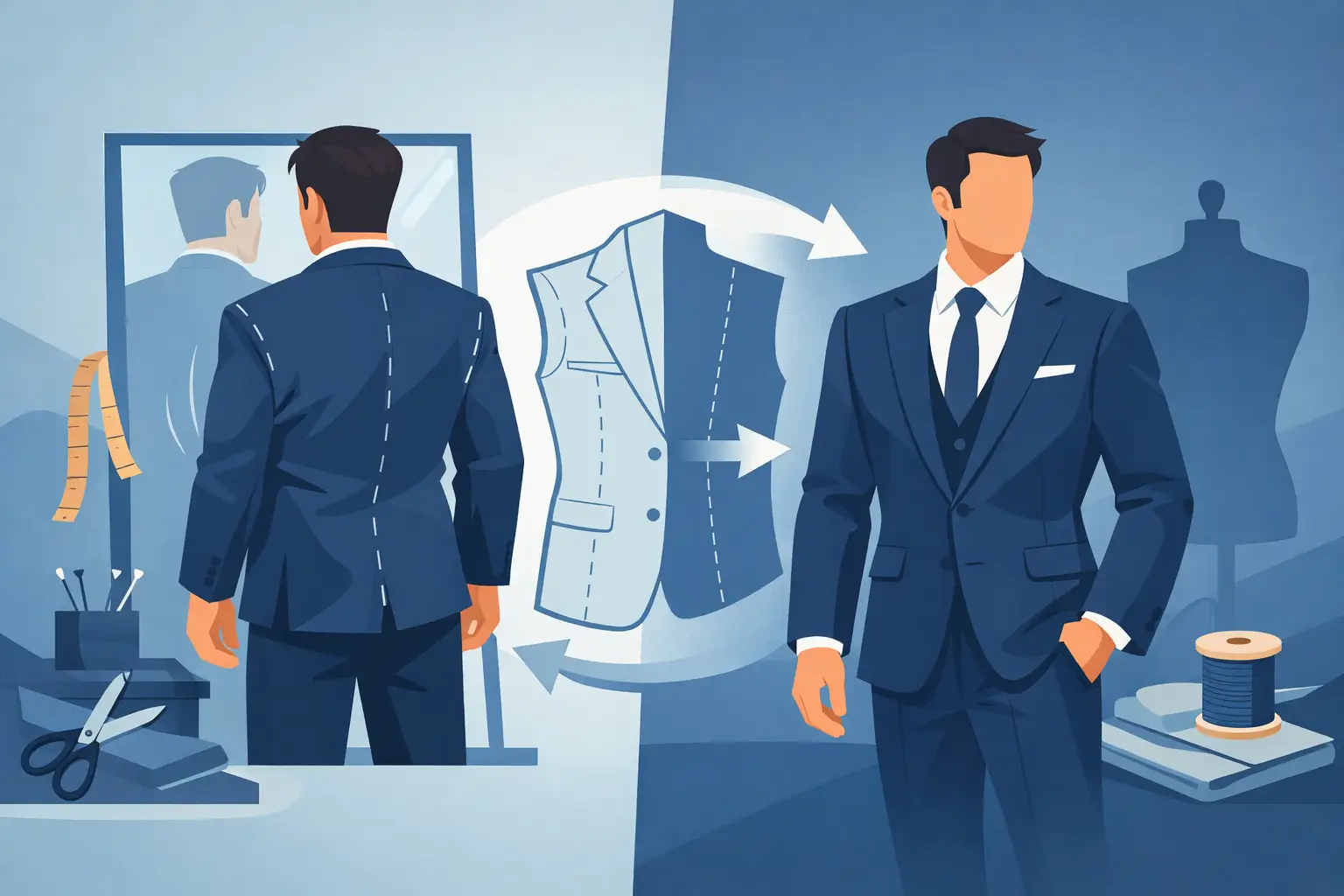
The finest cloth and most elegant design cannot compensate for poor fit. An overcoat for business wear must be cut around tailoring, not around a knit or shirt alone. The shoulder should sit cleanly, the collar should remain close to the neck, and the sleeves should allow the suit beneath to move without resistance.
There should also be shape through the body. Many men assume an overcoat needs to be boxy to fit over a jacket, but the opposite is true. The most distinguished coats are engineered with enough internal allowance while still following the contours of the body. That balance is what gives an overcoat its quiet authority.
Length of sleeve is another point often missed. Too long and the hands disappear, which makes the coat feel heavy. Too short and the proportion looks unsettled. In most cases, the sleeve should finish around the break of the wrist, preserving a crisp line without swallowing the hand.
Details that elevate the coat
A business overcoat should be restrained, but restraint is not the same as plainness. The details matter. A well-shaped lapel, properly weighted hem, elegant button stance and smooth lining all contribute to how the coat performs and how it feels to wear.
Pockets should suit the coat’s purpose. Slanted pockets can add a touch of dynamism, while straight flapped or jetted pockets tend to feel more formal. A centre vent often works well for movement, especially over suiting, though some coats benefit from a clean ventless back if the cut is managed skilfully.
These are not decorative niceties. They affect drape, comfort and longevity. Men building a serious wardrobe quickly learn that sophistication is nearly always the result of small decisions made properly.
Building the right overcoat wardrobe
If you are buying one coat, choose a single-breasted navy or charcoal overcoat with enough length to cover the suit jacket and enough structure to hold its shape. It will do the most work and remain relevant for years.
If you are adding a second, that is the moment to consider a more assertive option such as a double-breasted coat or a darker Chesterfield for formal business dressing. A covert coat makes sense for men who divide their time between tailored and slightly softer office wardrobes.
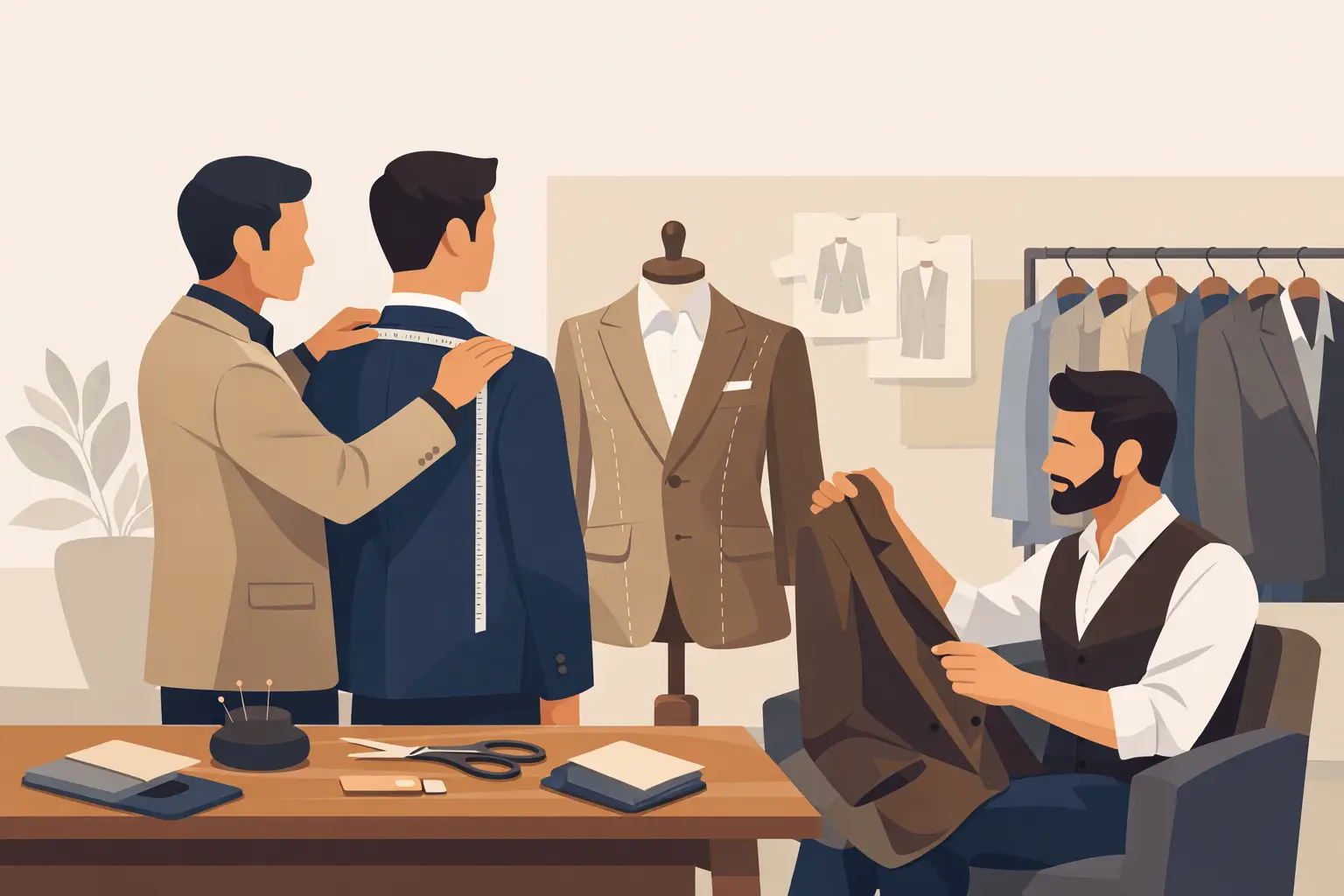
At Manndiip, this is where bespoke thinking proves its value. The right overcoat is not simply selected by trend or label. It is shaped around the wearer – his posture, his business wardrobe, his routine, and the impression he intends to make.
An overcoat should finish the line of your business dress with the same precision as the suit beneath it. Choose one that respects proportion, carries authority without effort, and feels unmistakably your own. That is when outerwear stops being seasonal necessity and becomes part of your signature.