
A suit that looks impeccable in October but feels stifling by May is not a versatile investment. When clients ask about the best suit fabrics for all season wear, they are usually asking a more refined question: which cloth will hold its shape, wear elegantly, and remain comfortable across a full working wardrobe rather than for one narrow stretch of weather.
The answer, in most cases, begins with wool. Not heavy winter flannel, and not an airy summer cloth designed for Mediterranean heat, but a well-chosen suiting wool with the right weight, weave, and finish. The difference matters. A suit is only as successful as the balance between cloth, cut, and the life you expect it to serve.
What makes the best suit fabrics for all season wear?
All-season fabric is not about surviving every possible temperature with equal ease. No cloth will feel identical in a July heatwave and a cold January morning. What you want is a material that performs across most of the British year, layers well, and maintains a clean silhouette in both boardroom and occasion settings.
That means looking at four things closely: weight, breathability, resilience, and drape. A cloth that is too light may crease quickly and lack presence. One that is too heavy can feel oppressive indoors, particularly if you travel between the office, train, and evening engagements. The most successful all-rounders usually sit in the middle, offering structure without stiffness and comfort without sacrificing elegance.
Wool remains the benchmark
For most men building a serious wardrobe, wool is still the finest place to start. It regulates temperature naturally, recovers well from creasing, and drapes with a level of sophistication that synthetic-heavy fabrics rarely match. A well-constructed wool suit also ages with greater grace, which matters if you expect repeated wear over several years.
Merino wool is especially strong for all-season tailoring. Its fibres are fine enough to feel smooth against the skin, yet resilient enough to maintain shape when properly woven. In practical terms, that means a jacket that keeps its line through a full day and trousers that remain polished rather than collapsing by mid-afternoon.
For year-round use in Britain, a cloth weight around 9 to 11 ounces is often the sweet spot. Lighter than this can work if you run warm or spend most of your time indoors, but very lightweight cloths ask more of the tailoring and can show wear sooner. Heavier cloths carry authority and beautiful drape, yet they are better reserved for cooler months.
Worsted wool vs woollen wool
If you are choosing one suit to cover the broadest number of occasions, worsted wool is usually the stronger option. It is woven from combed fibres, producing a smoother, cleaner finish with a sharper business-ready appearance. It travels well between office, wedding, dinner, and formal events where polish matters.
Woollen fabrics, by contrast, have a softer, fuzzier handle. Think flannel and more textured country cloths. They are handsome and characterful, but they lean seasonal. Beautiful in autumn and winter, less convincing as a true all-year solution.
The most reliable choice: midweight worsted wool
If there is one answer to the question of the best suit fabrics for all season wear, it is midweight worsted wool. It offers the broadest versatility with the fewest compromises. The surface is refined enough for business tailoring, formal enough for many celebratory settings, and durable enough for regular rotation.
This is the cloth we often recommend to men commissioning a first bespoke or made-to-measure suit. It gives enough body for the tailor to sculpt the chest, shoulder, and trouser line properly, while still breathing well through warmer months. It also responds beautifully to finishing details – a precise lapel roll, a clean sleeve pitch, a sharp trouser break – because the cloth has the discipline to hold shape.
In navy or mid-grey, midweight worsted becomes even more adaptable. Those colours move effortlessly between professional and social settings, and they tend to hide light creasing better than very pale tones or stark black.
Fresco and high-twist wool for men who run warm
Not every client experiences temperature the same way. If you tend to feel warm, commute frequently, or need tailoring that remains crisp during long days, high-twist wool deserves serious consideration. Fresco-style cloths, with their open weave and springy yarns, are particularly effective.
These fabrics allow more airflow and resist creasing remarkably well. The handle is a touch drier and the finish slightly less silky than classic worsted, but that is part of their appeal. They wear with quiet confidence and are excellent for business suits that need to stay composed under pressure.
The trade-off is visual softness. If you want a cloth with a luxurious fluidity and richer sheen, high-twist fabrics can feel a little more technical. For many professionals, however, performance is precisely the point.
Wool blends: when they work, and when they do not
Blends can be useful, but they need scrutiny. A wool-silk-linen blend, for example, can create striking texture and depth, especially for occasionwear. Yet as an all-season cloth, it is less dependable. Linen creases more readily, silk can make the fabric more delicate, and the overall effect often feels more seasonal and expressive.
Wool with a modest cashmere content can feel wonderfully soft, but softness is not always an advantage in a hard-working suit. Too much can reduce resilience. If the goal is a suit for frequent use, pure wool or a performance-led wool cloth often makes better sense than a blend chosen only for handle.
Synthetic blends are another matter. They may lower cost and sometimes improve wrinkle resistance, but they rarely deliver the breathability, drape, or longevity that a well-made suit deserves. On the body, the difference is usually obvious. The cloth can look flat, feel clammy, and lose refinement quickly.
Fabrics that are excellent, but not truly all-season
Some of the finest suit cloths are simply not designed to do everything. Linen is elegant, relaxed, and deeply appealing in warm weather, but its creasing is part of its character. That can be charming at a summer wedding and less ideal in a formal business setting.
Cotton suiting has a place too, especially for casual tailoring, but it does not recover from wear in the same way wool does. It can feel heavier than expected, show pressure marks, and lose shape through the day. As a second or third suit, it adds variety. As your single most versatile option, it is rarely first choice.
Flannel is another favourite that deserves honesty. Its softness and depth are exceptional, and few fabrics look more distinguished in colder months. Yet it is firmly autumn and winter territory. Calling it all-season would be flattering it beyond reason.
Choosing by use, not just by fabric label
The right cloth depends on how the suit will actually be worn. A man needing one suit for client meetings, occasional weddings, and evening dinners should prioritise versatility, resilience, and clean drape. Midweight worsted in navy or charcoal is difficult to fault.
A man who already owns core business suits may want his next all-season commission to have a little more personality – perhaps a subtle birdseye, pick-and-pick, or refined sharkskin. These still perform like serious wardrobe foundations, but they add visual depth without becoming limiting.
If your calendar includes regular travel, look more closely at high-twist wool or cloths known for wrinkle recovery. If your priorities are ceremony and visual richness, a slightly softer finish may be worth the trade. The finest tailoring decisions are never just about cloth in isolation. They are about context, lifestyle, and the silhouette you want the garment to project.
Why tailoring still matters as much as fabric
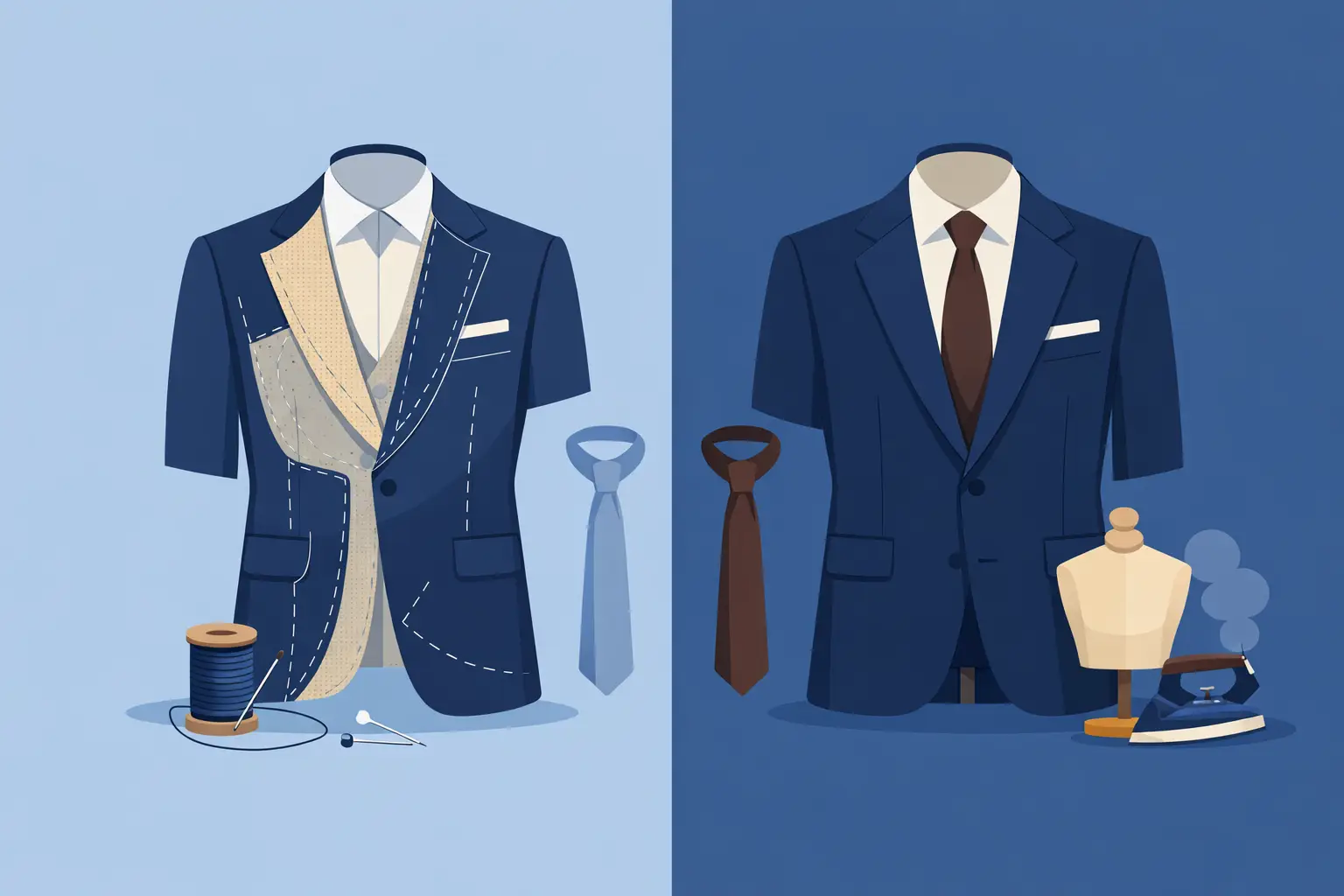
Even the best cloth can disappoint if the cut fights against it. A lightweight fabric needs disciplined pattern cutting and careful balance. A springier cloth needs to be shaped in a way that allows movement without distortion. This is where bespoke judgement changes the result.
The best suit fabrics for all season wear are only truly successful when matched to the wearer. Body shape, posture, working environment, and personal style all influence which cloth will feel effortless rather than merely acceptable. At Manndiip, that conversation is part of the craft. Fabric is not selected in a vacuum. It is chosen to serve the man, the setting, and the impression he intends to leave.
If you are investing in one suit to do serious work across the year, choose a midweight wool that combines breathability with structure, and let the tailoring do the rest. A well-chosen cloth should never ask for attention. It should simply make you look assured, feel comfortable, and move through each season with quiet authority.