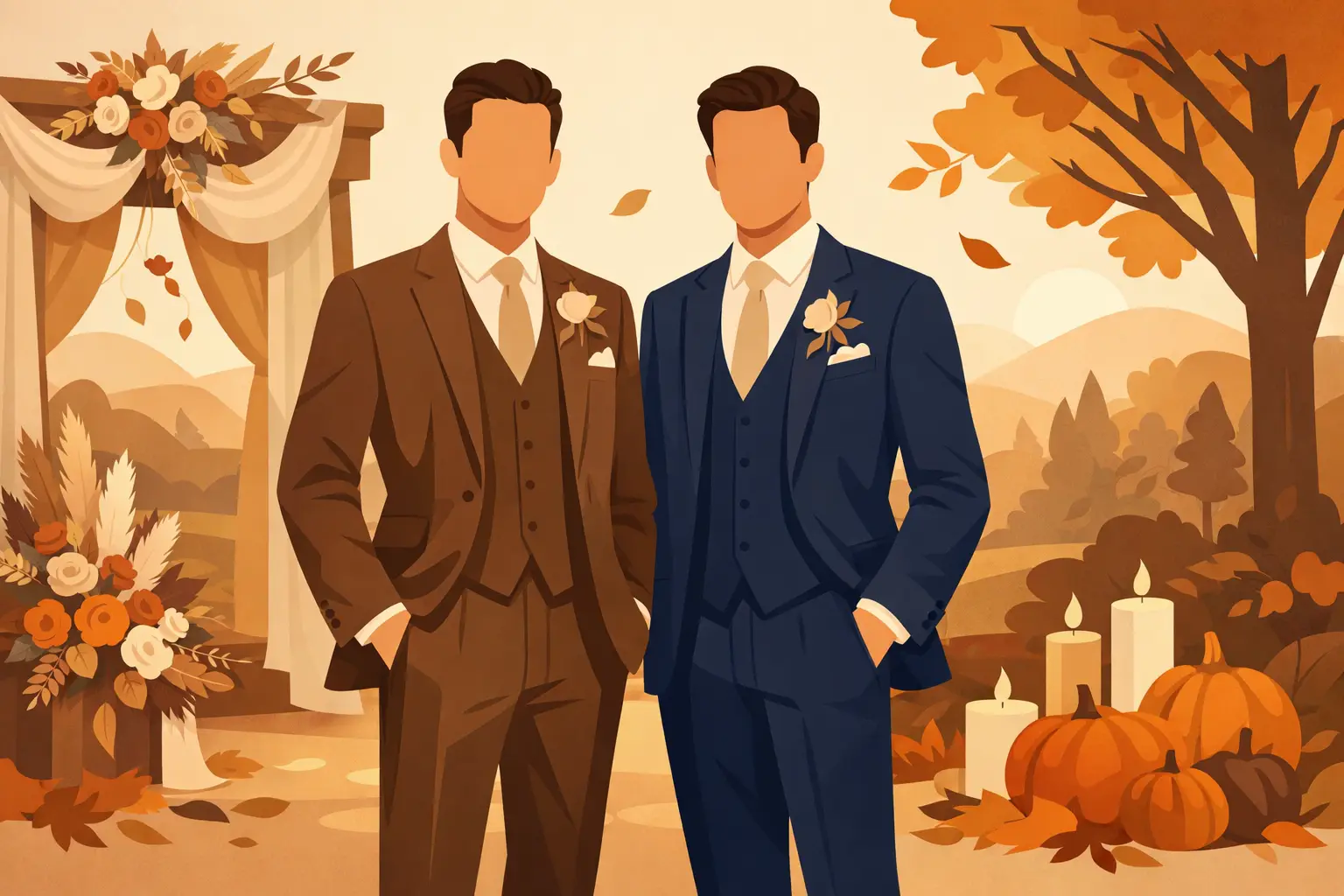
Autumn weddings ask more of a suit. The light is softer, the air has a chill to it, and the setting often carries richer colour – stone venues, candlelit interiors, turning leaves, darker florals. In that atmosphere, the best wedding suits for autumn ceremonies do more than look smart. They need to hold their shape through a long day, sit comfortably with changing temperatures, and feel visually at home in the season.
That is why autumn suiting deserves a more considered approach than simply choosing a dark wool suit and calling it done. Cloth weight, texture, colour depth and cut all matter more at this time of year. Get those elements right and the result is quietly commanding – refined enough for the ceremony, comfortable enough for the reception, and distinctive without looking as though you have tried too hard.
What makes the best wedding suits for autumn ceremonies
Autumn has a very particular character, and tailoring should respond to it. Summer wedding suits often prioritise lightness and breathability above all else. Winter suiting tends to lean heavier, denser and more formal. Autumn sits in the middle, which is precisely why it offers so much sartorial opportunity.
A well-judged autumn wedding suit usually benefits from a little more body in the cloth. Not heavy enough to feel restrictive, but substantial enough to drape cleanly and hold a crisp line. Fabrics with texture also come into their own. A flat, high-shine finish can feel slightly out of place against an autumn backdrop, whereas a subtle matte surface, a faint flannel finish or the gentle character of hopsack or fresco can look more balanced.
Colour is equally important. This is the season for depth rather than brightness. Navy remains dependable, but autumn opens the door to mid-brown, chocolate, olive, forest green, charcoal and muted burgundy accents. The aim is not to match the leaves outside. It is to choose tones with enough richness to feel seasonally appropriate and elegant in natural light.
Cloth first, then colour
When clients begin with colour alone, they often miss the real difference-maker: the cloth. A beautiful shade in the wrong fabric can feel limp, over-warm or too stark for the setting. Start with texture and weight, then refine the palette.
For many grooms and wedding guests, wool remains the strongest choice. A pure wool cloth in a mid-weight range offers versatility, drape and resilience. It photographs well, creases less aggressively than many blends, and adapts better to fluctuating temperatures than people expect. If the ceremony begins outdoors and moves inside, wool tends to manage that transition with ease.
Flannel deserves attention too, particularly for formal autumn venues. A fine flannel suit in charcoal, tobacco or deep navy carries a softness that feels luxurious rather than heavy. The trade-off is that it is more distinctively seasonal. If you want something you will rewear across business and formal occasions, a smoother worsted or lightly textured wool may offer better long-term versatility.
Tweed, done properly, can be exceptional for countryside weddings and rustic settings. It brings heritage character, visual interest and warmth. But it depends on the venue and the brief. In a grand city hotel or black-tie-leaning celebration, a full tweed suit may feel too informal. In that case, texture can be introduced more subtly through a waistcoat, jacket cloth or accessories.
The strongest colours for autumn wedding suiting
Deep navy
Deep navy is often the safest recommendation because it works almost everywhere, yet it need not be predictable. In autumn, navy gains depth when cut in a cloth with visible texture rather than a glossy finish. Pair it with a soft ivory shirt, a richer tie tone and darker brown shoes, and it immediately feels more seasonally attuned.
Charcoal and graphite
For evening ceremonies or more formal settings, charcoal has real authority. It is elegant, photographs beautifully and gives structure to the silhouette. If black feels too severe for a wedding before winter, charcoal is usually the more sophisticated answer.
Brown and tobacco tones
Brown is one of autumn’s most underrated choices. Mid-brown, espresso and tobacco shades can look exceptionally refined when tailored with precision. The key is cloth quality and fit. Brown exposes mediocre tailoring more quickly than navy does, but in a beautifully cut suit it feels confident, individual and warmly luxurious.
Olive and forest green
Green can be excellent for autumn ceremonies, particularly in rural venues or celebrations with a strong seasonal palette. The secret lies in restraint. Think muted olive or deep forest rather than anything vivid. These shades can look distinguished and modern, especially when balanced with crisp shirting and understated accessories.
The right cut matters more in colder months
Autumn cloths often carry a touch more weight and texture, which means the cut has to be disciplined. A loose silhouette can quickly read as bulky, while an overly tight fit becomes uncomfortable the moment layering enters the equation. The strongest autumn wedding suits are shaped cleanly through the chest and waist, with enough room for movement and enough precision to maintain a sharp outline.
A softly structured jacket can work beautifully for relaxed ceremonies, but there is a strong case for a little more shape in autumn. Light padding in the shoulder, proper canvas construction and a balanced lapel line give the suit presence. This is particularly useful when the surroundings are visually rich. The garment needs enough architecture to stand alongside the setting.
Trousers also deserve attention. Heavier cloth benefits from a clean fall, so the seat and thigh should be comfortable without excess fabric. A slight taper usually creates the most flattering line. If you are wearing braces, the trousers can sit especially well through a long day, maintaining shape without the interruption of a belt.
Three-piece or two-piece?
Why a waistcoat works in autumn
If there is a season made for the three-piece wedding suit, it is autumn. A waistcoat adds insulation, yes, but more importantly it adds ceremony. It keeps the groom looking finished when the jacket comes off later in the day and introduces visual depth to the ensemble.
For grooms, a three-piece often feels like the right balance between occasion and practicality. For guests, it depends on the formality of the event. A full three-piece can look excellent, but it may be wiser to hold back if there is a risk of overshadowing the wedding party.
When a two-piece is the better choice
Not every autumn ceremony calls for extra layers. If the venue runs warm, the celebration is more contemporary, or you prefer a cleaner silhouette, a sharply tailored two-piece in the right cloth is more than enough. In that case, accessories and overcoat choice become more important because they carry some of the seasonal expression.
Shirts, ties and outerwear
The suit should lead, but the supporting pieces determine how polished the final look feels. For autumn weddings, white and soft ivory shirts remain the most dependable. Pale blue can work with navy and charcoal, though it is generally less ceremonial. Texture in the tie is often a better move than bright pattern. Grenadine, silk-wool blends and matte printed silks tend to sit beautifully with autumn tailoring.
Pocket squares should complement rather than compete. A handmade square with restrained colour and a touch of texture often does more than a loud contrast piece. The same principle applies to ties – sophistication usually comes from harmony, not noise.
Outerwear is where many otherwise strong looks fall apart. If the weather calls for a coat, it must be worthy of the suit beneath. A properly cut wool overcoat in navy, camel or charcoal keeps the line clean and the entrance assured. Anything too casual or too bulky will dilute the elegance you have built elsewhere.
Best wedding suits for autumn ceremonies by venue
A country house or barn venue invites texture, depth and a slightly more relaxed expression of tailoring. Brown, olive and tweed-adjacent cloths thrive here. A city hotel or formal townhouse usually suits deeper navy, charcoal or graphite, with a cleaner finish and stronger structure. For church weddings followed by an evening reception, a three-piece in navy or charcoal often gives the most balanced result across both settings.
This is where bespoke or carefully guided custom tailoring has a clear advantage. The venue, time of day, your role in the wedding and your own proportions all influence the correct answer. There is no universal best suit, only the best one for your ceremony, your setting and the impression you want to leave.
A well-made autumn wedding suit should feel settled the moment you put it on. It should carry authority without stiffness, richness without excess, and comfort without compromise. That is the quiet power of proper tailoring – it allows the season to sharpen your presence, rather than dictate it.