
A business suit has a job to do before you say a word. In a boardroom, at a client lunch, or walking into an interview, it sets the tone immediately. The difference between simply wearing tailoring and being properly dressed often comes down to details most men can feel before they can name – balance through the chest, clean drape through the trouser, and a line through the shoulder that looks assured rather than forced.
For that reason, buying on appearance alone is rarely enough. A suit can photograph well on a hanger and still fall flat in motion. It may seem sharp for twenty minutes, then pull across the seat, collapse at the collar, or crease heavily by midday. For the man who relies on his wardrobe to project capability, polish and discernment, those shortcomings are not minor. They change how a suit performs.
What separates exceptional business suits from ordinary ones
The best business suits are not necessarily the flashiest, nor the most expensive by label alone. Their strength lies in proportion, cloth selection and construction. When these three elements are resolved properly, the result is calm, authoritative and effortless.
Proportion comes first. A jacket should frame the torso, not overpower it. The lapel width, button stance, gorge height and jacket length all need to work with your height, shoulder line and build. A shorter man may benefit from a slightly higher buttoning point to lengthen the leg line, while a broader man often needs careful suppression at the waist so the coat feels shaped rather than boxy. Good tailoring respects the body it is built for.
Cloth is equally decisive. Fine Super numbers can sound impressive, but an ultra-delicate cloth is not always the best choice for daily business wear. If you commute, travel, or spend long days seated in meetings, resilience matters. A well-chosen worsted wool in a sensible weight often gives the right balance of elegance, crease resistance and longevity. The cloth should suit the life of the wearer, not only the aspiration of the moment.
Construction is where quality reveals itself over time. A properly made jacket moves with greater ease and tends to hold its shape more gracefully. Canvassing, hand finishing, balanced pressing and precise pattern cutting all contribute to that impression of quiet authority. You may not announce these details, but people register the result.
Choosing business suits for the way you actually work
Not every professional wardrobe demands the same answer. That is where many men go wrong. They buy the suit they think they ought to own, rather than the one their week genuinely requires.
If your calendar is formal and client-facing, a navy two-piece remains the strongest foundation. It is versatile, refined and consistently appropriate. Worn with a crisp white or pale blue shirt, it carries authority without looking overstated. Charcoal follows closely behind, especially for men who want a slightly more understated option for frequent wear.
If your office dress code is polished but less rigid, texture becomes useful. A subtle birdseye, nailhead or understated twill can give depth without veering into casual territory. This is often the sweet spot for men who want their tailoring to feel distinguished rather than uniform.
Pattern needs judgement. Pinstripes can look superb in the right environment, but they are more declarative. For some industries that is an advantage. For others, particularly where approachability matters as much as authority, a plain cloth or discreet check may serve better. The right choice depends on role, seniority and how you want to be read.
The colours that work hardest
There is a reason navy and charcoal dominate serious wardrobes. They pair easily, transition across seasons and flatter most complexions. Mid-grey can also be highly useful, particularly in spring and summer, though it tends to read slightly less formal.
Black is often overbought for business and underperforms in practice. In daylight it can look harsh, and in many professional settings it feels more appropriate for evening or ceremonial dress. Unless your industry leans distinctly formal, navy or charcoal will usually do more for you.
The fit conversation most men actually need
Fit is not about tightness. A suit that grips the body too closely seldom looks luxurious. It limits movement, exaggerates strain points and can make even fine cloth seem cheaper than it is. Equally, excess room does not read as comfort. It reads as compromise.
A strong business fit should allow ease through the chest and shoulder, shape through the waist and a clean line through the sleeve and trouser. The collar should sit neatly at the neck. The jacket should stay balanced when buttoned. Trousers should skim rather than cling. These are quiet refinements, but they are the difference between a suit that supports you and one that distracts from you.
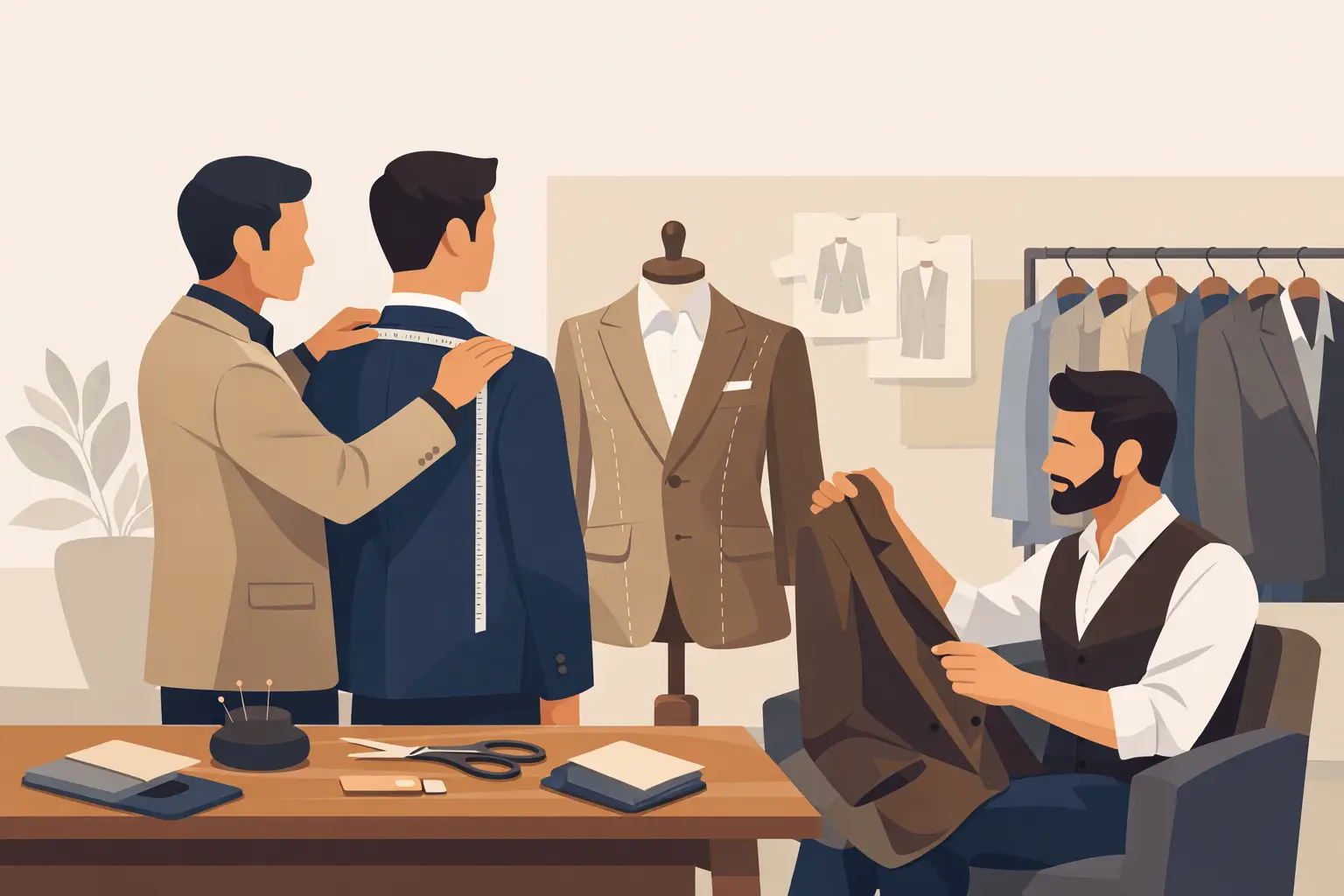
This is also where bespoke and proper custom tailoring distinguish themselves from off-the-peg convenience. Bodies are rarely standard. One shoulder may sit lower, the seat may require more room, or posture may affect how the jacket hangs. Tailoring that accounts for these realities creates a sharper result because it is grounded in your proportions rather than a generic block.
Why fabric matters more than trend
Trends move quickly, especially in menswear imagery. Cloth performance does not. If you are building a wardrobe for sustained professional use, fabric should be chosen with discipline.
For year-round wear in Britain, mid-weight wool is often the most reliable choice. It drapes well, breathes sensibly and maintains a polished surface. If you run warm, a lighter open weave can improve comfort, though there is usually a trade-off in how crisply it holds. If durability is the priority, especially for repeated weekly wear, a slightly sturdier cloth may prove the wiser investment.
Season also shapes how a suit feels on the body. In colder months, flannel can be deeply elegant for business, particularly in grey or muted navy. It carries softness and authority at once. In warmer weather, high-twist wool offers breathability and resilience. Linen blends have charm, but for stricter professional settings their natural rumpling needs to be accepted rather than fought.
Styling business suits without overworking them
A well-cut suit does not need constant embellishment. In fact, the more refined the tailoring, the less it asks for decoration.
Shirts should support the suit rather than compete with it. White remains the clearest expression of formality and freshness. Pale blue is equally dependable and often more forgiving against a range of skin tones. Stronger colours can work, but they require a more considered eye and can reduce versatility.
Ties deserve the same restraint. Grenadine, silk twill and subtle woven textures add richness without noise. A tie should bring rhythm to the outfit, not become its only point of interest. Pocket squares are similar. They are best used as a finishing gesture, not an announcement.
Shoes anchor the whole composition. Dark brown works beautifully with navy and many mid-greys, while black remains the safer choice with charcoal and more formal business dress. The key is condition. Even an excellent suit loses authority if the shoes are neglected.
When alterations are enough – and when they are not
There are times when a well-chosen ready-to-wear suit can be improved significantly with expert alterations. Trouser hems, waist suppression, sleeve length and jacket waist adjustment can sharpen a garment considerably. For men beginning to refine their wardrobe, this can be a sensible route.
But alterations have limits. If the shoulder is wrong, the balance is off, or the chest and collar do not sit properly, there is only so much that can be corrected after the fact. That is when made-to-measure or bespoke becomes more than a luxury. It becomes the practical solution.
At Manndiip, this is where craftsmanship proves its value. A personalised fitting process allows the suit to be shaped around posture, build and preference from the outset, producing a result that looks composed because it has been cut with intention.
Building a business wardrobe that grows with you
Most men do not need a wardrobe full of business suits immediately. They need the right foundation, then the judgement to add intelligently. A navy suit first, a charcoal next, then perhaps a mid-grey or subtle patterned option depending on your working life. Once those essentials are resolved, shirts, ties, outerwear and seasonal cloths can extend the wardrobe with purpose.
That measured approach usually delivers better results than buying several mediocre suits in haste. A smaller wardrobe of carefully chosen pieces feels more coherent, wears better and projects greater confidence. It also gives you room to understand your own preferences – how much structure you like, which cloths you return to, and what silhouette feels most like yourself.
A business suit should never feel like armour borrowed for the day. It should feel like an extension of your standards – precise, comfortable and assured. Get that right, and dressing well stops being effortful. It becomes part of how you carry yourself before the conversation has even begun.